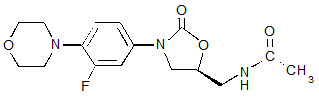
LINEZOLID 600MG 20 TAB
Generic: Linezolid
LINEZOLID 600MG 20 TAB
Sign up to see pricing
Licensed pharmacies, clinics, doctor's offices, and veterinary practices get instant account approval
Sign Up — Instant ApprovalDrug Information
Identification
Linezolid
Linezolid
Ascend Laboratories, LLC
HUMAN PRESCRIPTION DRUG
Administration
TABLET, FILM COATED
ORAL
ANDA205517
Active Ingredients
| Ingredient | Strength |
|---|---|
| LINEZOLID | 600 mg/1 |
Pharmacological Class
Data sourced from openFDA / DailyMed. For full prescribing information, consult the drug label.
Wholesale compliance resources
Drug Resources
Clinical Drug Information
Indications & Usage
1 INDICATIONS & USAGE Linezolid is an oxazolidinone-class antibacterial indicated in adults and children for the treatment of the following infections caused by susceptible Gram-positive bacteria: Nosocomial pneumonia (1.1); Community-acquired pneumonia ( 1.2 ); Complicated skin and skin structure infections, including diabetic foot infections, without concomitant osteomyelitis ( 1.3 ); Uncomplicated skin and skin structure infections ( 1.4 ); Vancomycin-resistant Enterococcus faecium infections. ( 1.5 ) Limitations of Use ( 1.6 ): Linezolid tablets are not indicated for the treatment of Gram-negative infections. The safety and efficacy of linezolid tablets formulations given for longer than 28 days have not been evaluated in controlled clinical trials. To reduce the development of drug-resistant bacteria and maintain the effectiveness of Linezolid formulations and other antibacterial drugs, Linezolid should be used only to treat or prevent infections that are proven or strongly suspected to be caused by bacteria. ( 1.7 ) 1.1 Nosocomial Pneumonia Linezolid is indicated for the treatment of nosocomial pneumonia caused by Staphylococcus aureus (methicillin-susceptible and -resistant isolates) or Streptococcus pneumoniae [ see Clinical Studies ( 14 ) ]. 1.2 Community-acquired Pneumonia Linezolid is indicated for the treatment of community-acquired pneumonia caused by Streptococcus pneumoniae , including cases with concurrent bacteremia, or Staphylococcus aureus (methicillin-susceptible isolates only) [ see Clinical Studies ( 14 ) ]. 1.3 Complicated Skin and Skin Structure Infections Linezolid is indicated for the treatment of complicated skin and skin structure infections, including diabetic foot infections, without concomitant osteomyelitis, caused by Staphylococcus aureus (methicillin-susceptible and -resistant isolates), Streptococcus pyogenes , or Streptococcus agalactiae . Linezolid has not been studied in the treatment of decubitus ulcers [ see Clinical Studies ( 14 ) ]. 1.4 Uncomplicated Skin and Skin Structure Infections Linezolid is indicated for the treatment of uncomplicated skin and skin structure infections caused by Staphylococcus aureus (methicillin-susceptible isolates only) or Streptococcus pyogenes [ see Clinical Studies ( 14 ) ]. 1.5 Vancomycin-resistant Enterococcus faecium Infections Linezolid is indicated for the treatment of vancomycin-resistant Enterococcus faecium infections, including cases with concurrent bacteremia [ see Clinical Studies ( 14 ) ]. 1.6 Limitations of Use Linezolid is not indicated for the treatment of Gram-negative infections. It is critical that specific Gram-negative therapy be initiated immediately if a concomitant Gram-negative pathogen is documented or suspected [ see Warnings and Precautions ( 5.4 ) ]. The safety and efficacy of linezolid formulations given for longer than 28 days have not been evaluated in controlled clinical trials [ see Clinical Studies ( 14 ) ]. 1.7 Usage To reduce the development of drug-resistant bacteria and maintain the effectiveness of linezolid and other antibacterial drugs, linezolid should be used only to treat or prevent infections that are proven or strongly suspected to be caused by susceptible bacteria. When culture and susceptibility information are available, they should be considered in selecting or modifying antibacterial therapy. In the absence of such data, local epidemiology and susceptibility patterns may contribute to the empiric selection of therapy.
Dosage & Administration
2 DOSAGE & ADMINISTRATION Dosage, Route, and Frequency of Administration Infection Pediatric Patients (Birth through 11 years of Age) Adults and Adolescents (12 years and Older) Duration (days ) Nosocomial pneumonia 10 mg/kg intravenous or oral every 8 hours 600 mg intravenous or oral every 12 hours 10 to 14 Community-acquired pneumonia, including concurrent bacteremia Complicated skin and skin structure infections Vancomycin-resistant Enterococcus faecium infections, including concurrent bacteremia 10 mg/kg intravenous or oral every 8 hours 600 mg intravenous or oral every 12 hours 14 to 28 Uncomplicated skin and skin structure infections less than 5 yrs: 10 mg/kg oral every 8 hours 5 to 11 yrs: 10 mg/kg oral every 12 hours Adults: 400 mg oral every 12 hours Adolescents: 600 mg oral every 12 hours 10 to 14 2.1 General Dosage and Administration The recommended dosage for Linezolid formulations for the treatment of infections is described in Table 1. Table 1. Dosage Guidelines for Linezolid Dosage, Route and Frequency of Administration Recommended Duration of Treatment (consecutive days) Infection* Pediatric Patients† (Birth through 11 Years of Age) Adults and Adolescents (12 Years and Older) Nosocomial pneumonia 10 mg/kg intravenously or oral ‡ every 8 hours 600 mg intravenously or oral ‡ every 12 hours 10 to 14 Community-acquired pneumonia, including concurrent bacteremia Complicated skin and skin structure infections Vancomycin-resistant Enterococcus faecium infections, including concurrent bacteremia 10 mg/kg intravenously or oral ‡ every 8 hours 600 mg intravenously or oral ‡ every 12 hours 14 to 28 Uncomplicated skin and skin structure infections less than 5 yrs: 10 mg/kg oral ‡ every 8 hours 5 to 11 yrs: 10 mg/kg oral ‡ every 12 hours Adults: 400 mg oral ‡ every 12 hours Adolescents: 600 mg oral ‡ every 12 hours 10 to 14 * Due to the designated pathogens [ see Indications and Usage (1) ] † Neonates less than 7 days : Most pre-term neonates less than 7 days of age (gestational age less than 34 weeks) have lower systemic linezolid clearance values and larger AUC values than many full-term neonates and older infants. These neonates should be initiated with a dosing regimen of 10 mg/kg every 12 hours. Consideration may be given to the use of 10 mg/kg every 8 hours regimen in neonates with a sub-optimal clinical response. All neonatal patients should receive 10 mg/kg every 8 hours by 7 days of life [ see Use in Specific Populations (8.4) and Clinical Pharmacology (12.3 ) ]. ‡ Oral dosing using either Linezolid Tablets or Linezolid for Oral Suspension [ see How Supplied/Storage and Handling (16) ]. No dose adjustment is necessary when switching from intravenous to oral administration.
Adverse Reactions
6 ADVERSE REACTIONS The following clinically significant adverse reactions are described elsewhere in the labeling: • Myelosuppression [see Warnings and Precautions ( 5.1 )] • Peripheral and Optic Neuropathy [see Warnings and Precautions ( 5.2 )] • Serotonin Syndrome [see Warnings and Precautions ( 5.3 )] • Clostridioides difficile-Associated Diarrhea [see Warnings and Precautions ( 5.5 )] • Lactic Acidosis [see Warnings and Precautions ( 5.7 )] • Convulsions [see Warnings and Precautions ( 5.8 )] • Rhabdomyolysis [see Warnings and Precautions ( 5.9 )] • Hypoglycemia [see Warnings and Precautions ( 5.10 )] Hyponatremia and/or Syndrome of Inappropriate Antidiuretic Hormone Secretion (SIADH) [see Warnings and Precautions ( 5.11 )] Most common adverse reactions (>5% of adult and/or pediatric patients treated with Linezolid) include: diarrhea, vomiting, headache, nausea, and anemia. ( 6 ) To report SUSPECTED ADVERSE REACTIONS, contact Ascend Laboratories, LLC at 1-877-272-7901 or FDA at 1-800-FDA-1088 or www.fda.gov/medwatch. 6.1 Clinical Trials Experience Because clinical trials are conducted under widely varying conditions, adverse reaction rates observed in the clinical trials of a drug cannot be directly compared to rates in the clinical trials of another drug and may not reflect the rates observed in practice. Adults The safety of Linezolid formulations was evaluated in 2,046 adult patients enrolled in seven Phase 3 comparator-controlled clinical trials, who were treated for up to 28 days. Of the patients treated for uncomplicated skin and skin structure infections (uSSSIs), 25.4% of Linezolid-treated and 19.6% of comparator-treated patients experienced at least one drug-related adverse event. For all other indications, 20.4% of Linezolid-treated and 14.3% of comparator-treated patients experienced at least one drug-related adverse event. Table 2 shows the incidence of all-causality, treatment-emergent adverse reactions reported in at least 1% of adult patients in these trials by dose of Linezolid. Table 2. Incidence (%) of Treatment–Emergent Adverse Reactions Occurring in >1% of Adult Patients Treated with Linezolid in Comparator-Controlled Clinical Trials ADVERSE REACTIONS Uncomplicated Skin and Skin Structure Infections All Other Indications Linezolid 400 mg by mouth every 12 hours (n=548) Clarithromycin 250 mg by mouth every 12 hours (n=537) Linezolid 600 mg every 12 hours (n=1,498) All Other Comparators* (n=1,464) Headache 8.8 8.4 5.7 4.4 Diarrhea 8.2 6.1 8.3 6.4 Nausea 5.1 4.5 6.6 4.6 Vomiting 2.0 1.5 4.3 2.3 Dizziness 2.6 3.0 1.8 1.5 Rash 1.1 1.1 2.3 2.6 Anemia 0.4 0 2.1 1.4 Taste alteration 1.8 2.0 1.0 0.3 Vaginal moniliasis 1.8 1.3 1.1 0.5 Oral moniliasis 0.5 0 1.7 1.0 Abnormal liver function tests 0.4 0.2 1.6 0.8 Fungal infection 1.5 0.2 0.3 0.2 Tongue discoloration 1.3 0 0.3 0 Localized abdominal pain 1.3 0.6 1.2 0.8 Generalized abdominal pain 0.9 0.4 1.2 1.0 * Comparators included cefpodoxime proxetil 200 mg by mouth every 12 hours; ceftriaxone 1 g intravenously every 12 hours; dicloxacillin 500 mg by mouth every 6 hours; oxacillin 2 g intravenously every 6 hours; vancomycin 1 g intravenously every 12 hours. Of the patients treated for uSSSIs, 3.5% of Linezolid-treated and 2.4% of comparator-treated patients discontinued treatment due to drug-related adverse events. For all other indications, discontinuations due to drug-related adverse events occurred in 2.1% of Linezolid-treated and 1.7% of comparator-treated patients. The most common reported drug-related adverse events leading to discontinuation of treatment were nausea, headache, diarrhea, and vomiting. Pediatric Patients The safety of Linezolid formulations was evaluated in 215 pediatric patients ranging in age from birth through 11 years, and in 248 pediatric patients aged 5 through 17 years (146 of these 248 were age 5 through 11 and 102 were age 12 to 17). These patients were enrolled in two Phase 3 comparator-controlled clinical trials and were treated for up to 28 days. In the study of hospitalized pediatric patients (birth through 11 years) with Gram-positive infections, who were randomized 2 to 1 (linezolid: vancomycin), mortality was 6.0% (13/215) in the linezolid arm and 3.0% (3/101) in the vancomycin arm. However, given the severe underlying illness in the patient population, no causality could be established. Of the pediatric patients treated for uSSSIs, 19.2% of Linezolid-treated and 14.1% of comparator-treated patients experienced at least one drug-related adverse event. For all other indications, 18.8% of Linezolid-treated and 34.3% of comparator-treated patients experienced at least one drug-related adverse event. Table 3 shows the incidence of all-causality, treatment-emergent adverse reactions reported in more than 1% of pediatric patients (and more than 1 patient) in either treatment group in the comparator-controlled Phase 3 trials. Table 3. Incidence (%) of Treatment-Emergent Adverse Reactions Occurring in >1% of Pediatric Patients (and >1 Patient) in Either Treatment Group in Comparator-Controlled Clinical Trials ADVERSE REACTIONS Uncomplicated Skin and Skin Structure Infections * All Other Indications † Linezolid (n=248) Cefadroxil (n=251) Linezolid (n=215) Vancomycin (n=101) Diarrhea 7.8 8.0 10.8 12.1 Vomiting 2.9 6.4 9.4 9.1 Headache 6.5 4.0 0.9 0 Anemia 0 0 5.6 7.1 Thrombocytopenia 0 0 4.7 2.0 Nausea 3.7 3.2 1.9 0 Generalized abdominal pain 2.4 2.8 0.9 2.0 Localized abdominal pain 2.4 2.8 0.5 1.0 Loose stools 1.6 0.8 2.3 3.0 Eosinophilia 0.4 0.8 1.9 1.0 Pruritus at non-application site 0.8 0.4 1.4 2.0 Vertigo 1.2 0.4 0 0 * Patients 5 through 11 years of age received Linezolid 10 mg/kg by mouth every 12 hours or cefadroxil 15 mg/kg by mouth every 12 hours. Patients 12 years or older received Linezolid 600 mg by mouth every 12 hours or cefadroxil 500 mg by mouth every 12 hours. † Patients from birth through 11 years of age received Linezolid 10 mg/kg intravenously by mouth every 8 hours or vancomycin 10 to 15 mg/kg intravenously every 6 to 24 hours, depending on age and renal clearance. Of the pediatric patients treated for uSSSIs, 1.6% of Linezolid-treated and 2.4% of comparator-treated patients discontinued treatment due to drug-related adverse events. For all other indications, discontinuations due to drug-related adverse events occurred in 0.9% of Linezolid-treated and 6.1% of comparator-treated patients. Laboratory Abnormalities Linezolid has been associated with thrombocytopenia when used in doses up to and including 600 mg every 12 hours for up to 28 days. In Phase 3 comparator-controlled trials, the percentage of adult patients who developed a substantially low platelet count (defined as less than 75% of lower limit of normal and/or baseline) was 2.4% (range among studies: 0.3 to 10.0%) with Linezolid and 1.5% (range among studies: 0.4 to 7.0%) with a comparator. In a study of hospitalized pediatric patients ranging in age from birth through 11 years, the percentage of patients who developed a substantially low platelet count (defined as less than 75% of lower limit of normal and/or baseline) was 12.9% with Linezolid and 13.4% with vancomycin. In an outpatient study of pediatric patients aged from 5 through 17 years, the percentage of patients who developed a substantially low platelet count was 0% with Linezolid and 0.4% with cefadroxil. Thrombocytopenia associated with the use of Linezolid appears to be dependent on duration of therapy (generally greater than 2 weeks of treatment). The platelet counts for most patients returned to the normal range/baseline during the follow-up period. No related clinical adverse events were identified in Phase 3 clinical trials in patients developing thrombocytopenia. Bleeding events were identified in thrombocytopenic patients in a compassionate use program for Linezolid; the role of linezolid in these events cannot be determined [ see Warnings and Precautions ( 5.1 ) ]. Changes seen in other laboratory parameters, without regard to drug relationship, revealed no substantial differences between Linezolid and the comparators. These changes were generally not clinically significant, did not lead to discontinuation of therapy, and were reversible. The incidence of adult and pediatric patients with at least one substantially abnormal hematologic or serum chemistry value is presented in Tables 4, 5, 6, and 7. Table 4. Percent of Adult Patients who Experienced at Least One Substantially Abnormal * Hematology Laboratory Value in Comparator-Controlled Clinical Trials with Linezolid Laboratory Assay Uncomplicated Skin and Skin Structure Infections All Other Indications Linezolid 400 mg every 12 hours Clarithromycin 250 mg every 12 hours Linezolid 600 mg every 12 hours All Other Comparators † Hemoglobin (g/dL) 0.9 0.0 7.1 6.6 Platelet count (x 10 3 /mm 3 ) 0.7 0.8 3.0 1.8 WBC (x 10 3 /mm 3 ) 0.2 0.6 2.2 1.3 Neutrophils (x 10 3 /mm 3 ) 0.0 0.2 1.1 1.2 * 2 x Upper Limit of Normal (ULN) for values normal at baseline; > 2 x ULN and >2 x baseline for values abnormal at baseline. † Comparators included cefpodoxime proxetil 200 mg by mouth every 12 hours; ceftriaxone 1 g intravenously every 12 hours; dicloxacillin 500 mg by mouth every 6 hours; oxacillin 2 g intravenously every 6 hours; vancomycin 1 g intravenously every 12 hours. Table 6. Percent of Pediatric Patients who Experienced at Least One Substantially Abnormal * Hematology Laboratory Value in Comparator-Controlled Clinical Trials with Linezolid Laboratory Assay Uncomplicated Skin and Skin Structure Infections † All Other Indications ‡ Linezolid Cefadroxil Linezolid Vancomycin Hemoglobin (g/dL) 0.0 0.0 15.7 12.4 Platelet count (x 10 3 /mm 3 ) 0.0 0.4 12.9 13.4 WBC (x 10 3 /mm 3 ) 0.8 0.8 12.4 10.3 Neutrophils (x 10 3 /mm 3 ) 1.2 0.8 5.9 4.3 * 2 x Upper Limit of Normal (ULN) for values normal at baseline; >2 x ULN and >2 (>1.5 for total bilirubin) x baseline for values abnormal at baseline. † Patients 5 through 11 years of age received Linezolid 10 mg/kg by mouth every 12 hours or cefadroxil 15 mg/kg by mouth every 12 hours. Patients 12 years or older received Linezolid 600 mg mouth every 12 hours or cefadroxil 500 mg by mouth every 12 hours. ‡ Patients from birth through 11 years of age received Linezolid 10 mg/kg intravenously/by mouth every 8 hours or vancomycin 10 to 15 mg/kg intravenously every 6 to 24 hours, depending on age and renal clearance. 6.2 Postmarketing Experience The following adverse reactions have been identified during post-approval use of Linezolid. Because these reactions are reported voluntarily from a population of uncertain size, it is not always possible to reliably estimate their frequency or establish a causal relationship to drug exposure: • Anaphylaxis, angioedema, bullous skin disorders including severe cutaneous adverse reactions (SCAR) such as toxic epidermal necrolysis and Stevens-Johnson syndrome, and hypersensitivity vasculitis. • Myelosuppression (including anemia, leukopenia, pancytopenia, and thrombocytopenia). Thrombocytopenia has been reported more often in patients with severe renal impairment and in patients with moderate to severe hepatic impairment [ see Warnings and Precautions ( 5.1 ) ]; sideroblastic anemia. • Peripheral neuropathy, and optic neuropathy sometimes progressing to loss of vision [ see Warnings and Precautions ( 5.2 ) ]. • Serotonin syndrome has been reported in patients receiving concomitant serotonergic agents, including antidepressants such as selective serotonin reuptake inhibitors (SSRIs) and opioids, and Linezolid [ see Warnings and Precautions ( 5.3 ) ]. • Lactic acidosis [ see Warnings and Precautions ( 5.7 ) ]. Although these reports have primarily been in patients treated for longer than the maximum recommended duration of 28 days, these events have also been reported in patients receiving shorter courses of therapy. • Convulsions [ see Warnings and Precautions ( 5.8 ) ]. • Rhabdomyolysis [see Warnings and Precautions ( 5.9 )]. • Hypoglycemia, including symptomatic episodes [ see Warnings and Precautions ( 5.10 ) ]. • Hyponatremia and/or Syndrome of Inappropriate Antidiuretic Hormone Secretion (SIADH) [ see Warnings and Precautions ( 5.11 ) ]. • Superficial tooth discoloration and tongue discoloration have been reported with the use of linezolid. The tooth discoloration was removable with professional dental cleaning (manual descaling) in cases with known outcome.
Information for Patients
17 PATIENT COUNSELING INFORMATION Important Administration Instructions Advise patients that linezolid may be taken with or without food. Peripheral and Optic Neuropathy Advise patients to inform their physician if they experience changes in vision while taking linezolid [ see Warnings and Precautions ( 5.2 ) ] . Serotonin Syndrome Advise patients to inform their physician if taking serotonergic agents, including serotonin re-uptake inhibitors or other antidepressants and opioids [ see Warnings and Precautions ( 5.3 ) ] . Potential Interactions Producing Elevation of Blood Pressure Advise patients to inform their physician if they have a history of hypertension. Advise patients to avoid large quantities of foods or beverages with high tyramine content while taking linezolid. Foods high in tyramine content include those that may have undergone protein changes by aging, fermentation, pickling, or smoking to improve flavor, such as aged cheeses, fermented or air-dried meats, sauerkraut, soy sauce, tap beers, and red wines. The tyramine content of any protein-rich food may be increased if stored for long periods or improperly refrigerated. Advise patients to inform their physician if taking medications containing pseudoephedrine HCl or phenylpropanolamine HCl, such as cold remedies and decongestants [ see Warnings and Precautions ( 5.6 ) ]. Lactic Acidosis Advise patients to inform their physician if they experience repeated episodes of nausea or vomiting while receiving linezolid [ see Warnings and Precautions ( 5.7 ) ]. Convulsions Advise patients to inform their physician if they have a history of seizures or convulsions [ see Warnings and Precautions ( 5.8 ) ]. Rhabdomyolysis Advise patients to inform their physician if they experience signs and symptoms of rhabdomyolysis including muscle pain, tenderness or weakness and dark urine [ see Warnings and Precautions ( 5.9 ) ]. Hypoglycemia Advise patients to inform their physician if they have diabetes mellitus. Hypoglycemic reactions, such as diaphoresis and tremulousness, along with low blood glucose measurements may occur when treated with linezolid. If such reactions occur, patients should contact a physician or other health professional for proper treatment [ see Warnings and Precautions ( 5.10 ) ] . Hyponatremia and/or SIADH Advise patients at risk for hyponatremia to inform their physician if they experience signs and symptoms of hyponatremia and/or SIADH, including confusion, somnolence, generalized weakness, and respiratory distress [see Warnings and Precautions ( 5.11 )]. Antibacterial Resistance Patients should be counseled that antibacterial drugs including linezolid should only be used to treat bacterial infections. They do not treat viral infections (e.g., the common cold). When linezolid is prescribed to treat a bacterial infection, patients should be told that although it is common to feel better early in the course of therapy, the medication should be taken exactly as directed. Skipping doses or not completing the full course of therapy may (1) decrease the effectiveness of the immediate treatment and (2) increase the likelihood that bacteria will develop resistance and will not be treatable by linezolid or other antibacterial drugs in the future. Diarrhea Diarrhea is a common problem caused by antibacterial drugs, which usually ends when the antibacterial drug is discontinued. Sometimes after starting treatment with antibacterial drugs, patients can develop watery and bloody stools (with or without stomach cramps and fever) even as late as two or more months after having taken the last dose of the antibacterial drug. If this occurs, patients should contact their physician as soon as possible [ see Warnings and Precautions ( 5.5 ) ]. Infertility Advise male patients that linezolid may reversibly impair fertility [ see Use in Specific Populations ( 8.3 ) ]. Manufactured by: Alkem Laboratories Ltd., Mumbai - 400 013, INDIA. Distributed by: Ascend Laboratories, LLC Bedminster, NJ 07921 Revised: January 2025 PT 1985-13
Clinical data sourced from openFDA drug labeling. For complete prescribing information, consult the full drug label.