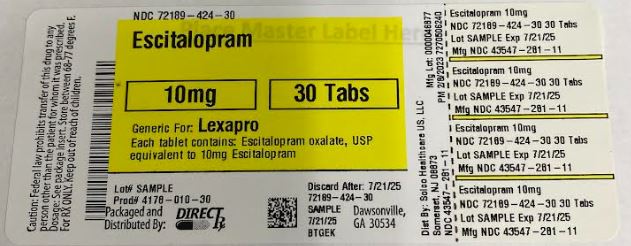
ESCITALOPRAM 20MG TAB 1000CT
Generic: Escitalopram
ESCITALOPRAM 20MG TAB 1000CT
Sign up to see pricing
Licensed pharmacies, clinics, doctor's offices, and veterinary practices get instant account approval
Sign Up — Instant ApprovalDrug Information
Identification
Escitalopram
Escitalopram
SOLCO HEALTHCARE US, LLC
HUMAN PRESCRIPTION DRUG
Administration
TABLET, FILM COATED
ORAL
ANDA078032
Active Ingredients
| Ingredient | Strength |
|---|---|
| ESCITALOPRAM OXALATE | 20 mg/1 |
Pharmacological Class
Data sourced from openFDA / DailyMed. For full prescribing information, consult the drug label.
Wholesale compliance resources
Drug Resources
Clinical Drug Information
Indications & Usage
1 INDICATIONS AND USAGE Escitalopram is indicated for the treatment of: • major depressive disorder (MDD) in adults and pediatric patients 12 years of age and older. • generalized anxiety disorder (GAD) in adults and pediatric patients 7 years of age and older. Escitalopram is a selective serotonin reuptake inhibitor (SSRI) indicated for the: • treatment of major depressive disorder (MDD) in adults and pediatric patients 12 years of age and older ( 1 ) • treatment of generalized anxiety disorder (GAD) in adults and pediatric patients 7 years and older ( 1 )
Dosage & Administration
2 DOSAGE AND ADMINISTRATION Indication and Population Recommended Dosage MDD in Adults ( 2.1 ) Initial: 10 mg once daily Recommended: 10 mg once daily Maximum: 20 mg once daily MDD in Pediatric Patients 12 years and older ( 2.1 ) Initial: 10 mg once daily Recommended: 10 mg once daily Maximum: 20 mg once daily GAD in Adults ( 2.2 ) Initial: 10 mg once daily Recommended: 10 mg once daily Maximum: 20 mg once daily GAD in Pediatric Patients 7 years and older ( 2.2 ) Initial: 10 mg once daily Recommended: 10 mg once daily Maximum: 20 mg once daily • No additional benefits were seen at 20 mg once daily ( 2.1 ) • Administer once daily, morning or evening, with or without food ( 2.3 ) • Elderly patients: recommended dosage is 10 mg once daily ( 2.4 ) • Hepatic impairment: recommended dosage is 10 mg once daily ( 2.4 , 8.6 ) • When discontinuing escitalopram tablets, reduce dose gradually whenever possible ( 2.5 ) 2.1 Major Depressive Disorder Adults The recommended dosage of escitalopram tablets in adults is 10 mg once daily. A fixed-dose trial of escitalopram demonstrated the effectiveness of both 10 mg and 20 mg of escitalopram, but failed to demonstrate a greater benefit of 20 mg over 10 mg [see Clinical Studies ( 14.1 )] . Depending on clinical response and tolerability, dosage may be increased to the maximum recommended dosage of 20 mg once daily at an interval of no less than 1 week. Pediatric Patients 12 years of age and older The recommended dosage of escitalopram tablets in pediatric patients 12 years of age and older is 10 mg once daily. Depending on clinical response and tolerability, dosage may be increased to the maximum recommended dosage of 20 mg once daily at an interval of no less than 3 weeks. 2.2 Generalized Anxiety Disorder Adults The recommended starting dosage of escitalopram tablets in adults is 10 mg once daily. Depending on clinical response and tolerability, dosage may be increased to the maximum recommended dosage of 20 mg once daily at an interval of no less than 1 week. Pediatric Patients 7 years of age and older The recommended starting dosage of escitalopram tablets for pediatric patients ages 7 years of age and older is 10 mg once daily. Depending on clinical response and tolerability, dosage may be increased to the maximum recommended dosage of 20 mg once daily at an interval of no less than 2 weeks. 2.3 Administration Information Administer escitalopram tablets orally once daily, in the morning or evening, with or without food. 2.4 Screen for Bipolar Disorder Prior to Starting Escitalopram Tablets Prior to initiating treatment with escitalopram or another antidepressant, screen patients for a personal family history of bipolar disorder, mania, or hypomania [see Warnings and Precautions ( 5.5 )] . 2.5 Recommended Dosage for Specific Populations The recommended dosage for most elderly patients and patients with hepatic impairment is 10 mg once daily [see Use in Specific Populations ( 8.5 , 8.6 )] . The recommended dosage for escitalopram tablets in adults with a creatinine clearance less than 20 mL/minute has not been determined. No dosage adjustment is necessary for patients with mild or moderate renal impairment [see Use in Specific Populations ( 8.7 )] . 2.6 Discontinuation of Treatment with Escitalopram Tablets Symptoms associated with discontinuation of escitalopram tablets and other SSRIs and SNRIs have been reported [see Warnings and Precautions ( 5.3 )] . Patients should be monitored for these symptoms when discontinuing treatment. A gradual reduction in the dose rather than abrupt cessation is recommended whenever possible. If intolerable symptoms occur following a decrease in the dose or upon discontinuation of treatment, then resuming the previously prescribed dose may be considered. Subsequently, the physician may continue decreasing the dose but at a more gradual rate. 2.7 Switching Patients to or from a Monoamine Oxidase Inhibitor (MAOI) Antidepressant At least 14 days should elapse between discontinuation of an MAOI intended to treat psychiatric disorders and initiation of therapy with escitalopram tablets. Conversely, at least 14 days should be allowed after stopping escitalopram tablets before starting an MAOI intended to treat psychiatric disorders [see Contraindications ( 4 )].
Adverse Reactions
6 ADVERSE REACTIONS The following adverse reactions are discussed in greater detail in other sections of the labeling: • Suicidal thoughts and behaviors in adolescents and young adults [see Warnings and Precautions ( 5.1 )] • Serotonin syndrome [see Warnings and Precautions ( 5.2 )] • Discontinuation syndrome [see Warnings and Precautions ( 5.3 )] • Seizures [see Warnings and Precautions ( 5.4 )] • Activation of mania or hypomania [see Warnings and Precautions ( 5.5 )] • Hyponatremia [see Warnings and Precautions ( 5.6 )] • Increased Risk of Bleeding [see Warnings and Precautions ( 5.7 )] • Interference with Cognitive and Motor Performance [see Warnings and Precautions ( 5.8 )] • Angle-closure glaucoma [see Warnings and Precautions ( 5.9 )] • Use in Patients with Concomitant Illness [see Warnings and Precautions ( 5.10 )] • Sexual Dysfunction [see Warnings and Precautions ( 5.11 )] Most commonly observed adverse reactions (incidence ≥ 5% and at least twice the incidence of placebo patients) are: insomnia, ejaculation disorder (primarily ejaculatory delay), nausea, sweating increased, fatigue and somnolence, decreased libido, and anorgasmia ( 6.1 ) To report SUSPECTED ADVERSE REACTIONS, contact Solco Healthcare LLC at 1-866-257-2597 or FDA at 1-800-FDA-1088 or www.fda.gov/medwatch. 6.1 Clinical Trials Experience Because clinical studies are conducted under widely varying conditions, adverse reaction rates observed in the clinical studies of a drug cannot be directly compared to rates in the clinical studies of another drug and may not reflect the rates observed in practice. Clinical Trial Data Sources Adults Adverse reactions information for escitalopram was collected from 715 patients with major depressive disorder who were exposed to escitalopram and from 592 patients who were exposed to placebo in double-blind, placebo-controlled trials. An additional 284 patients with major depressive disorder were newly exposed to escitalopram in open-label trials. The adverse reaction information for escitalopram in patients with GAD was collected from 429 patients exposed to escitalopram and from 427 patients exposed to placebo in double-blind, placebo-controlled trials. Adverse reactions during exposure were obtained primarily by general inquiry and recorded by clinical investigators using terminology of their own choosing. Consequently, it is not possible to provide a meaningful estimate of the proportion of individuals experiencing adverse reactions without first grouping similar types of reactions into a smaller number of standardized event categories. In the tables and tabulations that follow, standard World Health Organization (WHO) terminology has been used to classify reported adverse reactions. The stated frequencies of adverse reactions represent the proportion of individuals who experienced, at least once, a treatment emergent adverse event of the type listed. An event was considered treatment-emergent if it occurred for the first time or worsened while receiving therapy following baseline evaluation. Pediatric Patients Adverse reaction information for pediatric patients was collected in double-blind placebo-controlled studies in 576 pediatric patients 6 to 17 years of age, (286 escitalopram, 290 placebo) with major depressive disorder and in 273 pediatric patients 7 to 17 years of age (137 escitalopram, 136 placebo) with generalized anxiety disorder. The safety and effectiveness of escitalopram have not been established in pediatric patients less than 12 years of age with MDD or less than 7 years of age with GAD. Adverse Reactions Associated with Discontinuation of Treatment Major Depressive Disorder Adults Among the 715 depressed patients who received escitalopram in placebo-controlled trials, 6% discontinued treatment due to an adverse event, as compared to 2% of 592 patients receiving placebo. In two fixed-dose studies, the rate of discontinuation for adverse reactions in patients receiving 10 mg/day escitalopram was not significantly different from the rate of discontinuation for adverse reactions in patients receiving placebo. The rate of discontinuation for adverse reactions in patients assigned to a fixed dose of 20 mg/day escitalopram was 10%, which was significantly different from the rate of discontinuation for adverse reactions in patients receiving 10 mg/day escitalopram (4%) and placebo (3%). Adverse reactions that were associated with the discontinuation of at least 1% of patients treated with escitalopram, and for which the rate was at least twice that of placebo, were nausea (2%) and ejaculation disorder (2% of male patients). Pediatric Patients Adverse reactions in pediatric patients 6 to 17 years of age were associated with discontinuation of 3.5% of 286 patients receiving escitalopram and 1% of 290 patients receiving placebo. The most common adverse reaction (incidence at least 1% for escitalopram and greater than placebo) associated with discontinuation was insomnia (1% escitalopram, 0% placebo). The safety and effectiveness of escitalopram have not been established in pediatric patients less than 12 years of age with MDD. Generalized Anxiety Disorder Adults Among the 429 GAD patients who received escitalopram 10 to 20 mg/day in placebo-controlled trials, 8% discontinued treatment due to an adverse event, as compared to 4% of 427 patients receiving placebo. Adverse reactions that were associated with the discontinuation of at least 1% of patients treated with escitalopram, and for which the rate was at least twice the placebo rate, were nausea (2%), insomnia (1%), and fatigue (1%). Pediatric Patients Adverse reactions in pediatric patients 7 to 17 years were associated with discontinuation of 2.9% of 137 patients receiving escitalopram and 1.5% of 136 patients receiving placebo. The most common adverse reaction (incidence at least 1% for escitalopram and greater than placebo) associated with discontinuation was activation syndrome (1% escitalopram, 0% placebo), intentional self injury (1% escitalopram, 0% placebo), epistaxis (1% escitalopram, 0% placebo), and nausea (1% escitalopram, 0% placebo). Incidence of Adverse Reactions in Placebo-Controlled Clinical Trials Major Depressive Disorder Adults The most commonly observed adverse reactions in escitalopram patients (incidence of approximately 5% or greater and approximately twice the incidence in placebo patients) were insomnia, ejaculation disorder (primarily ejaculatory delay), nausea, sweating increased, fatigue, and somnolence. Table 2 enumerates the incidence, rounded to the nearest percent, of adverse reactions that occurred among 715 depressed patients who received escitalopram at doses ranging from 10 to 20 mg/day in placebo-controlled trials. Reactions included are those occurring in 2% or more of patients treated with escitalopram and for which the incidence in patients treated with escitalopram was greater than the incidence in placebo-treated patients. 1 Primarily ejaculatory delay. 2 Denominator used was for males only (N=225 Escitalopram; N=188 placebo). 3 Denominator used was for females only (N=490 Escitalopram; N=404 placebo). Pediatric Patients The overall profile of adverse reactions in pediatric patients 6 to 17 years in major depressive disorder was generally similar to that seen in adult studies, as shown in Table 2. However, the following adverse reactions (excluding those which appear in Table 2 and those for which the coded terms were uninformative or misleading) were reported at an incidence of at least 2% for escitalopram and greater than placebo: back pain, urinary tract infection, vomiting, and nasal congestion. The safety and effectiveness of escitalopram have not been established in pediatric patients less than 12 years of age with MDD. TABLE 2 Adverse Reactions observed with a frequency of ≥ 2% and greater than placebo for Major Depressive Disorder (Adults) Adverse Reaction Escitalopram Placebo (N=715) % (N=592) % Autonomic Nervous System Disorders Dry Mouth 6% 5% Sweating Increased 5% 2% Central & Peripheral Nervous System Disorders Dizziness 5% 3% Gastrointestinal Disorders Nausea 15% 7% Diarrhea 8% 5% Constipation 3% 1% Indigestion 3% 1% Abdominal Pain 2% 1% General Influenza-like Symptoms 5% 4% Fatigue 5% 2% Psychiatric Disorders Insomnia 9% 4% Somnolence 6% 2% Appetite Decreased 3% 1% Libido Decreased 3% 1% Respiratory System Disorders Rhinitis 5% 4% Sinusitis 3% 2% Urogenital Ejaculation Disorder 1,2 9% placebo for Generalized Anxiety Disorder (Adults) Adverse Reaction Escitalopram Placebo (N=429) % (N=427) % Autonomic Nervous System Disorders Dry Mouth 9% 5% Sweating Increased 4% 1% Central & Peripheral Nervous System Disorders Headache 24% 17% Paresthesia 2% 1% Gastrointestinal Disorders Nausea 18% 8% Diarrhea 8% 6% Constipation 5% 4% Indigestion 3% 2% Vomiting 3% 1% Abdominal Pain 2% 1% Flatulence 2% 1% Toothache 2% 0% General Fatigue 8% 2% Influenza-like Symptoms 5% 4% Musculoskeletal System Disorder Neck/Shoulder Pain 3% 1% Psychiatric Disorders Somnolence 13% 7% Insomnia 12% 6% Libido Decreased 7% 2% Dreaming Abnormal 3% 2% Appetite Decreased 3% 1% Lethargy 3% 1% Respiratory System Disorders Yawning 2% 1% Urogenital Ejaculation Disorder 1,2 14% 2% Anorgasmia 3 6% 500 msec or a prolongation >60 msec compared to 0.2% of patients in the placebo group. The incidence of tachycardic outliers was 0.2% in the escitalopram and the placebo group. The incidence of bradycardic outliers was 0.5% in the escitalopram group and 0.2% in the placebo group. QTcF interval was evaluated in a randomized, placebo and active (moxifloxacin 400 mg) controlled cross-over, escalating multiple dose study in 113 healthy subjects. The maximum mean (95% upper confidence bound) difference from placebo arm were 4.5 (6.4) and 10.7 (12.7) msec for 10 mg and supratherapeutic 30 mg escitalopram given once daily, respectively. Based on the established exposure-response relationship, the predicted QTcF change from placebo arm (95% confidence interval) under the C max for the dose of 20 mg is 6.6 (7.9) msec. Escitalopram 30 mg given once daily resulted in mean C max of 1.7-fold higher than the mean C max for the maximum recommended therapeutic dose at steady state (20 mg). The exposure under supratherapeutic 30 mg dose is similar to the steady state concentrations expected in CYP2C19 poor metabolizers following a therapeutic dose of 20 mg. Other Reactions Observed During the Premarketing Evaluation of Escitalopram Following is a list of treatment-emergent adverse reactions, as defined in the introduction to the ADVERSE REACTIONS section, reported by the 1,428 patients treated with escitalopram for periods of up to one year in double-blind or open-label clinical trials during its premarketing evaluation. The listing does not include those reactions already listed in Tables 2 & 3 , those reactions for which a drug cause was remote and at a rate less than 1% or lower than placebo, those reactions which were so general as to be uninformative, and those reactions reported only once which did not have a substantial probability of being acutely life threatening. Reactions are categorized by body system. Reactions of major clinical importance are described in the Warnings and Precautions section ( 5 ). Cardiovascular : hypertension, palpitation. Central and Peripheral Nervous System Disorders : light-headed feeling, migraine. Gastrointestinal Disorders : abdominal cramp, heartburn, gastroenteritis. General : allergy, chest pain, fever, hot flushes, pain in limb. Metabolic and Nutritional Disorders : increased weight. Musculoskeletal System Disorders : arthralgia, myalgia jaw stiffness. Psychiatric Disorders : appetite increased, concentration impaired, irritability. Reproductive Disorders/Female : menstrual cramps, menstrual disorder. Respiratory System Disorders : bronchitis, coughing, nasal congestion, sinus congestion, sinus headache. Skin and Appendages Disorders : rash. Special Senses : vision blurred, tinnitus. Urinary System Disorders : urinary frequency, urinary tract infection. 6.2 Post-Marketing Experience Adverse Reactions Reported Subsequent to the Marketing of Escitalopram The following adverse reactions have been identified during post-approval use of escitalopram tablets. Because these reactions are reported voluntarily from a population of uncertain size, it is not always possible to reliably estimate their frequency or establish a causal relationship to drug exposure. Blood and Lymphatic System Disorders : anemia, agranulocytosis, aplastic anemia, hemolytic anemia, idiopathic thrombocytopenia purpura, leukopenia, thrombocytopenia. Cardiac Disorders : atrial fibrillation, bradycardia, cardiac failure, myocardial infarction, tachycardia, torsade de pointes, ventricular arrhythmia, ventricular tachycardia. Ear and labyrinth disorders : vertigo Endocrine Disorders : diabetes mellitus, hyperprolactinemia, SIADH. Eye Disorders : angle closure glaucoma, diplopia, mydriasis, visual disturbance. Gastrointestinal Disorder : dysphagia, gastrointestinal hemorrhage, gastroesophageal reflux, pancreatitis, rectal hemorrhage. General Disorders and Administration Site Conditions : abnormal gait, asthenia, edema, fall, feeling abnormal, malaise. Hepatobiliary Disorders : fulminant hepatitis, hepatic failure, hepatic necrosis, hepatitis. Immune System Disorders : allergic reaction, anaphylaxis. Investigations : bilirubin increased, decreased weight, electrocardiogram QT prolongation, hepatic enzymes increased, hypercholesterolemia, INR increased, prothrombin decreased. Metabolism and Nutrition Disorders : hyperglycemia, hypoglycemia, hypokalemia, hyponatremia. Musculoskeletal and Connective Tissue Disorders : muscle cramp, muscle stiffness, muscle weakness, rhabdomyolysis. Nervous System Disorders : akathisia, amnesia, ataxia, choreoathetosis, cerebrovascular accident, dysarthria, dyskinesia, dystonia, extrapyramidal disorders, grand mal seizures (or convulsions), hypoaesthesia, myoclonus, nystagmus, Parkinsonism, restless legs, seizures, syncope, tardive dyskinesia, tremor. Pregnancy, Puerperium and Perinatal Conditions : spontaneous abortion. Psychiatric Disorders : acute psychosis, aggression, agitation, anger, anxiety, apathy, completed suicide, confusion, depersonalization, depression aggravated, delirium, delusion, disorientation, feeling unreal, hallucinations (visual and auditory), mood swings, nervousness, nightmare, panic reaction, paranoia, restlessness, self-harm or thoughts of self-harm, suicide attempt, suicidal ideation, suicidal tendency. Renal and Urinary Disorders : acute renal failure, dysuria, urinary retention. Reproductive System and Breast Disorders : menorrhagia, priapism. Respiratory, Thoracic and Mediastinal Disorders : anosmia, dyspnea, epistaxis, pulmonary embolism, hyposmia, pulmonary hypertension of the newborn. Skin and Subcutaneous Tissue Disorders : alopecia, angioedema, dermatitis, drug reaction with eosinophilia and systemic symptoms (DRESS), ecchymosis, erythema multiforme, photosensitivity reaction, Stevens Johnson Syndrome, toxic epidermal necrolysis, urticaria. Vascular Disorders : deep vein thrombosis, flushing, hypertensive crisis, hypotension, orthostatic hypotension, phlebitis, thrombosis.
Information for Patients
17 PATIENT COUNSELING INFORMATION Advise the patient to read the FDA-approved patient labeling (Medication Guide). Suicidal Thoughts and Behaviors Advise patients, their families and caregivers to look for the emergence of suicidal ideation and behavior, especially during treatment and when the dose is adjusted up or down, and instruct them to report such symptoms to their healthcare provider [see Boxed Warning and Warnings and Precautions ( 5.1 )] . Serotonin Syndrome Caution patients about the risk of serotonin syndrome, particularly with the concomitant use of escitalopram with other serotonergic drugs including triptans, tricyclic antidepressants, opioids, lithium, tryptophan, buspirone, amphetamines, and St. John’s Wort, and with drugs that impair metabolism of serotonin (in particular, MAOIs, both those intended to treat psychiatric disorders and also others, such as linezolid). Instruct patients to contact their health care provider or report to the emergency room if they experience signs or symptoms of serotonin syndrome [see Warnings and Precautions ( 5.2 ), Drug Interactions ( 7 )] . Discontinuation Syndrome Advise patients not to abruptly discontinue escitalopram and to discuss any tapering regimen with their healthcare provider. Inform patients that adverse reactions can occur when escitalopram is discontinued [see Warnings and Precautions ( 5.3 )] . Activation of Mania or Hypomania Advise patients and their caregivers to observe for signs of activation of mania/hypomania and instruct them to report such symptoms to the healthcare provider [see Warnings and Precautions ( 5.5 )] . Increased Risk of Bleeding Inform patients about the concomitant use of escitalopram with NSAIDs, aspirin, warfarin, other antiplatelet drugs, or other anticoagulants because the combined use has been associated with an increased risk of bleeding. Advise patients to inform their healthcare providers if they are taking or planning to take any prescription or over-the-counter medications that increase the risk of bleeding [see Warnings and Precautions ( 5.7 )] . Angle Closure Glaucoma Advise patients that taking escitalopram can cause mild pupillary dilation, which in susceptible individuals, can lead to an episode of angle closure glaucoma. Pre-existing glaucoma is almost always open-angle glaucoma because angle closure glaucoma, when diagnosed, can be treated definitively with iridectomy. Open-angle glaucoma is not a risk factor for angle closure glaucoma. Patients may wish to be examined to determine whether they are susceptible to angle closure, and have a prophylactic procedure (e.g., iridectomy), if they are susceptible [ see Warnings and Precautions ( 5.9 ) ] . Sexual Dysfunction Advise patients that use of escitalopram tablets may cause symptoms of sexual dysfunction in both male and female patients. Inform patients that they should discuss any changes in sexual function and potential management strategies with their healthcare provider [see Warnings and Precautions ( 5.11 )] . Concomitant Medications Since escitalopram is the active isomer of racemic citalopram (Celexa), the two agents should not be coadministered. Patients should be advised to inform their physician if they are taking, or plan to take, any prescription or over-the-counter drugs, as there is a potential for interactions. Interference with Psychomotor Performance Because psychoactive drugs may impair judgment, thinking, or motor skills, patients should be cautioned about operating hazardous machinery, including automobiles, until they are reasonably certain that escitalopram therapy does not affect their ability to engage in such activities. Alcohol Patients should be told that, although escitalopram has not been shown in experiments with normal subjects to increase the mental and motor skill impairments caused by alcohol, the concomitant use of escitalopram and alcohol in depressed patients is not advised. Pregnancy Advise pregnant women to notify their healthcare providers if they become pregnant or intend to become pregnant during treatment with escitalopram. Advise patients that escitalopram use later in pregnancy may lead to increased risk for neonatal complications requiring prolonged hospitalization, respiratory support, tube feeding, and/or persistent pulmonary hypertension (PPHN) of the newborn [see Use in Specific Populations ( 8.1 )] . Advise women that there is a pregnancy exposure registry that monitors pregnancy outcomes in women exposed to escitalopram during pregnancy [see Use in Specific Populations ( 8.1 )]. Lactation Advise breastfeeding women using escitalopram to monitor infants for excess sedation, restlessness, agitation, poor feeding and poor weight gain and to seek medical care if they notice these signs [see Use in Specific Populations ( 8.2 )] . Manufactured by: Zhejiang Huahai Pharmaceutical Co., Ltd. Xunqiao, Linhai, Zhejiang 317024, China Zhejiang Huahai Pharmaceutical Technology Co., Ltd. Jiangnan, Linhai, Zhejiang 317000, China Distributed by: Solco Healthcare US, LLC Somerset, NJ 08873, USA Revised: 05/2026 200331-08 (ZHP Xunqiao) 204425-04 (ZHT Jiangnan)
Clinical data sourced from openFDA drug labeling. For complete prescribing information, consult the full drug label.