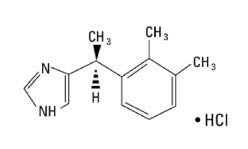
DEXMEDETOMIDINE IN 200MCG/2ML 25X2ML VIALS
Generic: Dexmedetomidine
DEXMEDETOMIDINE IN 200MCG/2ML 25X2ML VIALS
Sign up to see pricing
Licensed pharmacies, clinics, doctor's offices, and veterinary practices get instant account approval
Sign Up — Instant ApprovalDrug Information
Identification
Dexmedetomidine
Dexmedetomidine
Eugia US LLC
HUMAN PRESCRIPTION DRUG
Administration
INJECTION, SOLUTION
INTRAVENOUS
ANDA205867
Active Ingredients
| Ingredient | Strength |
|---|---|
| DEXMEDETOMIDINE HYDROCHLORIDE | 100 ug/mL |
Pharmacological Class
Data sourced from openFDA / DailyMed. For full prescribing information, consult the drug label.
Wholesale compliance resources
Drug Resources
Clinical Drug Information
Indications & Usage
1 INDICATIONS AND USAGE Dexmedetomidine injection is a alpha 2 -adrenergic receptor agonist indicated for: Sedation of initially intubated and mechanically ventilated adult patients during treatment in an intensive care setting. Administer dexmedetomidine injection by continuous infusion not to exceed 24 hours. ( 1.1 ) Sedation of non-intubated adult patients prior to and/or during surgical and other procedures. ( 1.2 ) Sedation of non-intubated pediatric patients aged 1 month to less than 18 years prior to and during non-invasive procedures. ( 1.2 ) 1.1 Intensive Care Unit Sedation Dexmedetomidine injection is indicated for sedation of initially intubated and mechanically ventilated adult patients during treatment in an intensive care setting. Dexmedetomidine injection should be administered by continuous infusion not to exceed 24 hours. Dexmedetomidine injection has been continuously infused in mechanically ventilated adult patients prior to extubation, during extubation, and post-extubation. It is not necessary to discontinue dexmedetomidine injection prior to extubation. 1.2 Procedural Sedation Dexmedetomidine injection is indicated for sedation of non-intubated adult patients prior to and/or during surgical and other procedures. Dexmedetomidine injection is indicated for sedation of non-intubated pediatric patients aged 1 month to less than 18 years prior to and during non-invasive procedures.
Dosage & Administration
2 DOSAGE AND ADMINISTRATION Individualize and titrate dexmedetomidine injection dosing to desired clinical effect. ( 2.1 ) Administer dexmedetomidine injection using a controlled infusion device. ( 2.1 ) Dilute the 200 mcg/2 mL (100 mcg/mL) vial contents in 0.9% sodium chloride solution to achieve required concentration (4 mcg/mL) prior to administration. ( 2.4 ) The 200 mcg/50 mL and 400 mcg/100 mL single-dose flexible containers do not require further dilution prior to administration. ( 2.4 ) For Adult Intensive Care Unit Sedation : Initiate at one mcg/kg over 10 minutes , followed by a maintenance infusion of 0.2 mcg/kg/ hour to 0.7 mcg/kg/ hour . ( 2.2 ) For Adult Procedural Sedation : Initiate at one mcg/kg over 10 minutes , followed by a maintenance infusion initiated at 0.6 mcg/kg/ hour and titrated to achieve desired clinical effect with doses ranging from 0.2 mcg/kg/ hour to 1 mcg/kg/ hour . ( 2.2 ) For Sedation of Pediatric Patients During Non-invasive Procedures : Patients 1 month to less than 2 years old initiate at 1.5 mcg/kg over 10 minutes followed by a maintenance infusion of 1.5 mcg/kg/ hour and titrated to achieve desired clinical effect with dosage ranging from 0.5 mcg/kg/ hour to 1.5 mcg/kg/ hour ; patients 2 to less than 18 years old initiate at 2 mcg/kg over 10 minutes followed by a maintenance infusion of 1.5 mcg/kg/ hour and titrated to achieve desired clinical effect with dosage ranging from 0.5 mcg/kg/ hour to 1.5 mcg/kg/ hour . ( 2.2 ) Alternative Doses : Recommended for patients over 65 years of age and awake fiberoptic intubation patients. ( 2.2 ) 2.1 Administration Instructions Dexmedetomidine injection dosing should be individualized and titrated to desired clinical response. Dexmedetomidine injection is not indicated for infusions lasting longer than 24 hours. Dexmedetomidine injection should be administered using a controlled infusion device. 2.2 Recommended Dosage Table 1: Recommended Dosage in Adult Patients INDICATION DOSAGE AND ADMINISTRATION Initiation of Intensive Care Unit Sedation For adult patients: a loading infusion of one mcg/kg over 10 minutes . For adult patients being converted from alternate sedative therapy: a loading dose may not be required. For patients over 65 years of age : Consider a dose reduction [see Use in Specific Populations (8.5) ] . For adult patients with impaired hepatic function: Consider a dose reduction [see Use in Specific Populations (8.6) , Clinical Pharmacology (12.3) ] . Maintenance of Intensive Care Unit Sedation For adult patients: a maintenance infusion of 0.2 mcg/kg/ hour to 0.7 mcg/kg/ hour . The rate of the maintenance infusion should be adjusted to achieve the desired level of sedation. For patients over 65 years of age: Consider a dose reduction [see Use in Specific Populations (8.5) ]. For adult patients with impaired hepatic function: Consider a dose reduction [see Use in Specific Populations (8.6), Clinical Pharmacology (12.3) ] . Initiation of Procedural Sedation For adult patients: a loading infusion of one mcg/kg over 10 minutes . For less invasive procedures such as ophthalmic surgery, a loading infusion of 0.5 mcg/kg given over 10 minutes may be suitable. For awake fiberoptic intubation in adult patients: a loading infusion of one mcg/kg over 10 minutes . For patients over 65 years of age: a loading infusion of 0.5 mcg/kg over 10 minutes [see Use in Specific Populations (8.5) ]. For adult patients with impaired hepatic function: Consider a dose reduction [see Use in Specific Populations (8.6) , Clinical Pharmacology (12.3) ] . Maintenance of Procedural Sedation For adult patients: the maintenance infusion is generally initiated at 0.6 mcg/kg/ hour and titrated to achieve desired clinical effect with doses ranging from 0.2 mcg/kg/ hour to 1 mcg/kg/ hour . Adjust the rate of the maintenance infusion to achieve the targeted level of sedation. For awake fiberoptic intubation in adult patients: a maintenance infusion of 0.7 mcg/kg/ hour is recommended until the endotracheal tube is secured. For patients over 65 years of age: Consider a dose reduction [see Use in Specific Populations (8.5) ] . For adult patients with impaired hepatic function: Consider a dose reduction [see Use in Specific Populations (8.6) , Clinical Pharmacology (12.3) ] . Table 2: Recommended Dosage in Pediatric Patients INDICATION DOSAGE AND ADMINISTRATION Initiation of Sedation During Non-invasive Procedures For pediatric patients: 1 month to less than 2 years: a loading infusion of 1.5 mcg/kg over 10 minutes . 2 to less than 18 years: a loading infusion of 2 mcg/kg over 10 minutes . Consider a reduction in dosage if clinically indicated. Maintenance of Sedation During Non-invasive Procedures For pediatric patients: 1 month to less than 18 years: the maintenance infusion is generally initiated at 1.5 mcg/kg/ hour and titrated to achieve desired clinical effect with dosage ranging from 0.5 mcg/kg/ hour to 1.5 mcg/kg/ hour . As clinically warranted, titrate the maintenance dose to individual patient clinical response. 2.3 Dosage Adjustment Due to possible pharmacodynamic interactions, a reduction in dosage of dexmedetomidine injection or other concomitant anesthetics, sedatives, hypnotics or opioids may be required when co-administered [ see Drug Interactions (7.1) ] . Dosage reductions may need to be considered for adult patients with hepatic impairment, and geriatric patients [ see Warnings and Precautions (5.9) , Use in Specific Populations (8.6 ), Clinical Pharmacology (12.3) ] . 2.4 Preparation of Solution Strict aseptic technique must always be maintained during handling of dexmedetomidine injection. Parenteral drug products should be inspected visually for particulate matter and discoloration prior to administration, whenever solution and container permit. Do not use if product is discolored or if precipitate matter is present. Dexmedetomidine Injection Presentations Requiring Dilution: Dexmedetomidine Injection, 200 mcg/2 mL (100 mcg/mL) Dexmedetomidine injection must be diluted with 0.9% sodium chloride injection to achieve required concentration (4 mcg/mL) prior to administration. Preparation of solutions is the same, whether for the loading dose or maintenance infusion. To prepare the infusion, withdraw 2 mL of dexmedetomidine injection, and add to 48 mL of 0.9% sodium chloride injection to a total of 50 mL. Shake gently to mix well. Dexmedetomidine Hydrochloride Presentations that are Ready to Use: Dexmedetomidine Hydrochloride in 0.9% Sodium Chloride Injection is supplied in flexible containers: • 200 mcg/50 mL (4 mcg/mL) in flexible containers • 400 mcg/100 mL (4 mcg/mL) in flexible containers These presentations contain a premixed, ready to use dexmedetomidine hydrochloride solution in 0.9% sodium chloride in water. No further dilution of these preparations is necessary. Instructions for Use for Flexible Containers : 1. Tear outer wrap at the notch and remove solution container. 2. Check the container for minute leaks by squeezing it firmly. If leaks are found, or if the seal is not intact, discard the solution, as the sterility may be compromised. 3. Do not use if the solution is cloudy or a precipitate is present. 4. Use aseptic technique. 5. WARNING: Do not use flexible containers in series connections. Such use could result in air embolism due to residual air being drawn from the primary container before administration of the fluid from the secondary container is complete. Preparation for Administration : 1. Close flow control clamp of administration set. 2. Remove cover from tube at bottom of container. 3. Insert piercing pin of administration set into port with a twisting motion until the pin is firmly seated. NOTE: See full directions on administration set carton. 4. Suspend container from hanger. 5. Squeeze and release drip chamber to establish proper fluid level in chamber during infusion. 6. Open flow control clamp to expel air from set. Close clamp. 7. Regulate rate of administration with flow control clamp. 2.5 Administration with Other Fluids Dexmedetomidine infusion should not be co-administered through the same intravenous catheter with blood or plasma because physical compatibility has not been established. Dexmedetomidine injection has been shown to be incompatible when administered with the following drugs: amphotericin B, diazepam. Dexmedetomidine injection has been shown to be compatible when administered with the following intravenous fluids: 0.9% sodium chloride in water 5% dextrose in water 20% mannitol Lactated Ringer’s solution 100 mg/mL magnesium sulfate solution 0.3% potassium chloride solution 2.6 Compatibility with Natural Rubber Compatibility studies have demonstrated the potential for absorption of dexmedetomidine injection to some types of natural rubber. Although dexmedetomidine injection is dosed to effect, it is advisable to use administration components made with synthetic or coated natural rubber gaskets.
Adverse Reactions
6 ADVERSE REACTIONS The following clinically significant adverse reactions are described elsewhere in the labeling: • Hypotension, bradycardia and sinus arrest [see Warnings and Precautions (5.2) ] • Transient hypertension [see Warnings and Precautions (5.3) ] The most common adverse reactions (incidence >2%) in adults are hypotension, bradycardia, and dry mouth. ( 6.1 ) The most common adverse reactions (incidence >5%) in pediatric patients aged 1 month to less than 17 years are bradypnea, bradycardia, hypertension, and hypotension. ( 6.1 ) Adverse reactions in adults, associated with infusions >24 hours in duration include ARDS, respiratory failure, and agitation. ( 6.1 ) To report SUSPECTED ADVERSE REACTIONS, contact Eugia US LLC at 1-866-850-2876 or FDA at 1-800-FDA-1088 or www.fda.gov/medwatch . 6.1 Clinical Trials Experience Because clinical trials are conducted under widely varying conditions, adverse reactions rates observed in the clinical trials of a drug cannot be directly compared to rates in the clinical trials of another drug and may not reflect the rates observed in practice. Most common treatment-emergent adverse reactions, occurring in greater than 2% of adult patients in both Intensive Care Unit and procedural sedation studies include hypotension, bradycardia and dry mouth. Intensive Care Unit Sedation Adverse reaction information is derived from the continuous infusion trials of dexmedetomidine for sedation in the Intensive Care Unit setting in which 1,007 adult patients received dexmedetomidine. The mean total dose was 7.4 mcg/kg (range: 0.8 to 84.1), mean dose per hour was 0.5 mcg/kg/hr (range: 0.1 to 6.0) and the mean duration of infusion of 15.9 hours (range: 0.2 to 157.2). The population was between 17 to 88 years of age, 43% ≥65 years of age, 77% male and 93% Caucasian. Treatment-emergent adverse reactions occurring at an incidence of >2% are provided in Table 3. The most frequent adverse reactions were hypotension, bradycardia and dry mouth [see Warnings and Precautions (5.2) ] . Table 3: Adverse Reactions with an Incidence >2%-Adult Intensive Care Unit Sedation Population 1% of All Dexmedetomidine-Treated Adult Patients in the Randomized Placebo-Controlled Continuous Infusion 180 mmHg or Diastolic blood pressure of >100 mmHg or in relative terms as ≥30% higher than pre-study drug infusion value. 4 Tachycardia was defined in absolute terms as >120 bpm or in relative terms as ≥30% greater than pre-study drug infusion value. Adverse Event Dexmedetomidine (N = 244) Midazolam (N = 122) Hypotension 1 56% 56% Hypotension Requiring Intervention 28% 27% Bradycardia 2 42% 19% Bradycardia Requiring Intervention 5% 1% Systolic Hypertension 3 28% 42% Tachycardia 4 25% 44% Tachycardia Requiring Intervention 10% 10% Diastolic Hypertension 3 12% 15% Hypertension 3 11% 15% Hypertension Requiring Intervention † 19% 30% Hypokalemia 9% 13% Pyrexia 7% 2% Agitation 7% 6% Hyperglycemia 7% 2% Constipation 6% 6% Hypoglycemia 5% 6% Respiratory Failure 5% 3% Renal Failure Acute 2% 1% Acute Respiratory Distress Syndrome 2% 1% Generalized Edema 2% 6% Hypomagnesemia 1% 7% The following adverse events occurred between 2 and 5% for dexmedetomidine and Midazolam, respectively: renal failure acute (2.5%, 0.8%), acute respiratory distress syndrome (2.5%, 0.8%), and respiratory failure (4.5%, 3.3%). Table 6: Number (%) of Adult Subjects Who Had a Dose-Related Increase in Treatment Emergent Adverse Events by Maintenance Adjusted Dose Rate Range in the Dexmedetomidine Group * Average maintenance dose over the entire study drug administration. Dexmedetomidine ( mcg/kg/hr) Adverse Event ≤0.7* (N = 95) >0.7 to ≤1.1* (N = 78) >1.1* (N = 71) Constipation 6% 5% 14% Agitation 5% 8% 14% Anxiety 5% 5% 9% Edema Peripheral 3% 5% 7% Atrial Fibrillation 2% 4% 9% Respiratory Failure 2% 6% 10% Acute Respiratory Distress Syndrome 1% 3% 9% Adult Procedural Sedation Adverse reaction information is derived from the two trials for adult procedural sedation [see Clinical Studies (14.2) ] in which 318 adult patients received dexmedetomidine. The mean total dose was 1.6 mcg/kg (range: 0.5 to 6.7), mean dose per hour was 1.3 mcg/kg/hr (range: 0.3 to 6.1) and the mean duration of infusion of 1.5 hours (range: 0.1 to 6.2). The population was between 18 to 93 years of age, ASA I-IV, 30% ≥65 years of age, 52% male and 61% Caucasian. Treatment-emergent adverse reactions occurring in adults at an incidence of >2% are provided in Table 7. The most frequent adverse reactions were hypotension, bradycardia, and dry mouth [see Warnings and Precautions (5.2) ] . Pre-specified criteria for the vital signs to be reported as adverse reactions are footnoted below the table. The decrease in respiratory rate and hypoxia was similar between dexmedetomidine and comparator groups in both studies. Table 7: Adverse Reactions with an Incidence >2%— Adult Procedural Sedation Population 1 Hypotension was defined in absolute and relative terms as Systolic blood pressure of 25% decrease from baseline. 3 Bradycardia was defined in absolute and relative terms as 180 mmHg or ≥30% higher than pre-study drug infusion value or Diastolic blood pressure of >100 mmHg. 5 Tachycardia was defined in absolute and relative terms as >120 beats per minute or ≥30% greater than pre-study drug infusion value. 6 Hypoxia was defined in absolute and relative terms as SpO 2 5% are provided in Table 8. The most frequent treatment-emergent adverse events were bradypnea, bradycardia, hypertension, and hypotension [see Warnings and Precautions (5.2 , 5.3) ] . In the combined age group and in each age group, increased incidence in bradycardia and hypertension was observed with increasing dexmedetomidine dose. Mild transient withdrawal symptoms of emergence delirium or agitation occurred in 3 of 122 patients after discontinuation of dexmedetomidine infusion [see Warnings and Precautions (5.5) ] . All reported treatment-emergent adverse reactions were mild to moderate in severity and the majority resolved without medical intervention. No subject in the study required airway intervention, including a jaw thrust or insertion of a nasal or oral airway. A similar profile was observed in the pediatric patients 1 month to less than 2 years old and in pediatric patients 2 to less than 17 years old. Pre-specified criteria for the vital signs to be reported as adverse events are footnoted below the table. Table 8: Treatment -Emergent Adverse Events with Incidence >5% -Pediatric Patients During Non-invasive Procedure N = Number of pediatric patients evaluable for adverse events. 1 Bradypnea was defined as respiratory rate <1st centile of the age adjusted normal range. 2 Bradycardia was defined as a decrease in HR of 30% from baseline or absolute HR ≤1 st centile of the age adjusted normal range. 3 For pediatric patients 1 month to less than 1 year old, hypertension was defined as supine systolic blood pressure ≥104 mm/Hg and/or diastolic blood pressure ≥56 mmHg measurements. For pediatric patients 1 to less than 17 years old: hypertension was defined as supine systolic blood pressure and/or diastolic blood pressure measurements ≥95 th percentile for gender, age, and height. 4 Hypotension was defined as a decrease in systolic blood pressure ≥30% from baseline. 5 Hypoxia was defined as oxygen saturation <90% for any duration. Dexmedetomidine Low Dose (N = 42) Dexmedetomidine Middle Dose (N = 42) Dexmedetomidine High Dose (N = 38) Total (N = 122) Number (%) of Pediatric Patients n (%) n (%) n (%) n (%) Adverse Event Bradypnea 1 33 (79) 27 (64) 22 (58) 82 (67) Bradycardia 2 24 (57) 24 (57) 27 (71) 75 (62) Hypertension 3 11 (26) 17 (41) 18 (47) 46 (38) Hypotension 4 13 (31) 11 (26) 6 (16) 30 (25) Hypoxia 5 6 (14) 3 (7) 1 (3) 10 (8) Diastolic Hypertension 3 3 (7) 3 (7) 4 (11) 10 (8) Systolic Hypertension 3 1 (2) 5 (12) 3 (8) 9 (7) Tachycardia 3 (7) 1 (2) 1 (3) 5 (4) 6.2 Postmarketing Experience The following adverse reactions have been identified during post-approval use of dexmedetomidine. Because these reactions are reported voluntarily from a population of uncertain size, it is not always possible to reliably estimate their frequency or establish a causal relationship to drug exposure. Hypotension and bradycardia were the most common adverse reactions associated with the use of dexmedetomidine during post-approval use of the drug. Table 9: Adverse Reactions Experienced During Post-Approval Use of Dexmedetomidine System Organ Class Preferred Term Blood and Lymphatic System Disorders Anemia Cardiac Disorders Arrhythmia, atrial fibrillation, atrioventricular block, bradycardia, cardiac arrest, cardiac disorder, extrasystoles, myocardial infarction, supraventricular tachycardia, tachycardia, ventricular arrhythmia, ventricular tachycardia Eye Disorders Photopsia, visual impairment Gastrointestinal Disorders Abdominal pain, diarrhea, nausea, vomiting General Disorders and Administration Site Conditions Chills, hyperpyrexia, pain, pyrexia, thirst Hepatobiliary Disorders Hepatic function abnormal, hyperbilirubinemia Investigations Alanine aminotransferase increased, aspartate aminotransferase increased, blood alkaline phosphatase increased, blood urea increased, electrocardiogram T wave inversion, gammaglutamyltransferase increased, electrocardiogram QT prolonged Metabolism and Nutrition Disorders Acidosis, hyperkalemia, hypoglycemia, hypovolemia, hypernatremia, diabetes insipidus (Cases of diabetes insipidus, with associated polyuria, dilute urine, and hypernatremia, have been reported) Nervous System Disorders Convulsion, dizziness, headache, neuralgia, neuritis, speech disorder Psychiatric Disorders Agitation, confusional state, delirium, hallucination, illusion Renal and Urinary Disorders Oliguria, polyuria Respiratory, Thoracic and Mediastinal Disorders Apnea, bronchospasm, dyspnea, hypercapnia, hypoventilation, hypoxia, pulmonary congestion, respiratory acidosis Skin and Subcutaneous Tissue Disorders Hyperhidrosis, pruritus, rash, urticaria Surgical and Medical Procedures Light anesthesia Vascular Disorders Blood pressure fluctuation, hemorrhage, hypertension, hypotension
Information for Patients
17 PATIENT COUNSELING INFORMATION Dexmedetomidine is indicated for short-term intravenous sedation. Dosage must be individualized and titrated to the desired clinical effect. Blood pressure, heart rate and oxygen levels will be monitored both continuously during the infusion of dexmedetomidine and as clinically appropriate after discontinuation. When dexmedetomidine is infused for more than 6 hours, patients should be informed to report nervousness, agitation, and headaches that may occur for up to 48 hours. Additionally, patients should be informed to report symptoms that may occur within 48 hours after the administration of dexmedetomidine such as: weakness, confusion, excessive sweating, weight loss, abdominal pain, salt cravings, diarrhea, constipation, dizziness or light-headedness. Advise breastfeeding mothers who were exposed to dexmedetomidine to monitor breastfed neonates for irritability [see Use in Specific Populations (8.2) ] . Distributed by: Eugia US LLC 279 Princeton-Hightstown Rd. E. Windsor, NJ 08520 Manufactured by: Eugia Pharma Specialities Limited Hyderabad – 500032 India
Clinical data sourced from openFDA drug labeling. For complete prescribing information, consult the full drug label.