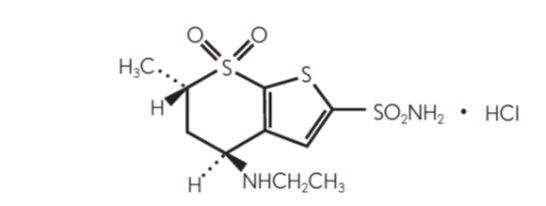
DORZOLAMIDE HCL OPHTHALMIC SOLUTION 0.02 10 ML
Generic: Dorzolamide hydrochloride
DORZOLAMIDE HCL OPHTHALMIC SOLUTION 0.02 10 ML
Sign up to see pricing
Licensed pharmacies, clinics, doctor's offices, and veterinary practices get instant account approval
Sign Up — Instant ApprovalDrug Information
Identification
Dorzolamide hydrochloride
Dorzolamide hydrochloride
Leading Pharma, LLC
HUMAN PRESCRIPTION DRUG
Administration
SOLUTION
OPHTHALMIC
ANDA205294
Active Ingredients
| Ingredient | Strength |
|---|---|
| DORZOLAMIDE HYDROCHLORIDE | 20 mg/mL |
Pharmacological Class
Data sourced from openFDA / DailyMed. For full prescribing information, consult the drug label.
Wholesale compliance resources
Clinical Drug Information
Indications & Usage
1 INDICATIONS AND USAGE Dorzolamide Hydrochloride Ophthalmic Solution is a carbonic anhydrase inhibitor indicated in the treatment of elevated intraocular pressure in patients with ocular hypertension or open-angle glaucoma. (1) Dorzolamide Hydrochloride Ophthalmic Solution is indicated in the treatment of elevated intraocular pressure in patients with ocular hypertension or open-angle glaucoma.
Dosage & Administration
2 DOSAGE AND ADMINISTRATION The dose is one drop of Dorzolamide Hydrochloride Ophthalmic Solution in the affected eye(s) three times daily. Dorzolamide Hydrochloride Ophthalmic Solution may be used concomitantly with other topical ophthalmic drug products to lower intraocular pressure. (2) The dose is one drop of Dorzolamide Hydrochloride Ophthalmic Solution in the affected eye(s) three times daily. Dorzolamide Hydrochloride Ophthalmic Solution may be used concomitantly with other topical ophthalmic drug products to lower intraocular pressure. If more than one topical ophthalmic drug is being used, the drugs should be administered at least five minutes apart.
Adverse Reactions
6 ADVERSE REACTIONS The most frequently reported adverse reactions associated with Dorzolamide Hydrochloride Ophthalmic Solution were ocular burning, stinging, or discomfort immediately following ocular administration (approximately one-third of patients). Approximately one-quarter of patients noted a bitter taste following administration. Superficial punctate keratitis occurred in 10 to 15% of patients and signs and symptoms of ocular allergic reaction in approximately 10%. (6) To report SUSPECTED ADVERSE REACTIONS, contact LEADING PHARMA at 1-844-740-7500 or FDA at 1-800-FDA-1088 or www.fda.gov/medwatch 6.1 Clinical Studies Experience Because clinical trials are conducted under widely varying conditions, adverse reaction rates observed in the clinical trials of a drug cannot be directly compared to rates in the clinical trials of another drug and may not reflect the rates observed in practice. Controlled clinical trials: The most frequent adverse reactions associated with Dorzolamide Hydrochloride Ophthalmic Solution were ocular burning, stinging, or discomfort immediately following ocular administration (approximately one-third of patients). Approximately one-quarter of patients noted a bitter taste following administration. Superficial punctate keratitis occurred in 10 to 15% of patients and signs and symptoms of ocular allergic reaction in approximately 10%. Reactions occurring in approximately 1 to 5% of patients were conjunctivitis and lid reactions [see Warnings and Precautions (5.4) ], blurred vision, eye redness, tearing, dryness, and photophobia. Other ocular reactions and systemic reactions were reported infrequently, including headache, nausea, asthenia/fatigue; and, rarely, skin rashes, urolithiasis, and iridocyclitis. In a 3-month, double-masked, active-treatment-controlled, multicenter study in pediatric patients, the adverse reactions profile of Dorzolamide Hydrochloride Ophthalmic Solution was comparable to that seen in adult patients. 6.2 Post-Marketing Experience The following adverse reactions have been identified during post-approval use of Dorzolamide Hydrochloride Ophthalmic Solution. Because these reactions are reported voluntarily from a population of uncertain size, it is not always possible to reliably estimate their frequency or establish a causal relationship to drug exposure: signs and symptoms of systemic allergic reactions including angioedema, bronchospasm, pruritus, and urticaria; Stevens-Johnson syndrome and toxic epidermal necrolysis; dizziness, paresthesia; ocular pain, transient myopia, choroidal detachment following filtration surgery, eyelid crusting; dyspnea; contact dermatitis, epistaxis, dry mouth and throat irritation.
Information for Patients
17 PATIENT COUNSELING INFORMATION Advise the patient to read the FDA-approved patient labeling (Instructions for Use). Sulfonamide Reactions Dorzolamide Hydrochloride Ophthalmic Solution is a sulfonamide and although administered topically is absorbed systemically. Therefore the same types of adverse reactions that are attributable to sulfonamides may occur with topical administration. Advise patients that if serious or unusual reactions including severe skin reactions or signs of hypersensitivity occur, they should discontinue the use of the product [see Warnings and Precautions (5.1) ]. Intercurrent Ocular Conditions Advise patients that if they have ocular surgery or develop an intercurrent ocular condition (e.g., trauma or infection), they should immediately seek their physician's advice concerning the continued use of the present multidose container. Handling Ophthalmic Solutions Instruct patients to avoid allowing the tip of the dispensing container to contact the eye or surrounding structures. Instruct patients that ocular solutions, if handled improperly or if the tip of the dispensing container contacts the eye or surrounding structures, can become. contaminated by common bacteria known to cause ocular infections. Serious damage to the eye and subsequent loss of vision may result from using contaminated solutions. Concomitant Topical Ocular Therapy I f more than one topical ophthalmic drug is being used, the drugs should be administered at least five minutes apart. Contact Lens Use Advise patients that Dorzolamide Hydrochloride Ophthalmic Solution contains benzalkonium chloride which may be absorbed by soft contactlenses. Contact lenses should be removed prior to administration of the solution. Lenses may be reinserted 15 minutes following DorzolamideHydrochloride Ophthalmic Solution administration. When to Seek Physician Advice Advise patients that if they develop any ocular reactions, particularly conjunctivitis and lid reactions, they should discontinue use and seek their physician's advice. Manufactured By: FDC Limited B-8, MIDC Industrial Area, Waluj, Aurangabad 431 136, Maharashtra India. Distributed by: Leading Pharma, LLC. Fairfield, NJ07004 Revised: December 2021
Clinical data sourced from openFDA drug labeling. For complete prescribing information, consult the full drug label.