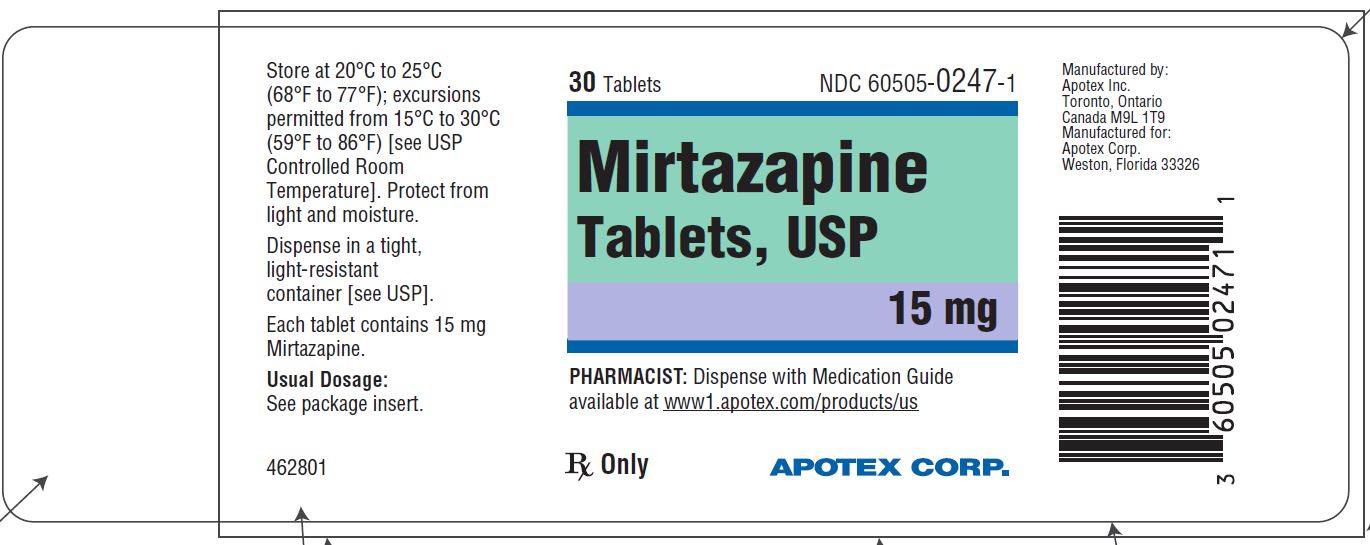
MIRTAZAPINE 15MG 30 TAB
Generic: Mirtazapine
MIRTAZAPINE 15MG 30 TAB
Sign up to see pricing
Licensed pharmacies, clinics, doctor's offices, and veterinary practices get instant account approval
Sign Up — Instant ApprovalDrug Information
Identification
Mirtazapine
Mirtazapine
Sun Pharmaceutical Industries, Inc.
HUMAN PRESCRIPTION DRUG
Administration
TABLET
ORAL
ANDA076541
Active Ingredients
| Ingredient | Strength |
|---|---|
| MIRTAZAPINE | 15 mg/1 |
Data sourced from openFDA / DailyMed. For full prescribing information, consult the drug label.
Wholesale compliance resources
Drug Resources
Clinical Drug Information
Indications & Usage
1 INDICATIONS AND USAGE Mirtazapine tablets are indicated for the treatment of major depressive disorder (MDD) in adults [see Clinical Studies (14) ]. Mirtazapine tablets are indicated for the treatment of major depressive disorder (MDD) in adults. (1)
Dosage & Administration
2 DOSAGE AND ADMINISTRATION • Starting dose: 15-mg once daily; may increase up to maximum recommended dose of 45 mg once daily. (2.1) • Administer orally once daily, preferably in the evening prior to sleep. (2.1) • Reduce dose gradually when discontinuing mirtazapine tablets. ( 2.6 , 5.14 ) 2.1 Recommended Dosage The recommended starting dose of mirtazapine tablets is 15 mg once daily, administered orally, preferably in the evening prior to sleep. If patients do not have an adequate response to the initial 15 mg dose, increase the dose up to a maximum of 45 mg per day. Dose changes should not be made in intervals of less than 1 to 2 weeks to allow sufficient time for evaluation of response to a given dose [see Clinical Pharmacology (12.3)]. 2.3 Screen for Bipolar Disorder Prior to Starting Mirtazapine Tablets Prior to initiating treatment with mirtazapine tablets or another antidepressant, screen patients for a personal or family history of bipolar disorder, mania, or hypomania [see Warnings and Precautions (5.9)]. 2.4 Switching Patients to or from a Monoamine Oxidase Inhibitor Antidepressant At least 14 days must elapse between discontinuation of a monoamine oxidase inhibitor (MAOI) antidepressant and initiation of mirtazapine tablets. In addition, at least 14 days must elapse after stopping mirtazapine tablets before starting an MAOI antidepressant [see Contraindications (4) and Warnings and Precautions (5.3)]. 2.5 Dosage Modifications Due to Drug Interactions Strong CYP3A Inducers An increase in dosage of mirtazapine tablets may be needed with concomitant strong CYP3A inducer (e.g., carbamazepine, phenytoin, rifampin) use. Conversely, a decrease in dosage of mirtazapine tablets may be needed if the CYP3A inducer is discontinued [see Drug Interactions (7)]. Strong CYP3A Inhibitors A decrease in dosage of mirtazapine tablets may be needed with concomitant use of strong CYP3A4 inhibitors (e.g., ketoconazole, clarithromycin). Conversely, an increase in dosage of mirtazapine tablets may be needed if the CYP3A4 inhibitor is discontinued [see Drug Interactions (7)]. Cimetidine A decrease in dosage of mirtazapine tablets may be needed with concomitant use of cimetidine. Conversely, an increase in dosage of mirtazapine tablets may be needed if cimetidine is discontinued [see Drug Interactions (7)]. 2.6 Discontinuation of Mirtazapine Tablets Treatment Adverse reactions may occur upon discontinuation or dose reduction of mirtazapine tablets [see Warnings and Precautions (5.14)]. Gradually reduce the dosage of mirtazapine tablets rather than stopping abruptly whenever possible.
Adverse Reactions
6 ADVERSE REACTIONS The following adverse reactions are described in more detail in other sections of the prescribing information: • Hypersensitivity [see Contraindications (4)] • Suicidal Thoughts and Behaviors [see Warnings and Precautions (5.1)] • Agranulocytosis [see Warnings and Precautions (5.2)] • Serotonin Syndrome [see Contraindications (4), Warnings and Precautions (5.3), Drug Interactions (7)] • Angle-Closure Glaucoma [see Warnings and Precautions (5.4)] • QT Prolongation and Torsades de Pointes [see Warnings and Precautions (5.5)] • Drug Reaction with Eosinophilia and Systemic Symptoms (DRESS) [see Warnings and Precautions (5.6)] • Increased Appetite and Weight Gain [see Warnings and Precautions (5.7)] • Somnolence [see Warnings and Precautions (5.8)] • Activation of Mania or Hypomania [see Warnings and Precautions (5.9)] • Seizures [see Warnings and Precautions (5.10)] • Elevated Cholesterol and Triglycerides [see Warnings and Precautions (5.11)] • Hyponatremia [see Warnings and Precautions (5.12)] • Transaminase Elevations [see Warnings and Precautions (5.13)] • Discontinuation Syndrome [see Warnings and Precautions (5.14)] • Use in Patients with Concomitant Illness [see Warnings and Precautions (5.15)] Most common adverse reactions (≥5% or greater and twice placebo) were somnolence, increased appetite, weight gain, and dizziness. (6.1) To report SUSPECTED ADVERSE REACTIONS, contact Sun Pharmaceutical Industries, Inc., at 1-800-406-7984 or FDA at 1-800-FDA-1088 or www.fda.gov/medwatch. 6.1 Clinical Trial Experience Because clinical trials are conducted under widely varying conditions, adverse reaction rates observed in the clinical trials of a drug cannot be directly compared to rates in the clinical trials of another drug and may not reflect the rates observed in practice. The data described below are from clinical trials in which mirtazapine tablets were administered to 2796 patients in phase 2 and 3 clinical studies. The trials consisted of double-blind controlled and open-label studies, inpatient and outpatient studies, fixed dose, and titration studies. Adverse Reactions Leading to Discontinuation of Treatment Approximately 16% of the 453 patients who received mirtazapine tablets in U.S. 6-week placebo-controlled clinical trials discontinued treatment due to an adverse reaction, compared to 7% of the 361 placebo-treated patients in those studies. The most common reactions leading to discontinuation (≥1% and at a rate at least twice that of placebo) are included in Table 2. Table 2: Adverse Reactions (≥1% and at least twice placebo) Leading to Discontinuation of Mirtazapine Tablets in 6-Week Clinical Trials in Patients with MDD Mirtazapine Tablets (n=453) Placebo (n=361) Somnolence 10.4% 2.2% Nausea 1.5% 0% Common Adverse Reactions The most common adverse reactions (≥5% and twice placebo) associated with the use of mirtazapine tablets are listed in Table 3. Table 3: Adverse Reactions (≥5% and twice placebo) in 6-Week U.S. Clinical Trials of Mirtazapine Tablets in Patients with MDD Mirtazapine Tablets (n=453) Placebo (n=361) Somnolence 54% 18% Increased Appetite 17% 2% Weight Gain 12% 2% Dizziness 7% 3% Table 4 enumerates adverse reactions that occurred in ≥1% of mirtazapine tablets-treated patients, and were more frequent than the placebo-treated patients, who participated in 6-week, U.S. placebo-controlled trials in which patients were dosed in a range of 5 to 60 mg/day. This table shows the percentage of patients in each group who had at least 1 episode of an adverse reaction at some time during their treatment. Table 4: Adverse Reactions (≥1% and greater than placebo) in 6-Week U.S. Clinical Studies of Mirtazapine Tablets in Patients with MDD Mirtazapine Tablets (n=453) Placebo (n=361) Body as a Whole Asthenia 8% 5% Flu Syndrome 5% 3% Back Pain 2% 1% Digestive System Dry Mouth 25% 15% Increased Appetite 17% 2% Constipation 13% 7% Metabolic and Nutritional Disorders Weight Gain 12% 2% Peripheral Edema 2% 1% Edema 1% 0% Musculoskeletal System Myalgia 2% 1% Nervous System Somnolence 54% 18% Dizziness 7% 3% Abnormal Dreams 4% 1% Thinking Abnormal 3% 1% Tremor 2% 1% Confusion 2% 0% Respiratory System Dyspnea 1% 0% Urogenital System Urinary Frequency 2% 1% ECG Changes The electrocardiograms for 338 patients who received mirtazapine tablets and 261 patients who received placebo in 6-week, placebo-controlled trials were analyzed. Mirtazapine tablets were associated with a mean increase in heart rate of 3.4 bpm, compared to 0.8 bpm for placebo. The clinical significance of these changes is unknown. Other Adverse Reactions Observed During the Premarketing Evaluation of Mirtazapine Tablets The following list does not include reactions: 1) already listed in previous tables or elsewhere in labeling, 2) for which a drug cause was remote, 3) which were so general or excessively specific so as to be uninformative, 4) which were not considered to have significant clinical implications, or 5) which occurred at a rate equal to or less than placebo. Adverse reactions are categorized by body system according to the following definitions: frequent adverse reactions are those occurring in at least 1/100 patients; infrequent adverse reactions are those occurring in 1/100 to 1/1000 patients; rare adverse reactions are those occurring in fewer than 1/1000 patients. Body as a Whole: frequent: malaise, abdominal pain, abdominal syndrome acute; infrequent: chills, fever, face edema, ulcer, photosensitivity reaction, neck rigidity, neck pain, abdomen enlarged; rare: cellulitis, chest pain substernal. Cardiovascular System: frequent: hypertension, vasodilatation; infrequent: angina pectoris, myocardial infarction, bradycardia, ventricular extrasystoles, syncope, migraine, hypotension; rare : atrial arrhythmia, bigeminy, vascular headache, pulmonary embolus, cerebral ischemia, cardiomegaly, phlebitis, left heart failure. Digestive System: frequent: vomiting, anorexia; infrequent: eructation, glossitis, cholecystitis, nausea and vomiting, gum hemorrhage, stomatitis, colitis, liver function tests abnormal; rare: tongue discoloration, ulcerative stomatitis, salivary gland enlargement, increased salivation, intestinal obstruction, pancreatitis, aphthous stomatitis, cirrhosis of liver, gastritis, gastroenteritis, oral moniliasis, tongue edema. Endocrine System: rare: goiter, hypothyroidism. Hemic and Lymphatic System: rare: lymphadenopathy, leukopenia, petechia, anemia, thrombocytopenia, lymphocytosis, pancytopenia. Metabolic and Nutritional Disorders: frequent: thirst; infrequent: dehydration, weight loss; rare: gout, SGOT increased, healing abnormal, acid phosphatase increased, SGPT increased, diabetes mellitus, hyponatremia. Musculoskeletal System: frequent: myasthenia, arthralgia; infrequent: arthritis, tenosynovitis; rare: pathologic fracture, osteoporosis fracture, bone pain, myositis, tendon rupture, arthrosis, bursitis. Nervous System: frequent: hypesthesia, apathy, depression, hypokinesia, vertigo, twitching, agitation, anxiety, amnesia, hyperkinesia, paresthesia; infrequent: ataxia, delirium, delusions, depersonalization, dyskinesia, extrapyramidal syndrome, libido increased, coordination abnormal, dysarthria, hallucinations, manic reaction, neurosis, dystonia, hostility, reflexes increased, emotional lability, euphoria, paranoid reaction; rare: aphasia, nystagmus, akathisia (psychomotor restlessness), stupor, dementia, diplopia, drug dependence, paralysis, grand mal convulsion, hypotonia, myoclonus, psychotic depression, withdrawal syndrome, serotonin syndrome. Respiratory System: frequent: cough increased, sinusitis; infrequent: epistaxis, bronchitis, asthma, pneumonia; rare: asphyxia, laryngitis, pneumothorax, hiccup. Skin and Appendages: frequent: pruritus, rash; infrequent: acne, exfoliative dermatitis, dry skin, herpes simplex, alopecia; rare: urticaria, herpes zoster, skin hypertrophy, seborrhea, skin ulcer. Special Senses: infrequent: eye pain, abnormality of accommodation, conjunctivitis, deafness, keratoconjunctivitis, lacrimation disorder, angle-closure glaucoma, hyperacusis, ear pain; rare: blepharitis, partial transitory deafness, otitis media, taste loss, parosmia. Urogenital System: frequent: urinary tract infection; infrequent: kidney calculus, cystitis, dysuria, urinary incontinence, urinary retention, vaginitis, hematuria, breast pain, amenorrhea, dysmenorrhea, leukorrhea, impotence; rare: polyuria, urethritis, metrorrhagia, menorrhagia, abnormal ejaculation, breast engorgement, breast enlargement, urinary urgency. 6.2 Postmarketing Experience The following adverse reactions have been identified during post-approval use of mirtazapine tablets. Because these reactions are reported voluntarily from a population of uncertain size, it is not always possible to reliably estimate their frequency or establish a causal relationship to drug exposure. Cardiac disorders: ventricular arrhythmia (Torsades de Pointes) Endocrine disorders : hyperprolactinemia (and related symptoms, e.g., galactorrhea and gynecomastia) Musculoskeletal and connective tissue disorders: increased creatine kinase blood levels and rhabdomyolysis Psychiatric disorders: somnambulism (ambulation and other complex behaviors out of bed) Reproductive system and breast disorders: priapism Skin and subcutaneous tissue disorders: severe skin reactions, including DRESS, Stevens-Johnson syndrome, bullous dermatitis, erythema multiforme and toxic epidermal necrolysis
Information for Patients
17 PATIENT COUNSELING INFORMATION Advise the patient to read the FDA-approved patient labeling (Medication Guide). Suicidal Thoughts and Behaviors Advise patients and caregivers to look for the emergence of suicidality, especially early during treatment and when the dosage is adjusted up or down, and instruct them to report such symptoms to the healthcare provider [see Boxed Warning and Warnings and Precautions (5.1)]. Agranulocytosis Advise patients to contact their physician if they experience fever, chills, sore throat, mucous membrane ulceration, flu-like complaints, or other symptoms that might suggest infection [see Warnings and Precautions (5.2)]. Serotonin Syndrome Caution patients about the risk of serotonin syndrome, particularly with the concomitant use of mirtazapine tablets with other serotonergic drugs including triptans, tricyclic antidepressants, fentanyl, lithium, tramadol, tryptophan, buspirone, amphetamines, St. John’s Wort, and with drugs that impair metabolism of serotonin (in particular, MAOIs, both those intended to treat psychiatric disorders and also others, such as linezolid). Advise patients to contact their healthcare provider or report to the emergency room if they experience signs or symptoms of serotonin syndrome [see Dosage and Administration (2.4), Contraindications (4), Warnings and Precautions (5.3), Drug Interactions (7)]. QT Prolongation and Torsades de Pointes Inform patients to consult their physician immediately if they feel faint, lose consciousness, or have heart palpitations [see Warnings and Precautions (5.5), Drug Interactions (7), Overdosage (10)]. Advise patients to inform physicians that they are taking mirtazapine tablets before any new drug is taken. Drug Reaction with Eosinophilia and Systemic Symptoms (DRESS) Advise patients to report to their healthcare provider at the earliest onset of fever, rash, swollen lymph nodes, or other signs and symptoms suggestive of Drug Reaction with Eosinophilia and Systemic Symptoms (DRESS) [ see Contraindications (4) , Warnings and Precautions (5.6)]. Somnolence Advise patients that mirtazapine tablets may impair judgment, thinking, and particularly, motor skills, because of its prominent sedative effect. Caution patients about performing activities requiring mental alertness, such as operating hazardous machinery or operating a motor vehicle, until they are reasonably certain that mirtazapine tablets therapy does not adversely affect their ability to engage in such activities. [see Warnings and Precautions (5.8)]. Alcohol Advise patients to avoid alcohol while taking mirtazapine tablets [see Warnings and Precautions (5.8), Drug Interactions (7)]. Activation of Mania/Hypomania Advise patients and their caregivers to observe for signs of activation of mania/hypomania and instruct them to report such symptoms to the healthcare provider [see Warnings and Precautions (5.9)]. Discontinuation Syndrome Advise patients not to abruptly discontinue mirtazapine tablets and to discuss any tapering regimen with their healthcare provider. Adverse reactions can occur when mirtazapine tablets are discontinued [see Dosage and Administration (2.6), Warnings and Precautions (5.14)]. Allergic Reactions Advise patients to notify their healthcare provider if they develop an allergic reaction such as rash, hives, swelling, or difficulty breathing [see Contraindications (4), Adverse Reactions (6.2)]. Pregnancy • Advise patients to notify their physician if they become pregnant or intend to become pregnant during mirtazapine tablets therapy. • Advise patients that there is a pregnancy exposure registry that monitors pregnancy outcomes in women exposed to mirtazapine tablets during pregnancy [see Use in Specific Populations (8.1)]. Lactation Advise patients to notify their physician if they are breastfeeding an infant [see Use in Specific Populations (8.2)]. Angle-Closure Glaucoma Patients should be advised that taking mirtazapine tablets can cause mild pupillary dilation, which in susceptible individuals, can lead to an episode of angle-closure glaucoma. Pre-existing glaucoma is almost always open-angle glaucoma because angle-closure glaucoma, when diagnosed, can be treated definitively with iridectomy. Open-angle glaucoma is not a risk factor for angle-closure glaucoma. Patients may wish to be examined to determine whether they are susceptible to angle closure, and have a prophylactic procedure (e.g., iridectomy), if they are susceptible [see Warnings and Precautions (5.4)]. Manufactured by: ALKALOIDA Chemical Company Zrt. 4440 Tiszavasvári Kabay János u. 29. Hungary Distributed by: Sun Pharmaceutical Industries, Inc. Cranbury, NJ 08512 Revised: 11/2021
Clinical data sourced from openFDA drug labeling. For complete prescribing information, consult the full drug label.