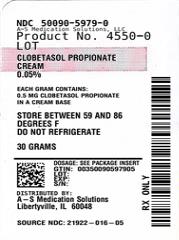
CLOBETASOL PROPIONATE TOPICAL SOLUTION USP, 0.05%, 25ML
Generic: CLOBETASOL PROPIONATE
CLOBETASOL PROPIONATE TOPICAL SOLUTION USP, 0.05%, 25ML
Sign up to see pricing
Licensed pharmacies, clinics, doctor's offices, and veterinary practices get instant account approval
Sign Up — Instant ApprovalDrug Information
Identification
CLOBETASOL PROPIONATE
CLOBETASOL PROPIONATE
Glenmark Pharmaceuticals Inc., USA
HUMAN PRESCRIPTION DRUG
Administration
SOLUTION
TOPICAL
ANDA210190
Active Ingredients
| Ingredient | Strength |
|---|---|
| CLOBETASOL PROPIONATE | .5 mg/mL |
Pharmacological Class
Data sourced from openFDA / DailyMed. For full prescribing information, consult the drug label.
Wholesale compliance resources
Drug Resources
Clinical Drug Information
Indications & Usage
INDICATIONS AND USAGE Clobetasol propionate topical solution is indicated for short-term topical treatment of inflammatory and pruritic manifestations of moderate to severe corticosteroid-responsive dermatoses of the scalp. Treatment beyond 2 consecutive weeks is not recommended, and the total dosage should not exceed 50 mL/week because of the potential for the drug to suppress the HPA axis. This product is not recommended for use in pediatric patients under 12 years of age.
Dosage & Administration
DOSAGE AND ADMINISTRATION Clobetasol propionate topical solution should be applied to the affected scalp areas twice daily, once in the morning and once at night. Clobetasol propionate topical solution is potent; therefore, treatment must be limited to 2 consecutive weeks and amounts greater than 50 mL/week should not be used. Clobetasol propionate topical solution is not to be used with occlusive dressings. Geriatric Use: In studies where geriatric patients (65 years of age or older, see PRECAUTIONS ) have been treated with clobetasol propionate topical solution, safety did not differ from that in younger patients; therefore, no dosage adjustment is recommended.
Adverse Reactions
ADVERSE REACTIONS Clobetasol propionate topical solution is generally well tolerated when used for 2-week treatment periods. The most frequent adverse events reported for clobetasol propionate topical solution have been local and have included burning and/or stinging sensation, which occurred in 29 of 294 patients; scalp pustules, which occurred in 3 of 294 patients; and tingling and folliculitis, each of which occurred in 2 of 294 patients. Less frequent adverse events were itching and tightness of the scalp, dermatitis, tenderness, headache, hair loss, and eye irritation, each of which occurred in 1 of 294 patients. The following local adverse reactions are reported infrequently when topical corticosteroids are used as recommended. These reactions are listed in an approximately decreasing order of occurrence: burning, itching, irritation, dryness, folliculitis, hypertrichosis, acneiform eruptions, hypopigmentation, perioral dermatitis, allergic contact dermatitis, maceration of the skin, secondary infection, skin atrophy, striae, and miliaria. Systemic absorption of topical corticosteroids has produced reversible HPA axis suppression, manifestations of Cushing’s syndrome, hyperglycemia, and glucosuria in some patients. In rare instances, treatment (or withdrawal of treatment) of psoriasis with corticosteroids is thought to have exacerbated the disease or provoked the pustular form of the disease, so careful patient supervision is recommended. To report SUSPECTED ADVERSE REACTIONS, contact Glenmark Pharmaceuticals Inc., USA at 1(888)721-7115 or FDA at 1-800-FDA-1088 or www.fda.gov/medwatch.
Information for Patients
Information for Patients Patients using clobetasol propionate topical solution should receive the following information and instructions: 1. This medication is to be used as directed by the physician and should not be used longer than the prescribed time period. It is for external use only. Avoid contact with the eyes. 2. This medication should not be used for any disorder other than that for which it was prescribed. 3. The treated skin area should not be bandaged or otherwise covered or wrapped so as to be occlusive. 4. Patients should report any signs of local adverse reactions to the physician.
Clinical data sourced from openFDA drug labeling. For complete prescribing information, consult the full drug label.