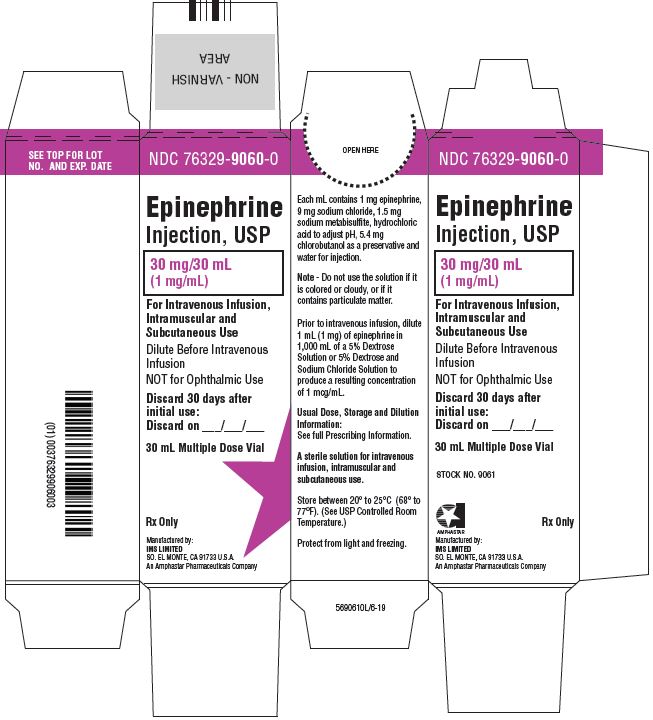
EPINEPHRINE 30MG 30ML MDV
Generic: Epinephrine
EPINEPHRINE 30MG 30ML MDV
Sign up to see pricing
Licensed pharmacies, clinics, doctor's offices, and veterinary practices get instant account approval
Sign Up — Instant ApprovalDrug Information
Identification
Epinephrine
Epinephrine
International Medication Systems, Limited
HUMAN PRESCRIPTION DRUG
Administration
INJECTION
INTRAMUSCULAR, INTRAVENOUS, SUBCUTANEOUS
ANDA211880
Active Ingredients
| Ingredient | Strength |
|---|---|
| EPINEPHRINE | 1 mg/mL |
Pharmacological Class
Data sourced from openFDA / DailyMed. For full prescribing information, consult the drug label.
Wholesale compliance resources
Drug Resources
Clinical Drug Information
Indications & Usage
1 INDICATIONS AND USAGE Epinephrine Injection, USP is a non-selective alpha and beta adrenergic agonist indicated for: Emergency treatment of allergic reactions (Type 1), including anaphylaxis ( 1.1 ) To increase mean arterial blood pressure in adult patients with hypotension associated with septic shock ( 1.2 ) 1.1 Anaphylaxis Emergency treatment of allergic reactions (Type I), including anaphylaxis, which may result from insect stings or bites, foods, drugs, sera, diagnostic testing substances and other allergens, as well as idiopathic anaphylaxis or exercise-induced anaphylaxis. 1.2 Hypotension associated with Septic Shock Epinephrine Injection, USP is indicated to increase mean arterial blood pressure in adult patients with hypotension associated with septic shock.
Dosage & Administration
2 DOSAGE AND ADMINISTRATION Anaphylaxis: ◦ Adults and Children 30 kg (66 lbs) or more : 0.3 to 0.5 mg (0.3 to 0.5 mL) intramuscularly or subcutaneously into anterolateral aspect of the thigh every 5 to 10 minutes as necessary ( 2.2 ) ◦ Children 30 kg (66 lbs) or less : 0.01 mg/kg (0.01 mL/kg), up to 0.3 mg (0.3 mL), intramuscularly or subcutaneously into anterolateral aspect of the thigh every 5 to 10 minutes as necessary ( 2.2 ) Hypotension associated with septic shock : ◦ Dilute epinephrine in dextrose solution prior to infusion ( 2.3 ) ◦ Infuse epinephrine into a large vein ( 2.3 ) ◦ Intravenous infusion rate of 0.05 mcg/kg/min to 2 mcg/kg/min, titrated to achieve desired mean arterial pressure ( 2.3 ) ◦ Wean gradually ( 2.3 ) ◦ See Full Prescribing Information for instructions on dilution and administration of the injection. 2.1 General Considerations Inspect visually for particulate matter and discoloration prior to administration; solution should be clear and colorless. Do not use if the solution is colored or cloudy, or if it contains particulate matter. 2.2 Anaphylaxis Inject Epinephrine Injection, USP intramuscularly or subcutaneously into the anterolateral aspect of the thigh, through clothing if necessary. When administering to a child, to minimize the risk of injection related injury, hold the leg firmly in place and limit movement prior to and during an injection. The injection may be repeated every 5 to 10 minutes as necessary. For intramuscular administration, use a needle long enough (at least 1/2 inch) to ensure the injection is administered into the muscle. Monitor the patient clinically for the severity of the allergic reaction and potential cardiac effects of the drug, and repeat as needed. Do not administer repeated injections at the same site, as the resulting vasoconstriction may cause tissue necrosis. Adults and Children 30 kg (66 lbs) or more: 0.3 to 0.5 mg (0.3 mL to 0.5 mL) of undiluted Epinephrine Injection, USP administered intramuscularly or subcutaneously in the anterolateral aspect of the thigh, up to a maximum of 0.5 mg (0.5 mL) per injection, repeated every 5 to 10 minutes as necessary. Monitor clinically for reaction severity and cardiac effects. Children less than 30 kg (66 lbs): 0.01 mg/kg (0.01 mL/kg) of undiluted Epinephrine Injection USP, administered intramuscularly or subcutaneously in the anterolateral aspect of the thigh, up to a maximum of 0.3 mg (0.3 mL) per injection, repeated every 5 to 10 minutes as necessary. Monitor clinically for reaction severity and cardiac effects. 2.3 Hypotension associated with Septic Shock Dilute 1 mL (1 mg) of epinephrine from its vial to 1,000 mL of a 5 percent dextrose or 5 percent dextrose and sodium chloride solution to produce a 1 mcg per mL dilution. Administration in saline solution alone is not recommended. If indicated, administer whole blood or plasma separately. Whenever possible, give infusions of epinephrine into a large vein. Avoid using a catheter tie-in technique, because the obstruction to blood flow around the tubing may cause stasis and increased local concentration of the drug. Avoid the veins of the leg in elderly patients or in those suffering from occlusive vascular diseases. To provide hemodynamic support in septic shock associated hypotension in adult patients, the suggested dosing infusion rate of intravenously administered epinephrine is 0.05 to 2 mcg/kg/min, and is titrated to achieve a desired mean arterial pressure (MAP). The dosage may be adjusted periodically, such as every 10 to 15 minutes, in increments of 0.05 to 0.2 mcg/kg/min, to achieve the desired blood pressure goal. After hemodynamic stabilization, wean incrementally over time, such as by decreasing doses of epinephrine every 10 minutes to determine if the patient can tolerate gradual withdrawal. Epinephrine Injection, USP diluted in 5 percent dextrose solutions or 5 percent dextrose and sodium chloride solutions are stable for 4 hours at room temperature or 24 hours under refrigerated conditions.
Adverse Reactions
6 ADVERSE REACTIONS Common adverse reactions to systemically administered epinephrine include anxiety, apprehensiveness, restlessness, tremor, weakness, dizziness, sweating, palpitations, pallor, nausea and vomiting, headache, and respiratory difficulties. These symptoms occur in some persons receiving therapeutic doses of epinephrine, but are more likely to occur in patients with heart disease, hypertension, or hyperthyroidism [ see Warnings and Precautions (5.7) ] . The true incidence of adverse reactions associated with the systemic use of epinephrine is difficult to determine. Adverse reactions reported in observational trials, case reports, and studies are listed below by body system: Cardiovascular : angina, arrhythmias, hypertension, pallor, palpitations, tachyarrhythmia, tachycardia, vasoconstriction, ventricular ectopy and stress cardiomyopathy. Rapid rises in blood pressure associated with epinephrine use have produced cerebral hemorrhage, particularly in elderly patients with cardiovascular disease [ see Warnings and Precautions (5.7) ] . Neurological : disorientation, impaired memory, panic, psychomotor agitation, sleepiness, tingling. Psychiatric : anxiety, apprehensiveness, restlessness. Other : Patients with Parkinson’s disease may experience psychomotor agitation or a temporary worsening of symptoms [ see Warnings and Precautions (5.7) ] . Diabetic patients may experience transient increases in blood sugar. Injection into the buttock has resulted in cases of gas gangrene [ see Warnings and Precautions (5.1) ] . Rare cases of serious skin and soft tissue infections, including necrotizing fasciitis and myonecrosis caused by Clostridia (gas gangrene), have been reported following epinephrine injection in the thigh [ see Warnings and Precautions (5.2) ] . Common adverse reactions to systemically administered epinephrine include anxiety, tremor, weakness, dizziness, sweating, palpitations and pallor ( 6 ) To report SUSPECTED ADVERSE REACTIONS, contact Amphastar Pharmaceuticals, Inc. at 1-800-423-4136 or FDA at 1-800-FDA-1088 or www.fda.gov/medwatch.
Information for Patients
17 PATIENT COUNSELING INFORMATION Advise patients or their caregivers about common adverse reactions associated with the use of epinephrine including an increase in heart rate, the sensation of a more forceful heartbeat, palpitations, sweating, nausea and vomiting, difficulty breathing, pallor, dizziness, weakness or shakiness, headache, apprehension, nervousness, or anxiety. These symptoms and signs usually subside rapidly, especially with rest, quiet and recumbent positioning. Warn patients with a good response to initial treatment about the possibility of recurrence of symptoms and instruct patients to obtain proper medical attention if symptoms return. Warn patients with diabetes that they may develop increased blood glucose levels following epinephrine administration. Rare cases of serious skin and soft tissue infections, including necrotizing fasciitis and myonecrosis caused by Clostridia (gas gangrene), have been reported at the injection site following epinephrine injection for anaphylaxis. Advise patients to seek medical care if they develop signs or symptoms of infection, such as persistent redness, warmth, swelling, or tenderness, at the epinephrine injection site [see Warnings and Precautions (5.2) ].
Clinical data sourced from openFDA drug labeling. For complete prescribing information, consult the full drug label.