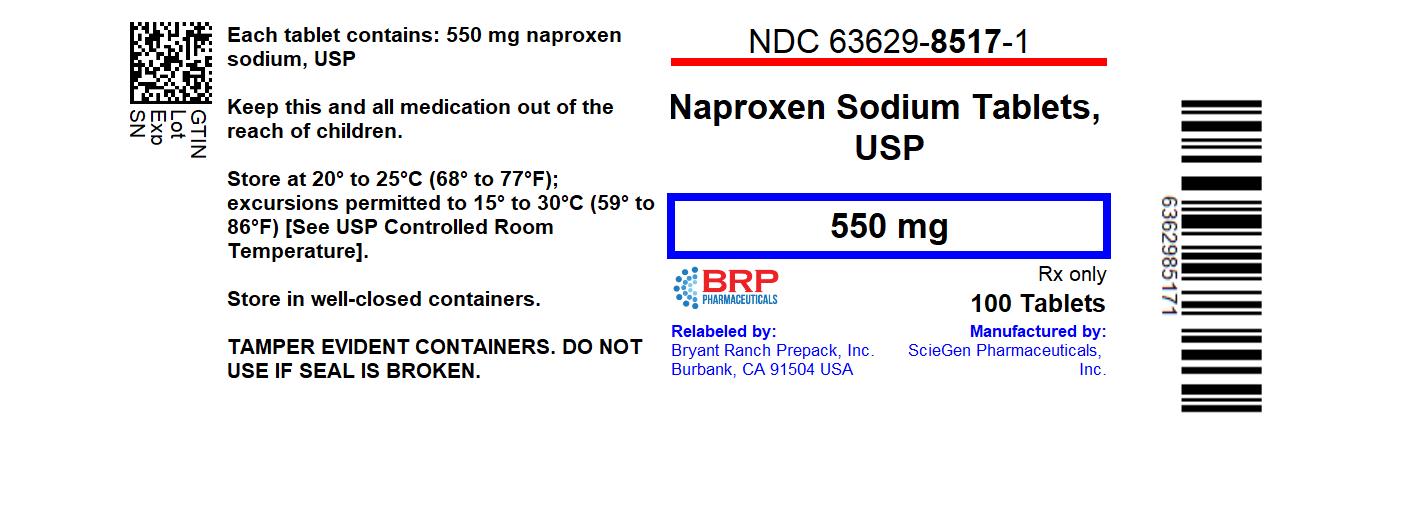
NAPROXEN SODIUM TABS 550 MG 100CT
Generic: Naproxen sodium
NAPROXEN SODIUM TABS 550 MG 100CT
Sign up to see pricing
Licensed pharmacies, clinics, doctor's offices, and veterinary practices get instant account approval
Sign Up — Instant ApprovalDrug Information
Identification
Naproxen sodium
Naproxen sodium
Dr. Reddy's Laboratories Inc.
HUMAN PRESCRIPTION DRUG
Administration
TABLET, FILM COATED
ORAL
ANDA078486
Active Ingredients
| Ingredient | Strength |
|---|---|
| NAPROXEN SODIUM | 550 mg/1 |
Pharmacological Class
Data sourced from openFDA / DailyMed. For full prescribing information, consult the drug label.
Wholesale compliance resources
Drug Resources
Clinical Drug Information
Indications & Usage
1 INDICATIONS AND USAGE Naproxen sodium tablets are indicated for: the relief of the signs and symptoms of: • rheumatoid arthritis • osteoarthritis • ankylosing spondylitis • Polyarticular Juvenile Idiopathic Arthritis Naproxen sodium tablets are also indicated for: the relief of signs and symptoms of: • tendonitis • bursitis • acute gout the management of: • pain • primary dysmenorrhea Naproxen sodium tablets are non-steroidal anti-inflammatory drugs indicated for: the relief of the signs and symptoms of: • rheumatoid arthritis • osteoarthritis • ankylosing spondylitis • polyarticular juvenile idiopathic arthritis Naproxen sodium tablets are also indicated for: the relief of signs and symptoms of: • tendonitis • bursitis • acute gout the management of: • pain • primary dysmenorrhea
Dosage & Administration
2 DOSAGE AND ADMINISTRATION Use the lowest effective dosage for shortest duration consistent with individual patient treatment goals. ( 2.1) Rheumatoid Arthritis, Osteoarthritis, and Ankylosing Spondylitis Naproxen Sodium Tablets 275 mg 550 mg twice daily The dose may be adjusted up or down depending on the clinical response of the patient. In patients who tolerate lower doses well, the dose may be increased to naproxen 1,500 mg/day for up to 6 months. Polyarticular Juvenile Idiopathic Arthritis Naproxen tablets may not allow for the flexible dose titration needed in pediatric patients with polyarticular juvenile idiopathic arthritis. A liquid formulation may be more appropriate. Recommended total daily dose of naproxen is approximately 10mg/kg given in 2 divided doses. Dosing with naproxen tablets is not appropriate for children weighing less than 50 kilograms. Management of Pain, Primary Dysmenorrhea, and Acute Tendonitis and Bursitis Recommended starting dose 550 mg of naproxen sodium as naproxen sodium tablets is followed by 550 mg every 12 hours or 275 mg every 6 to 8 hours as required. The initial total daily dose should not exceed 1,375 mg of naproxen sodium.Thereafter, the total daily dose should not exceed 1,100 mg of naproxen sodium. Naproxen sodium is recommended for the management of acute painful conditions when prompt onset of pain relief is desired. Acute Gout Naproxen sodium tablets may also be used at a starting dose of 825 mg followed by 275 mg every 8 hours. 2.1 General Dosing Instructions Carefully consider the potential benefits and risks of naproxen sodium tablets are other treatment options before deciding to use naproxen sodium tablets. Use the lowest effective dose for the shortest duration consistent with individual patient treatment goals [see Warnings and Precautions ( 5 ) ]. After observing the response to initial therapy with naproxen sodium tablets, the dose and frequency should be adjusted to suit an individual patient’s needs. Naproxen-containing products such as naproxen sodium tablets, and other naproxen products should not be used concomitantly since they all circulate in the plasma as the naproxen anion. 2.2 Rheumatoid Arthritis, Osteoarthritis and Ankylosing Spondylitis The recommended dosages of naproxen sodium tablets, is shown in Table 1. Table 1: Recommended dosages for Naproxen Sodium Tablets Naproxen sodium tablets 275 mg 550 mg (naproxen 500 mg with 50 mg sodium) twice daily During long-term administration, the dose of naproxen may be adjusted up or down depending on the clinical response of the patient. A lower daily dose may suffice for long-term administration. The morning and evening doses do not have to be equal in size and administration of the drug more frequently than twice daily does not generally make a difference in response. In patients who tolerate lower doses well, the dose may be increased to naproxen 1,500 mg/day for limited periods of up to 6 months when a higher level of anti-inflammatory/analgesic activity is required. When treating such patients with naproxen 1,500 mg/day, the physician should observe sufficient increased clinical benefits to offset the potential increased risk. 2.3 Polyarticular Juvenile Idiopathic Arthritis Naproxen solid-oral dosage forms may not allow for the flexible dose titration needed in pediatric patients with polyarticular juvenile idiopathic arthritis. A liquid formulation may be more appropriate for weight-based dosing and due to the need for dose flexibility in children. In pediatric patients, doses of 5 mg/kg/day produced plasma levels of naproxen similar to those seen in adults taking 500 mg of naproxen [see Clinical Pharmacology ( 12 )]. The recommended total daily dose of naproxen is approximately 10 mg/kg given in 2 divided doses. 2.4 Management of Pain, Primary Dysmenorrhea, and Acute Tendonitis and Bursitis The recommended starting dose of naproxen sodium tablets is 550 mg followed by 550 mg every 12 hours or 275 mg (one half of a 550 mg tablet) every 6 to 8 hours as required. The initial total daily dose should not exceed 1,375 mg (two and one-half tablets) of naproxen sodium. Thereafter, the total daily dose should not exceed 1,100 mg of naproxen sodium. Because the sodium salt of naproxen is more rapidly absorbed, naproxen sodium is recommended for the management of acute painful conditions when prompt onset of pain relief is desired. 2.5 Acute Gout Naproxen sodium tablets may also be used at a starting dose of 825 mg (one and one-half tablets) followed by 275 mg (one-half tablet) every 8 hours. 2.6 Non-Interchangeability with Other Formulations of Naproxen Different dose strengths and formulations (e.g., tablets, suspension) of naproxen are not interchangeable. This difference should be taken into consideration when changing strengths or formulations
Adverse Reactions
6 ADVERSE REACTIONS The following adverse reactions are discussed in greater detail in other sections of the labeling: • Cardiovascular Thrombotic Events [see Warnings and Precautions (5.1)] • GI Bleeding, Ulceration, and Perforation [see Warnings and Precautions ( 5.2 )] • Hepatotoxicity [see Warnings and Precautions (5.3) ] • Hypertension [see Warnings and Precautions (5.4 )] • Heart Failure and Edema [see Warnings and Precautions (5.5 )] • Renal Toxicity and Hyperkalemia [see Warnings and Precautions (5.6 )] • Anaphylactic Reactions [see Warnings and Precautions ( 5.7 )] • Serious Skin Reactions [see Warnings and Precautions ( 5.9 )] • Hematologic Toxicity [see Warnings and Precautions ( 5.12 )] Most common adverse reactions to naproxen were dyspepsia, abdominal pain, nausea, headache, rash, ecchymosis, and edema. ( 6.1) To report SUSPECTED ADVERSE REACTIONS, contact Dr. Reddy's Laboratories, Inc. at 1-888-375-3784 or FDA at 1-800-FDA-1088 or www.fda.gov/medwatch . 6.1 Clinical Trials Experience Because clinical trials are conducted under widely varying conditions, adverse reaction rates observed in the clinical trials of a drug cannot be directly compared to rates in the clinical trials of another drug and may not reflect the rates observed in practice. Adverse reactions reported in controlled clinical trials in 960 patients treated for rheumatoid arthritis or osteoarthritis are listed below. In general, reactions in patients treated chronically were reported 2 to 10 times more frequently than they were in short-term studies in the 962 patients treated for mild to moderate pain or for dysmenorrhea. The most frequent complaints reported related to the gastrointestinal tract. A clinical study found gastrointestinal reactions to be more frequent and more severe in rheumatoid arthritis patients taking daily doses of 1,500 mg naproxen compared to those taking 750 mg naproxen. In controlled clinical trials with about 80 pediatric patients and in well-monitored, open-label studies with about 400 pediatric patients with polyarticular juvenile idiopathic arthritis treated with naproxen, the incidence of rash and prolonged bleeding times were greater, the incidence of gastrointestinal and central nervous system reactions were about the same, and the incidence of other reactions were lower in pediatric patients than in adults. In patients taking naproxen in clinical trials, the most frequently reported adverse experiences in approximately 1% to 10% of patients were: Gastrointestinal (GI) Experiences, including : heartburn*, abdominal pain*, nausea*, constipation*, diarrhea, dyspepsia, stomatitis Central Nervous System : headache*, dizziness*, drowsiness*, lightheadedness, vertigo Dermatologic : pruritus (itching)*, skin eruptions*, ecchymoses*, sweating, purpura Special Senses : tinnitus*, visual disturbances, hearing disturbances Cardiovascular : edema*, palpitations General : dyspnea*, thirst *Incidence of reported reaction between 3% and 9%. Those reactions occurring in less than 3% of the patients are unmarked. In patients taking NSAIDs, the following adverse experiences have also been reported in approximately 1% to 10% of patients. Gastrointestinal (GI) Experiences, including: flatulence, gross bleeding/perforation, GI ulcers (gastric/duodenal), vomiting General : abnormal renal function, anemia, elevated liver enzymes, increased bleeding time, rashes The following are additional adverse experiences reported in <1% of patients taking naproxen during clinical trials. Gastrointestinal : pancreatitis, vomiting Hepatobiliary : jaundice Hemic and Lymphatic : melena, thrombocytopenia, agranulocytosis Nervous System : inability to concentrate Dermatologic : skin rashes 6.2 Postmarketing Experience The following adverse reactions have been identified during post approval use of naproxen. Because these reactions are reported voluntarily from a population of uncertain size, it is not always possible to reliably estimate their frequency or establish a causal relationship to drug exposure. The following are additional adverse experiences reported in <1% of patients taking naproxen during clinical trials and through postmarketing reports. Those adverse reactions observed through postmarketing reports are italicized. Body as a Whole : anaphylactoid reactions, angioneurotic edema, menstrual disorders, pyrexia (chills and fever) Cardiovascular: congestive heart failure, vasculitis, hypertension, pulmonary edema Gastrointestinal : inflammation, bleeding (sometimes fatal, particularly in the elderly), ulceration, perforation and obstruction of the upper or lower gastrointestinal tract. Esophagitis, stomatitis, hematemesis, colitis, exacerbation of inflammatory bowel disease (ulcerative colitis, Crohn’s disease). Hepatobiliary : abnormal liver function tests, hepatitis (some cases have been fatal) Hemic and Lymphatic: eosinophilia, leucopenia, granulocytopenia, hemolytic anemia, aplastic anemia Metabolic and Nutritional : hyperglycemia, hypoglycemia Nervous System: depression, dream abnormalities, insomnia, malaise, myalgia, muscle weakness, aseptic meningitis, cognitive dysfunction, convulsions Respiratory : eosinophilic pneumonitis, asthma Dermatologic: alopecia, urticaria, toxic epidermal necrolysis, erythema multiforme, erythema nodosum, lichen planus, pustular reaction, systemic lupus erythematoses, bullous reactions, including Stevens-Johnson syndrome, fixed drug eruption (FDE), photosensitive dermatitis, photosensitivity reactions, including rare cases resembling porphyria cutanea tarda (pseudoporphyria) or epidermolysis bullosa. If skin fragility, blistering or other symptoms suggestive of pseudoporphyria occur, treatment should be discontinued and the patient monitored. Special Senses: hearing impairment, corneal opacity, papillitis, retrobulbar optic neuritis, papilledema Urogenital : glomerular nephritis, hematuria, hyperkalemia, interstitial nephritis, nephrotic syndrome, renal disease, renal failure, renal papillary necrosis, raised serum creatinine Reproduction (female): infertility In patients taking NSAIDs, the following adverse experiences have also been reported in <1% of patients. Body as a Whole : fever, infection, sepsis, anaphylactic reactions, appetite changes, death Cardiovascular: hypertension, tachycardia, syncope, arrhythmia, hypotension, myocardial infarction Gastrointestinal : dry mouth, esophagitis, gastric/peptic ulcers, gastritis, glossitis, eructation Hepatobiliary : hepatitis, liver failure Hemic and Lymphatic : rectal bleeding, lymphadenopathy, pancytopenia Metabolic and Nutritional : weight changes Nervous System: anxiety, asthenia, confusion, nervousness, paresthesia, somnolence, tremors, convulsions, coma, hallucinations Respiratory : asthma, respiratory depression, pneumonia Dermatologic : exfoliative dermatitis Special Senses : blurred vision, conjunctivitis Urogenital: cystitis, dysuria, oliguria/polyuria, proteinuria
Information for Patients
17 PATIENT COUNSELING INFORMATION Advise the patient to read the FDA-approved patient labeling (Medication Guide) that accompanies each prescription dispensed. Inform patients, families, or their caregivers of the following information before initiating therapy with naproxen sodium and periodically during the course of ongoing therapy. Cardiovascular Thrombotic Events Advise patients to be alert for the symptoms of cardiovascular thrombotic events, including chest pain, shortness of breath, weakness, or slurring of speech, and to report any of these symptoms to their health care provider immediately [see Warnings and Precautions (5.1) ]. Gastrointestinal Bleeding, Ulceration, and Perforation Advise patients to report symptoms of ulcerations and bleeding, including epigastric pain, dyspepsia, melena, and hematemesis to their health care provider. In the setting of concomitant use of low-dose aspirin for cardiac prophylaxis, inform patients of the increased risk for and the signs and symptoms of GI bleeding [see Warnings and Precautions ( 5.2 )]. Hepatotoxicity Inform patients of the warning signs and symptoms of hepatotoxicity (e.g., nausea, fatigue, lethargy, pruritus, diarrhea, jaundice, right upper quadrant tenderness, and “flu-like” symptoms). If these occur, instruct patients to stop naproxen sodium and seek immediate medical therapy [see Warnings and Precautions (5.3)] . Heart Failure and Edema Advise patients to be alert for the symptoms of congestive heart failure including shortness of breath, unexplained weight gain, or edema and to contact their healthcare provider if such symptoms occur [see Warnings and Precautions (5.5)] . Anaphylactic Reactions Inform patients of the signs of an anaphylactic reaction (e.g., difficulty breathing, swelling of the face or throat). Instruct patients to seek immediate emergency help if these occur [see Contraindications ( 4 ) and Warnings and Precautions ( 5.7 )]. Serious Skin Reactions including DRESS Advise patients to stop taking naproxen sodium immediately if they develop any type of rash or fever and to contact their healthcare provider as soon as possible [see Warnings and Precautions ( 5.9 , 5.10 ) ]. Female Fertility Advise females of reproductive potential who desire pregnancy that NSAIDs, including naproxen sodium, may be associated with a reversible delay in ovulation [see Use in Specific Populations ( 8.3 )]. Fetal Toxicity Inform pregnant women to avoid use of naproxen sodium and other NSAIDs starting at 30 weeks gestation because of the risk of the premature closing of the fetal ductus arteriosus. If treatment with naproxen sodium is needed for a pregnant woman between about 20 to 30 weeks gestation, advise her that she may need to be monitored for oligohydramnios, if treatment continues for longer than 48 hours [see Warnings and Precautions ( 5.11 ) and Use in Specific Populations ( 8.1 )]. Avoid Concomitant Use of NSAIDs Inform patients that the concomitant use of naproxen sodium with other NSAIDs or salicylates (e.g., diflunisal, salsalate) is not recommended due to the increased risk of gastrointestinal toxicity, and little or no increase in efficacy [see Warnings and Precautions ( 5.2 ) and Drug Interactions ( 7 )]. Alert patients that NSAIDs may be present in “over the counter” medications for treatment of colds, fever, or insomnia. Use of NSAIDS and Low-Dose Aspirin Inform patients not to use low-dose aspirin concomitantly with naproxen sodium until they talk to their healthcare provider [see Drug Interactions ( 7 )]. R X Only Distributor: Dr. Reddy’s Laboratories Inc., Princeton, NJ 08540 Made in India Revised: 12/2024
Clinical data sourced from openFDA drug labeling. For complete prescribing information, consult the full drug label.