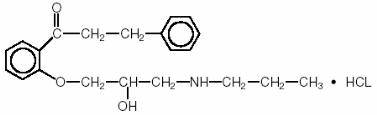
PROPAFENONE HCL TABS 150 MG 100CT
Generic: Propafenone Hydrochloride
PROPAFENONE HCL TABS 150 MG 100CT
Sign up to see pricing
Licensed pharmacies, clinics, doctor's offices, and veterinary practices get instant account approval
Sign Up — Instant ApprovalDrug Information
Identification
Propafenone Hydrochloride
Propafenone Hydrochloride
ANI Pharmaceuticals, Inc.
HUMAN PRESCRIPTION DRUG
Administration
TABLET, COATED
ORAL
ANDA076550
Active Ingredients
| Ingredient | Strength |
|---|---|
| PROPAFENONE HYDROCHLORIDE | 150 mg/1 |
Pharmacological Class
Data sourced from openFDA / DailyMed. For full prescribing information, consult the drug label.
Wholesale compliance resources
Clinical Drug Information
Indications & Usage
1 INDICATIONS AND USAGE Propafenone Hydrochloride Tablets are indicated to: • prolong the time to recurrence of paroxysmal atrial fibrillation/flutter (PAF) associated with disabling symptoms in patients without structural heart disease. • prolong the time to recurrence of paroxysmal supraventricular tachycardia (PSVT) associated with disabling symptoms in patients without structural heart disease. • treat documented ventricular arrhythmias, such as sustained ventricular tachycardia that, in the judgment of the physician, are life-threatening. Initiate treatment in the hospital. Usage Considerations: • The use of Propafenone Hydrochloride Tablets in patients with permanent atrial fibrillation (AF) or in patients exclusively with atrial flutter or PSVT has not been evaluated. Do not use Propafenone Hydrochloride Tablets to control ventricular rate during AF. • Some patients with atrial flutter treated with propafenone have developed 1:1 conduction, producing an increase in ventricular rate. Concomitant treatment with drugs that increase the functional atrioventricular (AV) nodal refractory period is recommended. • The use of Propafenone Hydrochloride Tablets in patients with chronic atrial fibrillation has not been evaluated. • Because of the proarrhythmic effects of Propafenone Hydrochloride Tablets, its use with lesser ventricular arrhythmias is not recommended, even if patients are symptomatic, and any use of the drug should be reserved for patients in whom, in the opinion of the physician, the potential benefits outweigh the risks. • The effect of propafenone on mortality has not been determined [see Boxed Warning ] . Propafenone Hydrochloride Tablets are an antiarrhythmic indicated to: • prolong the time to recurrence of symptomatic atrial fibrillation (AF) in patients with episodic (most likely paroxysmal or persistent) AF who do not have structural heart disease. ( 1 ) • prolong the time to recurrence of paroxysmal supraventricular tachycardia (PSVT) associated with disabling symptoms in patients who do not have structural heart disease. ( 1 ) • treat documented life-threatening ventricular arrhythmias. ( 1 ) Usage Considerations: • Use in patients with permanent atrial fibrillation or with atrial flutter or PSVT has not been evaluated. Do not use to control ventricular rate during atrial fibrillation. ( 1 ) • In patients with atrial fibrillation and atrial flutter, use Propafenone Hydrochloride Tablets with drugs that increase the atrioventricular nodal refractory period. ( 1 ) • Because of proarrhythmic effects, use with lesser ventricular arrhythmias is not recommended, even if patients are symptomatic. ( 1 ) • The effect of propafenone on mortality has not been determined. ( 1 )
Dosage & Administration
2 DOSAGE AND ADMINISTRATION The dose of Propafenone Hydrochloride Tablets must be individually titrated on the basis of response and tolerance. Initiate therapy with Propafenone Hydrochloride Tablets 150 mg given every 8 hours (450 mg per day). Dosage may be increased at a minimum of 3- to 4- day intervals to 225 mg every 8 hours (675 mg per day). If additional therapeutic effect is needed, the dose of Propafenone Hydrochloride Tablets may be increased to 300 mg every 8 hours (900 mg per day). The usefulness and safety of dosages exceeding 900 mg per day have not been established. In patients with hepatic impairment or those with significant widening of the QRS complex or second- or third-degree AV block, consider reducing the dose. As with other antiarrhythmic agents, in the elderly or in ventricular arrhythmia patients with marked previous myocardial damage, the dose of Propafenone Hydrochloride Tablets should be increased more gradually during the initial phase of treatment. The combination of cytochrome P450 3A4 (CYP3A4) inhibition and either cytochrome P450 2D6 (CYP2D6) deficiency or CYP2D6 inhibition with the simultaneous administration of propafenone may significantly increase the concentration of propafenone and thereby increase the risk of proarrhythmia and other adverse events. Therefore, avoid simultaneous use of Propafenone Hydrochloride Tablets with both a CYP2D6 inhibitor and a CYP3A4 inhibitor [see Warnings and Precautions ( 5.4 ), Drug Interactions ( 7.1 )] . • Initiate therapy with 150 mg given every 8 hours. ( 2 ) • As needed, uptitrate in 3 to 4 days to 225 to 300 mg every 8 hours. ( 2 ) • Consider reducing the dose in patients with hepatic impairment, significant widening of the QRS complex, or second- or third-degree AV block. ( 2 )
Adverse Reactions
6 ADVERSE REACTIONS The most commonly reported adverse events with propafenone (greater than 5%) included: unusual taste, nausea and/or vomiting, dizziness, constipation, headache, fatigue, first-degree AV block, and intraventricular conduction delay. ( 6.1 ) To report SUSPECTED ADVERSE REACTIONS, contact ANI Pharmaceuticals, Inc. at 1-855-204-1431 or FDA at 1-800-FDA-1088 or www.fda.gov/medwatch. 6.1 Clinical Trials Experience Because clinical trials are conducted under widely varying conditions, adverse reaction rates observed in the clinical trials of a drug cannot be directly compared with rates in the clinical trials of another drug and may not reflect the rates observed in practice. Adverse reactions associated with propafenone hydrochloride tablets occur most frequently in the gastrointestinal, cardiovascular, and central nervous systems. About 20% of subjects treated with propafenone hydrochloride tablets have discontinued treatment because of adverse reactions. Adverse reactions reported for greater than 1.5% of 474 subjects with SVT who received propafenone hydrochloride tablets in U.S. clinical trials are presented in Table 1 by incidence and percent discontinuation, reported to the nearest percent. Table 1. Adverse Reactions Reported for >1.5% of Subjects with Supraventricular Tachycardia Adverse Reaction Incidence (n = 480) % of Subjects Who Discontinued Unusual taste 14% 1.3% Nausea and/or vomiting 11% 2.9% Dizziness 9% 1.7% Constipation 8% 0.2% Headache 6% 0.8% Fatigue 6% 1.5% Blurred vision 3% 0.6% Weakness 3% 1.3% Dyspnea 2% 1.0% Wide complex tachycardia 2% 1.9% CHF 2% 0.6% Bradycardia 2% 0.2% Palpitations 2% 0.2% Tremor 2% 0.4% Anorexia 2% 0.2% Diarrhea 2% 0.4% Ataxia 2% 0.0% In controlled trials in subjects with ventricular arrhythmia, the most common reactions reported for propafenone hydrochloride tablets and more frequent than on placebo were unusual taste, dizziness, first-degree AV block, intraventricular conduction delay, nausea and/or vomiting, and constipation. Headache was relatively common also, but was not increased compared with placebo. Other reactions reported more frequently than on placebo or comparator and not already reported elsewhere included anxiety, angina, second-degree AV block, bundle branch block, loss of balance, congestive heart failure, and dyspepsia. Adverse reactions reported for greater than or equal to 1% of 2,127 subjects with ventricular arrhythmia who received propafenone in U.S. clinical trials were evaluated by daily dose. The most common adverse reactions appeared dose-related (but note that most subjects spent more time at the larger doses), especially dizziness, nausea and/or vomiting, unusual taste, constipation, and blurred vision. Some less common reactions may also have been dose-related such as first-degree AV block, congestive heart failure, dyspepsia, and weakness. Other adverse reactions included rash, syncope, chest pain, abdominal pain, ataxia, and hypotension. In addition, the following adverse reactions were reported less frequently than 1% either in clinical trials or in marketing experience. Causality and relationship to propafenone therapy cannot necessarily be judged from these events. Cardiovascular System Atrial flutter, AV dissociation, cardiac arrest, flushing, hot flashes, sick sinus syndrome, sinus pause or arrest, supraventricular tachycardia. Nervous System Abnormal dreams, abnormal speech, abnormal vision, confusion, depression, memory loss, numbness, paresthesias, psychosis/mania, seizures (0.3%), tinnitus, unusual smell sensation, vertigo. Gastrointestinal Cholestasis, elevated liver enzymes (alkaline phosphatase, serum transaminases), gastroenteritis, hepatitis. Hematologic Agranulocytosis, anemia, bruising, granulocytopenia, leukopenia, purpura, thrombocytopenia. Other Alopecia, eye irritation, impotence, increased glucose, positive ANA (0.7%), muscle cramps, muscle weakness, nephrotic syndrome, pain, pruritus. 6.2 Postmarketing Experience The following adverse reactions have been identified during post-approval use of propafenone hydrochloride tablets. Because these reactions are reported voluntarily from a population of uncertain size, it is not always possible to reliably estimate their frequency or establish a causal relationship to drug exposure. Gastrointestinal A number of patients with liver abnormalities associated with propafenone therapy have been reported in postmarketing experience. Some appeared due to hepatocellular injury, some were cholestatic, and some showed a mixed picture. Some of these reports were simply discovered through clinical chemistries, others because of clinical symptoms including fulminant hepatitis and death. One case was rechallenged with a positive outcome. Blood and Lymphatic System Increased bleeding time. Immune System Lupus erythematosis. Nervous System Apnea, coma. Renal and Urinary Hyponatremia/inappropriate ADH secretion, kidney failure.
Information for Patients
17 PATIENT COUNSELING INFORMATION Advise the patient to read the FDA-approved patient labeling (Patient Information). • Instruct patients to notify their healthcare providers of any change in over-the-counter, prescription, and supplement use. • Instruct patients to report symptoms that may be associated with altered electrolyte balance, such as excessive or prolonged diarrhea, sweating, vomiting, or loss of appetite or thirst. • Instruct patients not to double the next dose if a dose is missed. The next dose should be taken at the usual time. Manufactured by: ANI Pharmaceuticals, Inc. Baudette, MN 56623 ani
Clinical data sourced from openFDA drug labeling. For complete prescribing information, consult the full drug label.