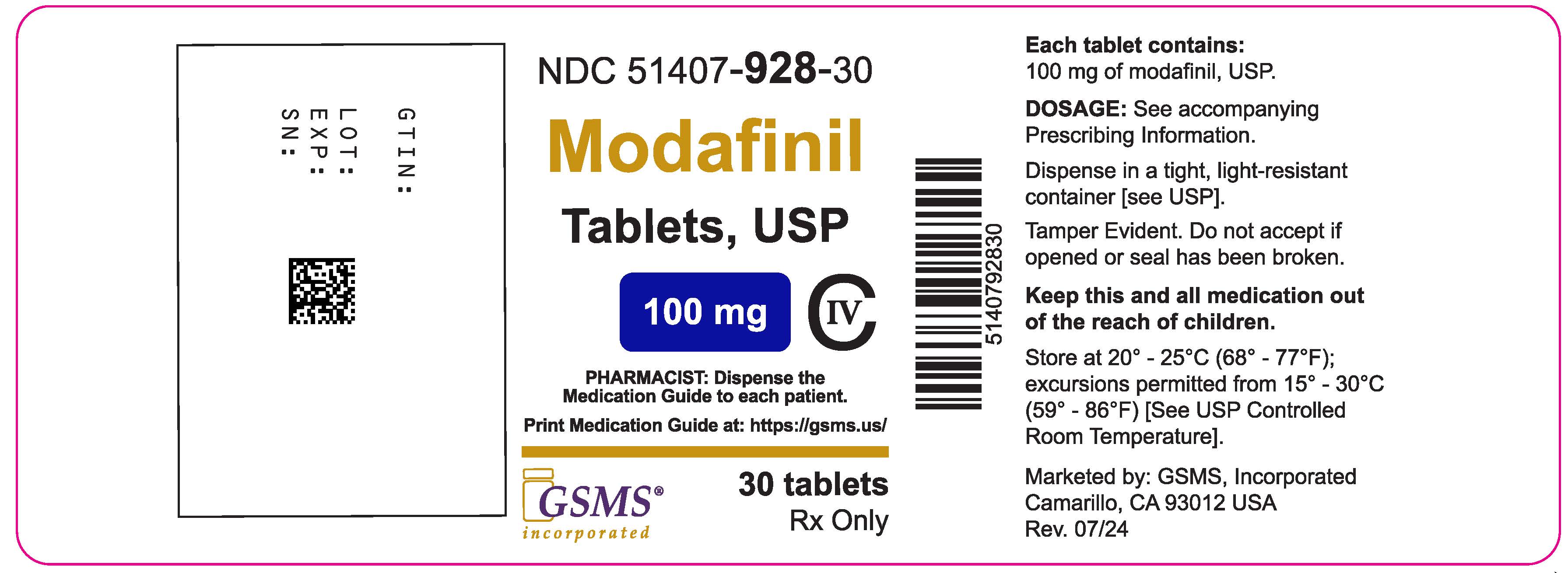
MODAFINIL TABS 200 MG 30CT
Generic: Modafinil
MODAFINIL TABS 200 MG 30CT
Sign up to see pricing
Licensed pharmacies, clinics, doctor's offices, and veterinary practices get instant account approval
Sign Up — Instant ApprovalDrug Information
Identification
Modafinil
Modafinil
Bionpharma Inc.
HUMAN PRESCRIPTION DRUG
Administration
TABLET
ORAL
ANDA078963
Active Ingredients
| Ingredient | Strength |
|---|---|
| MODAFINIL | 200 mg/1 |
Pharmacological Class
Data sourced from openFDA / DailyMed. For full prescribing information, consult the drug label.
Wholesale compliance resources
Drug Resources
Clinical Drug Information
Indications & Usage
1 INDICATIONS AND USAGE Modafinil tablets are indicated to improve wakefulness in adult patients with excessive sleepiness associated with narcolepsy, obstructive sleep apnea (OSA), or shift work disorder (SWD). Limitations of Use In OSA, modafinil tablets are indicated to treat excessive sleepiness and not as treatment for the underlying obstruction. If continuous positive airway pressure (CPAP) is the treatment of choice for a patient, a maximal effort to treat with CPAP for an adequate period of time should be made prior to initiating and during treatment with modafinil tablets for excessive sleepiness. Modafinil tablets are indicated to improve wakefulness in adult patients with excessive sleepiness associated with narcolepsy, obstructive sleep apnea (OSA), or shift work disorder (SWD). ( 1 ) Limitations of Use In OSA, modafinil tablets are indicated to treat excessive sleepiness and not as treatment for the underlying obstruction.
Dosage & Administration
2 DOSAGE AND ADMINISTRATION The recommended dosage of modafinil tablets for each indication is as follows: Narcolepsy or OSA: 200 mg once a day in the morning. ( 2.1 ) SWD: 200 mg once a day, taken approximately one hour prior to start of the work shift. ( 2.2 ) Severe Hepatic Impairment: reduce dose to half the recommended dose. ( 2.3 , 12.3 ) Geriatric Patients: consider lower dose. ( 2.4 , 12.3 ) 2.1 Dosage in Narcolepsy and Obstructive Sleep Apnea (OSA) The recommended dosage of modafinil tablets for patients with narcolepsy or OSA is 200 mg taken orally once a day as a single dose in the morning. Doses up to 400 mg/day, given as a single dose, have been well tolerated, but there is no consistent evidence that this dose confers additional benefit beyond that of the 200 mg/day dose [see Clinical Pharmacology ( 12.3 ) and Clinical Studies ( 14.1 , 14.2 )] . 2.2 Dosage in Shift Work Disorder (SWD) The recommended dosage of modafinil tablets for patients with SWD is 200 mg taken orally once a day as a single dose approximately 1 hour prior to the start of their work shift . 2.3 Dosage Modifications in Patients with Severe Hepatic Impairment In patients with severe hepatic impairment, the dosage of modafinil tablets should be reduced to one-half of that recommended for patients with normal hepatic function [see Use in Specific Populations ( 8.6 ) and Clinical Pharmacology ( 12.3 )] . 2.4 Use in Geriatric Patients Consideration should be given to the use of lower doses and close monitoring in geriatric patients [see Use in Specific Populations ( 8.5 )] .
Adverse Reactions
6 ADVERSE REACTIONS The following serious adverse reactions are described elsewhere in the labeling: • Serious Rash, including Stevens-Johnson Syndrome [see Warnings and Precautions ( 5.1 )] • Angioedema and Anaphylaxis Reactions [see Warnings and Precautions ( 5.2 )] • Multi-organ Hypersensitivity Reactions [see Warnings and Precautions ( 5.3 )] • Persistent Sleepiness [see Warnings and Precautions ( 5.4 )] • Psychiatric Symptoms [see Warnings and Precautions ( 5.5 )] • Effects on Ability to Drive and Use Machinery [see Warnings and Precautions ( 5.6 )] • Cardiovascular Events [see Warnings and Precautions ( 5.7 )] Most common adverse reactions (≥5%): headache, nausea, nervousness, rhinitis, diarrhea, back pain, anxiety, insomnia, dizziness, and dyspepsia. ( 6.1 ) To report SUSPECTED ADVERSE REACTIONS, contact Bionpharma Inc. at 1-888-235-BION or 1-888-235-2466 or FDA at 1-800-FDA-1088 or www.fda.gov/medwatch. 6.1 Clinical Trials Experience Because clinical trials are conducted under widely varying conditions, adverse reaction rates observed in the clinical trials of a drug cannot be directly compared to rates in the clinical trials of another drug and may not reflect the rates observed in practice. Modafinil has been evaluated for safety in over 3,500 patients, of whom more than 2,000 patients with excessive sleepiness associated with OSA, SWD, and narcolepsy. Most Common Adverse Reactions In placebo-controlled clinical trials, the most common adverse reactions (≥ 5%) associated with the use of modafinil more frequently than placebo-treated patients were headache, nausea, nervousness, rhinitis, diarrhea, back pain, anxiety, insomnia, dizziness, and dyspepsia. The adverse reaction profile was similar across these studies. Table 1 presents the adverse reactions that occurred at a rate of 1% or more and were more frequent in modafinil-treated patients than in placebo-treated patients in the placebo-controlled clinical trials. Table 1. Adverse Reactions in Pooled Placebo-Controlled Trials* in Narcolepsy, OSA, and SWD Modafinil (%) (n = 934) Placebo (%) (n = 567) Headache 34 23 Nausea 11 3 Nervousness 7 3 Rhinitis 7 6 Back Pain 6 5 Diarrhea 6 5 Anxiety 5 1 Dizziness 5 4 Dyspepsia 5 4 Insomnia 5 1 Anorexia 4 1 Dry Mouth 4 2 Pharyngitis 4 2 Chest Pain 3 1 Hypertension 3 1 Abnormal Liver Function 2 1 Constipation 2 1 Depression 2 1 Palpitation 2 1 Paresthesia 2 0 Somnolence 2 1 Tachycardia 2 1 Vasodilatation 2 0 Abnormal Vision 1 0 Agitation 1 0 Asthma 1 0 Chills 1 0 Confusion 1 0 Dyskinesia 1 0 Edema 1 0 Emotional Lability 1 0 Eosinophilia 1 0 Epistaxis 1 0 Flatulence 1 0 Hyperkinesia 1 0 Hypertonia 1 0 Mouth Ulceration 1 0 Sweating 1 0 Taste Perversion 1 0 Thirst 1 0 Tremor 1 0 Urine Abnormality 1 0 Vertigo 1 0 *Adverse Reactions that occurred in ≥ 1% of modafinil-treated patients (either 200, 300, or 400 mg once daily) and greater incidence than placebo Dose-Dependent Adverse Reactions In the placebo-controlled clinical trials which compared doses of 200, 300, and 400 mg/day of modafinil and placebo, the following adverse reactions were dose related: headache and anxiety. Adverse Reactions Resulting in Discontinuation of Treatment In placebo-controlled clinical trials, 74 of the 934 patients (8%) who received modafinil discontinued due to an adverse reaction compared to 3% of patients that received placebo. The most frequent reasons for discontinuation that occurred at a higher rate for modafinil than placebo patients were headache (2%), nausea, anxiety, dizziness, insomnia, chest pain, and nervousness (each <1%). Laboratory Abnormalities Clinical chemistry, hematology, and urinalysis parameters were monitored in the studies. Mean plasma levels of gamma glutamyltransferase (GGT) and alkaline phosphatase (AP) were found to be higher following administration of modafinil, but not placebo. Few patients, however, had GGT or AP elevations outside of the normal range. Shifts to higher, but not clinically significantly abnormal, GGT and AP values appeared to increase with time in the population treated with modafinil in the placebo-controlled clinical trials. No differences were apparent in alanine aminotransferase (ALT), aspartate aminotransferase (AST), total protein, albumin, or total bilirubin. 6.2 Postmarketing Experience The following adverse reactions have been identified during post approval use of modafinil. Because these reactions are reported voluntarily from a population of uncertain size, it is not always possible to reliably estimate their frequency or establish a causal relationship to drug exposure. Hematologic: agranulocytosis Psychiatric disorders: psychomotor hyperactivity
Information for Patients
17 PATIENT COUNSELING INFORMATION Advise the patient to read the FDA-approved patient labeling (Medication Guide). Allergic Reactions Advise patients to stop taking modafinil tablets and to notify their physician right away if they develop a rash, hives, mouth sores, blisters, peeling skin, trouble swallowing or breathing, or a related allergic phenomenon. Driving and Dangerous Activities Advise patients not to alter their previous behavior with regard to potentially dangerous activities (e.g., driving, operating machinery) or other activities requiring appropriate levels of wakefulness, until and unless treatment with modafinil tablets has been shown to produce levels of wakefulness that permit such activities. Advise patients that modafinil tablets are not a replacement for sleep. Continuing Previously Prescribed Treatments Inform patients that it may be critical that they continue to take their previously prescribed treatments (e.g., patients with OSA receiving CPAP should continue to do so). Discontinuing Drug Due to Adverse Reactions Advise patients to stop taking modafinil tablets and contact their physician right away if they experience chest pain, rash, depression, anxiety, or signs of psychosis or mania. Pregnancy Advise patients to notify their physician if they become pregnant or intend to become pregnant during therapy. Caution patients regarding the potential increased risk of pregnancy when using steroidal contraceptives (including depot or implantable contraceptives) with modafinil tablets and for one month after discontinuation of therapy. Nursing Advise patients to notify their physician if they are breastfeeding an infant. Concomitant Medication Advise patients to inform their physician if they are taking, or plan to take, any prescription or over‑the‑counter drugs, because of the potential for interactions between modafinil tablets and other drugs. Alcohol Advise patients that the use of modafinil tablets in combination with alcohol has not been studied. Advise patients that it is prudent to avoid alcohol while taking modafinil tablets.
Clinical data sourced from openFDA drug labeling. For complete prescribing information, consult the full drug label.