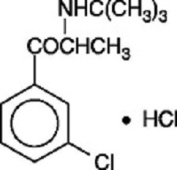
BUPROPION SR 150MG 500 TAB
Generic: bupropion hydrochloride
BUPROPION SR 150MG 500 TAB
Sign up to see pricing
Licensed pharmacies, clinics, doctor's offices, and veterinary practices get instant account approval
Sign Up — Instant ApprovalDrug Information
Identification
bupropion hydrochloride
bupropion hydrochloride SR
Solco Healthcare US LLC
HUMAN PRESCRIPTION DRUG
Administration
TABLET, FILM COATED, EXTENDED RELEASE
ORAL
ANDA202304
Active Ingredients
| Ingredient | Strength |
|---|---|
| BUPROPION HYDROCHLORIDE | 150 mg/1 |
Pharmacological Class
Data sourced from openFDA / DailyMed. For full prescribing information, consult the drug label.
Wholesale compliance resources
Clinical Drug Information
Indications & Usage
1 INDICATIONS AND USAGE Bupropion hydrochloride extended-release (SR) tablets are indicated for the treatment of major depressive disorder (MDD), as defined by the Diagnostic and Statistical Manual (DSM). The efficacy of bupropion in the treatment of a major depressive episode was established in two 4-week controlled inpatient trials and one 6-week controlled outpatient trial of adult subjects with MDD [see Clinical Studies (14) ] . The efficacy of bupropion hydrochloride extended-release (SR) tablets in maintaining an antidepressant response for up to 44 weeks following 8 weeks of acute treatment was demonstrated in a placebo-controlled trial [see Clinical Studies (14) ] . Bupropion hydrochloride extended-release (SR) tablets are an aminoketone antidepressant, indicated for the treatment of major depressive disorder (MDD). ( 1 )
Dosage & Administration
2 DOSAGE AND ADMINISTRATION • Starting dose: 150 mg/day. ( 2.1 ) • General: Increase dose gradually to reduce seizure risk. ( 2.1 , 5.3 ) • After 3 days, may increase the dose to 300 mg/day, given as 150 mg twice daily at an interval of at least 8 hours. ( 2.1 ) • Usual target dose: 300 mg/day as 150 mg twice daily. ( 2.1 ) • Maximum dose: 400 mg/day, given as 200 mg twice daily, for patients not responding to 300 mg/day. ( 2.1 ) • Periodically reassess the dose and need for maintenance treatment. ( 2.1 ) • Moderate to severe hepatic impairment: 100 mg daily or 150 mg every other day. ( 2.2 , 8.7 ) • Mild hepatic impairment: Consider reducing the dose and/or frequency of dosing. ( 2.2 , 8.7 ) • Renal impairment: Consider reducing the dose and/or frequency. ( 2.3 , 8.6 ) 2.1 General Instructions for Use To minimize the risk of seizure, increase the dose gradually [see Warnings and Precautions (5.3) ] . Bupropion hydrochloride extended-release (SR) tablets should be swallowed whole and not crushed, divided, or chewed. Bupropion hydrochloride extended-release (SR) tablets may be taken with or without food. The usual adult target dose for bupropion hydrochloride extended-release (SR) tablets is 300 mg/day, given as 150 mg twice daily. Initiate dosing with 150 mg/day given as a single daily dose in the morning. After 3 days of dosing, the dose may be increased to the 300-mg/day target dose, given as 150 mg twice daily. There should be an interval of at least 8 hours between successive doses. A maximum of 400 mg/day, given as 200 mg twice daily, may be considered for patients in whom no clinical improvement is noted after several weeks of treatment at 300 mg/day. To avoid high peak concentrations of bupropion and/or its metabolites, do not exceed 200 mg in any single dose. It is generally agreed that acute episodes of depression require several months or longer of antidepressant drug treatment beyond the response in the acute episode. It is unknown whether the dose of bupropion hydrochloride extended-release (SR) tablets needed for maintenance treatment is identical to the dose that provided an initial response. Periodically reassess the need for maintenance treatment and the appropriate dose for such treatment. 2.2 Dose Adjustment in Patients with Hepatic Impairment In patients with moderate to severe hepatic impairment (Child-Pugh score: 7 to 15), the maximum dose of bupropion hydrochloride extended-release (SR) tablets is 100 mg/day or 150 mg every other day. In patients with mild hepatic impairment (Child-Pugh score: 5 to 6), consider reducing the dose and/or frequency of dosing [see Use in Specific Populations (8.7) , Clinical Pharmacology (12.3) ] . 2.3 Dose Adjustment in Patients with Renal Impairment Consider reducing the dose and/or frequency of bupropion hydrochloride extended-release (SR) tablets in patients with renal impairment (Glomerular Filtration Rate [GFR] less than 90 mL/min) [see Use in Specific Populations (8.6) , Clinical Pharmacology (12.3) ] . 2.4 Switching a Patient to or from a Monoamine Oxidase Inhibitor (MAOI) Antidepressant At least 14 days should elapse between discontinuation of an MAOI intended to treat depression and initiation of therapy with bupropion hydrochloride extended-release (SR) tablets. Conversely, at least 14 days should be allowed after stopping bupropion hydrochloride extended-release (SR) tablets before starting an MAOI antidepressant [see Contraindications (4) , Drug Interactions (7.6) ] . 2.5 Use of Bupropion Hydrochloride Extended-release (SR) Tablets with Reversible MAOIs Such as Linezolid or Methylene Blue Do not start bupropion hydrochloride extended-release (SR) in a patient who is being treated with a reversible MAOI such as linezolid or intravenous methylene blue. Drug interactions can increase the risk of hypertensive reactions. In a patient who requires more urgent treatment of a psychiatric condition, non-pharmacological interventions, including hospitalization, should be considered [see Contraindications (4) , Drug Interactions (7.6) ] . In some cases, a patient already receiving therapy with bupropion hydrochloride extended-release (SR) tablets may require urgent treatment with linezolid or intravenous methylene blue. If acceptable alternatives to linezolid or intravenous methylene blue treatment are not available and the potential benefits of linezolid or intravenous methylene blue treatment are judged to outweigh the risks of hypertensive reactions in a particular patient, bupropion hydrochloride extended-release (SR) tablets should be stopped promptly, and linezolid or intravenous methylene blue can be administered. The patient should be monitored for 2 weeks or until 24 hours after the last dose of linezolid or intravenous methylene blue, whichever comes first. Therapy with bupropion hydrochloride extended-release (SR) tablets may be resumed 24 hours after the last dose of linezolid or intravenous methylene blue. The risk of administering methylene blue by non-intravenous routes (such as oral tablets or by local injection) or in intravenous doses much lower than 1 mg/kg with bupropion hydrochloride extended-release (SR) tablets is unclear. The clinician should, nevertheless, be aware of the possibility of a drug interaction with such use [see Contraindications (4) , Drug Interactions (7.6) ] .
Adverse Reactions
6 ADVERSE REACTIONS The following adverse reactions are discussed in greater detail in other sections of the labeling: • Suicidal thoughts and behaviors in adolescents and young adults [see Boxed Warning , Warnings and Precautions (5.1) ] • Neuropsychiatric symptoms and suicide risk in smoking cessation treatment [see Warnings and Precautions (5.2) ] • Seizure [see Warnings and Precautions (5.3) ] • Hypertension [see Warnings and Precautions (5.4) ] • Activation of mania or hypomania [see Warnings and Precautions (5.5) ] • Psychosis and other neuropsychiatric reactions [see Warnings and Precautions (5.6) ] • Angle-closure glaucoma [see Warnings and Precautions (5.7) ] • Hypersensitivity reactions [see Warnings and Precautions (5.8) ] Most common adverse reactions (incidence ≥5% and ≥2% more than placebo rate) are: headache, dry mouth, nausea, insomnia, dizziness, pharyngitis, constipation, agitation, anxiety, abdominal pain, tinnitus, tremor, palpitation, myalgia, sweating, rash, and anorexia. ( 6.1 ) To report SUSPECTED ADVERSE REACTIONS, contact Solco Healthcare US, LLC at 1-866-257-2597 or FDA at 1-800-FDA-1088 or www.fda.gov/medwatch. 6.1 Clinical Trials Experience Because clinical trials are conducted under widely varying conditions, adverse reaction rates observed in the clinical trials of a drug cannot be directly compared with rates in the clinical trials of another drug and may not reflect the rates observed in clinical practice. Adverse Reactions Leading to Discontinuation of Treatment In placebo-controlled clinical trials, 4%, 9%, and 11% of the placebo, 300-mg/day, and 400-mg/day groups, respectively, discontinued treatment due to adverse reactions. The specific adverse reactions leading to discontinuation in at least 1% of the 300-mg/day or 400-mg/day groups and at a rate at least twice the placebo rate are listed in Table 2. Table 2. Treatment Discontinuations Due to Adverse Reactions in Placebo-Controlled Trials Adverse Reaction Placebo (n=385) Bupropion Hydrochloride Extended-release (SR) Tablets 300 mg/day (n=376) Bupropion Hydrochloride Extended-release (SR) Tablets 400 mg/day (n=114) Rash 0.0% 2.4% 0.9% Nausea 0.3% 0.8% 1.8% Agitation 0.3% 0.3% 1.8% Migraine 0.3% 0.0% 1.8% Commonly Observed Adverse Reactions Adverse reactions from Table 3 occurring in at least 5% of subjects treated with bupropion hydrochloride extended-release (SR) tablets and at a rate at least twice the placebo rate are listed below for the 300- and 400-mg/day dose groups. Bupropion hydrochloride extended-release (SR) tablets 300 mg/day: Anorexia, dry mouth, rash, sweating, tinnitus, and tremor. Bupropion hydrochloride extended-release (SR) tablets 400 mg/day: Abdominal pain, agitation, anxiety, dizziness, dry mouth, insomnia, myalgia, nausea, palpitation, pharyngitis, sweating, tinnitus, and urinary frequency. Adverse reactions reported in placebo-controlled trials are presented in Table 3. Reported adverse reactions were classified using a COSTART-based Dictionary. Table 3. Adverse Reactions Reported by at Least 1% of Subjects and at a Greater Frequency than Placebo in Controlled Clinical Trials Body System/Adverse Reaction Bupropion Hydrochloride Extended-release (SR) Tablets 300 mg/day (n = 376) Bupropion Hydrochloride Extended-release (SR) Tablets 400 mg/day (n = 114) Placebo (n = 385) Body (general) Headache 26% 25% 23% Infection 8% 9% 6% Abdominal pain 3% 9% 2% Asthenia 2% 4% 2% Chest pain 3% 4% 1% Pain 2% 3% 2% Fever 1% 2% — Cardiovascular Palpitation 2% 6% 2% Flushing 1% 4% — Migraine 1% 4% 1% Hot flashes 1% 3% 1% Digestive Dry mouth 17% 24% 7% Nausea 13% 18% 8% Constipation 10% 5% 7% Diarrhea 5% 7% 6% Anorexia 5% 3% 2% Vomiting 4% 2% 2% Dysphagia 0% 2% 0% Musculoskeletal Myalgia 2% 6% 3% Arthralgia 1% 4% 1% Arthritis 0% 2% 0% Twitch 1% 2% — Nervous system Insomnia 11% 16% 6% Dizziness 7% 11% 5% Agitation 3% 9% 2% Anxiety 5% 6% 3% Tremor 6% 3% 1% Nervousness 5% 3% 3% Somnolence 2% 3% 2% Irritability 3% 2% 2% Memory decreased — 3% 1% Paresthesia 1% 2% 1% Central nervous system stimulation 2% 1% 1% Respiratory Pharyngitis 3% 11% 2% Sinusitis 3% 1% 2% Increased cough 1% 2% 1% Skin Sweating 6% 5% 2% Rash 5% 4% 1% Pruritus 2% 4% 2% Urticaria 2% 1% 0% Special senses Tinnitus 6% 6% 2% Taste perversion 2% 4% — Blurred vision or diplopia 3% 2% 2% Urogenital Urinary frequency 2% 5% 2% Urinary urgency — 2% 0% Vaginal hemorrhage a 0% 2% — Urinary tract infection 1% 0% — a Incidence based on the number of female subjects. — Hyphen denotes adverse events occurring in greater than 0 but less than 0.5% of subjects. Other Adverse Reactions Observed during the Clinical Development of Bupropion In addition to the adverse reactions noted above, the following adverse reactions have been reported in clinical trials with the sustained-release formulation of bupropion in depressed subjects and in nondepressed smokers, as well as in clinical trials with the immediate-release formulation of bupropion. Adverse reaction frequencies represent the proportion of subjects who experienced a treatment-emergent adverse reaction on at least one occasion in placebo-controlled trials for depression (n = 987) or smoking cessation (n = 1,013), or subjects who experienced an adverse reaction requiring discontinuation of treatment in an open-label surveillance trial with bupropion hydrochloride extended-release (SR) tablets (n = 3,100). All treatment-emergent adverse reactions are included except those listed in Table 3, those listed in other safety-related sections of the prescribing information, those subsumed under COSTART terms that are either overly general or excessively specific so as to be uninformative, those not reasonably associated with the use of the drug, and those that were not serious and occurred in fewer than 2 subjects. Adverse reactions are further categorized by body system and listed in order of decreasing frequency according to the following definitions of frequency: Frequent adverse reactions are defined as those occurring in at least 1/100 subjects. Infrequent adverse reactions are those occurring in 1/100 to 1/1,000 subjects, while rare events are those occurring in less than 1/1,000 subjects. Body (General): Infrequent were chills, facial edema, and photosensitivity. Rare was malaise. Cardiovascular: Infrequent were postural hypotension, stroke, tachycardia, and vasodilation. Rare were syncope and myocardial infarction. Digestive: Infrequent were abnormal liver function, bruxism, gastric reflux, gingivitis, increased salivation, jaundice, mouth ulcers, stomatitis, and thirst. Rare was edema of tongue. Hemic and Lymphatic: Infrequent was ecchymosis. Metabolic and Nutritional: Infrequent were edema and peripheral edema. Musculoskeletal: Infrequent were leg cramps. Nervous System: Infrequent were abnormal coordination, decreased libido, depersonalization, dysphoria, emotional lability, hostility, hyperkinesia, hypertonia, hypesthesia, suicidal ideation, and vertigo. Rare were amnesia, ataxia, derealization, and hypomania. Respiratory: Rare was bronchospasm. Special Senses: Infrequent were accommodation abnormality and dry eye. Urogenital: Infrequent were impotence, polyuria, and prostate disorder. Changes in Body Weight In placebo-controlled trials, subjects experienced weight gain or weight loss as shown in Table 4. Table 4. Incidence of Weight Gain and Weight Loss (≥5 lbs.) in Placebo-Controlled Trials Weight Change Bupropion Hydrochloride Extended-release (SR) Tablets 300 mg/day (n = 339) Bupropion Hydrochloride Extended-release (SR) Tablets 400 mg/day (n = 112) Placebo (n = 347) Gained >5 lbs. 3% 2% 4% Lost >5 lbs. 14% 19% 6% In clinical trials conducted with the immediate-release formulation of bupropion, 35% of subjects receiving tricyclic antidepressants gained weight, compared with 9% of subjects treated with the immediate-release formulation of bupropion. If weight loss is a major presenting sign of a patient’s depressive illness, the anorectic and/or weight-reducing potential of bupropion hydrochloride extended-release (SR) tablets should be considered. 6.2 Postmarketing Experience The following adverse reactions have been identified during postapproval use of bupropion hydrochloride extended-release (SR) tablets and are not described elsewhere in the label. Because these reactions are reported voluntarily from a population of uncertain size, it is not always possible to reliably estimate their frequency or establish a causal relationship to drug exposure. Body (General) Arthralgia, myalgia, and fever with rash and other symptoms suggestive of delayed hypersensitivity. These symptoms may resemble serum sickness [see Warnings and Precautions (5.8)] . Cardiovascular Complete atrioventricular block, extrasystoles, hypotension, hypertension (in some cases severe), phlebitis, pulmonary embolism, and Brugada pattern/syndrome. Digestive Colitis, esophagitis, gastrointestinal hemorrhage, gum hemorrhage, hepatitis, intestinal perforation, pancreatitis, and stomach ulcer. Endocrine Hyperglycemia, hypoglycemia, hyponatremia, and syndrome of inappropriate antidiuretic hormone secretion. Hemic and Lymphatic Anemia, leukocytosis, leukopenia, lymphadenopathy, pancytopenia, and thrombocytopenia. Altered PT and/or INR, infrequently associated with hemorrhagic or thrombotic complications, were observed when bupropion was coadministered with warfarin. Metabolic and Nutritional Glycosuria. Musculoskeletal Muscle rigidity/fever/rhabdomyolysis and muscle weakness. Nervous System Abnormal electroencephalogram (EEG), aggression, akinesia, aphasia, coma, completed suicide, delirium, delusions, dysarthria, euphoria, extrapyramidal syndrome (dyskinesia, dystonia, hypokinesia, parkinsonism), hallucinations, increased libido, manic reaction, neuralgia, neuropathy, paranoid ideation, restlessness, suicide attempt, unmasking tardive dyskinesia, and aseptic meningitis. Respiratory Pneumonia. Skin and Subcutaneous Tissue Disorders Alopecia, angioedema, exfoliative dermatitis, hirsutism, Stevens-Johnson syndrome, acute generalized exanthematous pustulosis, and drug reaction with eosinophilia and systemic symptoms (DRESS). Special Senses Deafness, increased intraocular pressure, and mydriasis. Urogenital Abnormal ejaculation, cystitis, dyspareunia, dysuria, gynecomastia, menopause, painful erection, salpingitis, urinary incontinence, urinary retention, and vaginitis.
Information for Patients
17 PATIENT COUNSELING INFORMATION Advise the patient to read the FDA-approved patient labeling (Medication Guide). Suicidal Thoughts and Behaviors Instruct patients, their families, and/or their caregivers to be alert to the emergence of anxiety, agitation, panic attacks, insomnia, irritability, hostility, aggressiveness, impulsivity, akathisia (psychomotor restlessness), hypomania, mania, other unusual changes in behavior, worsening of depression, and suicidal ideation, especially early during antidepressant treatment and when the dose is adjusted up or down. Advise families and caregivers of patients to observe for the emergence of such symptoms on a day-to-day basis, since changes may be abrupt. Such symptoms should be reported to the patient’s prescriber or healthcare professional, especially if they are severe, abrupt in onset, or were not part of the patient’s presenting symptoms. Symptoms such as these may be associated with an increased risk for suicidal thinking and behavior and indicate a need for very close monitoring and possibly changes in the medication. Neuropsychiatric Adverse Events and Suicide Risk in Smoking Cessation Treatment Although bupropion hydrochloride extended-release (SR) tablets are not indicated for smoking cessation treatment, it contains the same active ingredient as ZYBAN which is approved for this use. Inform patients that some patients have experienced changes in mood (including depression and mania), psychosis, hallucinations, paranoia, delusions, homicidal ideation, aggression, hostility, agitation, anxiety, and panic, as well as suicidal ideation and suicide when attempting to quit smoking while taking bupropion. Instruct patients to discontinue bupropion and contact a healthcare professional if they experience such symptoms [see Warnings and Precautions ( 5.2 ), Adverse Reactions ( 6.2 )]. Severe Allergic Reactions Educate patients on the symptoms of hypersensitivity and to discontinue bupropion hydrochloride extended-release (SR) tablets if they have a severe allergic reaction. Seizure Instruct patients to discontinue and not restart bupropion hydrochloride extended-release (SR) tablets if they experience a seizure while on treatment. Advise patients that the excessive use or abrupt discontinuation of alcohol, benzodiazepines, antiepileptic drugs, or sedatives/hypnotics can increase the risk of seizure. Advise patients to minimize or avoid use of alcohol. As the dose is increased during initial titration to doses above 150 mg/day, instruct patients to take bupropion hydrochloride extended-release (SR) tablets in 2 divided doses, preferably with at least 8 hours between successive doses, to minimize the risk of seizures. Angle-Closure Glaucoma Patients should be advised that taking bupropion hydrochloride extended-release (SR) tablets can cause mild pupillary dilation, which in susceptible individuals, can lead to an episode of angle-closure glaucoma. Pre-existing glaucoma is almost always open-angle glaucoma because angle-closure glaucoma, when diagnosed, can be treated definitively with iridectomy. Open-angle glaucoma is not a risk factor for angle-closure glaucoma. Patients may wish to be examined to determine whether they are susceptible to angle closure, and have a prophylactic procedure (e.g., iridectomy), if they are susceptible [see Warnings and Precautions (5.7) ] . Bupropion-Containing Products Educate patients that bupropion hydrochloride extended-release (SR) tablets contain the same active ingredient (bupropion hydrochloride) found in ZYBAN, which is used as an aid to smoking cessation treatment, and that bupropion hydrochloride extended-release (SR) tablets should not be used in combination with ZYBAN or any other medications that contain bupropion (such as bupropion hydrochloride extended-release (SR) tablets, the immediate-release formulation and bupropion hydrochloride extended-release (XL) tablets or FORFIVO XL, the extended- release formulations, and APLENZIN, the extended-release formulation of bupropion hydrobromide). In addition, there are a number of generic bupropion HCl products for the immediate-, sustained-, and extended-release formulations. Potential for Cognitive and Motor Impairment Advise patients that any CNS-active drug like bupropion hydrochloride extended-release (SR) tablets may impair their ability to perform tasks requiring judgment or motor and cognitive skills. Advise patients that until they are reasonably certain that bupropion hydrochloride extended-release (SR) tablets do not adversely affect their performance, they should refrain from driving an automobile or operating complex, hazardous machinery. Bupropion hydrochloride extended-release (SR) tablets may lead to decreased alcohol tolerance. Concomitant Medications Counsel patients to notify their healthcare provider if they are taking or plan to take any prescription or over-the-counter drugs because bupropion hydrochloride extended-release (SR) tablets and other drugs may affect each others’ metabolisms. Pregnancy Advise patients to notify their healthcare provider if they become pregnant or intend to become pregnant during therapy with bupropion hydrochloride extended-release (SR) tablets. Advise patients that there is a pregnancy exposure registry that monitors pregnancy outcomes in women exposed to bupropion hydrochloride extended-release (SR) tablets during pregnancy [see Use in Specific Populations (8.1)] . Storage Information Instruct patients to store bupropion hydrochloride extended-release (SR) tablets at room temperature, between 68°F and 77°F (20°C to 25°C) and keep the tablets dry and out of the light. Administration Information Instruct patients to swallow bupropion hydrochloride extended-release (SR) tablets whole so that the release rate is not altered. Do not chew, divide, or crush tablets; they are designed to slowly release drug in the body. When patients take more than 150 mg/day, instruct them to take bupropion hydrochloride extended-release (SR) tablets in 2 doses at least 8 hours apart, to minimize the risk of seizures. Instruct patients if they miss a dose, not to take an extra tablet to make up for the missed dose and to take the next tablet at the regular time because of the dose-related risk of seizure. Instruct patients that bupropion hydrochloride extended-release (SR) tablets may have an odor. Bupropion hydrochloride extended-release (SR) tablets can be taken with or without food.
Clinical data sourced from openFDA drug labeling. For complete prescribing information, consult the full drug label.