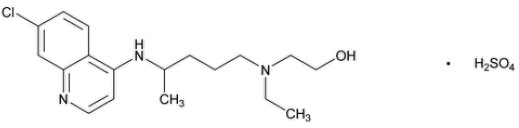
HYDROXYCHLOROQUINE 400MG 100 TAB
Generic: Hydroxychloroquine Sulfate
HYDROXYCHLOROQUINE 400MG 100 TAB
Sign up to see pricing
Licensed pharmacies, clinics, doctor's offices, and veterinary practices get instant account approval
Sign Up — Instant ApprovalDrug Information
Identification
Hydroxychloroquine Sulfate
Hydroxychloroquine Sulfate
Accord Healthcare, Inc.,
HUMAN PRESCRIPTION DRUG
Administration
TABLET
ORAL
ANDA213342
Active Ingredients
| Ingredient | Strength |
|---|---|
| HYDROXYCHLOROQUINE SULFATE | 400 mg/1 |
Pharmacological Class
Data sourced from openFDA / DailyMed. For full prescribing information, consult the drug label.
Wholesale compliance resources
Clinical Drug Information
Indications & Usage
1 INDICATIONS AND USAGE Hydroxychloroquine sulfate is an antimalarial and antirheumatic indicated for the: Treatment of uncomplicated malaria due to Plasmodium falciparum, Plasmodium malariae, Plasmodium ovale, and Plasmodium vivax in adult and pediatric patients. ( 1.1 ) Prophylaxis of malaria in geographic areas where chloroquine resistance is not reported in adult and pediatric patients. ( 1.1 ) Treatment of rheumatoid arthritis in adults. ( 1.2 ) >Treatment of systemic lupus erythematosus in adults. ( 1.3 ) Treatment of chronic discoid lupus erythematosus in adults. ( 1.4 ) Limitations of Use ( 1.1 ) : Hydroxychloroquine sulfate is not recommended for the: Treatment of complicated malaria. Treatment of chloroquine or hydroxychloroquine-resistant strains of Plasmodium species. Treatment of malaria acquired in geographic areas where chloroquine resistance occurs or when the Plasmodium species has not been identified. Prophylaxis of malaria in geographic areas where chloroquine resistance occurs. Prevention of relapses of P. vivax or P. ovale because it is not active against the hypnozoite liver stage forms of these parasites. For radical cure of P. vivax and P. ovale infections, concomitant therapy with an 8-aminoquinoline drug is necessary. 1.1 Malaria Hydroxychloroquine sulfate is indicated in adult and pediatric patients for the: Treatment of uncomplicated malaria due to Plasmodium falciparum, Plasmodium malariae, Plasmodium vivax, and Plasmodium ovale. Prophylaxis of malaria in geographic areas where chloroquine resistance is not reported. Limitations of Use: Hydroxychloroquine sulfate is not recommended for: Treatment of complicated malaria. Treatment of malaria by chloroquine or hydroxychloroquine-resistant strains of Plasmodium species [see Microbiology (12.4) ] . Treatment of malaria acquired in geographic areas where chloroquine resistance occurs or when the Plasmodium species has not been identified. Prophylaxis of malaria in geographic areas where chloroquine resistance occurs. Prevention of relapses of P. vivax or P. ovale because it is not active against the hypnozoite liver stage forms of these parasites. For radical cure of P. vivax and P. ovale infections, concomitant therapy with an 8-aminoquinoline drug is necessary [see Microbiology (12.4) ] . For the most current information about drug resistance, refer to the latest recommendations from the Center for Disease Control and Prevention 1 . 1.2 Rheumatoid Arthritis Hydroxychloroquine sulfate is indicated for the treatment of acute and chronic rheumatoid arthritis in adults. 1.3 Systemic Lupus Erythematosus Hydroxychloroquine sulfate is indicated for the treatment of systemic lupus erythematosus in adults. 1.4 Chronic Discoid Lupus Erythematosus Hydroxychloroquine sulfate is indicated for the treatment of chronic discoid lupus erythematosus in adults.
Dosage & Administration
2 DOSAGE AND ADMINISTRATION Malaria in Adult and Pediatric Patients ( 2.2 ): Prophylaxis: Begin weekly doses 2 weeks prior to travel to the endemic area, continue weekly doses while in the endemic area, and continue the weekly doses for 4 weeks after leaving the endemic area: Adults: 400 mg once a week Pediatric patients ≥ 31 kg: 6.5 mg/kg up to 400 mg, once a week Treatment of Uncomplicated Malaria: See Full Prescribing Information (FPI) for complete dosing information. Rheumatoid Arthritis in Adults ( 2.3 ): Initial dosage: 400 mg to 600 mg daily Chronic dosage: 200 mg once daily or 400 mg once daily (or in two divided doses) Systemic Lupus Erythematosus in Adults ( 2.4 ): 200 mg once daily or 400 mg once daily (or in two divided doses) Chronic Discoid Lupus Erythematosus in Adults ( 2.5 ): 200 mg once daily or 400 mg once daily (or in two divided doses) 2.1 Important Administration Instructions Administer Hydroxychloroquine sulfate orally with food or milk. Do not crush or divide the tablets. 2.2 Dosage for Malaria in Adult and Pediatric Patients Hydroxychloroquine sulfate is not recommended in pediatric patients less than 31 kg because the lowest available strength (200 mg) exceeds the recommended dose for these patients and it cannot be divided. Prophylaxis Treatment must start 2 weeks before travel to an endemic area. Advise the patient to take the prophylaxis dosage once a week, staring 2 weeks prior to travel to the endemic area, on the same day every week, continuing the same weekly dose while in the endemic area, and for 4 weeks after leaving the endemic area. The recommended prophylaxis dosage is: Adult patients: 400 mg once a week Pediatric patients ≥ 31kg: 6.5 mg/kg actual body weight (up to 400 mg) once a week Treatment of Uncomplicated Malaria The dosages for the treatment of uncomplicated malaria are: Adult patients: Administer 800 mg initially; subsequently administer 400 mg at 6 hours, 24 hours, and 48 hours after the initial dose (total dosage = 2000 mg). Pediatric patients ≥ 31 kg: Administer 13 mg/kg (up to 800 mg) initially; subsequently administer 6.5 mg/kg (up to 400 mg) at 6 hours, 24 hours, and 48 hours after the initial dose (total dosage = 31 mg/kg - up to 2000 mg). For radical cure of P. vivax and P. ovale infections, concomitant therapy with an 8-aminoquinoline drug is necessary [see Microbiology (12.4) ] . 2.3 Dosage for Rheumatoid Arthritis in Adults The recommended dosage is: Initial dosage: 400 mg to 600 mg daily as a single daily dose or two divided doses. The action of hydroxychloroquine is cumulative and may require weeks to months for maximum therapeutic effect. Daily doses exceeding 5 mg/kg (actual weight) of hydroxychloroquine sulfate increase the incidence of retinopathy [see Warnings and Precautions (5.2) ] . Chronic dosage: 200 mg once daily to 400 mg daily, as a single dose or two divided doses. Corticosteroids, salicylates, and other antirheumatic agents may be used concomitantly with hydroxychloroquine sulfate. 2.4 Dosage for Systemic Lupus Erythematosus in Adults The recommended dosage is 200 mg given once daily, or 400 mg given once daily or in two divided doses. 2.5 Dosage for Chronic Discoid Lupus Erythematosus in Adults The recommended dosage is 200 mg given once daily, or 400 mg given once daily or in two divided doses.
Adverse Reactions
6 ADVERSE REACTIONS The following adverse reactions are described in greater detail in other sections: Cardiomyopathy and Ventricular Arrhythmias [see Warnings and Precautions (5.1) ] Retinal Toxicity [see Warnings and Precautions (5.2) ] Serious Skin Reactions [see Warnings and Precautions (5.3) ] Worsening of Psoriasis [see Warnings and Precautions (5.4) ] Risks Associated with Use in Porphyria [see Warnings and Precautions (5.5) ] Hematologic Toxicity [see Warnings and Precautions (5.6) ] Hemolytic Anemia Associated with G6PD [see Warnings and Precautions (5.7) ] Skeletal Muscle Myopathy or Neuropathy [see Warnings and Precautions (5.8) ] Neuropsychiatric Reactions Including Suicidality [see Warnings and Precautions (5.9) ] Hypoglycemia [see Warnings and Precautions (5.10) ] Renal Toxicity [see Warnings and Precautions (5.11) ] The following adverse reactions have been identified during post-approval use of 4-aminoquinoline drugs, including hydroxychloroquine sulfate. Because these reactions are reported voluntarily from a population of uncertain size, it is not always possible to reliably estimate their frequency or establish a causal relationship to drug exposure: Blood and lymphatic system disorders: Bone marrow depression, anemia, aplastic anemia, agranulocytosis, leukopenia, thrombocytopenia Cardiac disorders: Cardiomyopathy, cardiac failure, QT-interval prolongation, ventricular tachycardia, torsades de pointes, atrioventricular block, bundle branch block, sick sinus syndrome, pulmonary hypertension Ear and labyrinth disorders: Vertigo, tinnitus, nystagmus, sensorineural hearing loss Eye disorders: Retinopathy, retinal pigmentation changes (typically bull’s eye appearance), visual field defects (paracentral scotomas), macular degeneration, corneal edema, corneal opacities, decreased dark adaptation Gastrointestinal disorders: Nausea, vomiting, diarrhea, abdominal pain General disorders: Fatigue Hepatobiliary disorders: Abnormal liver function tests, fulminant hepatic failure Immune system disorders: Urticaria, angioedema, bronchospasm Metabolism and nutrition disorders: Anorexia, hypoglycemia, weight loss Musculoskeletal and connective tissue disorders: Proximal myopathy, depressed tendon reflexes, abnormal nerve conduction Nervous system disorders: Ataxia, dizziness, headache, seizure, extrapyramidal disorders (dystonia, dyskinesia, tremor) Neuropsychiatric disorders: Affect/emotional lability, irritability, nervousness, psychosis, suicidal ideation, suicidal behavior, depression, hallucinations, anxiety, agitation, confusion, delusions, paranoia, mania and sleep disorders (insomnia, night terrors, nightmares) Skin and subcutaneous tissue disorders: Alopecia, hair color changes, rash, pruritus, photosensitivity, psoriasis exacerbation, hyperpigmentation, exfoliative dermatitis, erythema multiforme, acute generalized exanthematous pustulosis, Drug Rash with Eosinophilia and Systemic Symptoms (DRESS syndrome), Stevens-Johnson syndrome (SJS), toxic epidermal necrolysis (TEN) The most common adverse reactions reported are: nausea, vomiting, diarrhea, and abdominal pain. ( 6 ) To report SUSPECTED ADVERSE REACTIONS, contact Accord Healthcare Inc. at 1-866-941-7875 or FDA at 1-800-FDA-1088 or www.fda.gov/medwatch.
Information for Patients
17 PATIENT COUNSELING INFORMATION Important Administration Instructions: Advise the patient to take hydroxychloroquine sulfate with food or milk and not to crush or divide the tablet. Cardiomyopathy and Ventricular Arrhythmias: Inform the patient that serious cardiac effects, life-threatening and fatal cases have been reported with use of hydroxychloroquine sulfate. Advise patients to seek medical attention immediately if they experience any symptoms of heart rhythm changes including fast or irregular heartbeat, lightheadedness, dizziness, or syncope [see Warnings and Precautions (5.1) ] . Retinal Toxicity: Inform the patient that irreversible retinal damage has been observed in some patients with the use of hydroxychloroquine sulfate. Advise patients of the importance of the ophthalmology visits for monitoring their eyes. Instruct patients to seek medical attention promptly if they experience decreased vision or decreased dark adaptation [see Warnings and Precautions (5.2) ] . Serious Skin Reactions: Inform the patient that severe, life-threatening skin reactions have been reported with the use of hydroxychloroquine sulfate. Advise the patient to seek medical attention immediately if experiencing any of the following signs and symptoms: blisters on the skin, eyes, lips or in the mouth, itching or burning, with or without fever [see Warnings and Precautions (5.3) ]. Hepatotoxicity Associated with Porphyria Cutanea Tarda Inform the patient that liver toxicity has been reported in when hydroxychloroquine sulfate was used in patients with porphyria cutanea tarda. In some cases, PCT was diagnosed only after the occurrence of liver injury, when hydroxychloroquine sulfate was prescribed for an approved indication. Advise the patient to seek medical attention if experiencing fatigue, rash, nausea, dark urine, or jaundice [see Warnings and Precautions (5.5) ]. Skeletal Muscle Myopathy or Neuropathy: Inform the patient that muscle weakness and atrophy has been reported with hydroxychloroquine sulfate use. Advise patients to report to the physician symptoms of muscle weakness [see Warnings and Precautions (5.8) ] . Neuropsychiatric Reactions Including Suicidality: Alert patients to seek medical attention immediately if they experience new or worsening depression, suicidal thoughts, or other mood changes [see Warnings and Precautions (5.9) ] . Hypoglycemia: Inform the patient that hydroxychloroquine sulfate has been associated with severe hypoglycemia. Advise the patient to monitor blood sugar levels if possible and to seek medical attention if experiencing any of the signs and symptoms of hypoglycemia such as sweating, shakiness, weakness, dizziness, tachycardia, nausea, blurred vision, confusion, fainting, or loss of consciousness [see Warnings and Precautions (5.10) ] . Pregnancy: Inform the patient that there is a pregnancy registry that monitors pregnancy outcomes in women exposed to hydroxychloroquine sulfate during pregnancy. Encourage patients to register by contacting 1-877-311-8972 [see Use in Specific Populations (8.1) ] . For more information, go to www.accordhealthcare.us or call Accord Healthcare Inc. at 1-866-941-7875. Manufactured For: Accord Healthcare, Inc., 8041 Arco Corporate Drive, Suite 200, Raleigh, NC 27617, USA. Manufactured By: Intas Pharmaceuticals Limited, Ahmedabad-380 054, India. 10 3313 4 6030162 Issued April 2024
Clinical data sourced from openFDA drug labeling. For complete prescribing information, consult the full drug label.