ROSUVASTATIN 20MG 90 TAB
Generic: Rosuvastatin
ROSUVASTATIN 20MG 90 TAB
Sign up to see pricing
Licensed pharmacies, clinics, doctor's offices, and veterinary practices get instant account approval
Sign Up — Instant ApprovalDrug Information
Identification
Rosuvastatin
Rosuvastatin
Camber Pharmaceuticals, Inc.
HUMAN PRESCRIPTION DRUG
Administration
TABLET, FILM COATED
ORAL
ANDA207616
Active Ingredients
| Ingredient | Strength |
|---|---|
| ROSUVASTATIN CALCIUM | 20 mg/1 |
Pharmacological Class
Data sourced from openFDA / DailyMed. For full prescribing information, consult the drug label.
Wholesale compliance resources
Drug Resources
Clinical Drug Information
Indications & Usage
1 INDICATIONS AND USAGE Rosuvastatin tablets is indicated: To reduce the risk major adverse cardiovascular (CV) events (CV death, nonfatal myocardial infarction, nonfatal stroke, or an arterial revascularization procedure) in adults without established coronary heart disease who are at increased risk of CV disease based on age, high-sensitivity C-reactive protein (hsCRP) ≥2 mg/L, and at least one additional CV risk factor. As an adjunct to diet to: Reduce low-density lipoprotein cholesterol (LDL-C) in adults with primary hyperlipidemia. Reduce LDL-C and slow the progression of atherosclerosis in adults. Reduce LDL-C in adults and pediatric patients aged 8 years and older with heterozygous familial hypercholesterolemia (HeFH). As an adjunct to other LDL-C-lowering therapies, or alone if such treatments are unavailable, to reduce LDL-C in adults and pediatric patients aged 7 years and older with homozygous familial hypercholesterolemia (HoFH). As an adjunct to diet for the treatment of adults with: Primary dysbetalipoproteinemia. Hypertriglyceridemia. Rosuvastatin tablets is an HMG Co-A reductase inhibitor (statin) indicated: ( 1 ) To reduce the risk of major adverse cardiovascular (CV) events (CV death, nonfatal myocardial infarction, nonfatal stroke, or an arterial revascularization procedure) in adults without established coronary heart disease who are at increased risk of CV disease based on age, high-sensitivity C-reactive protein (hsCRP) ≥ 2 mg/L, and at least one additional CV risk factor. As an adjunct to diet to reduce LDL-C in adults with primary hyperlipidemia. to reduce LDL-C and slow the progression of atherosclerosis in adults. to reduce LDL-C in adults and pediatric patients aged 8 years and older with heterozygous familial hypercholesterolemia (HeFH). As an adjunct to other LDL-C-lowering therapies, or alone if such treatments are unavailable, to reduce LDL-C in adults and pediatric patients aged 7 years and older with homozygous familial hypercholesterolemia (HoFH). As an adjunct to diet for the treatment of adults with: Primary dysbetalipoproteinemia. Hypertriglyceridemia.
Dosage & Administration
2 DOSAGE AND ADMINISTRATION Take orally with or without food, at any time of day. ( 2.1 ) Assess LDL-C when clinically appropriate, as early as 4 weeks after initiating rosuvastatin tablets, and adjust dosage if necessary. ( 2.1 ) Adults : Recommended dosage range is 5 to 40 mg once daily. ( 2.1 ) Pediatric Patients with HeFH : Recommended dosage range is 5 to 10 mg once daily for patients aged 8 to less than 10 years of age, and 5 to 20 mg once daily for patients aged 10 years and older. ( 2.2) Pediatric Patients with HoFH : Recommended dosage is 20 mg once daily for patients aged 7 years and older. ( 2.2 ) Asian Patients : Initiate at 5 mg once daily. Consider risks and benefits of treatment if not adequately controlled at doses up to 20 mg once daily. ( 2.4 ) Patients with Severe Renal Impairment (not on hemodialysis) : Initiate at 5 mg once daily; do not exceed 10 mg once daily. ( 2.5 ) See full prescribing information for rosuvastatin tablets dosage and administration modifications due to drug interactions. ( 2.6 ) 2.1 General Dosage and Administration Information Administer rosuvastatin tablets orally as a single dose at any time of day, with or without food. Swallow the tablets whole. Assess LDL-C when clinically appropriate, as early as 4 weeks after initiating rosuvastatin tablets, and adjust the dosage if necessary. If a dose is missed, advise patients not take an extra dose. Resume treatment with the next dose. When taking rosuvastatin tablets with an aluminum and magnesium hydroxide combination antacid, administer rosuvastatin tablets at least 2 hours before the antacid [ see Drug Interactions ( 7.2 ) ]. 2.2 Recommended Dosage in Adult Patients The dosage range for rosuvastatin tablets is 5 to 40 mg orally once daily. The recommended dose of rosuvastatin tablets depends on a patient's indication for usage, LDL-C, and individual risk for CV events. 2.3 Recommended Dosage in Pediatric Patients Dosage in Pediatric Patients 8 Years of Age and Older with HeFH The recommended dosage range is 5 mg to 10 mg orally once daily in patients aged 8 years to less than 10 years and 5 mg to 20 mg orally once daily in patients aged 10 years and older. Dosage in Pediatric Patients 7 Years of Age and Older with HoFH The recommended dosage is 20 mg orally once daily. 2.4 Dosing in Asian Patients Initiate rosuvastatin tablets at 5 mg once daily due to increased rosuvastatin plasma concentrations. Consider the risks and benefits of rosuvastatin tablets when treating Asian patients not adequately controlled at doses up to 20 mg once daily [see Warnings and Precautions ( 5.1 ), Use in Specific Populations ( 8.8 ), and Clinical Pharmacology ( 12.3 )]. 2.5 Recommended Dosage in Patients with Renal Impairment In patients with severe renal impairment (CL cr less than 30 mL/min/1.73 m 2 ) not on hemodialysis, the recommended starting dosage is 5 mg once daily and should not exceed 10 mg once daily [see Warnings and Precautions ( 5.1 ) and Use in Specific Populations ( 8.6 )]. There are no dosage adjustment recommendations for patients with mild and moderate renal impairment. 2.6 Dosage Modifications Due to Drug Interactions Rosuvastatin Tablets Dosage Modifications Due to Drug Interactions Table 1 displays dosage modifications for rosuvastatin tablets due to drug interactions [see Warnings and Precautions ( 5.1 ) and Drug Interactions ( 7.1 )]. Table 1: Rosuvastatin Tablets Dosage Modifications Due to Drug Interactions Concomitantly Used Drug Rosuvastatin Tablets Dosage Modifications Cyclosporine Do not exceed 5 mg once daily. Teriflunomide Do not exceed 10 mg once daily. Enasidenib Do not exceed 10 mg once daily. Capmatinib Do not exceed 10 mg once daily. Fostamatinib Do not exceed 20 mg once daily. Febuxostat Do not exceed 20 mg once daily. Gemfibrozil Avoid concomitant use. If used concomitantly, initiate at 5 mg once daily and do not exceed 10 mg once daily. Tafamidis Avoid concomitant use. If used concomitantly, initiate at 5 mg once daily and do not exceed 20 mg once daily. Antiviral Medications Sofbuvir/velpatasvir/voxilaprevir Ledipasvir/sofosbuvir Concomitant use not recommended. o Simeprevir o Dasabuvir/ombitasvir/paritaprevir/ritonavir o Elbasvir/Grazoprevir o Sofosbuvir/Velpatasvir o Glecaprevir/Pibrentasvir o Atazanavir/Ritonavir o Lopinavir/Ritonavir Initiate at 5 mg once daily. Do not exceed 10 mg once daily. Darolutamide Do not exceed 5 mg once daily. Regorafenib Do not exceed 10 mg once daily. Rosuvastatin Tablets Administration Modifications Due to Drug Interactions When taking rosuvastatin tablets with an aluminum and magnesium hydroxide combination antacid, administer rosuvastatin tablets at least 2 hours before the antacid [see Drug Interactions ( 7.2 )] .
Adverse Reactions
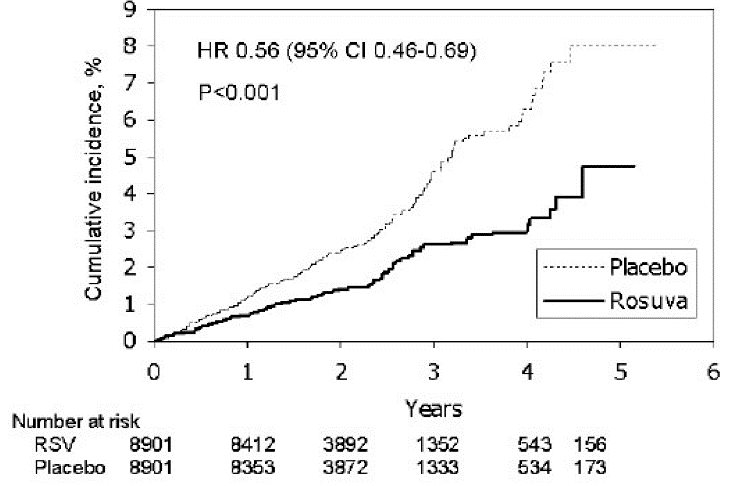
6 ADVERSE REACTIONS The following important adverse reactions are described below and elsewhere in the labeling: Myopathy and Rhabdomyolysis [see Warnings and Precautions ( 5.1 )] Immune-Mediated Necrotizing Myopathy [see Warnings and Precautions ( 5.2 )] Hepatic Dysfunction [see Warnings and Precautions ( 5.3 )] Proteinuria and Hematuria [see Warnings and Precautions ( 5.4 )] Increases in HbA1c and Fasting Serum Glucose Levels [see Warnings and Precautions ( 5.5 )] Most frequent adverse reactions (rate ≥2%) are headache, nausea, myalgia, asthenia, and constipation. ( 6.1 ) To report SUSPECTED ADVERSE REACTIONS, contact Westminster Pharmaceuticals, LLC at 1-844-221-7294 or FDA at 1-800-FDA-1088 or www.fda.gov/medwatch. 6.1 Clinical Trials Experience Because clinical trials are conducted under widely varying conditions, adverse reaction rates observed in the clinical trials of a drug cannot be directly compared to rates in the clinical trials of another drug and may not reflect the rates observed in clinical practice. Adverse reactions reported in ≥2% of patients in placebo-controlled clinical studies and at a rate greater than placebo are shown in Table 2. These studies had a treatment duration of up to 12 weeks. Table 2: Adverse Reactions Reported in ≥2% of Patients Treated with Rosuvastatin and > Placebo in Placebo-Controlled Trials Adverse Reactions Placebo N=382 % Rosuvastatin 5 mg N=291 % Rosuvastatin 10 mg N=283 % Rosuvastatin 20 mg N=64 % Rosuvastatin 40 mg N=106 % Total Rosuvastatin 5 mg-40 mg N=744 % Headache 5.0 5.5 4.9 3.1 8.5 5.5 Nausea 3.1 3.8 3.5 6.3 0 3.4 Myalgia 1.3 3.1 2.1 6.3 1.9 2.8 Asthenia 2.6 2.4 3.2 4.7 0.9 2.7 Constipation 2.4 2.1 2.1 4.7 2.8 2.4 Other adverse reactions reported in clinical studies were abdominal pain, dizziness, hypersensitivity (including rash, pruritus, urticaria, and angioedema) and pancreatitis. The following laboratory abnormalities have also been reported: dipstick-positive proteinuria and microscopic hematuria; elevated creatine phosphokinase, transaminases, glucose, glutamyl transpeptidase, alkaline phosphatase, and bilirubin; and thyroid function abnormalities. In the METEOR study, patients were treated with rosuvastatin 40 mg (n=700) or placebo (n=281) with a mean treatment duration of 1.7 years. Adverse reactions reported in ≥2% of patients and at a rate greater than placebo are shown in Table 3. Table 3: Adverse Reactions Reported in ≥2% of Patients Treated with Rosuvastatin and > Placebo in the METEOR Trial Adverse Reactions Placebo N=281 % Rosuvastatin 40 mg N=700 % Myalgia 12.1 12.7 Arthralgia 7.1 10.1 Headache 5.3 6.4 Dizziness 2.8 4.0 Increased CPK 0.7 2.6 Abdominal pain 1.8 2.4 ALT greater than 3x ULN Frequency recorded as abnormal laboratory value. 0.7 2.2 In the JUPITER study, patients were treated with rosuvastatin 20 mg (n=8,901) or placebo (n=8,901) for a mean duration of 2 years. In JUPITER, there was a significantly higher frequency of diabetes mellitus reported in patients taking rosuvastatin (2.8%) versus patients taking placebo (2.3%). Mean HbA1c was significantly increased by 0.1% in rosuvastatin-treated patients compared to placebo-treated patients. The number of patients with a HbA1c >6.5% at the end of the trial was significantly higher in rosuvastatin-treated versus placebo-treated patients [see Clinical Studies ( 14 )] . Adverse reactions reported in ≥2% of patients and at a rate greater than placebo are shown in Table 4. Table 4: Adverse Reactions Reported in ≥2% of Patients Treated with Rosuvastatin and > Placebo in the JUPITER Trial Adverse Reactions Placebo N=8,901 % Rosuvastatin 20 mg N=8,901 % Myalgia 6.6 7.6 Arthralgia 3.2 3.8 Constipation 3.0 3.3 Diabetes mellitus 2.3 2.8 Nausea 2.3 2.4 Pediatric Patients with HeFH In a 12‑week controlled study in pediatric patients 10 to 17 years of age with HeFH with rosuvastatin 5 to 20 mg daily [see Use in Specific Populations ( 8.4 ) and Clinical Studies ( 14 )] , elevations in serum CK greater than 10 x ULN were observed more frequently in rosuvastatin-treated patients compared with patients receiving placebo. Four of 130 (3%) patients treated with rosuvastatin (2 treated with 10 mg and 2 treated with 20 mg) had increased CK greater than 10 x ULN, compared to 0 of 46 patients on placebo. 6.2 Postmarketing Experience The following adverse reactions have been identified during postapproval use of rosuvastatin. Because these reactions are reported voluntarily from a population of uncertain size, it is not always possible to reliably estimate their frequency or establish a causal relationship to drug exposure. Blood Disorders : thrombocytopenia Hepatobiliary Disorders : hepatitis, jaundice, fatal and non-fatal hepatic failure Musculoskeletal Disorders : arthralgia, rare reports of immune-mediated necrotizing myopathy associated with statin use Nervous System Disorders : peripheral neuropathy, rare postmarketing reports of cognitive impairment (e.g., memory loss, forgetfulness, amnesia, memory impairment, and confusion) associated with the use of all statins. The reports are generally nonserious, and reversible upon statin discontinuation, with variable times to symptom onset (1 day to years) and symptom resolution (median of 3 weeks). There have been rare reports of new-onset or exacerbation of myasthenia gravis, including ocular myasthenia, and reports of recurrence when the same or a different statin was administered. Psychiatric Disorders : depression, sleep disorders (including insomnia and nightmares) Reproductive System and Breast Disorders : gynecomastia Respiratory Disorders : interstitial lung disease Skin and Subcutaneous Tissue Disorders : drug reaction with eosinophilia and systemic symptoms (DRESS), lichenoid drug eruption
Information for Patients
17 PATIENT COUNSELING INFORMATION Advise the patient to read the FDA-approved patient labeling (Patient Information). Myopathy and Rhabdomyolysis Advise patients that rosuvastatin may cause myopathy and rhabdomyolysis. Inform patients that the risk is also increased when taking certain types of medication and they should discuss all medication, both prescription and over the counter, with their healthcare provider. Instruct patients to promptly report any unexplained muscle pain, tenderness or weakness particularly if accompanied by malaise or fever [see Warnings and Precautions ( 5.1 ), and Drug Interactions ( 7.1 )] . Hepatic Dysfunction Inform patients that rosuvastatin may cause liver enzyme elevations and possibly liver failure. Advise patients to promptly report fatigue, anorexia, right upper abdominal discomfort, dark urine or jaundice [see Warnings and Precautions ( 5.3 )] . Increases in HbA1c and Fasting Serum Glucose Levels Inform patients that increases in HbA1c and fasting serum glucose levels may occur with rosuvastatin. Encourage patients to optimize lifestyle measures, including regular exercise, maintaining a healthy body weight, and making healthy food choices [see Warnings and Precautions ( 5.5 )] . Pregnancy Advise pregnant patients and patients who can become pregnant of the potential risk to a fetus. Advise patients to inform their healthcare provider of a known or suspected pregnancy to discuss if rosuvastatin should be discontinued [see Use in Specific Populations ( 8.1 )] . Lactation Advise patients that breastfeeding during treatment with rosuvastatin is not recommended [see Use in Specific Populations ( 8.2 )] . Concomitant Use of Antacids When taking rosuvastatin with an aluminum and magnesium hydroxide combination antacid, the antacid should be taken at least 2 hours after rosuvastatin administration [see Drug Interactions ( 7.2 )]. Missed Doses If a dose is missed, advise patients not take an extra dose. Just resume the usual schedule [see Dosage and Administration ( 2.1 )] . Distributed by: Westminster Pharmaceuticals, LLC Nashville, TN 37217 Manufactured by: Renata PLC (General Plant-2) Noyapara, Bhawal Mirzapur Rajendrapur, Gazipur, 1700 Bangladesh PATIENT INFORMATION Rosuvastatin (roe-SOO-va-STAT-in) Tablets, USP (rosuvastatin) tablets, for oral use Read this Patient Information carefully before you start taking rosuvastatin tablets and each time you get a refill. If you have any questions about rosuvastatin tablets, ask your healthcare provider. Only your healthcare provider can determine if rosuvastatin tablets is right for you. What is rosuvastatin tablets? Rosuvastatin tablets is a prescription medicine that contains a cholesterol-lowering medicine called rosuvastatin. • Rosuvastatin tablets are used to: to reduce the risk of major adverse cardiovascular (CV) events, such as death from cardiovascular disease, heart attack, stroke or the need for procedures to improve blood flow to the heart called arterial revascularization in adults who do not have known heart disease but do have certain additional risk factors. along with diet to: lower the level of low-density lipoprotein (LDL-C) cholesterol or "bad" cholesterol in adults with primary hyperlipidemia. slow the buildup of fatty deposits (plaque) in the walls of blood vessels. treat adults and children 8 years of age and older with high blood cholesterol due to heterozygous familial hypercholesterolemia (HeFH) (an inherited condition that causes high levels of LDL-C). along with other cholesterol lowering treatments or alone if such treatments are unavailable in adults and children 7 years of age and older with homozygous familial hypercholesterolemia (HoFH) (an inherited condition that causes high levels of LDL-C). along with diet for the treatment of adults with: primary dysbetalipoproteinemia (an inherited condition that causes high levels of cholesterol and fat). hypertriglyceridemia. It is not known if rosuvastatin tablets is safe and effective in children younger than 8 years of age with HeFH or children younger than 7 years of age with HoFH or in children with other types of hyperlipidemias (other than HeFH or HoFH). Do not take rosuvastatin tablets if you: • have liver problems. • are allergic to rosuvastatin or any of the ingredients in rosuvastatin tablets. See the end of this leaflet for a complete list of ingredients in rosuvastatin tablets. Symptoms of allergic reactions include rash, itching, hives, and swelling. Before you take rosuvastatin tablets, tell your healthcare provider about all of your medical conditions, including if you: • have unexplained muscle aches or weakness. • have or have had kidney problems. • have or have had liver problems. • drink more than 2 glasses of alcohol daily. • have thyroid problems. • are of Asian descent. • are pregnant or think you may be pregnant, or are planning to become pregnant. If you become pregnant while taking rosuvastatin tablets, call your healthcare provider right away to discuss your rosuvastatin tablets treatment. • are breastfeeding. Rosuvastatin can pass into your breast milk and may harm your baby. Talk to your healthcare provider about the best way to feed your baby if you take rosuvastatin tablets. Do not breastfeed while taking rosuvastatin tablets. Tell your healthcare provider about all the medicines you take, including prescription and over-the-counter medicines, vitamins, and herbal supplements. Tell your healthcare provider who prescribes rosuvastatin tablets if another healthcare provider increases the dose of another medicine you are taking. Rosuvastatin tablets may affect the way other medicines work, and other medicines may affect how rosuvastatin tablets works. Especially tell your healthcare provider if you take: • coumarin anticoagulants (medicines that prevent blood clots, such as warfarin) • antacids (medicines you take for heartburn that contain aluminum and magnesium hydroxide Taking rosuvastatin tablets with certain medicines may increase the risk of muscle problems. Especially tell your healthcare provider if you take: • cyclosporine (a medicine for your immune system) • teriflunomide (a medicine used to treat relapsing remitting multiple sclerosis) • enasidenib (a medicine used to treat acute myeloid leukemia) • capmatinib (a medicine for the treatment of non-small cell lung cancer) • fostamatinib (a medicine used to treat low platelet counts) • febuxostat (a medicine used to treat and prevent high blood levels of uric acid) • gemfibrozil (a fibric acid medicine for lowering cholesterol) • tafamidis [used to treat cardiomyopathy (enlarged and thickened heart muscle)] • anti-viral medicines including certain HIV or hepatitis C virus drugs such as: lopinavir, ritonavir, fosamprenavir, tipranavir, atazanavir, simeprevir combination of ▪ sofosbuvir/velpatasvir/voxilaprevir ▪ dasabuvir/ombitasvir/paritaprevir/ritonavir ▪ elbasvir/grazoprevir ▪ sofosbuvir/velpatasvir ▪ glecaprevir/pibrentasvir and all other combinations with ledipasvir including ledipasvir/sofosbuvir • darolutamide (a medicine for the treatment of prostate cancer) • regorafenib (a medicine used to treat cancer of the colon and rectum) • fibric acid derivatives (such as fenofibrate) • ticagrelor (helps reduce the chance of a blood clot formation that can block a blood vessel) • niacin or nicotinic acid • colchicine (a medicine used to treat gout) Ask your healthcare provider or pharmacist for a list of these medicines if you are not sure. Know the medicines you take. Keep a list of them to show your healthcare provider and pharmacist when you get new medicine. How should I take rosuvastatin tablets? • Take rosuvastatin tablets exactly as your healthcare provider tells you to take it. • Take rosuvastatin tablets, by mouth, 1 time each day. Swallow the tablet whole. • Rosuvastatin tablets can be taken at any time of day, with or without food. • Do not change your dose or stop rosuvastatin tablets without talking to your healthcare provider, even if you are feeling well. • Your healthcare provider may do blood tests to check your cholesterol levels before and during your treatment with rosuvastatin tablets. Your healthcare provider may change your dose of rosuvastatin tablets if needed. • While taking rosuvastatin tablets, continue to follow your cholesterol-lowering diet and to exercise as your healthcare provider told you to. • If you take a medicine called an antacid that contains a combination of aluminum and magnesium hydroxide, take rosuvastatin tablets at least 2 hours before you take the antacid. • If you miss a dose of rosuvastatin tablets, take your next dose at your normal scheduled time. Do not take an extra dose of rosuvastatin tablets. • In case of an overdose, get medical help or contact a live Poison Center expert right away at 1-800-222-1222. Advice is also available online at poisonhelp.org. What are the possible side effects of rosuvastatin tablets? Rosuvastatin tablets may cause serious side effects, including: • Muscle pain, tenderness and weakness (myopathy) . Muscle problems, including muscle breakdown, can be serious in some people and rarely cause kidney damage that can lead to death. Tell your healthcare provider right away if: you have unexplained muscle pain, tenderness, or weakness, especially if you have a fever or feel more tired than usual, while you take rosuvastatin tablets. you have muscle problems that do not go away even after your healthcare provider has told you to stop taking rosuvastatin tablets. Your healthcare provider may do further tests to diagnose the cause of your muscle problems. Your chances of getting muscle problems are higher if you: are taking certain other medicines while you take rosuvastatin tablets (see "Especially tell your healthcare provider if you take") are 65 years of age or older are of Asian descent have thyroid problems (hypothyroidism) that are not controlled have kidney problems are taking higher doses of rosuvastatin tablets • Liver problems. Your healthcare provider may do blood tests to check your liver before you start taking rosuvastatin tablets and if you have symptoms of liver problems while you take rosuvastatin tablets. Call your healthcare provider right away if you have any of the following symptoms of liver problems: feel unusually tired or weak loss of appetite upper belly pain dark urine yellowing of your skin or the whites of your eyes • Protein and blood in the urine . Rosuvastatin tablets may cause you to have protein and blood in your urine. If you develop protein or blood in your urine, your healthcare provider may decrease your dose of rosuvastatin tablets. • Increase in blood sugar (glucose) levels . Rosuvastatin tablets may cause an increase in your blood sugar levels. The most common side effects may include headache, nausea, muscle aches and pains, weakness, and constipation. Tell your healthcare provider if you have any side effect that bothers you or that does not go away. For more information, ask your healthcare provider or pharmacist. Call your doctor for medical advice about side effects. You may report side effects to FDA at 1-800-FDA-1088. How should I store rosuvastatin tablets? • Store rosuvastatin tablets at room temperature, between 68°F to 77°F (20°C to 25°C) and in a dry place. Keep rosuvastatin tablets and all medicines out of the reach of children. General Information about the safe and effective use of rosuvastatin tablets Medicines are sometimes prescribed for purposes other than those listed in a Patient Information leaflet. Do not use rosuvastatin tablets for a condition for which it was not prescribed. Do not give rosuvastatin tablets to other people, even if they have the same medical condition you have. It may harm them. You can ask your pharmacist or healthcare provider for information about rosuvastatin tablets that is written for health professionals. What are the Ingredients in rosuvastatin tablets? Active Ingredient: rosuvastatin as rosuvastatin calcium Inactive Ingredients: anhydrous lactose, lactose monohydrate, anhydrous dibasic calcium phosphate, microcrystalline cellulose (101, 102), crospovidone, magnesium stearate, hypromellose 2910, titanium dioxide, triacetin, D&C yellow #10 aluminium lake, FD&C red #40/allura red AC aluminium lake, FD&C blue #2/ indigo carmine aluminium lake, FD&C yellow #6/ sunset yellow FCF aluminium lake. Distributed by: Westminster Pharmaceuticals, LLC Nashville, TN 37217 Manufactured by: Renata PLC (General Plant-2) Noyapara, Bhawal Mirzapur Rajendrapur, Gazipur, 1700 Bangladesh This Patient Information has been approved by the U.S. Food and Drug Administration Rev. 07/2025
Clinical data sourced from openFDA drug labeling. For complete prescribing information, consult the full drug label.