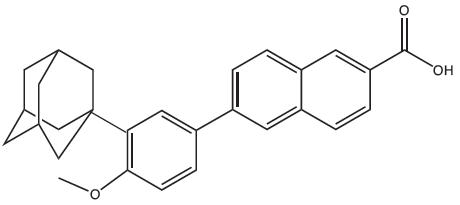
ADAPALENE BENZOYL PEROXIDE TOPICAL GEL .01%, 2.5 PUMP 45 G
Generic: ADAPALENE and BENZOYL PEROXIDE
ADAPALENE BENZOYL PEROXIDE TOPICAL GEL .01%, 2.5 PUMP 45 G
Sign up to see pricing
Licensed pharmacies, clinics, doctor's offices, and veterinary practices get instant account approval
Sign Up — Instant ApprovalDrug Information
Identification
ADAPALENE and BENZOYL PEROXIDE
ADAPALENE and BENZOYL PEROXIDE
Sun Pharmaceutical Industries, Inc.
HUMAN PRESCRIPTION DRUG
Administration
GEL
TOPICAL
ANDA206959
Active Ingredients
| Ingredient | Strength |
|---|---|
| ADAPALENE | 1 mg/g |
| BENZOYL PEROXIDE | 25 mg/g |
Pharmacological Class
Data sourced from openFDA / DailyMed. For full prescribing information, consult the drug label.
Wholesale compliance resources
Clinical Drug Information
Indications & Usage
1 INDICATIONS AND USAGE Adapalene and benzoyl peroxide gel 0.1%/2.5% is indicated for the topical treatment of acne vulgaris in patients 9 years of age and older. Adapalene and benzoyl peroxide gel 0.1%/2.5% is a combination of adapalene, a retinoid, and benzoyl peroxide, and is indicated for the topical treatment of acne vulgaris in patients 9 years of age and older.
Dosage & Administration
2 DOSAGE AND ADMINISTRATION For topical use only; adapalene and benzoyl peroxide gel 0.1%/2.5% is not for oral, ophthalmic, or intravaginal use. Apply a thin film of adapalene and benzoyl peroxide gel to affected areas of the face and/or trunk once daily after washing. Use a pea-sized amount for each area of the face (e.g., forehead, chin, each cheek). Avoid the eyes, lips and mucous membranes. Adapalene and benzoyl peroxide gel 0.1%/2.5% is not for oral, ophthalmic, or intravaginal use. ( 2 ) Apply a thin film of adapalene and benzoyl peroxide gel to affected areas of the face and/or trunk once daily after washing. Use a pea-sized amount for each area of the face (e.g., forehead, chin, each cheek). Avoid the eyes, lips and mucous membranes. ( 2 )
Adverse Reactions
6 ADVERSE REACTIONS Most commonly reported adverse events (≥1%) in patients treated with adapalene and benzoyl peroxide gel 0.1%/2.5% were dry skin, contact dermatitis, application site burning, application site irritation and skin irritation. ( 6 ) To report SUSPECTED ADVERSE REACTIONS, contact Taro Pharmaceuticals U.S.A., Inc. at 1-866-923-4914 or FDA at 1-800-FDA-1088 or www.fda.gov/medwatch. 6.1 Clinical Studies Experience Because clinical studies are conducted under widely varying conditions, adverse reaction rates observed in the clinical studies of a drug cannot be directly compared to rates in the clinical studies of another drug and may not reflect the rates observed in practice. During clinical trials, 1401 subjects were exposed to adapalene and benzoyl peroxide gel 0.1%/2.5%. A total of 1036 subjects with acne vulgaris, 12 years and older, were treated once daily for 12 weeks to 12 months. Related adverse events reported within 12 weeks of treatment and in at least 1% of subjects treated with adapalene and benzoyl peroxide gel and those reported in subjects treated with the vehicle gel are presented in Table 1: Table 1: Drug Related Adverse Events Reported in Clinical Trials by At Least 1% of Patients Treated For 12 Weeks System Organ Class/ Preferred Term Adapalene and benzoyl peroxide gel N = 564 Vehicle gel N = 489 Subjects with AE (s) 14% 4% Dry Skin 7% 2% Contact dermatitis 3% <1% Application site burning 2% <1% Application site irritation 1% <1% Skin irritation 1% 0% Local tolerability evaluations, presented in Table 2, were conducted at each study visit in clinical trials by assessment of erythema, scaling, dryness, burning, and stinging. Table 2: Incidence of Local Cutaneous Irritation in Controlled Clinical Trials (N = 553) Treatment Emergent Signs and Symptoms Maximum Severity During Treatment End of Treatment Severity (12 Weeks) Mild Moderate Severe Mild Moderate Severe Erythema 27% 13% 1% 8% 2% 1% Scaling 35% 11% 1% 9% 1% <1% Dryness 41% 13% 1% 10% 2% <1% Stinging/burning 41% 15% 3% 7% 2% 1% Analysis over the 12-week period showed that local tolerability scores for erythema, scaling, dryness, and stinging/burning peaked at Week 1 of therapy and decreased thereafter. During a pediatric clinical trial, 285 children with acne vulgaris, 9 to 11 years of age were treated with adapalene and benzoyl peroxide gel or with the vehicle gel once daily for 12 weeks. Overall, the safety profile of adapalene and benzoyl peroxide gel in these subjects is comparable to the safety profile observed in older subjects 12 years of age and above, both in the nature and frequency of the observed events. Analysis of local tolerability evaluations shows similar incidence of treatment emergent signs and symptoms as in subjects 12 years of age and above, with local tolerability signs and symptoms peaking during the first week and decreasing over time. 6.2 Postmarketing Experience The following adverse reactions have been identified during postapproval use of adapalene and benzoyl peroxide gel: eyelid edema, sunburn, blister, pain of skin, pruritus, swelling face, conjunctivitis, skin discoloration, rash, eczema, throat tightness and allergic contact dermatitis. Because these reactions are reported voluntarily from a population of uncertain size, it is not always possible to reliably estimate their frequency or establish a causal relationship to drug exposure.
Information for Patients
17 PATIENT COUNSELING INFORMATION [See FDA Approved Patient Labeling (Patient Information) ] Information for Patients Advise patients to cleanse the area to be treated with a mild or soapless cleanser; pat dry. Apply adapalene and benzoyl peroxide gel as a thin layer, avoiding the eyes, lips and mucous membranes. Advise patients not to use more than the recommended amount and not to apply more than once daily as this will not produce faster results, but may increase irritation. Adapalene and benzoyl peroxide gel may cause irritation such as erythema, scaling, dryness, stinging or burning. Advise patients to minimize exposure to sunlight, including sunlamps. Recommend the use of sunscreen products and protective apparel, (e.g., hat) when exposure cannot be avoided. Adapalene and benzoyl peroxide gel may bleach hair and colored fabric.
Clinical data sourced from openFDA drug labeling. For complete prescribing information, consult the full drug label.