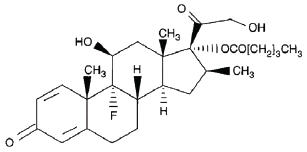
BETAMETHASONE VALERATE TOPICAL FOAM 0.0012 50CT
Generic: Betamethasone Valerate
BETAMETHASONE VALERATE TOPICAL FOAM 0.0012 50CT
Sign up to see pricing
Licensed pharmacies, clinics, doctor's offices, and veterinary practices get instant account approval
Sign Up — Instant ApprovalDrug Information
Identification
Betamethasone Valerate
Betamethasone Valerate
Sun Pharmaceutical Industries, Inc.
HUMAN PRESCRIPTION DRUG
Administration
AEROSOL, FOAM
TOPICAL
ANDA208204
Active Ingredients
| Ingredient | Strength |
|---|---|
| BETAMETHASONE VALERATE | 1.2 mg/g |
Pharmacological Class
Data sourced from openFDA / DailyMed. For full prescribing information, consult the drug label.
Wholesale compliance resources
Drug Resources
Clinical Drug Information
Indications & Usage
INDICATIONS AND USAGE Betamethasone valerate foam, 0.12% is a medium potency topical corticosteroid indicated for relief of the inflammatory and pruritic manifestations of corticosteroid-responsive dermatoses of the scalp.
Warnings
WARNING FLAMMABLE. AVOID FIRE, FLAME OR SMOKING DURING AND IMMEDIATELY FOLLOWING APPLICATION. Keep out of reach of children. Contents under pressure. Do not puncture or incinerate container. Do not expose to heat or store at temperatures above 120°F (49°C).
Dosage & Administration
DOSAGE AND ADMINISTRATION Note: For proper dispensing of foam, can must be inverted. For application to the scalp invert can and dispense a small amount of betamethasone valerate foam, 0.12% onto a saucer or other cool surface. Do not dispense directly onto hands as foam will begin to melt immediately upon contact with warm skin. Pick up small amounts of foam with fingers and gently massage into affected area until foam disappears. Repeat until entire affected scalp area is treated. Apply twice daily, once in the morning and once at night. As with other corticosteroids, therapy should be discontinued when control is achieved. If no improvement is seen within 2 weeks, reassessment of the diagnosis may be necessary. Betamethasone valerate foam, 0.12% should not be used with occlusive dressings unless directed by a physician.
Adverse Reactions
ADVERSE REACTIONS The most frequent adverse event was burning/itching/stinging at the application site; the incidence and severity of this event were as follows: Incidence and severity of burning/itching/stinging Maximum severity Product Total incidence Mild Moderate Severe Betamethasone Valerate Foam n=63 34 (54%) 28 (44%) 5 (8%) 1 (2%) Betamethasone valerate lotion n=63 33 (52%) 26 (41%) 6 (10%) 1 (2%) Placebo Foam n=32 24 (75%) 13 (41%) 7 (22%) 4 (12%) Placebo Lotion n=30 20 (67%) 12 (40%) 5 (17%) 3 (10%) Other adverse events which were considered to be possibly, probably, or definitely related to betamethasone valerate foam, 0.12% occurred in 1 patient each; these were paresthesia, pruritus, acne, alopecia, and conjunctivitis. The following additional local adverse reactions have been reported with topical corticosteroids, and they may occur more frequently with the use of occlusive dressings. These reactions are listed in an approximately decreasing order of occurrence: irritation; dryness; folliculitis; acneiform eruptions; hypopigmentation; perioral dermatitis; allergic contact dermatitis; secondary infection; skin atrophy; striae; and miliaria. Systemic absorption of topical corticosteroids has produced reversible hypothalamic-pituitary-adrenal (HPA) axis suppression, manifestations of Cushing's syndrome, hyperglycemia, and glucosuria in some patients.
Information for Patients
Information for Patients Patients using topical corticosteroids should receive the following information and instructions: This medication is to be used as directed by the physician. It is for external use only. Avoid contact with the eyes. This medication should not be used for any disorder other than that for which it was prescribed. The treated scalp area should not be bandaged or otherwise covered or wrapped so as to be occlusive unless directed by the physician. Patients should report to their physician any signs of local adverse reactions. As with other corticosteroids, therapy should be discontinued when control is achieved. If no improvement is seen within 2 weeks, contact the physician.
Clinical data sourced from openFDA drug labeling. For complete prescribing information, consult the full drug label.