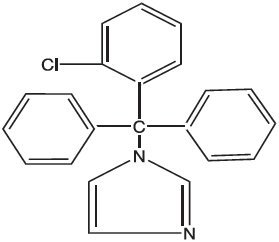
CLOTRIMAZOLE AND BETAMETHASONE DIPROPIONATE CREAM, USP 45 G
Generic: Clotrimazole and Betamethasone Dipropionate
CLOTRIMAZOLE AND BETAMETHASONE DIPROPIONATE CREAM, USP 45 G
Sign up to see pricing
Licensed pharmacies, clinics, doctor's offices, and veterinary practices get instant account approval
Sign Up — Instant ApprovalDrug Information
Identification
Clotrimazole and Betamethasone Dipropionate
Clotrimazole and Betamethasone Dipropionate
Taro Pharmaceuticals U.S.A., Inc.
HUMAN PRESCRIPTION DRUG
Administration
CREAM
TOPICAL
ANDA075673
Active Ingredients
| Ingredient | Strength |
|---|---|
| BETAMETHASONE DIPROPIONATE | .5 mg/g |
| CLOTRIMAZOLE | 10 mg/g |
Pharmacological Class
Data sourced from openFDA / DailyMed. For full prescribing information, consult the drug label.
Wholesale compliance resources
Clinical Drug Information
Indications & Usage
1 INDICATIONS AND USAGE Clotrimazole and Betamethasone Dipropionate Cream is a combination of an azole antifungal and corticosteroid and is indicated for the topical treatment of symptomatic inflammatory tinea pedis, tinea cruris, and tinea corporis due to Epidermophyton floccosum , Trichophyton mentagrophytes , and Trichophyton rubrum in patients 17 years and older. Clotrimazole and Betamethasone Dipropionate Cream contains a combination of clotrimazole, an azole antifungal, and betamethasone dipropionate, a corticosteroid, and is indicated for the topical treatment of symptomatic inflammatory tinea pedis, tinea cruris, and tinea corporis due to Epidermophyton floccosum , Trichophyton mentagrophytes , and Trichophyton rubrum in patients 17 years and older. ( 1 )
Dosage & Administration
2 DOSAGE AND ADMINISTRATION Treatment of tinea corporis or tinea cruris: Apply a thin film of clotrimazole and betamethasone dipropionate cream into the affected skin areas twice a day for one week. Do not use more than 45 grams per week. Do not use with occlusive dressings. If a patient shows no clinical improvement after 1 week of treatment with clotrimazole and betamethasone dipropionate cream, the diagnosis should be reviewed. Do not use longer than 2 weeks. Treatment of tinea pedis: Gently massage a sufficient amount of clotrimazole and betamethasone dipropionate cream into the affected skin areas twice a day for two weeks. Do not use more than 45 grams per week. Do not use with occlusive dressings. If a patient shows no clinical improvement after 2 weeks of treatment with clotrimazole and betamethasone dipropionate cream, the diagnosis should be reviewed. Do not use longer than 4 weeks. Clotrimazole and betamethasone dipropionate cream is for topical use only. It is not for oral, ophthalmic, or intravaginal use. Avoid contact with eyes. Wash hands after each application. Tinea pedis: Apply a thin film to the affected skin areas twice a day for 2 weeks. Do not use longer than 4 weeks. ( 2 ) Tinea cruris and tinea corporis: Apply a thin film to the affected skin area twice a day for 1 week. Do not use longer than 2 weeks. ( 2 ) Do not use with occlusive dressings unless directed by a physician. ( 2 ) Not for ophthalmic, oral or intravaginal use. ( 2 )
Adverse Reactions
6 ADVERSE REACTIONS Most common adverse reactions reported for clotrimazole and betamethasone dipropionate cream were paraesthesia in 1.9% of patients and rash, edema, and secondary infections each in less than 1% of patients. ( 6.1 ) To report SUSPECTED ADVERSE REACTIONS, contact Taro Pharmaceuticals U.S.A., Inc., at 1-866-923-4914 or FDA at 1-800-FDA-1088 or www.fda.gov/medwatch. 6.1 Clinical Trial Experience Because clinical trials are conducted under widely varying conditions, adverse reaction rates observed in the clinical trials of a drug cannot be directly compared to rates in the clinical trials of another drug and may not reflect the rates observed in practice. In clinical trials common adverse reaction reported for clotrimazole and betamethasone dipropionate cream was paresthesia in 1.9% of patients. Adverse reactions reported at a frequency < 1% included rash, edema, and secondary infection. 6.2 Postmarketing Experience Because adverse reactions are reported voluntarily from a population of uncertain size, it is not always possible to reliably estimate their frequency or establish a causal relationship to drug exposure. The following local adverse reactions have been reported with topical corticosteroids: itching, irritation, dryness, folliculitis, hypertrichosis, acneiform eruptions, hypopigmentation, perioral dermatitis, allergic contact dermatitis, maceration of the skin, skin atrophy, striae, miliaria, capillary fragility (ecchymoses), telangiectasia, and sensitization (local reactions upon repeated application of product). Ophthalmic adverse reactions of blurred vision, cataracts, glaucoma, increased intraocular pressure, and central serous chorioretinopathy have been reported with the use of topical corticosteroids, including topical betamethasone products. Adverse reactions reported with the use of clotrimazole are: erythema, stinging, blistering, peeling, edema, pruritus, urticaria, and general irritation of the skin.
Information for Patients
17 PATIENT COUNSELING INFORMATION Advise the patient to read the FDA-approved patient labeling (Patient Information). Inform the patient of the following: Pregnancy Advise pregnant women that clotrimazole and betamethasone dipropionate cream may increase the risk of having a low birthweight infant and to use clotrimazole and betamethasone dipropionate cream on the smallest area of skin and for the shortest duration possible [see Use in Specific Populations (8.1) ]. Lactation Advise a woman to use clotrimazole and betamethasone dipropionate cream on the smallest area of skin and for the shortest duration possible while breastfeeding. Advise breastfeeding women not to apply clotrimazole and betamethasone dipropionate cream directly to the nipple and areola to avoid direct infant exposure [see Use in Specific Populations (8.2) ]. Important Administration Instructions Inform the patient of the following: Use clotrimazole and betamethasone dipropionate cream as directed by the physician. It is for external use only. Avoid contact with the eyes, the mouth, or intravaginally. Advise patients to report any visual symptoms to their healthcare providers. Do not use clotrimazole and betamethasone dipropionate cream on the face or underarms. Do not use more than 45 grams of clotrimazole and betamethasone dipropionate cream per week. When using clotrimazole and betamethasone dipropionate cream in the groin area, patients should use the medication for 2 weeks only, and apply the cream sparingly. Patients should wear loose-fitting clothing. Notify the physician if the condition persists after 2 weeks. Do not use clotrimazole and betamethasone dipropionate cream for any disorder other than that for which it was prescribed. Do not bandage, cover or wrap the treatment area unless directed by the physician. Avoid use of clotrimazole and betamethasone dipropionate cream in the diaper area, as diapers or plastic pants may constitute occlusive dressing. Report any signs of local adverse reactions to the physician. Advise patients that local reactions and skin atrophy are more likely to occur with occlusive use or prolonged use. This medication is to be used for the full prescribed treatment time, even though the symptoms may have improved. Notify the physician if there is no improvement after 1 week of treatment for tinea cruris or tinea corporis, or after 2 weeks for tinea pedis.
Clinical data sourced from openFDA drug labeling. For complete prescribing information, consult the full drug label.