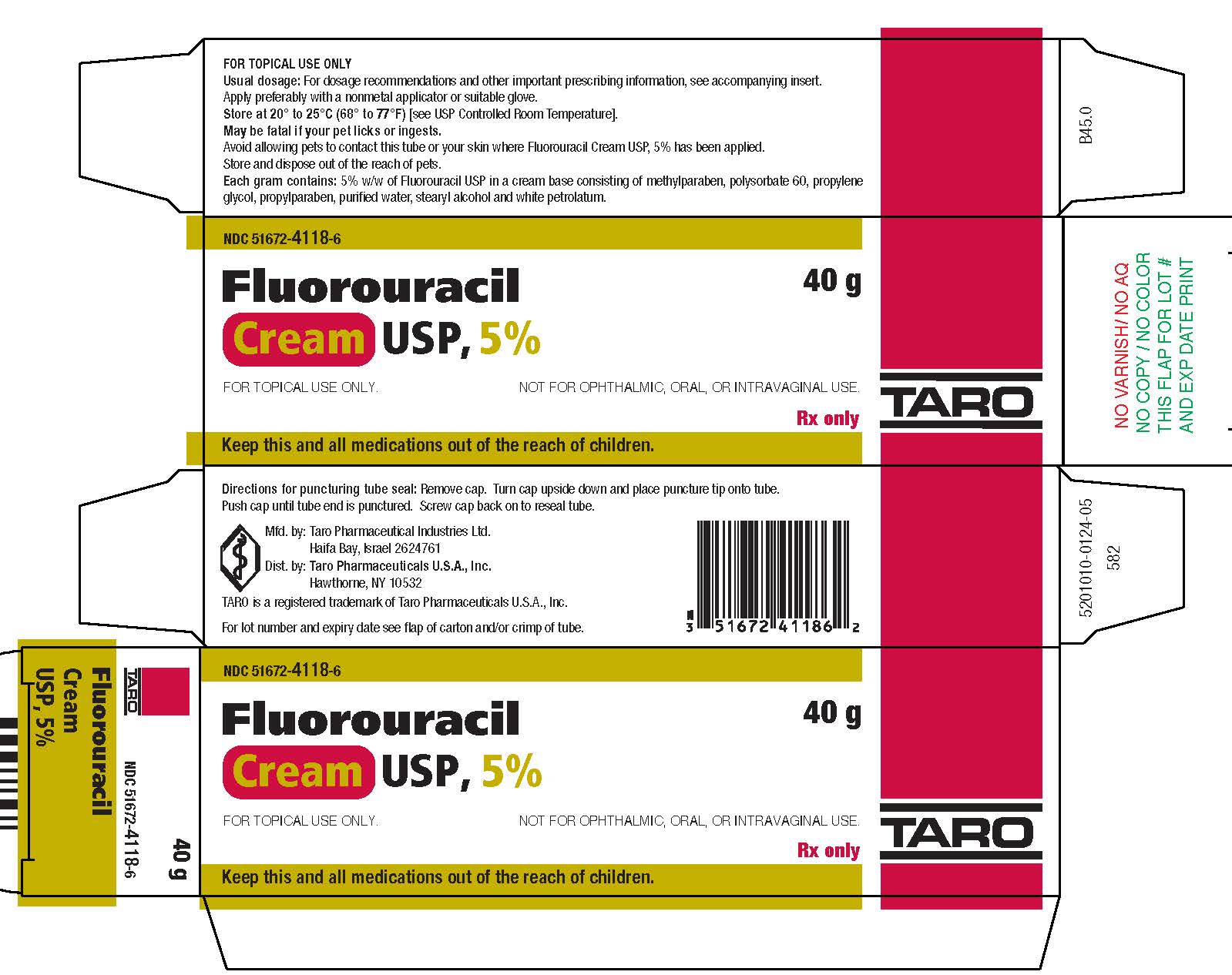
FLUOROURACIL CREAM 5% 40G
Generic: Fluorouracil
FLUOROURACIL CREAM 5% 40G
Sign up to see pricing
Licensed pharmacies, clinics, doctor's offices, and veterinary practices get instant account approval
Sign Up — Instant ApprovalDrug Information
Identification
Fluorouracil
Fluorouracil
Taro Pharmaceuticals U.S.A., Inc.
HUMAN PRESCRIPTION DRUG
Administration
CREAM
TOPICAL
ANDA090368
Active Ingredients
| Ingredient | Strength |
|---|---|
| FLUOROURACIL | 50 mg/g |
Pharmacological Class
Data sourced from openFDA / DailyMed. For full prescribing information, consult the drug label.
Wholesale compliance resources
Drug Resources
Clinical Drug Information
Indications & Usage
INDICATIONS AND USAGE Fluorouracil is recommended for the topical treatment of multiple actinic or solar keratoses. In the 5% strength, it is also useful in the treatment of superficial basal cell carcinomas when conventional methods are impractical, such as with multiple lesions or difficult treatment sites. Safety and efficacy in other indications have not been established. The diagnosis should be established prior to treatment, since this method has not been proven effective in other types of basal cell carcinomas. With isolated, easily accessible basal cell carcinomas, surgery is preferred since success with such lesions is almost 100%. The success rate with fluorouracil cream and solution is approximately 93%, based on 113 lesions in 54 patients. Twenty-five lesions treated with the solution produced 1 failure and 88 lesions treated with the cream produced 7 failures.
Warnings
WARNINGS Application to mucous membranes should be avoided due to the possibility of local inflammation and ulceration. Additionally, cases of miscarriage and a birth defect (ventricular septal defect) have been reported when fluorouracil was applied to mucous membrane areas during pregnancy. Occlusion of the skin with resultant hydration has been shown to increase percutaneous penetration of several topical preparations. If any occlusive dressing is used in treatment of basal cell carcinoma, there may be an increase in the severity of inflammatory reactions in the adjacent normal skin. A porous gauze dressing may be applied for cosmetic reasons without increase in reaction. Exposure to ultraviolet rays should be minimized during and immediately following treatment with fluorouracil because the intensity of the reaction may be increased. Patients should discontinue therapy with fluorouracil if symptoms of DPD enzyme deficiency develop (see CONTRAINDICATIONS section). Rarely, life-threatening toxicities such as stomatitis, diarrhea, neutropenia, and neurotoxicity have been reported with intravenous administration of fluorouracil in patients with DPD enzyme deficiency. One case of life-threatening systemic toxicity has been reported with the topical use of fluorouracil in a patient with DPD enzyme deficiency. Symptoms included severe abdominal pain, bloody diarrhea, vomiting, fever, and chills. Physical examination revealed stomatitis, erythematous skin rash, neutropenia, thrombocytopenia, inflammation of the esophagus, stomach, and small bowel. Although this case was observed with 5% fluorouracil cream, it is unknown whether patients with profound DPD enzyme deficiency would develop systemic toxicity with lower concentrations of topically applied fluorouracil.
Dosage & Administration
DOSAGE AND ADMINISTRATION When fluorouracil is applied to a lesion, a response occurs with the following sequence: erythema, usually followed by vesiculation, desquamation, erosion and re-epithelialization. Fluorouracil should be applied preferably with a nonmetal applicator or suitable glove. If fluorouracil is applied with the fingers, the hands should be washed immediately afterward. Actinic or Solar Keratosis Apply cream twice daily in an amount sufficient to cover the lesions. Medication should be continued until the inflammatory response reaches the erosion stage, at which time use of the drug should be terminated. The usual duration of therapy is from 2 to 4 weeks. Complete healing of the lesions may not be evident for 1 to 2 months following cessation of fluorouracil therapy. Superficial Basal Cell Carcinomas Only the 5% strength is recommended. Apply cream twice daily in an amount sufficient to cover the lesions. Treatment should be continued for at least 3 to 6 weeks. Therapy may be required for as long as 10 to 12 weeks before the lesions are obliterated. As in any neoplastic condition, the patient should be followed for a reasonable period of time to determine if a cure has been obtained.
Adverse Reactions
ADVERSE REACTIONS The most frequent adverse reactions to fluorouracil occur locally and are often related to an extension of the pharmacological activity of the drug. These include burning, crusting, allergic contact dermatitis, pruritus, scarring, rash, soreness and ulceration. Ulcerations, other local reactions, cases of miscarriage and a birth defect (ventricular septal defect) have been reported when fluorouracil was applied to mucous membrane areas. Leukocytosis is the most frequent hematological side effect. Although a causal relationship is remote, other adverse reactions which have been reported infrequently are: Central Nervous System: Emotional upset, insomnia, irritability. Gastrointestinal: Medicinal taste, stomatitis. Hematological: Eosinophilia, thrombocytopenia, toxic granulation. Integumentary: Alopecia, blistering, bullous pemphigoid, discomfort, ichthyosis, scaling, suppuration, swelling, telangiectasia, tenderness, urticaria, skin rash. Special Senses: Conjunctival reaction, corneal reaction, lacrimation, nasal irritation. Miscellaneous: Herpes simplex. To report SUSPECTED ADVERSE REACTIONS, contact Taro Pharmaceuticals U.S.A., Inc., at 1-866-923-4914 and/or FDA at 1-800-FDA-1088 or www.fda.gov/medwatch.
Information for Patients
Information for Patients Patients should be forewarned that the reaction in the treated areas may be unsightly during therapy and, usually, for several weeks following cessation of therapy. Patients should be instructed to avoid exposure to ultraviolet rays during and immediately following treatment with fluorouracil because the intensity of the reaction may be increased. If fluorouracil is applied with the fingers, the hands should be washed immediately afterward. Fluorouracil should not be applied on the eyelids or directly into the eyes, nose or mouth because irritation may occur. Fluorouracil, including fluorouracil cream, may be fatal if ingested by pets. Avoid allowing pets to contact the fluorouracil cream container or the skin where fluorouracil cream has been applied. Store fluorouracil cream out of reach of pets. Safely discard or clean any cloth or applicator that may retain fluorouracil cream and avoid leaving any residues of fluorouracil cream on your hands, clothing, carpeting or furniture.
Clinical data sourced from openFDA drug labeling. For complete prescribing information, consult the full drug label.