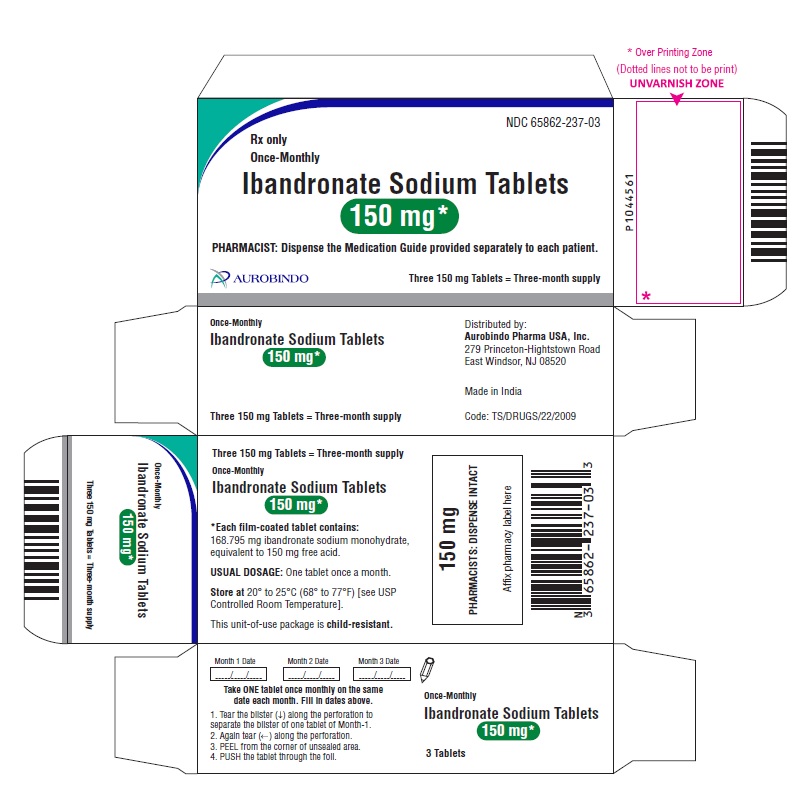
IBANDRONATE SODIUM TABS 150 MG 3 X 1
Generic: IBANDRONATE SODIUM
IBANDRONATE SODIUM TABS 150 MG 3 X 1
Sign up to see pricing
Licensed pharmacies, clinics, doctor's offices, and veterinary practices get instant account approval
Sign Up — Instant ApprovalDrug Information
Identification
IBANDRONATE SODIUM
IBANDRONATE SODIUM
Macleods Pharmaceuticals Limited
HUMAN PRESCRIPTION DRUG
Administration
TABLET, FILM COATED
ORAL
ANDA206887
Active Ingredients
| Ingredient | Strength |
|---|---|
| IBANDRONATE SODIUM | 150 mg/1 |
Pharmacological Class
Data sourced from openFDA / DailyMed. For full prescribing information, consult the drug label.
Wholesale compliance resources
Drug Resources
Clinical Drug Information
Indications & Usage
1 INDICATIONS & USAGE Ibandronate sodium is a bisphosphonate indicated for the treatment and prevention of postmenopausal osteoporosis. ( 1.1 ). Limitations of Use The optimal duration of use has not been determined. For patients at low-risk for fracture, consider drug discontinuation after 3 to 5 years of use. ( 1.2 ) 1.1 Treatment and Prevention of Postmenopausal Osteoporosis Ibandronate sodium tablets are indicated for the treatment and prevention of osteoporosis in postmenopausal women. Ibandronate sodium tablets increases bone mineral density (BMD) and reduce the incidence of vertebral fractures. 1.2 Important Limitations of Use The optimal duration of use has not been determined. The safety and effectiveness of ibandronate sodium tablets for the treatment of osteoporosis are based on clinical data of three years duration. All patients on bisphosphonate therapy should have the need for continued therapy re-evaluated on a periodic basis. Patients at low-risk for fracture should be considered for drug discontinuation after 3 to 5 years of use. Patients who discontinue therapy should have their risk for fracture re-evaluated periodically.
Dosage & Administration
2 DOSAGE & ADMINISTRATION • Take one 150 mg tablet once monthly on the same day each month ( 2.1 ) • Instruct patient to: ( 2.2 ) o Swallow whole tablet with 6-8 oz of plain water only, at least 60 minutes before the first food, beverage, or medication of day. Avoid lying down for at least 60 minutes after taking ibandronate sodium tablets. o Do not eat, drink (except for water), or take other medication for 60 minutes after taking ibandronate sodium tablets. • Take supplemental calcium and vitamin D if dietary intake inadequate ( 2.3 ) 2.1 Dosage Information The dose of ibandronate sodium is one 150 mg tablet taken once monthly on the same date each month. 2.2 Important Administration Instructions Instruct Patients to do the following: o Take ibandronate sodium tablets at least 60 minutes before the first food or drink (other than water) of the day or before taking any oral medication or supplementation, including calcium, antacids, or vitamins to maximize absorption and clinical benefit, (see DRUG INTERACTIONS [ 7.1 ] ). Avoid the use of water with supplements including mineral water because they may have a higher concentration of calcium. o Swallow ibandronate sodium tablets whole with a full glass of plain water (6 to 8 oz) while standing or sitting in an upright position to reduce the potential for esophageal irritation. Avoid lying down for 60 minutes after taking ibandronate sodium tablets (see WARNINGS AND PRECAUTIONS [ 5.1 ] ). Do not chew or suck the tablet because of a potential for oropharyngeal ulceration. o Do not eat, drink anything except plain water, or take other medications for at least 60 minutes after taking ibandronate sodium tablets. 2.3 Recommendations for Calcium and Vitamin D Supplementation Instruct patients to take supplemental calcium and vitamin D if their dietary intake is inadequate. Avoid the use of calcium supplements within 60 minutes of ibandronate sodium tablets administration because co-administration of ibandronate sodium tablets and calcium may interfere with the absorption of ibandronate sodium (see DRUG INTERACTIONS [ 7.1 ] ). 2.4 Administration Instructions for Missed Once-Monthly Doses If the once-monthly dose is missed, instruct patients to do the following: • If the next scheduled ibandronate sodium tablets day is more than 7 days away, take one ibandronate sodium tablet 150 mg in the morning following the date that it is remembered. • If the next scheduled ibandronate sodium tablets day is only 1 to 7 days away, wait until the subsequent month’s scheduled ibandronate sodium tablets day to take their tablet. For subsequent monthly doses for both of the above scenarios, instruct patients to return to their original schedule by taking one ibandronate sodium tablet 150 mg every month on their previous chosen day.
Adverse Reactions
6 ADVERSE REACTIONS The following clinically significant adverse drug reactions are described elsewhere in the labeling: • Upper Gastrointestinal Adverse Reactions [ see Warnings and Precautions ( 5.1 ) ] • Hypocalcemia and Mineral Metabolism [ see Warnings and Precautions ( 5.2 )] • Musculoskeletal [ see Warnings and Precautions ( 5.3 ) ] • Jaw Osteonecrosis [ see Warnings and Precautions ( 5.4 ) ] • Atypical Fractures Including Femoral Fractures [ see Warnings and Precautions ( 5.5 )] • Severe Renal Impairment [ see Warnings and Precautions ( 5.6 )] The most common adverse reactions (greater than 5%) are back pain, dyspepsia, pain in extremity, diarrhea, headache, and myalgia. ( 6 ) To report SUSPECTED ADVERSE REACTIONS, contact Macleods Pharma USA, Inc. at 1-888-943-3210 or FDA at 1-800-FDA-1088 or www.fda.gov/medwatch . 6.1 Clinical Trials Experience Because clinical trials are conducted under widely varying conditions, adverse reaction rates observed in the clinical trials of a drug cannot be directly compared to rates in the clinical trials of another drug and may not reflect the rates observed in practice. Treatment and Prevention of Postmenopausal Osteoporosis Daily Dosing The safety of ibandronate sodium2.5 mg once daily in the treatment and prevention of postmenopausal osteoporosis was assessed in 3577 patients aged 41 – 82 years. The duration of the trials was 2 to 3 years, with 1134 patients exposed to placebo and 1140 exposed to ibandronate sodium 2.5 mg. Patients with pre-existing gastrointestinal disease and concomitant use of non-steroidal anti-inflammatory drugs, proton pump inhibitors and H2 antagonists were included in these clinical trials. All patients received 500 mg calcium plus 400 international units vitamin D supplementation daily. The incidence of all-cause mortality was 1% in the placebo group and 1.2% in the ibandronate sodium 2.5 mg daily group. The incidence of serious adverse reactions was 20% in the placebo group and 23% in the ibandronate sodium 2.5 mg daily group. The percentage of patients who withdrew from treatment due to adverse reactions was approximately 17% in both the ibandronate sodium 2.5 mg daily group and the placebo group. Table 1 lists adverse reactions from the treatment and prevention studies reported in greater than or equal to 2% of patients and more frequently in patients treated daily with ibandronate sodium than patients treated with placebo. Table 1 Adverse Reactions Occurring at an Incidence Greater Than or Equal to 2% and in More Patients Treated with Ibandronate Sodium Than in Patients Treated with Placebo Daily in the Osteoporosis Treatment and Prevention Studies Body System Placebo % (n=1134) Ibandronate Sodium 2.5 mg % (n=1140) Body as a Whole Back Pain 12 14 Pain in Extremity 6 8 Asthenia 2 4 Allergic Reaction 2 3 Digestive System Dyspepsia 10 12 Diarrhea 5 7 Tooth Disorder 2 4 Vomiting 2 3 Gastritis 2 2 Musculoskeletal System Myalgia 5 6 Joint Disorder 3 4 Arthritis 3 3 Nervous System Headache 6 7 Dizziness 3 4 Vertigo 3 3 Respiratory System Upper Respiratory Infection 33 34 Bronchitis 7 10 Pneumonia 4 6 Pharyngitis 2 3 Urogenital System Urinary Tract Infection 4 6 Gastrointestinal Adverse Reactions The incidence of selected gastrointestinal adverse reactions in the placebo and ibandronate sodium 2.5 mg daily groups were: dyspepsia (10% vs. 12%), diarrhea (5% vs. 7%), and abdominal pain (5% vs. 6%). Musculoskeletal Adverse Reactions The incidence of selected musculoskeletal adverse reactions in the placebo and ibandronate sodium 2.5 mg daily groups were: back pain (12% vs. 14%), arthralgia (14% vs. 14%) and myalgia (5% vs. 6%). Ocular Adverse Events Reports in the medical literature indicate that bisphosphonates may be associated with ocular inflammation such as iritis and scleritis. In some cases, these events did not resolve until the bisphosphonate was discontinued. There were no reports of ocular inflammation in studies with ibandronate sodium 2.5 mg daily. Monthly Dosing The safety of ibandronate sodium 150 mg once monthly in the treatment of postmenopausal osteoporosis was assessed in a two year trial which enrolled 1583 patients aged 54 – 81 years, with 395 patients exposed to ibandronate sodium 2.5 mg daily and 396 exposed to ibandronate sodium 150 mg monthly. Patients with active or significant pre-existing gastrointestinal disease were excluded from this trial. Patients with dyspepsia or concomitant use of non-steroidal anti-inflammatory drugs, proton pump inhibitors and H2 antagonists were included in this study. All patients received 500 mg calcium plus 400 international units vitamin D supplementation daily. After one year, the incidence of all-cause mortality was 0.3% in both the ibandronate sodium 2.5 mg daily group and the ibandronate sodium 150 mg monthly group. The incidence of serious adverse events was 5% in the ibandronate sodium 2.5 mg daily group and 7% in the ibandronate sodium 150 mg monthly group. The percentage of patients who withdrew from treatment due to adverse events was 9% in the ibandronate sodium 2.5 mg daily group and 8% in the ibandronate sodium 150 mg monthly group. Table 2 lists the adverse events reported in greater than or equal to 2% of patients. Table 2 Adverse Events with an Incidence of at Least 2% in Patients Treated with Ibandronate Sodium 2.5 mg Daily or 150 mg Once-Monthly for Treatment of Postmenopausal Osteoporosis Body System/Adverse Event Ibandronate Sodium 2.5 mg Daily % (n=395) Ibandronate Sodium 150 mg Monthly % (n=396) Vascular Disorders Hypertension 7.3 6.3 Gastrointestinal Disorders Dyspepsia 7.1 5.6 Nausea 4.8 5.1 Diarrhea 4.1 5.1 Constipation 2.5 4.0 Abdominal Pain a 5.3 7.8 Musculoskeletal and Connective Tissue Disorders Arthralgia 3.5 5.6 Back Pain 4.3 4.5 Pain in Extremity 1.3 4.0 Localized Osteoarthritis 1.3 3.0 Myalgia 0.8 2.0 Muscle Cramp 2.0 1.8 Infections and Infestations Influenza 3.8 4.0 Nasopharyngitis 4.3 3.5 Bronchitis 3.5 2.5 Urinary Tract Infection 1.8 2.3 Upper Respiratory Tract Infection 2.0 2.0 Nervous System Disorders Headache Dizziness 4.1 1.0 3.3 2.3 General Disorders and Administration Site Conditions Influenza-like Illness b 0.8 3.3 Skin and Subcutaneous Tissue Disorders Rash c 1.3 2.3 Psychiatric Disorders Insomnia 0.8 2.0 a Combination of abdominal pain and abdominal pain upper b Combination of influenza-like illness and acute phase reaction c Combination of rash pruritic, rash macular, rash papular, rash generalized, rash erythematous, dermatitis, dermatitis allergic, dermatitis medicamentosa, erythema and exanthema Gastrointestinal Adverse Events The incidence of adverse events in the ibandronate sodium 2.5 mg daily and ibandronate sodium 150 mg monthly groups were: dyspepsia (7% vs. 6%), diarrhea (4% vs. 5%), and abdominal pain (5% vs. 8%). Musculoskeletal Adverse Events The incidence of adverse events in the ibandronate sodium 2.5 mg daily and ibandronate sodium 150 mg monthly groups were: back pain (4% vs. 5%), arthralgia (4% vs. 6%) and myalgia (1% vs. 2%). Acute Phase Reactions Symptoms consistent with acute phase reactions have been reported with bisphosphonate use. Over the two years of the study, the overall incidence of acute phase reaction symptoms was 3% in the ibandronate sodium 2.5 mg daily group and 9% in the ibandronate sodium 150 mg monthly group. These incidence rates are based on the reporting of any of 33 acute-phase reaction like symptoms within 3 days of the monthly dosing and lasting 7 days or less. Influenza like illness was reported in no patients in the ibandronate sodium 2.5 mg daily group and 2% in the ibandronate sodium 150 mg monthly group. Ocular Adverse Events Two patients who received ibandronate sodium 150 mg once-monthly experienced ocular inflammation, one was a case of uveitis and the other scleritis. One hundred sixty (160) postmenopausal women without osteoporosis participated in a 1-year, double-blind, placebo-controlled study of ibandronate sodium 150 mg once-monthly for prevention of bone loss. Seventy-seven subjects received ibandronate sodium and 83 subjects received placebo. The overall pattern of adverse events was similar to that previously observed. 6.2 Postmarketing Experience The following adverse reactions have been identified during postapproval use of ibandronate sodium or bisphosphonate products. Because these reactions are reported voluntarily from a population of uncertain size, it is not always possible to reliably estimate their frequency or establish a causal relationship to drug exposure. Hypersensitivity Allergic reactions including anaphylactic reaction/shock with fatalities, angioedema, bronchospasm, asthma exacerbations, rash, Stevens-Johnson syndrome, erythema multiforme, and dermatitis bullous have been reported (see CONTRAINDICATIONS [ 4 ] ). Hypocalcemia Hypocalcemia has been reported in patients treated with ibandronate sodium (see WARNINGS AND PRECAUTIONS [ 5.2] ). Musculoskeletal Bone, joint, or muscle pain, described as severe or incapacitating, has been reported rarely [see WARNINGS AND PRECAUTIONS ( 5.3 )]; low-energy femoral shaft and subtrochanteric fractures, and atypical fractures of other bones [see Warnings and Precautions ( 5.5 )]. Jaw Osteonecrosis Osteonecrosis of the jaw and other oro-facial sites, including the external auditory canal, have been reported in patients treated with ibandronate sodium (see WARNINGS AND PRECAUTIONS [ 5.4 ] ).
Information for Patients
17 PATIENT COUNSELING INFORMATION "See FDA-approved patient labeling (Medication Guide)" 17.1 Information for Patients Instruct patients to read the Medication Guide carefully before taking ibandronate sodium and to re-read it each time the prescription is renewed because it contains important information the patient should know about ibandronate sodium. The Medication Guide also includes the dosing instructions in order to maximize absorption and clinical benefit. • Ibandronate sodium should be taken at least 60 minutes before the first food or drink (other than water) of the day and before taking any oral medication or supplementation including calcium, antacids or vitamins (see DRUG INTERACTIONS [ 7.1 ] ). • To facilitate delivery to the stomach, and thus reduce the potential for esophageal irritation, ibandronate sodium should be swallowed whole with a full glass of plain water (6 to 8 oz) while the patient is standing or sitting in an upright position. Patients should not lie down for 60 minutes after taking ibandronate sodium. • Patients should not eat, drink anything except for water, or take other medications for 60 minutes after taking ibandronate sodium. • Plain water is the only drink that should be taken with ibandronate sodium. Note that some mineral waters may have a higher concentration of calcium and therefore should not be used. • Patients should not chew or suck the tablet because of a potential for oropharyngeal ulceration. • The ibandronate sodium tablet 150 mg should be taken on the same date each month (i.e., the patient’s ibandronate sodium tablet day). • The patient must not take two 150 mg tablets within the same week. • If the once-monthly dose is missed, and the patient’s next scheduled ibandronate sodium day is more than 7 days away, the patient should be instructed to take one ibandronate sodium tablet 150 mg in the morning following the date that it is remembered (see DOSAGE AND ADMINISTRATION [ 2.3 ] ). The patient should then return to taking one ibandronate sodium tablet 150 mg every month in the morning of their chosen day, according to their original schedule. • If the once-monthly dose is missed, and the patient’s next scheduled ibandronate sodium day is only 1 to 7 days away, the patient must wait until the subsequent month’s scheduled ibandronate sodium tablet day to take their tablet. The patient should then return to taking one ibandronate sodium tablet 150 mg every month in the morning of their chosen day, according to their original schedule. Patients should receive supplemental calcium and vitamin D if dietary intake is inadequate. Intake of supplemental calcium and vitamin D should be delayed for at least 60 minutes following oral administration of ibandronate sodium in order to maximize absorption of ibandronate sodium. Physicians should be alert to signs or symptoms signaling a possible esophageal reaction during therapy, and patients should be instructed to discontinue ibandronate sodium and seek medical attention if they develop symptoms of esophageal irritation such as new or worsening dysphagia, pain on swallowing, retrosternal pain, or heartburn. Manufactured for : Macleods Pharma USA, Inc. Princeton, NJ 08540 Manufactured by: Macleods Pharmaceuticals Ltd. Baddi, Himachal Pradesh 174101 INDIA Revised: January 2026
Clinical data sourced from openFDA drug labeling. For complete prescribing information, consult the full drug label.