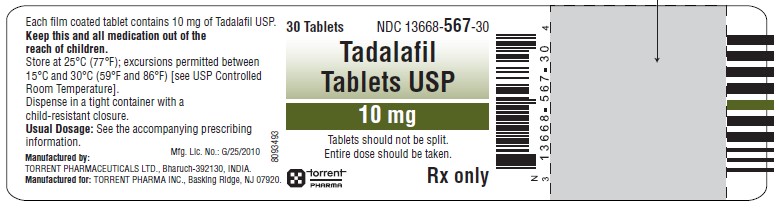
TADALAFIL TABS 20 MG 30
Generic: Tadalafil
TADALAFIL TABS 20 MG 30
Sign up to see pricing
Licensed pharmacies, clinics, doctor's offices, and veterinary practices get instant account approval
Sign Up — Instant ApprovalDrug Information
Identification
Tadalafil
Tadalafil
Macleods Pharmaceuticals Limited
HUMAN PRESCRIPTION DRUG
Administration
TABLET, FILM COATED
ORAL
ANDA207244
Active Ingredients
| Ingredient | Strength |
|---|---|
| TADALAFIL | 20 mg/1 |
Pharmacological Class
Data sourced from openFDA / DailyMed. For full prescribing information, consult the drug label.
Wholesale compliance resources
Drug Resources
Clinical Drug Information
Indications & Usage
1 INDICATIONS & USAGE Tadalafil is a phosphodiesterase 5 (PDE5) inhibitor indicated for the treatment of: erectile dysfunction (ED) ( 1.1 ) the signs and symptoms of benign prostatic hyperplasia (BPH) ( 1.2 ) ED and the signs and symptoms of BPH (ED/BPH) ( 1.3 ) If tadalafil tablets are used with finasteride to initiate BPH treatment, such use is recommended for up to 26 weeks ( 1.4 ). 1.1 Erectile Dysfunction Tadalafil tablets are indicated for the treatment of erectile dysfunction (ED). 1.2 Benign Prostatic Hyperplasia Tadalafil tablets are indicated for the treatment of the signs and symptoms of benign prostatic hyperplasia (BPH). 1.3 Erectile Dysfunction and Benign Prostatic Hyperplasia Tadalafil tablets are indicated for the treatment of ED and the signs and symptoms of BPH (ED/BPH). 1.4 Limitation of Use If tadalafil tablets are used with finasteride to initiate BPH treatment, such use is recommended for up to 26 weeks because the incremental benefit of tadalafil tablets decreases from 4 weeks until 26 weeks, and the incremental benefit of tadalafil tablets beyond 26 weeks is unknown [see Clinical Studies ( 14.3 ) ].
Dosage & Administration
2 DOSAGE & ADMINISTRATION Do not split tadalafil tablets; entire dose should be taken. Tadalafil tablets for use as needed : ED: Starting dose: 10 mg as needed prior to sexual activity. Increase to 20 mg or decrease to 5 mg based upon efficacy/tolerability. Improves erectile function compared to placebo up to 36 hours post dose. Not to be taken more than once per day ( 2.1 ). Tadalafil tablets for once daily use : ED: 2.5 mg taken once daily, without regard to timing of sexual activity. May increase to 5 mg based upon efficacy and tolerability ( 2.2 ). BPH: 5 mg, taken at approximately the same time every day ( 2.3 ) ED and BPH: 5 mg, taken at approximately the same time every day ( 2.3 , 2.4 ) Tadalafil tablets may be taken without regard to food ( 2.5 ). 2.1 Tadalafil Tablets for Use as Needed for Erectile Dysfunction The recommended starting dose of tadalafil tablets for use as needed in most patients is 10 mg, taken prior to anticipated sexual activity. The dose may be increased to 20 mg or decreased to 5 mg, based on individual efficacy and tolerability. The maximum recommended dosing frequency is once per day in most patients. Tadalafil tablets for use as needed were shown to improve erectile function compared to placebo up to 36 hours following dosing. Therefore, when advising patients on optimal use of tadalafil tablets, this should be taken into consideration. 2.2 Tadalafil Tablets for Once Daily Use for Erectile Dysfunction • The recommended starting dose of tadalafil tablets for once daily use is 2.5 mg, taken at approximately the same time every day, without regard to timing of sexual activity. • The tadalafil tablets dose for once daily use may be increased to 5 mg, based on individual efficacy and tolerability. 2.3 Tadalafil Tablets for Once Daily Use for Benign Prostatic Hyperplasia • The recommended dose of tadalafil tablets for once daily use is 5 mg, taken at approximately the same time every day. • When therapy for BPH is initiated with tadalafil tablets and finasteride, the recommended dose of tadalafil tablets for once daily use is 5 mg, taken at approximately the same time every day for up to 26 weeks. 2.4 Tadalafil Tablets for Once Daily Use for Erectile Dysfunction and Benign Prostatic Hyperplasia The recommended dose of tadalafil tablets for once daily use is 5 mg, taken at approximately the same time every day, without regard to timing of sexual activity. 2.5 Use with Food Tadalafil tablets may be taken without regard to food. 2.6 Use in Specific Populations Renal Impairment Tadalafil Tablets for Use as Needed • Creatinine clearance 30 to 50 mL/min: A starting dose of 5 mg not more than once per day is recommended, and the maximum dose is 10 mg not more than once in every 48 hours. • Creatinine clearance less than 30 mL/min or on hemodialysis: The maximum dose is 5 mg not more than once in every 72 hours [see Warnings and Precautions ( 5.7 ) and Use in Specific Populations ( 8.7 )]. Tadalafil Tablets for Once Daily Use Erectile Dysfunction • Creatinine clearance less than 30 mL/min or on hemodialysis: tadalafil tablets for once daily use is not recommended [see Warnings and Precautions ( 5.7 ) and Use in Specific Populations ( 8.7 )]. Benign Prostatic Hyperplasia and Erectile Dysfunction/Benign Prostatic Hyperplasia • Creatinine clearance 30 to 50 mL/min: A starting dose of 2.5 mg is recommended. An increase to 5 mg may be considered based on individual response. • Creatinine clearance less than 30 mL/min or on hemodialysis: tadalafil tablets for once daily use is not recommended [see Warnings and Precautions ( 5.7 ) and Use in Specific Populations ( 8.7 )]. Hepatic Impairment Tadalafil Tablets for Use as Needed • Mild or moderate (Child Pugh Class A or B): The dose should not exceed 10 mg once per day. The use of tadalafil tablets once per day has not been extensively evaluated in patients with hepatic impairment and therefore, caution is advised. • Severe (Child Pugh Class C): The use of tadalafil tablets are not recommended [see Warnings and Precautions ( 5.8 ) and Use in Specific Populations ( 8.6 )]. Tadalafil Tablets for Once Daily Use • Mild or moderate (Child Pugh Class A or B): tadalafil tablets for once daily use has not been extensively evaluated in patients with hepatic impairment. Therefore, caution is advised if tadalafil tablets for once daily use is prescribed to these patients. • Severe (Child Pugh Class C): The use of tadalafil tablets are not recommended [see Warnings and Precautions ( 5.8 ) and Use in Specific Populations ( 8.6 )]. 2.7 Concomitant Medications Nitrates Concomitant use of nitrates in any form is contraindicated [see Contraindications ( 4.1 )]. Alpha-Blockers ED — When tadalafil tablets are coadministered with an alpha-blocker in patients being treated for ED, patients should be stable on alpha-blocker therapy prior to initiating treatment, and tadalafil tablets should be initiated at the lowest recommended dose [see Warnings and Precautions ( 5.6 ), Drug Interactions ( 7.1 ), and Clinical Pharmacology ( 12.2 )]. BPH — Tadalafil tablets are not recommended for use in combination with alpha-blockers for the treatment of BPH [see Warnings and Precautions ( 5.6 ), Drug Interactions ( 7.1 ), and Clinical Pharmacology ( 12.2 )]. CYP3A4 Inhibitors Tadalafil Tablets for Use as Needed — For patients taking concomitant potent inhibitors of CYP3A4, such as ketoconazole or ritonavir, the maximum recommended dose of tadalafil tablets are 10 mg, not to exceed once every 72 hours [see Warnings and Precautions ( 5.10 ) and Drug Interactions ( 7.2 )]. Tadalafil Tablets for Once Daily Use — For patients taking concomitant potent inhibitors of CYP3A4, such as ketoconazole or ritonavir, the maximum recommended dose is 2.5 mg [see Warnings and Precautions ( 5.10 ) and Drug Interactions ( 7.2 )].
Adverse Reactions
6 ADVERSE REACTIONS Most common adverse reactions (≥2%) include headache, dyspepsia, back pain, myalgia, nasal congestion, flushing, and pain in limb ( 6.1 ). To report SUSPECTED ADVERSE REACTIONS, contact Macleods Pharma USA, Inc., at 1-888-943-3210 or 1-855-926-3384 or FDA at 1-800-FDA-1088 or www.fda.gov/medwatch . 6.1 Clinical Trials Experience Because clinical trials are conducted under widely varying conditions, adverse reaction rates observed in the clinical trials of a drug cannot be directly compared to rates in the clinical trials of another drug and may not reflect the rates observed in practice. Tadalafil was administered to over 9000 men during clinical trials worldwide. In trials of tadalafil tablets for once daily use, a total of 1434, 905, and 115 were treated for at least 6 months, 1 year, and 2 years, respectively. For tadalafil tablets for use as needed, over 1300 and 1000 subjects were treated for at least 6 months and 1 year, respectively. Tadalafil tablets for Use as Needed for ED In eight primary placebo-controlled clinical studies of 12 weeks duration, mean age was 59 years (range 22 to 88) and the discontinuation rate due to adverse events in patients treated with tadalafil 10 or 20 mg was 3.1%, compared to 1.4% in placebo treated patients. When taken as recommended in the placebo-controlled clinical trials, the following adverse reactions were reported ( see Table 1 ) for tadalafil tablets for use as needed: Table 1: Treatment-Emergent Adverse Reactions Reported by ≥2% of Patients Treated with Tadalafil Tablets (10 or 20 mg) and More Frequent on Drug than Placebo in the Eight Primary Placebo-Controlled Clinical Studies (Including a Study in Patients with Diabetes) for Tadalafil Tablets for Use as Needed for ED Adverse Reaction Placebo (N=476) Tadalafil 5 mg (N=151) Tadalafil 10 mg (N=394) Tadalafil 20 mg (N=635) Headache 5% 11% 11% 15% Dyspepsia 1% 4% 8% 10% Back pain 3% 3% 5% 6% Myalgia 1% 1% 4% 3% Nasal congestion 1% 2% 3% 3% Flushing a 1% 2% 3% 3% Pain in limb 1% 1% 3% 3% a The term flushing includes: facial flushing and flushing Tadalafil Tablets for Once Daily Use for ED In three placebo-controlled clinical trials of 12 or 24 weeks duration, mean age was 58 years (range 21 to 82) and the discontinuation rate due to adverse events in patients treated with tadalafil was 4.1%, compared to 2.8% in placebo-treated patients. The following adverse reactions were reported (see Table 2) in clinical trials of 12 weeks duration: Table 2: Treatment-Emergent Adverse Reactions Reported by ≥2% of Patients Treated with Tadalafil Tablets for Once Daily Use (2.5 or 5 mg) and More Frequent on Drug than Placebo in the Three Primary Placebo-Controlled Phase 3 Studies of 12 weeks Treatment Duration (Including a Study in Patients with Diabetes) for Tadalafil Tablets for Once Daily Use for ED Adverse Reaction Placebo (N=248) Tadalafil 2.5 mg (N=196) Tadalafil 5 mg (N=304) Headache 5% 3% 6% Dyspepsia 2% 4% 5% Nasopharyngitis 4% 4% 3% Back pain 1% 3% 3% Upper respiratory tract infection 1% 3% 3% Flushing 1% 1% 3% Myalgia 1% 2% 2% Cough 0% 4% 2% Diarrhea 0% 1% 2% Nasal congestion 0% 2% 2% Pain in extremity 0% 1% 2% Urinary tract infection 0% 2% 0% Gastroesophageal reflux disease 0% 2% 1% Abdominal pain 0% 2% 1% The following adverse reactions were reported (see Table 3) over 24 weeks treatment duration in one placebo-controlled clinical study: Table 3: Treatment-Emergent Adverse Reactions Reported by ≥2% of Patients Treated with Tadalafil Tablets for Once Daily Use (2.5 or 5 mg) and More Frequent on Drug than Placebo in One Placebo-Controlled Clinical Study of 24 Weeks Treatment Duration for Tadalafil Tablets for Once Daily Use for ED Adverse Reaction Placebo (N=94) Tadalafil 2.5 mg (N=96) Tadalafil 5 mg (N=97) Nasopharyngitis 5% 6% 6% Gastroenteritis 2% 3% 5% Back pain 3% 5% 2% Upper respiratory tract infection 0% 3% 4% Dyspepsia 1% 4% 1% Gastroesophageal reflux disease 0% 3% 2% Myalgia 2% 4% 1% Hypertension 0% 1% 3% Nasal congestion 0% 0% 4% Tadalafil Tablets for Once Daily Use for BPH and for ED and BPH In three placebo-controlled clinical trials of 12 weeks duration, two in patients with BPH and one in patients with ED and BPH, the mean age was 63 years (range 44 to 93) and the discontinuation rate due to adverse events in patients treated with tadalafil was 3.6% compared to 1.6% in placebo-treated patients. Adverse reactions leading to discontinuation reported by at least 2 patients treated with tadalafil included headache, upper abdominal pain, and myalgia. The following adverse reactions were reported (see Table 4). Table 4: Treatment-Emergent Adverse Reactions Reported by ≥1% of Patients Treated with Tadalafil Tablets for Once Daily Use (5 mg) and More Frequent on Drug than Placebo in Three Placebo-Controlled Clinical Studies of 12 Weeks Treatment Duration, including Two Studies for Tadalafil Tablets for Once Daily Use for BPH and One Study for ED and BPH Adverse Reaction Placebo (N=576) Tadalafil 5 mg (N=581) Headache 2.3% 4.1% Dyspepsia 0.2% 2.4% Back pain 1.4% 2.4% Nasopharyngitis 1.6% 2.1% Diarrhea 1.0% 1.4% Pain in extremity 0.0% 1.4% Myalgia 0.3% 1.2% Dizziness 0.5% 1.0% Additional, less frequent adverse reactions (<1%) reported in the controlled clinical trials of tadalafil tablets for BPH or ED and BPH included: gastroesophageal reflux disease, upper abdominal pain, nausea, vomiting, arthralgia, and muscle spasm. Back pain or myalgia was reported at incidence rates described in Tables 1 through 4. In tadalafil clinical pharmacology trials, back pain or myalgia generally occurred 12 to 24 hours after dosing and typically resolved within 48 hours. The back pain/myalgia associated with tadalafil treatment was characterized by diffuse bilateral lower lumbar, gluteal, thigh, or thoracolumbar muscular discomfort and was exacerbated by recumbency. In general, pain was reported as mild or moderate in severity and resolved without medical treatment, but severe back pain was reported with a low frequency (<5% of all reports). When medical treatment was necessary, acetaminophen or non-steroidal anti-inflammatory drugs were generally effective; however, in a small percentage of subjects who required treatment, a mild narcotic (e.g., codeine) was used. Overall, approximately 0.5% of all subjects treated with tadalafil tablets for on demand use discontinued treatment as a consequence of back pain/myalgia. In the 1-year open label extension study, back pain and myalgia were reported in 5.5% and 1.3% of patients, respectively. Diagnostic testing, including measures for inflammation, muscle injury, or renal damage revealed no evidence of medically significant underlying pathology. Incidence rates for tadalafil tablets for once daily use for ED, BPH and BPH/ED are described in Tables 2, 3 and 4. In studies of tadalafil tablets for once daily use, adverse reactions of back pain and myalgia were generally mild or moderate with a discontinuation rate of <1% across all indications. Across placebo-controlled studies with tadalafil tablets for use as needed for ED, diarrhea was reported more frequently in patients 65 years of age and older who were treated with tadalafil tablets (2.5% of patients) [see Use in Specific Populations ( 8.5 )]. Across all studies with any tadalafil tablets dose, reports of changes in color vision were rare (<0.1% of patients). The following section identifies additional, less frequent events (<2%) reported in controlled clinical trials of tadalafil tablets for once daily use or use as needed. A causal relationship of these events to tadalafil tablets is uncertain. Excluded from this list are those events that were minor, those with no plausible relation to drug use, and reports too imprecise to be meaningful: Body as a Whole — asthenia, face edema, fatigue, pain, peripheral edema Cardiovascular — angina pectoris, chest pain, hypotension, myocardial infarction, postural hypotension, palpitations, syncope, tachycardia Digestive — abnormal liver function tests, dry mouth, dysphagia, esophagitis, gastritis, GGTP increased, loose stools, nausea, upper abdominal pain, vomiting, gastroesophageal reflux disease, hemorrhoidal hemorrhage, rectal hemorrhage Musculoskeletal — arthralgia, neck pain Nervous — dizziness, hypesthesia, insomnia, paresthesia, somnolence, vertigo Renal and Urinary — renal impairment Respiratory — dyspnea, epistaxis, pharyngitis Skin and Appendages — pruritus, rash, sweating Ophthalmologic — blurred vision, changes in color vision, conjunctivitis (including conjunctival hyperemia), eye pain, lacrimation increase, swelling of eyelids Otologic — sudden decrease or loss of hearing, tinnitus Urogenital — erection increased, spontaneous penile erection 6.2 Postmarketing Experience The following adverse reactions have been identified during post approval use of tadalafil tablets. Because these reactions are reported voluntarily from a population of uncertain size, it is not always possible to reliably estimate their frequency or establish a causal relationship to drug exposure. These events have been chosen for inclusion either due to their seriousness, reporting frequency, lack of clear alternative causation, or a combination of these factors. Cardiovascular and Cerebrovascular — Serious cardiovascular events, including myocardial infarction, sudden cardiac death, stroke, chest pain, palpitations, and tachycardia, have been reported postmarketing in temporal association with the use of tadalafil. Most, but not all, of these patients had preexisting cardiovascular risk factors. Many of these events were reported to occur during or shortly after sexual activity, and a few were reported to occur shortly after the use of tadalafil tablets without sexual activity. Others were reported to have occurred hours to days after the use of tadalafil tablets and sexual activity. It is not possible to determine whether these events are related directly to tadalafil tablets, to sexual activity, to the patient’s underlying cardiovascular disease, to a combination of these factors, or to other factors [see Warnings and Precautions ( 5.1 )]. Body as a Whole — hypersensitivity reactions including urticaria, Stevens-Johnson syndrome, and exfoliative dermatitis Nervous — migraine, seizure and seizure recurrence, transient global amnesia Ophthalmologic — visual field defect, retinal vein occlusion, retinal artery occlusion Non-arteritic anterior ischemic optic neuropathy (NAION), a cause of decreased vision including permanent loss of vision, has been reported rarely postmarketing in temporal association with the use of PDE5 inhibitors, including tadalafil tablets. Most, but not all, of these patients had underlying anatomic or vascular risk factors for development of NAION, including but not necessarily limited to: low cup to disc ratio (“crowded disc”), age over 50, diabetes, hypertension, coronary artery disease, hyperlipidemia, and smoking [ see Warnings and Precautions ( 5.4) ]. Otologic — Cases of sudden decrease or loss of hearing have been reported postmarketing in temporal association with the use of PDE5 inhibitors, including tadalafil tablets. In some of the cases, medical conditions and other factors were reported that may have also played a role in the otologic adverse events. In many cases, medical follow-up information was limited. It is not possible to determine whether these reported events are related directly to the use of tadalafil tablets, to the patient’s underlying risk factors for hearing loss, a combination of these factors, or to other factors [see Warnings and Precautions ( 5.5 )]. Urogenital — priapism [see Warnings and Precautions ( 5.3 )].
Information for Patients
17 PATIENT COUNSELING INFORMATION “See FDA-approved patient labeling (Patient Information)” 17.1 Nitrates Physicians should discuss with patients the contraindication of tadalafil tablets with regular and/or intermittent use of organic nitrates. Patients should be counseled that concomitant use of tadalafil tablets with nitrates could cause blood pressure to suddenly drop to an unsafe level, resulting in dizziness, syncope, or even heart attack or stroke. Physicians should discuss with patients the appropriate action in the event that they experience anginal chest pain requiring nitroglycerin following intake of tadalafil tablets. In such a patient, who has taken tadalafil tablets, where nitrate administration is deemed medically necessary for a life-threatening situation, at least 48 hours should have elapsed after the last dose of tadalafil tablets before nitrate administration is considered. In such circumstances, nitrates should still only be administered under close medical supervision with appropriate hemodynamic monitoring. Therefore, patients who experience anginal chest pain after taking tadalafil tablets should seek immediate medical attention [see Contraindications ( 4.1 ) and Warnings and Precautions ( 5.1 )]. 17.2 Guanylate Cyclase (GC) Stimulators Physicians should discuss with patients the contraindication of tadalafil tablets with any use of a GC stimulator, such as riociguat, for pulmonary arterial hypertension. Patients should be counseled that the concomitant use of tadalafil tablets with GC stimulators may cause blood pressure to drop to an unsafe level. 17.3 Cardiovascular Considerations Physicians should consider the potential cardiac risk of sexual activity in patients with preexisting cardiovascular disease. Physicians should advise patients who experience symptoms upon initiation of sexual activity to refrain from further sexual activity and seek immediate medical attention [see Warnings and Precautions ( 5.1 )]. 17.4 Concomitant Use with Drugs Which Lower Blood Pressure Physicians should discuss with patients the potential for tadalafil tablets to augment the blood-pressure-lowering effect of alpha-blockers, and antihypertensive medications [see Warnings and Precautions ( 5.6 ), Drug Interactions ( 7.1 ), and Clinical Pharmacology ( 12.2 )]. 17.5 Potential for Drug Interactions When Taking Tadalafil Tablets for Once Daily Use Physicians should discuss with patients the clinical implications of continuous exposure to tadalafil when prescribing tadalafil tablets for once daily use, especially the potential for interactions with medications (e.g., nitrates, alpha-blockers, antihypertensives and potent inhibitors of cytochrome P450 3A4) and with substantial consumption of alcohol. [see Dosage and Administration ( 2.7 ), Warnings and Precautions ( 5.6 ), Drug Interactions ( 7.1 , 7.2 ), Clinical Pharmacology ( 12.2 ), and Clinical Studies ( 14.2 )]. 17.6 Priapism There have been rare reports of prolonged erections greater than 4 hours and priapism (painful erections greater than 6 hours in duration) for this class of compounds. Priapism, if not treated promptly, can result in irreversible damage to the erectile tissue. Physicians should advise patients who have an erection lasting greater than 4 hours, whether painful or not, to seek emergency medical attention. 17.7 Sudden Loss of Vision Physicians should advise patients to stop use of all PDE5 inhibitors, including tadalafil tablets, and seek medical attention in the event of a sudden loss of vision in one or both eyes. Such an event may be a sign of non-arteritic anterior ischemic optic neuropathy (NAION), a cause of decreased vision, including possible permanent loss of vision, that has been reported rarely postmarketing in temporal association with the use of all PDE5 inhibitors. Physicians should discuss with patients the increased risk of NAION in individuals who have already experienced NAION in one eye. Physicians should also discuss with patients the increased risk of NAION among the general population in patients with a “crowded” optic disc, although evidence is insufficient to support screening of prospective users of PDE5 inhibitors, including tadalafil tablets, for this uncommon condition [see Warnings and Precautions ( 5.4 ) and Adverse Reactions ( 6.2 )]. 17.8 Sudden Hearing Loss Physicians should advise patients to stop taking PDE5 inhibitors, including tadalafil tablets, and seek prompt medical attention in the event of sudden decrease or loss of hearing. These events, which may be accompanied by tinnitus and dizziness, have been reported in temporal association to the intake of PDE5 inhibitors, including tadalafil tablets. It is not possible to determine whether these events are related directly to the use of PDE5 inhibitors or to other factors [see Adverse Reactions ( 6.1 , 6.2 )]. 17.9 Alcohol Patients should be made aware that both alcohol and tadalafil tablets, a PDE5 inhibitor, act as mild vasodilators. When mild vasodilators are taken in combination, blood-pressure-lowering effects of each individual compound may be increased. Therefore, physicians should inform patients that substantial consumption of alcohol (e.g., 5 units or greater) in combination with tadalafil tablets can increase the potential for orthostatic signs and symptoms, including increase in heart rate, decrease in standing blood pressure, dizziness, and headache [see Warnings and Precautions ( 5.9 ), Drug Interactions ( 7.1 ), and Clinical Pharmacology ( 12.2 )]. 17.10 Sexually Transmitted Disease The use of tadalafil tablets offers no protection against sexually transmitted diseases. Counseling of patients about the protective measures necessary to guard against sexually transmitted diseases, including Human Immunodeficiency Virus (HIV) should be considered. 17.11 Recommended Administration Physicians should instruct patients on the appropriate administration of tadalafil tablets to allow optimal use. For tadalafil tablets for use as needed in men with ED, patients should be instructed to take one tablet at least 30 minutes before anticipated sexual activity. In most patients, the ability to have sexual intercourse is improved for up to 36 hours. For tadalafil tablets for once daily use in men with ED or ED/BPH, patients should be instructed to take one tablet at approximately the same time every day without regard for the timing of sexual activity. Tadalafil tablets are effective at improving erectile function over the course of therapy. For tadalafil tablets for once daily use in men with BPH, patients should be instructed to take one tablet at approximately the same time every day. Manufactured for: Macleods Pharma USA, Inc. Princeton, NJ 08540 Manufactured by: Macleods pharmaceuticals Ltd. Daman 396210, INDIA The brands listed are trademarks of their respective owners and are not trademarks of Macleods Pharmaceuticals Ltd. The makers of these brands are not affiliated with and do not endorse Macleods Pharmaceuticals Ltd. or its products. Revision Date: 09/2025
Clinical data sourced from openFDA drug labeling. For complete prescribing information, consult the full drug label.