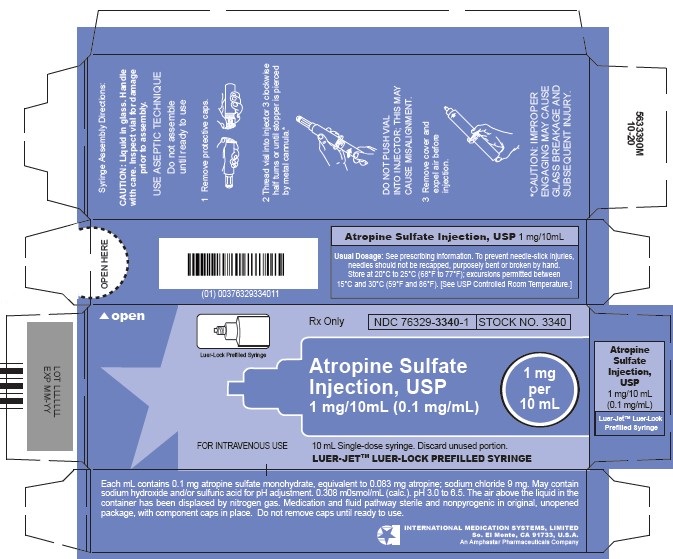
ATROPINE SULFATE PFS 1MG 10X10ML
Generic: Atropine Sulfate
ATROPINE SULFATE PFS 1MG 10X10ML
Sign up to see pricing
Licensed pharmacies, clinics, doctor's offices, and veterinary practices get instant account approval
Sign Up — Instant ApprovalDrug Information
Identification
Atropine Sulfate
Atropine Sulfate
International Medication Systems, Limited
HUMAN PRESCRIPTION DRUG
Administration
INJECTION
INTRAVENOUS
ANDA212461
Active Ingredients
| Ingredient | Strength |
|---|---|
| ATROPINE SULFATE | .1 mg/mL |
Pharmacological Class
Data sourced from openFDA / DailyMed. For full prescribing information, consult the drug label.
Wholesale compliance resources
Drug Resources
Clinical Drug Information
Indications & Usage
1 INDICATIONS AND USAGE Atropine Sulfate Injection is indicated for temporary blockade of severe or life-threatening muscarinic effects, e.g., as an antisialagogue, an antivagal agent, an antidote for organophosphorus or muscarinic mushroom poisoning, and to treat bradyasystolic cardiac arrest. Atropine is a muscarinic antagonist indicated for temporary blockade of severe or life-threatening muscarinic effects.
Dosage & Administration
2 DOSAGE AND ADMINISTRATION • For intravenous administration ( 2.1 ) • Titrate according to heart rate, PR interval, blood pressure and symptoms ( 2.1 ) • Adult dosage - Antisialagogue or for antivagal effects: Initial single dose of 0.5 mg to 1 mg ( 2.2 ) - Antidote for organophosphorus or muscarinic mushroom poisoning: Initial single dose of 2 mg to 3 mg, repeated every 20–30 minutes ( 2.2 ) - Bradyasystolic cardiac arrest: 1 mg dose, repeated every 3–5 minutes if asystole persists ( 2.2 ) • Patients with Coronary Artery Disease: Limit the total dose to 0.03 mg/kg to 0.04 mg/kg ( 2.4 ) 2.1 General Administration Parenteral drug products should be inspected visually for particulate matter and discoloration prior to administration, whenever solution and container permit. Do not administer unless solution is clear and seal is intact. Each syringe is intended for single dose only. Discard unused portion. For intravenous administration. Titrate based on heart rate, PR interval, blood pressure and symptoms. 2.2 Adult Dosage Table 1: Recommended Dosage Use Dose (adults) Repeat Antisialagogue or other antivagal 0.5 to 1 mg 1–2 hours Organophosphorus or muscarinic mushroom poisoning 2 to 3 mg 20–30 minutes Bradyasystolic cardiac arrest 1 mg 3–5 minutes; 3 mg maximum total dose 2.3 Pediatric Dosage Dosing in pediatric populations has not been well studied. Usual initial dose is 0.01 to 0.03 mg/kg. 2.4 Dosing in Patients with Coronary Artery Disease Limit the total dose of atropine sulfate to 0.03 mg/kg to 0.04 mg/kg [see Warnings and Precautions ( 5.1 )].
Adverse Reactions
6 ADVERSE REACTIONS The following adverse reactions have been identified during post-approval use of atropine sulfate. Because these reactions are reported voluntarily from a population of uncertain size, it is not always possible to reliably estimate their frequency or establish a causal relationship to drug exposure. Most of the side effects of atropine are directly related to its antimuscarinic action. Dryness of the mouth, blurred vision, photophobia and tachycardia commonly occur. Anhidrosis can produce heat intolerance. Constipation and difficulty in micturition may occur in elderly patients. Occasional hypersensitivity reactions have been observed, especially skin rashes which in some instances progressed to exfoliation. Most adverse reactions are directly related to atropine’s antimuscarinic action. Dryness of the mouth, blurred vision, photophobia and tachycardia commonly occur with chronic administration of therapeutic doses. To report SUSPECTED ADVERSE REACTIONS, contact Amphastar Pharmaceuticals, Inc. at 1-800-423-4136, or FDA at 1-800-FDA-1088 or www.fda.gov/medwatch .
Clinical data sourced from openFDA drug labeling. For complete prescribing information, consult the full drug label.