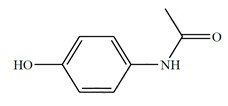
ACETAMINOPHEN INJECTION SDV 10MG/ML 24X100ML
Generic: Acetaminophen
ACETAMINOPHEN INJECTION SDV 10MG/ML 24X100ML
Sign up to see pricing
Licensed pharmacies, clinics, doctor's offices, and veterinary practices get instant account approval
Sign Up — Instant ApprovalDrug Information
Identification
Acetaminophen
Acetaminophen
Eugia US LLC
HUMAN PRESCRIPTION DRUG
Administration
INJECTION, SOLUTION
INTRAVENOUS
ANDA210969
Active Ingredients
| Ingredient | Strength |
|---|---|
| ACETAMINOPHEN | 10 mg/mL |
Data sourced from openFDA / DailyMed. For full prescribing information, consult the drug label.
Wholesale compliance resources
Drug Resources
Clinical Drug Information
Indications & Usage
1 INDICATIONS AND USAGE Acetaminophen Injection is indicated for the management of mild to moderate pain in adult and pediatric patients 2 years and older the management of moderate to severe pain with adjunctive opioid analgesics in adult and pediatric patients 2 years and older the reduction of fever in adult and pediatric patients. Acetaminophen Injection is indicated for the Management of mild to moderate pain in adult and pediatric patients 2 years and older ( 1 ) Management of moderate to severe pain with adjunctive opioid analgesics in adult and pediatric patients 2 years and older ( 1 ) Reduction of fever in adult and pediatric patients ( 1 )
Dosage & Administration
2 DOSAGE AND ADMINISTRATION Acetaminophen Injection may be given as a single or repeated dose. (2.1) Acetaminophen Injection should be administered only as a 15-minute intravenous infusion. ( 2.4 ) Adults and Adolescents Weighing 50 kg and Over: 1,000 mg every 6 hours or 650 mg every 4 hours to a maximum of 4,000 mg per day. Minimum dosing interval of 4 hours. (2.2) Adults and Adolescents Weighing Under 50 kg: 15 mg/kg every 6 hours or 12.5 mg/kg every 4 hours to a maximum of 75 mg/kg per day. Minimum dosing interval of 4 hours. (2.2) Children: Children 2 to 12 years of age: 15 mg/kg every 6 hours or 12.5 mg/kg every 4 hours to a maximum of 75 mg/kg per day. Minimum dosing interval of 4 hours. (2.3) Neonates and Infants: Neonates including premature neonates born at ≥ 32 weeks gestational age to 28 days chronological age, 12.5 mg/kg every 6 hours to a maximum of 50 mg/kg per day. Minimum dosing interval of 6 hours. ( 2.4 ) Infants (29 days to 2 years of age): 15 mg/kg every 6 hours to a maximum of 60 mg/kg per day. Minimum dosing interval of 6 hours. ( 2.4 ) 2.1 General Dosing Information Acetaminophen Injection may be given as a single or repeated dose for the treatment of acute pain or fever. No dose adjustment is required when converting between oral acetaminophen and Acetaminophen Injection dosing in adults and adolescents who weigh 50 kg and above. Calculated maximum daily dose of acetaminophen is based on all routes of administration (i.e., intravenous, oral, and rectal) and all products containing acetaminophen. Exceeding the maximum mg/kg daily dose of acetaminophen as described in Tables 1 to 3 may result in hepatic injury, including the risk of liver failure and death. To avoid the risk of overdose, ensure that the total amount of acetaminophen from all routes and from all sources does not exceed the maximum recommended dose. 2.2 Recommended Dosage: Adults and Adolescents Adults and adolescents weighing 50 kg and over: the recommended dosage of Acetaminophen Injection is 1,000 mg every 6 hours or 650 mg every 4 hours, with a maximum single-dose of Acetaminophen Injection of 1,000 mg, a minimum dosing interval of 4 hours, and a maximum daily dose of acetaminophen of 4,000 mg per day (includes all routes of administration and all acetaminophen-containing products including combination products). Adults and adolescents weighing under 50 kg: the recommended dosage of Acetaminophen Injection is 15 mg/kg every 6 hours or 12.5 mg/kg every 4 hours, with a maximum single-dose of Acetaminophen Injection of 15 mg/kg, a minimum dosing interval of 4 hours, and a maximum daily dose of acetaminophen of 75 mg/kg per day (includes all routes of administration and all acetaminophen-containing products including combination products). Table 1. Dosing for Adults and Adolescents Age group Dose given every 4 hours Dose given every 6 hours Maximum single- dose Maximum total daily dose of acetaminophen (by all routes) Adults and adolescents (13 years and older) weighing ≥ 50 kg 650 mg 1,000 mg 1,000 mg 4,000 mg in 24 hours Adults and adolescents (13 years and older) weighing < 50 kg 12.5 mg/kg 15 mg/kg 15 mg/kg (up to 750 mg) 75 mg/kg in 24 hours (up to 3,750 mg) 2.3 Recommended Dosage: Children Children 2 to 12 years of age: the recommended dosage of Acetaminophen Injection is 15 mg/kg every 6 hours or 12.5 mg/kg every 4 hours, with a maximum single-dose of Acetaminophen Injection of 15 mg/kg, a minimum dosing interval of 4 hours, and a maximum daily dose of acetaminophen of 75 mg/kg per day. Table 2. Dosing for Children Age group Dose given every 4 hours Dose given every 6 hours Maximum single- dose Maximum total daily dose of acetaminophen (by all routes) Children 2 to 12 years of age 12.5 mg/kg 15 mg/kg 15 mg/kg (up to 750 mg) 75 mg/kg in 24 hours (up to 3,750 mg) 2.4 Recommended Dosage for Treatment of Fever in Neonates and Infants Neonates, including premature neonates born at ≥ 32 weeks gestational age, up to 28 days chronological age: the recommended dosage of acetaminophen is 12.5 mg/kg every 6 hours, to a maximum daily dose of acetaminophen of 50 mg/kg per day, with a minimum dosing interval of 6 hours. Infants 29 days to 2 years of age: the recommended dosage of acetaminophen is 15 mg/kg every 6 hours, to a maximum daily dose of acetaminophen of 60 mg/kg per day, with a minimum dosing interval of 6 hours. Table 3. Dosing for Treatment of Fever in Neonates and Infants Age group Dose given every 6 hours Maximum total daily dose of acetaminophen (by all routes) Neonates (birth to 28 days) 12.5 mg/kg 50 mg/kg Infants (29 days to 2 years) 15 mg/kg 60 mg/kg 2.5 Instructions for Intravenous Administration For adult and adolescent patients weighing ≥ 50 kg requiring 1,000 mg doses of Acetaminophen Injection, administer the dose by inserting a vented intravenous set through the septum of the 100 mL vial. Acetaminophen Injection may be administered without further dilution. Examine the container contents before dose preparation or administering. DO NOT USE if particulate matter or discoloration is observed. Administer the contents of the vial intravenously over 15 minutes. Use aseptic technique when preparing Acetaminophen Injection for intravenous infusion. Do not add other medications to the Acetaminophen Injection vial or infusion device. For doses less than 1,000 mg, the appropriate dose must be withdrawn from the container and placed into a separate container prior to administration. Using aseptic technique, withdraw the appropriate dose (650 mg or weight-based) from an intact sealed Acetaminophen Injection container and place the measured dose in a separate empty, sterile container (e.g., glass bottle, plastic intravenous container, or syringe) for intravenous infusion to avoid the inadvertent delivery and administration of the total volume of the commercially available container. The entire 100 mL container of Acetaminophen Injection is not intended for use in patients weighing less than 50 kg. Acetaminophen Injection is supplied in a single-dose container and the unused portion must be discarded. Place small volume pediatric doses up to 60 mL in volume in a syringe and administer over 15 minutes using a syringe pump. Monitor the end of the infusion in order to prevent the possibility of an air embolism, especially in cases where the Acetaminophen Injection infusion is the primary infusion. Once the container seal has been penetrated, or the contents transferred to another container, administer the dose of Acetaminophen Injection within 6 hours. Do not add other medications to the Acetaminophen Injection solution. Diazepam and chlorpromazine hydrochloride are physically incompatible with Acetaminophen Injection, therefore do not administer simultaneously.
Adverse Reactions
6 ADVERSE REACTIONS The following serious adverse reactions are discussed elsewhere in the labeling: Hepatic Injury [see Warnings and Precautions (5.1) ] Serious Skin Reactions [see Warnings and Precautions (5.2) ] Allergy and Hypersensitivity [see Warnings and Precautions (5.4) ] The most common adverse reactions in patients treated with acetaminophen were nausea, vomiting, headache, and insomnia in adult patients; nausea, vomiting, constipation, and pruritus in pediatric patients. (6.1) To report SUSPECTED ADVERSE REACTIONS, contact Eugia US LLC at 1-866-850-2876 or FDA at 1-800-FDA-1088 or www.fda.gov/medwatch . 6.1 Clinical Trial Experience Because clinical trials are conducted under widely varying conditions, adverse reaction rates observed cannot be directly compared to rates in other clinical trials and may not reflect the rates observed in practice. Adult Population A total of 1,020 adult patients have received acetaminophen in clinical trials, including 37.3% (n=380) who received 5 or more doses, and 17.0% (n=173) who received more than 10 doses. Most patients were treated with acetaminophen 1,000 mg every 6 hours. A total of 13.1% (n=134) received acetaminophen 650 mg every 4 hours. All adverse reactions that occurred in adult patients treated with either acetaminophen or placebo in repeated dose, placebo-controlled clinical trials at an incidence ≥ 3% and at a greater frequency than placebo are listed in Table 4. The most common adverse events in adult patients treated with acetaminophen (incidence ≥ 5% and greater than placebo) were nausea, vomiting, headache, and insomnia. Table 4. Treatment-Emergent Adverse Reactions Occurring in ≥ 3% of Acetaminophen-treated Adult Patients and at a Greater Frequency than Placebo in Placebo-Controlled, Repeated Dose Studies * Pyrexia adverse reaction frequency data is included in order to alert healthcare practitioners that the antipyretic effects of acetaminophen may mask fever. System Organ Class – Preferred Term Acetaminophen (N=402) n (%) Placebo (N=379) n (%) Gastrointestinal Disorders Nausea Vomiting 138 (34) 62 (15) 119 (31) 42 (11) General Disorders and Administration Site Conditions Pyrexia* 22 (5) 52 (14) Nervous System Disorders Headache 39 (10) 33 (9) Psychiatric Disorders Insomnia 30 (7) 21 (5) Other Adverse Reactions Observed During Clinical Studies of Acetaminophen in Adults The following additional treatment-emergent adverse reactions were reported by adult subjects treated with acetaminophen in all clinical trials (n=1,020) that occurred with an incidence of at least 1% and at a frequency greater than placebo (n=525). Blood and lymphatic system disorders : anemia General disorders and administration site conditions : fatigue, infusion site pain, edema peripheral Investigations : aspartate aminotransferase increased, breath sounds abnormal Metabolism and nutrition disorders : hypokalemia Musculoskeletal and connective tissue disorders : muscle spasms, trismus Psychiatric disorders : anxiety Respiratory, thoracic and mediastinal disorders : dyspnea Vascular disorders : hypertension, hypotension Pediatric Population A total of 483 pediatric patients (72 neonates, 167 infants, 171 children, and 73 adolescents) have received acetaminophen in active-controlled (n=250) and open-label clinical trials (n=225), including 43.9% (n=212) who received 5 or more doses and 31.2% (n=153) who received more than 10 doses. Pediatric patients received acetaminophen doses up to 15 mg/kg on an every 4 hours, every 6 hours, or every 8 hours schedule. The maximum exposure was 7.7, 6.4, 6.8, and 7.1 days in neonates, infants, children, and adolescents, respectively. The most common adverse events (incidence ≥ 5%) in pediatric patients treated with acetaminophen were nausea, vomiting, constipation, and pruritus. Other Adverse Reactions Observed During Clinical Studies of Acetaminophen in Pediatrics The following additional treatment-emergent adverse reactions were reported by pediatric subjects treated with acetaminophen (n=483) that occurred with an incidence of at least 1%. Blood and lymphatic system disorders : anemia Gastrointestinal disorders : diarrhea General disorders and administration site conditions : pyrexia, injection site pain Metabolism and nutrition disorders : hypokalemia, hypomagnesemia, hypoalbuminemia, hypophosphatemia Musculoskeletal and connective tissue disorders : muscle spasm Nervous system disorders : headache Psychiatric disorders : agitation Renal and urinary disorders : oliguria Respiratory, thoracic and mediastinal disorders : atelectasis, pleural effusion, pulmonary edema, stridor, wheezing Vascular disorders : hypotension, hypertension
Clinical data sourced from openFDA drug labeling. For complete prescribing information, consult the full drug label.