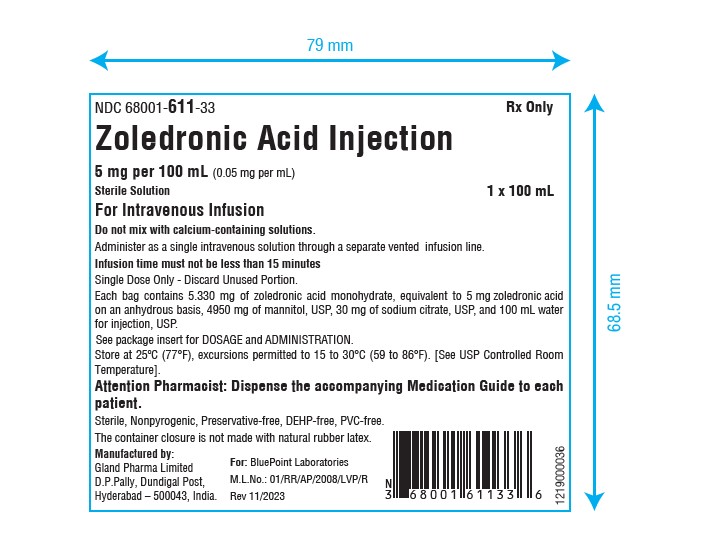
ZOLEDRONIC ACID INJECTION 4MG 1X5ML
Generic: zoledronic acid
ZOLEDRONIC ACID INJECTION 4MG 1X5ML
Sign up to see pricing
Licensed pharmacies, clinics, doctor's offices, and veterinary practices get instant account approval
Sign Up — Instant ApprovalDrug Information
Identification
zoledronic acid
Zoledronic Acid
BPI Labs LLC
HUMAN PRESCRIPTION DRUG
Administration
INJECTION, SOLUTION, CONCENTRATE
INTRAVENOUS
ANDA207341
Active Ingredients
| Ingredient | Strength |
|---|---|
| ZOLEDRONIC ACID | 4 mg/5mL |
Pharmacological Class
Data sourced from openFDA / DailyMed. For full prescribing information, consult the drug label.
Wholesale compliance resources
Drug Resources
Clinical Drug Information
Indications & Usage
1 INDICATIONS AND USAGE Zoledronic Acid Injection is a bisphosphonate indicated for the treatment of: • Hypercalcemia of malignancy ( 1.1 ) • Patients with multiple myeloma and patients with documented bone metastases from solid tumors, in conjunction with standard antineoplastic therapy. Prostate cancer should have progressed after treatment with at least one hormonal therapy. ( 1.2 ) Limitations of Use : The safety and efficacy of Zoledronic Acid Injection has not been established for use in hyperparathyroidism or non-tumor-related hypercalcemia. 1.1 Hypercalcemia of Malignancy Zoledronic Acid Injection is indicated for the treatment of hypercalcemia of malignancy defined as an albumin-corrected calcium (cCa) of greater than or equal to 12 mg/dL [3.0 mmol/L] using the formula: cCa in mg/dL= Ca in mg/dL + 0.8 (4.0 g/dL – patient albumin [g/dL]). 1.2 Multiple Myeloma and Bone Metastases of Solid Tumors Zoledronic Acid Injection is indicated for the treatment of patients with multiple myeloma and patients with documented bone metastases from solid tumors, in conjunction with standard antineoplastic therapy. Prostate cancer should have progressed after treatment with at least one hormonal therapy. Limitations of Use The safety and efficacy of Zoledronic Acid Injection in the treatment of hypercalcemia associated with hyperparathyroidism or with other non-tumor-related conditions have not been established.
Dosage & Administration
2 DOSAGE AND ADMINISTRATION Parenteral drug products should be inspected visually for particulate matter and discoloration prior to administration, whenever solution and container permit. Hypercalcemia of malignancy ( 2.1 ) • 4 mg as a single-use intravenous infusion over no less than 15 minutes. • 4 mg as retreatment after a minimum of 7 days. Multiple myeloma and bone metastasis from solid tumors ( 2.2 ) • 4 mg as a single-use intravenous infusion over no less than 15 minutes every 3 to 4 weeks for patients with creatinine clearance of greater than 60 mL/min. • Reduce the dose for patients with renal impairment. • Coadminister oral calcium supplements of 500 mg and a multiple vitamin containing 400 international units of vitamin D daily. Administer through a separate vented infusion line and do not allow to come in contact with any calcium or divalent cation-containing solutions. ( 2.3 ) 2.1 Hypercalcemia of Malignancy The maximum recommended dose of Zoledronic Acid Injection in hypercalcemia of malignancy (albumin-corrected serum calcium greater than or equal to 12 mg/dL [3.0 mmol/L]) is 4 mg. The 4 mg dose must be given as a single-dose intravenous infusion over no less than 15 minutes . Patients who receive Zoledronic Acid Injection should have serum creatinine assessed prior to each treatment. Dose adjustments of Zoledronic Acid Injection are not necessary in treating patients for hypercalcemia of malignancy presenting with mild-to-moderate renal impairment prior to initiation of therapy (serum creatinine less than 400 μmol/L or less than 4.5 mg/dL). Patients should be adequately rehydrated prior to administration of Zoledronic Acid Injection [ see Warnings and Precautions (5.2) ] . Consideration should be given to the severity of, as well as the symptoms of, tumor-induced hypercalcemia when considering use of Zoledronic Acid Injection. Vigorous saline hydration, an integral part of hypercalcemia therapy, should be initiated promptly and an attempt should be made to restore the urine output to about 2 L/day throughout treatment. Mild or asymptomatic hypercalcemia may be treated with conservative measures (i.e., saline hydration, with or without loop diuretics). Patients should be hydrated adequately throughout the treatment, but overhydration, especially in those patients who have cardiac failure, must be avoided. Diuretic therapy should not be employed prior to correction of hypovolemia. Retreatment with Zoledronic Acid Injection 4 mg may be considered if serum calcium does not return to normal or remain normal after initial treatment. It is recommended that a minimum of 7 days elapse before retreatment, to allow for full response to the initial dose. Renal function must be carefully monitored in all patients receiving Zoledronic Acid Injection and serum creatinine must be assessed prior to retreatment with Zoledronic Acid Injection [ see Warnings and Precautions (5.2) ]. 2.2 Multiple Myeloma and Bone Metastases of Solid Tumors The recommended dose of Zoledronic Acid Injection in patients with multiple myeloma and metastatic bone lesions from solid tumors for patients with creatinine clearance (CrCl) greater than 60 mL/min is 4 mg infused over no less than 15 minutes every 3 to 4 weeks. The optimal duration of therapy is not known. Upon treatment initiation, the recommended Zoledronic Acid Injection doses for patients with reduced renal function (mild and moderate renal impairment) are listed in Table 1. These doses are calculated to achieve the same area under the curve (AUC) as that achieved in patients with creatinine clearance of 75 mL/min. CrCl is calculated using the Cockcroft-Gault formula [see Warnings and Precautions (5.2) ] . Table 1: Reduced Doses for Patients with Baseline CrCl Less than or Equal to 60 mL/min Baseline Creatinine Clearance (mL/min) Zoledronic Acid Injection Recommended Dose (mg) * greater than 60 4 50 to 60 3.5 40 to 49 3.3 30 to 39 3 *Doses calculated assuming target AUC of 0.66 (mg•hr/L) (CrCl=75 mL/min) During treatment, serum creatinine should be measured before each Zoledronic Acid Injection dose and treatment should be withheld for renal deterioration. In the clinical studies, renal deterioration was defined as follows: For patients with normal baseline creatinine, increase of 0.5 mg/dL For patients with abnormal baseline creatinine, increase of 1.0 mg/dL In the clinical studies, Zoledronic Acid Injection treatment was resumed only when the creatinine returned to within 10% of the baseline value. Zoledronic Acid Injection should be reinitiated at the same dose as that prior to treatment interruption. Patients should also be administered an oral calcium supplement of 500 mg and a multiple vitamin containing 400 international units of vitamin D daily. 2.3 Preparation of Solution Zoledronic Acid Injection must not be mixed with calcium or other divalent cation-containing infusion solutions, such as Lactated Ringer’s solution, and should be administered as a single intravenous solution in a line separate from all other drugs. 4 mg/5 mL Single-Dose Vial for Dilution Prior to Intravenous Infusion Zoledronic Acid Injection 4 mg/5 mL vial for dilution prior to intravenous infusion contains an overfill to allow withdrawal of 5 mL (equivalent to 4 mg zoledronic acid). Zoledronic Acid Injection (4 mg/5 mL) should immediately be diluted in 100 mL of sterile 0.9% Sodium Chloride, USP, or 5% Dextrose Injection, USP, following proper aseptic technique, and administered to the patient by intravenous infusion. Do not store undiluted Zoledronic Acid Injection (4 mg/5 mL) in a syringe, to avoid inadvertent injection. To prepare reduced doses for patients with baseline CrCl less than or equal to 60 mL/min, withdraw the specified volume of the Zoledronic Acid Injection (4 mg/5 mL) from the vial for the dose required (see Table 3). Table 3: Preparation of Reduced Doses – Zoledronic Acid Injection 4 mg/5 mL Single-Dose Vial for Dilution Remove and use Zoledronic acid Injection Volume (mL) Dose (mg) 4.4 3.5 4.1 3.3 3.8 3.0 The withdrawn Zoledronic Acid Injection (4 mg/5 mL) solution must be diluted in 100 mL of sterile 0.9% Sodium Chloride, USP, or 5% Dextrose Injection, USP. If not used immediately after dilution with infusion media, for microbiological integrity, the solution should be refrigerated at 2°C to 8°C (36°F to 46°F). The refrigerated solution should then be equilibrated to room temperature prior to administration. The total time between dilution, storage in the refrigerator, and end of administration must not exceed 24 hours. 2.4 Method of Administration Due to the risk of clinically significant deterioration in renal function, which may progress to renal failure, single doses of Zoledronic Acid Injection should not exceed 4 mg and the duration of infusion should be no less than 15 minutes [see Warnings and Precautions (5.3) ]. In the trials and in postmarketing experience, renal deterioration, progression to renal failure and dialysis, have occurred in patients, including those treated with the approved dose of 4 mg infused over 15 minutes. There have been instances of this occurring after the initial Zoledronic Acid Injection dose.
Adverse Reactions
6 ADVERSE REACTIONS The most common adverse events (greater than 25%) were nausea, fatigue, anemia, bone pain, constipation, fever, vomiting, and dyspnea. ( 6.1 ) To report SUSPECTED ADVERSE REACTIONS, contact BPI Labs, LLC at 727-471-0850 or FDA at 1-800-FDA-1088 or www.fda.gov/medwatch . 6.1 Clinical Trials Experience Because clinical trials are conducted under widely varying conditions, adverse reaction rates observed in the clinical trials of a drug cannot be directly compared to rates in the clinical trials of another drug and may not reflect the rates observed in practice. Hypercalcemia of Malignancy The safety of Zoledronic Acid Injection was studied in 185 patients with hypercalcemia of malignancy (HCM) who received either Zoledronic Acid Injection 4 mg given as a 5-minute intravenous infusion (n=86) or pamidronate 90 mg given as a 2-hour intravenous infusion (n=103). The population was aged 33 to 84 years, 60% male and 81% Caucasian, with breast, lung, head and neck, and renal cancer as the most common forms of malignancy. NOTE: pamidronate 90 mg was given as a 2-hour intravenous infusion. The relative safety of pamidronate 90 mg given as a 2-hour intravenous infusion compared to the same dose given as a 24-hour intravenous infusion has not been adequately studied in controlled clinical trials. Renal Toxicity Administration of Zoledronic Acid Injection 4 mg given as a 5-minute intravenous infusion has been shown to result in an increased risk of renal toxicity, as measured by increases in serum creatinine, which can progress to renal failure. The incidence of renal toxicity and renal failure has been shown to be reduced when Zoledronic Acid Injection 4 mg is given as a 15-minute intravenous infusion. Zoledronic Acid Injection should be administered by intravenous infusion over no less than 15 minutes [see Warnings and Precautions (5.3) , Dosage and Administration (2.4) ] . The most frequently observed adverse events were fever, nausea, constipation, anemia, and dyspnea (see Table 4). Table 4 provides adverse events that were reported by 10% or more of the 189 patients treated with Zoledronic Acid Injection 4 mg or pamidronate 90 mg from the two HCM trials. Adverse events are listed regardless of presumed causality to study drug. Table 4: Percentage of Patients with Adverse Events Greater than or Equal to 10% Reported in Hypercalcemia of Malignancy Clinical Trials by Body System Zoledronic Acid Injection 4 mg Pamidronate 90 mg n (%) n (%) Patients Studied Total No. of Patients Studied 86 (100) 103 (100) Total No. of Patients with any AE 81 (94) 95 (92) Body as a Whole Fever 38 (44) 34 (33) Progression of Cancer 14 (16) 21 (20) Cardiovascular Hypotension 9 (11) 2 (2) Digestive Nausea 25 (29) 28 (27) Constipation 23 (27) 13 (13) Diarrhea 15 (17) 17 (17) Abdominal Pain 14 (16) 13 (13) Vomiting 12 (14) 17 (17) Anorexia 8 (9) 14 (14) Hemic and Lymphatic System Anemia 19 (22) 18 (18) Infections Moniliasis 10 (12) 4 (4) Laboratory Abnormalities Hypophosphatemia 11 (13) 2 (2) Hypokalemia 10 (12) 16 (16) Hypomagnesemia 9 (11) 5 (5) Musculoskeletal Skeletal Pain 10 (12) 10 (10) Nervous Insomnia 13 (15) 10 (10) Anxiety 12 (14) 8 (8) Confusion 11 (13) 13 (13) Agitation 11 (13) 8 (8) Respiratory Dyspnea 19 (22) 20 (19) Coughing 10 (12) 12 (12) Urogenital Urinary Tract Infection 12 (14) 15 (15) The following adverse events from the two controlled multicenter HCM trials (n=189) were reported by a greater percentage of patients treated with Zoledronic Acid Injection 4 mg than with pamidronate 90 mg and occurred with a frequency of greater than or equal to 5% but less than 10%. Adverse events are listed regardless of presumed causality to study drug: asthenia, chest pain, leg edema, mucositis, dysphagia, granulocytopenia, thrombocytopenia, pancytopenia, nonspecific infection, hypocalcemia, dehydration, arthralgias, headache and somnolence. Rare cases of rash, pruritus, and chest pain have been reported following treatment with Zoledronic Acid Injection. Acute Phase Reaction Within three days after Zoledronic Acid Injection administration, an acute phase reaction has been reported in patients, with symptoms including pyrexia, fatigue, bone pain and/or arthralgias, myalgias, chills, and influenza-like illness. These symptoms usually resolve within a few days. Pyrexia has been the most commonly associated symptom, occurring in 44% of patients. Mineral and Electrolyte Abnormalities Electrolyte abnormalities, most commonly hypocalcemia, hypophosphatemia, and hypomagnesemia, can occur with bisphosphonate use. Grade 3 and Grade 4 laboratory abnormalities for serum creatinine, serum calcium, serum phosphorus, and serum magnesium observed in two clinical trials of Zoledronic Acid Injection in patients with HCM are shown in Table 5 and 6. Table 5: Grade 3 Laboratory Abnormalities for Serum Creatinine, Serum Calcium, Serum Phosphorus, and Serum Magnesium in Two Clinical Trials in Patients with HCM Grade 3 Laboratory Parameter Zoledronic Acid Injection 4 mg Pamidronate 90 mg n/N (%) n/N (%) Serum Creatinine 1 2/86 (2%) 3/100 (3%) Hypocalcemia 2 1/86 (1%) 2/100 (2%) Hypophosphatemia 3 36/70 (51%) 27/81 (33%) Hypomagnesemia 4 0/71 0 0/84 0 1 Grade 3 (greater than 3x Upper Limit of Normal); Grade 4 (greater than 6x Upper Limit of Normal). 2 Grade 3 (less than 7 mg/dL); Grade 4 (less than 6 mg/dL). 3 Grade 3 (less than 2 mg/dL); Grade 4 (less than 1 mg/dL). 4 Grade 3 (less than 0.8 mEq/L); Grade 4 (less than 0.5 mEq/L). Table 6: Grade 4 Laboratory Abnormalities for Serum Creatinine, Serum Calcium, Serum Phosphorus, and Serum Magnesium in Two Clinical Trials in Patients with HCM Grade 4 Laboratory Parameter Zoledronic Acid Injection 4 mg Pamidronate 90 mg n/N (%) n/N (%) Serum Creatinine 1 0/86 0 1/100 (1%) Hypocalcemia 2 0/86 0 0/100 0 Hypophosphatemia 3 1/70 (1%) 4/81 (5%) Hypomagnesemia 4 0/71 0 1/84 (1%) 1 Grade 3 (greater than 3x Upper Limit of Normal); Grade 4 (greater than 6x Upper Limit of Normal). 2 Grade 3 (less than 7 mg/dL); Grade 4 (less than 6 mg/dL). 3 Grade 3 (less than 2 mg/dL); Grade 4 (less than 1 mg/dL). 4 Grade 3 (less than 0.8 mEq/L); Grade 4 (less than 0.5 mEq/L). Injection-Site Reactions Local reactions at the infusion-site, such as redness or swelling, were observed infrequently. In most cases, no specific treatment is required and the symptoms subside after 24 to 48 hours. Ocular Adverse Events Ocular inflammation such as uveitis and scleritis can occur with bisphosphonate use, including Zoledronic Acid Injection. No cases of iritis, scleritis, or uveitis were reported during these clinical trials. However, cases have been seen in postmarketing use [see Adverse Reactions (6.2) ] . Multiple Myeloma and Bone Metastases of Solid Tumors The safety analysis includes patients treated in the core and extension phases of the trials. The analysis includes the 2042 patients treated with Zoledronic Acid Injection 4 mg, pamidronate 90 mg, or placebo in the three controlled multi-center bone metastases trials, including 969 patients completing the efficacy phase of the trial, and 619 patients that continued in the safety extension phase. Only 347 patients completed the extension phases and were followed for 2 years (or 21 months for the other solid tumor patients). The median duration of exposure for safety analysis for Zoledronic Acid Injection 4 mg (core plus extension phases) was 12.8 months for breast cancer and multiple myeloma, 10.8 months for prostate cancer, and 4.0 months for other solid tumors. Table 7 describes adverse events that were reported by 10% or more of patients. Adverse events are listed regardless of presumed causality to study drug. Table 7: Percentage of Patients with Adverse Events Greater than or Equal to 10% Reported in Three Bone Metastases Clinical Trials by Body System Zoledronic Acid Injection 4 mg Pamidronate 90 mg Placebo n (%) n (%) n (%) Patients Studied Total No. of Patients 1031 (100) 556 (100) 455 (100) Total No. of Patients with any AE 1015 (98) 548 (99) 445 (98) Blood and Lymphatic Anemia 344 (33) 175 (32) 128 (28) Neutropenia 124 (12) 83 (15) 35 (8) Thrombocytopenia 102 (10) 53 (10) 20 (4) Gastrointestinal Nausea 476 (46) 266 (48) 171 (38) Vomiting 333 (32) 183 (33) 122 (27) Constipation 320 (31) 162 (29) 174 (38) Diarrhea 249 (24) 162 (29) 83 (18) Abdominal Pain 143 (14) 81 (15) 48 (11) Dyspepsia 105 (10) 74 (13) 31 (7) Stomatitis 86 (8) 65 (12) 14 (3) Sore Throat 82 (8) 61 (11) 17 (4) General Disorders and Administration Site Fatigue 398 (39) 240 (43) 130 (29) Pyrexia 328 (32) 172 (31) 89 (20) Weakness 252 (24) 108 (19) 114 (25) Edema Lower Limb 215 (21) 126 (23) 84 (19) Rigors 112 (11) 62 (11) 28 (6) Infections Urinary Tract Infection 124 (12) 50 (9) 41 (9) Upper Respiratory Tract Infection 101 (10) 82 (15) 30 (7) Metabolism Anorexia 231 (22) 81 (15) 105 (23) Weight Decreased 164 (16) 50 (9) 61 (13) Dehydration 145 (14) 60 (11) 59 (13) Appetite Decreased 130 (13) 48 (9) 45 (10) Musculoskeletal Bone Pain 569 (55) 316 (57) 284 (62) Myalgia 239 (23) 143 (26) 74 (16) Arthralgia 216 (21) 131 (24) 73 (16) Back Pain 156 (15) 106 (19) 40 (9) Pain in Limb 143 (14) 84 (15) 52 (11) Neoplasms Malignant Neoplasm Aggravated 205 (20) 97 (17) 89 (20) Nervous Headache 191 (19) 149 (27) 50 (11) Dizziness (excluding vertigo) 180 (18) 91 (16) 58 (13) Insomnia 166 (16) 111 (20) 73 (16) Paresthesia 149 (15) 85 (15) 35 (8) Hypoesthesia 127 (12) 65 (12) 43 (10) Psychiatric Depression 146 (14) 95 (17) 49 (11) Anxiety 112 (11) 73 (13) 37 (8) Confusion 74 (7) 39 (7) 47 (10) Respiratory Dyspnea 282 (27) 155 (28) 107 (24) Cough 224 (22) 129 (23) 65 (14) Skin Alopecia 125 (12) 80 (14) 36 (8) Dermatitis 114 (11) 74 (13) 38 (8) Grade 3 and Grade 4 laboratory abnormalities for serum creatinine, serum calcium, serum phosphorus, and serum magnesium observed in three clinical trials of Zoledronic Acid Injection in patients with bone metastases are shown in Tables 8 and 9. Table 8: Grade 3 Laboratory Abnormalities for Serum Creatinine, Serum Calcium, Serum Phosphorus, and Serum Magnesium in Three Clinical Trials in Patients with Bone Metastases Grade 3 Laboratory Parameter Zoledronic Acid Injection 4 mg Pamidronate 90 mg Placebo n/N (%) n/N (%) n/N (%) Serum Creatinine 1* 7/529 (1%) 4/268 (2%) 4/241 (2%) Hypocalcemia 2 6/973 (<1%) 4/536 (<1%) 0/415 0 Hypophosphatemia 3 115/973 (12%) 38/537 (7%) 14/415 (3%) Hypermagnesemia 4 19/971 (2%) 2/535 (<1%) 8/415 (2%) Hypomagnesemia 5 1/971 (<1%) 0/535 — 1/415 (<1%) * Serum creatinine data for all patients randomized after the 15-minute infusion amendment. 1 Grade 3 (greater than 3x Upper Limit of Normal); Grade 4 (greater than 6x Upper Limit of Normal). 2 Grade 3 (less than 7 mg/dL); Grade 4 (less than 6 mg/dL). 3 Grade 3 (less than 2 mg/dL); Grade 4 (less than 1 mg/dL). 4 Grade 3 (greater than 3 mEq/L); Grade 4 (greater than 8 mEq/L). 5 Grade 3 (less than 0.9 mEq/L); Grade 4 (less than 0.7 mEq/L). Table 9: Grade 4 Laboratory Abnormalities for Serum Creatinine, Serum Calcium, Serum Phosphorus, and Serum Magnesium in Three Clinical Trials in Patients with Bone Metastases Grade 4 Laboratory Parameter Zoledronic Acid Injection 4 mg Pamidronate 90 mg Placebo n/N (%) n/N (%) n/N (%) Serum Creatinine 1* 2/529 (<1%) 1/268 (<1%) 0/241 0 Hypocalcemia 2 7/973 (<1%) 3/536 (<1%) 2/415 (<1%) Hypophosphatemia 3 5/973 (<1%) 0/537 0 1/415 (<1%) Hypermagnesemia 4 0/971 0 0/535 0 2/415 (<1%) Hypomagnesemia 5 2/971 (<1%) 1/535 (<1%) 0/415 0 * Serum creatinine data for all patients randomized after the 15-minute infusion amendment. 1 Grade 3 (greater than 3x Upper Limit of Normal); Grade 4 (greater than 6x Upper Limit of Normal). 2 Grade 3 (less than 7 mg/dL); Grade 4 (less than 6 mg/dL). 3 Grade 3 (less than 2 mg/dL); Grade 4 (less than 1 mg/dL). 4 Grade 3 (greater than 3 mEq/L); Grade 4 (greater than 8 mEq/L). 5 Grade 3 (less than 0.9 mEq/L); Grade 4 (less than 0.7 mEq/L). Among the less frequently occurring adverse events (less than 15% of patients), rigors, hypokalemia, influenza-like illness, and hypocalcemia showed a trend for more events with bisphosphonate administration (Zoledronic Acid Injection 4 mg and pamidronate groups) compared to the placebo group. Less common adverse events reported more often with Zoledronic Acid Injection 4 mg than pamidronate included decreased weight, which was reported in 16% of patients in the Zoledronic Acid Injection 4 mg group compared with 9% in the pamidronate group. Decreased appetite was reported in slightly more patients in the Zoledronic Acid Injection 4 mg group (13%) compared with the pamidronate (9%) and placebo (10%) groups, but the clinical significance of these small differences is not clear. Renal Toxicity In the bone metastases trials, renal deterioration was defined as an increase of 0.5 mg/dL for patients with normal baseline creatinine (less than 1.4 mg/dL) or an increase of 1.0 mg/dL for patients with an abnormal baseline creatinine (greater than or equal to 1.4 mg/dL). The following are data on the incidence of renal deterioration in patients receiving Zoledronic Acid Injection 4 mg over 15 minutes in these trials (see Table 10). Table 10: Percentage of Patients with Treatment-Emergent Renal Function Deterioration by Baseline Serum Creatinine* Patient Population/Baseline Creatinine Multiple Myeloma and Breast Cancer Zoledronic Acid Injection 4 mg Pamidronate 90 mg n/N (%) n/N (%) Normal 27/246 (11%) 23/246 (9%) Abnormal 2/26 (8%) 2/22 (9%) Total 29/272 (11%) 25/268 (9%) Solid Tumors Zoledronic Acid Injection 4 mg Placebo n/N (%) n/N (%) Normal 17/154 (11%) 10/143 (7%) Abnormal 1/11 (9%) 1/20 (5%) Total 18/165 (11%) 11/163 (7%) Prostate Cancer Zoledronic Acid Injection 4 mg Placebo n/N (%) n/N (%) Normal 12/82 (15%) 8/68 (12%) Abnormal 4/10 (40%) 2/10 (20%) Total 16/92 (17%) 10/78 (13%) *Table includes only patients who were randomized to the trial after a protocol amendment that lengthened the infusion duration of Zoledronic Acid Injection to 15 minutes. The risk of deterioration in renal function appeared to be related to time on study, whether patients were receiving Zoledronic Acid Injection (4 mg over 15 minutes), placebo, or pamidronate. In the trials and in postmarketing experience, renal deterioration, progression to renal failure, and dialysis have occurred in patients with normal and abnormal baseline renal function, including patients treated with 4 mg infused over a 15-minute period. There have been instances of this occurring after the initial Zoledronic Acid Injection dose. 6.2 Postmarketing Experience The following adverse reactions have been reported during postapproval use of Zoledronic Acid Injection. Because these reports are from a population of uncertain size and are subject to confounding factors, it is not possible to reliably estimate their frequency or establish a causal relationship to drug exposure. Osteonecrosis of the Jaw Cases of osteonecrosis (primarily involving the jaw but also of other anatomical sites including hip, femur and external auditory canal) have been reported predominantly in cancer patients treated with intravenous bisphosphonates including Zoledronic Acid Injection. Many of these patients were also receiving chemotherapy and corticosteroids which may be a risk factor for ONJ. Caution is advised when Zoledronic Acid Injection is administered with anti-angiogenic drugs as an increased incidence of ONJ has been observed with concomitant use of these drugs. Data suggests a greater frequency of reports of ONJ in certain cancers, such as advanced breast cancer and multiple myeloma. The majority of the reported cases are in cancer patients following invasive dental procedures, such as tooth extraction. It is therefore prudent to avoid invasive dental procedures as recovery may be prolonged [see Warnings and Precautions (5.4) ]. Acute Phase Reaction Within three days after Zoledronic Acid Injection administration, an acute phase reaction has been reported, with symptoms including pyrexia, fatigue, bone pain and/or arthralgias, myalgias, chills, influenza-like illness and arthritis with subsequent joint swelling; these symptoms usually resolve within three days of onset, but resolution could take up to 7 to 14 days. However, some of these symptoms have been reported to persist for a longer duration. Musculoskeletal Pain Severe and occasionally incapacitating bone, joint, and/or muscle pain has been reported with bisphosphonate use [see Warnings and Precautions (5.5) ]. Atypical Subtrochanteric and Diaphyseal Femoral Fractures Atypical subtrochanteric and diaphyseal femoral fractures have been reported with bisphosphonate therapy, including Zoledronic Acid Injection [see Warnings and Precautions (5.6) ]. Ocular Adverse Events Cases of uveitis, scleritis, episcleritis, conjunctivitis, iritis, and orbital inflammation including orbital edema have been reported during postmarketing use. In some cases, symptoms resolved with topical steroids. Hypersensitivity Reactions There have been rare reports of allergic reaction with intravenous zoledronic acid including angioedema and bronchoconstriction. Very rare cases of anaphylactic reaction/shock have been reported. Cases of Stevens-Johnson syndrome and toxic epidermal necrolysis have also been reported. Additional adverse reactions reported in postmarketing use include: CNS : taste disturbance, hyperesthesia, tremor; Special Senses: blurred vision; uveitis; Gastrointestinal: dry mouth; Skin: Increased sweating; Musculoskeletal: muscle cramps; Cardiovascular: hypertension, bradycardia, hypotension (associated with syncope or circulatory collapse primarily in patients with underlying risk factors); Respiratory: bronchospasms, interstitial lung disease (ILD) with positive rechallenge; Renal: hematuria, proteinuria, acquired Fanconi syndrome; General Disorders and Administration Site: weight increase, influenza-like illness (pyrexia, asthenia, fatigue or malaise) persisting for greater than 30 days; Laboratory Abnormalities: hyperkalemia, hypernatremia, hypocalcemia (cardiac arrhythmias and neurologic adverse events including seizures, tetany, and numbness have been reported due to severe hypocalcemia).
Information for Patients
17 PATIENT COUNSELING INFORMATION Drugs with Same Active Ingredient or in the Same Drug Class Inform patients not to take Reclast or other bisphosphonates during the course of their Zoledronic Acid Injection therapy [see Warnings and Precautions (5.1) ] . Renal Impairment · Instruct patients to tell their doctor if they have kidney problems before being given Zoledronic Acid Injection. · Inform patients of the importance of getting their blood tests (serum creatinine) during the course of their Zoledronic Acid Injection therapy [see Warnings and Precautions (5.3) ]. Osteonecrosis of the Jaw (ONJ) · Advise patients to have a dental examination prior to treatment with Zoledronic Acid Injection and to avoid invasive dental procedures during treatment. · Inform patients of the importance of good dental hygiene, routine dental care, and regular dental check-ups. · Advise patients to immediately tell their doctor about any oral symptoms such as loosening of a tooth, pain, swelling, or non-healing of sores or discharge during treatment with Zoledronic Acid Injection [see Warnings and Precautions (5.4) ] . Musculoskeletal Pain Advise patients to immediately tell their doctor about any severe bone, joint, and/or muscle pain [see Warnings and Precautions (5.5) ]. Atypical Subtrochanteric and Diaphyseal Femoral Fracture Advise patients to report any thigh, hip, or groin pain. It is unknown whether the risk of atypical femur fracture continues after stopping therapy [see Warnings and Precautions (5.6) ]. Patients with Asthma There have been reports of bronchoconstriction in aspirin-sensitive patients receiving bisphosphonates, including zoledronic acid. Before being given zoledronic acid, instruct patients to tell their doctor if they are aspirin-sensitive [see Warnings and Precautions (5.7) ] . Hypocalcemia Advise patients with multiple myeloma and bone metastasis of solid tumors to take an oral calcium supplement of 500 mg and a multiple vitamin containing 400 international units of vitamin D daily [see Warnings and Precautions (5.9) ]. Embryo-Fetal Toxicity · Zoledronic Acid Injection should not be given if the patient is pregnant or plans to become pregnant. Inform female patients of the risk to a fetus and potential loss of the pregnancy [see Warnings and Precautions (5.10) ]. · Advise females of reproductive potential to use effective contraception during and after treatment with Zoledronic Acid Injection [see Warnings and Precautions (5.10) , Use in Specific Populations (8.1 , 8.3 )]. Lactation Advise lactating women not to breastfeed during and after treatment with Zoledronic Acid Injection [see Use in Specific Populations (8.2) ]. Common Adverse Reactions Advise patients that the most common side effects of Zoledronic Acid Injection are nausea, fatigue, anemia, bone pain, constipation, fever, vomiting, and dyspnea. Brands listed are the trademarks of their respective owners. Manufactured for: BPI Labs, LLC 12393 Belcher Road S, Suite 450 Largo, FL 33773, USA. Made in India. L02I R-2508 Revised: August 2025.
Clinical data sourced from openFDA drug labeling. For complete prescribing information, consult the full drug label.