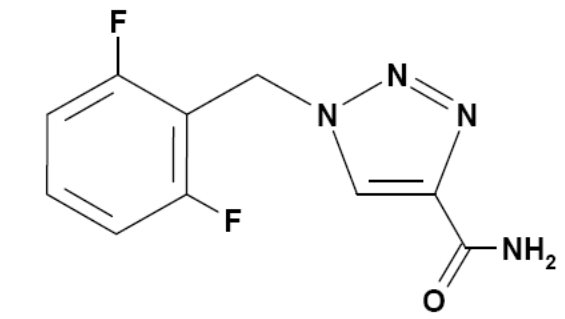
RUFINAMIDE 400MG 120 TABS
RUFINAMIDE 400MG 120 TABS
Sign up to see pricing
Licensed pharmacies, clinics, doctor's offices, and veterinary practices get instant account approval
Sign Up — Instant ApprovalWholesale compliance resources
Drug Resources
Clinical Drug Information
Indications & Usage
1 I NDICATIONS AND USAGE BANZEL is indicated for adjunctive treatment of seizures associated with Lennox-Gastaut Syndrome in pediatric patients 1 year of age and older and in adults. BANZEL is indicated for adjunctive treatment of seizures associated with Lennox-Gastaut Syndrome (LGS) in pediatric patients 1 year of age and older, and in adults ( 1 )
Dosage & Administration
2 DOSAGE AND ADMINISTRATION BANZEL should be given with food. Tablets can be administered whole, as half tablets, or crushed ( 2.2 ) Measure oral suspension using provided adapter and dosing syringe ( 2.2 ) Pediatric patients 1 year and older: Starting daily dose: 10 mg/kg per day in two equally divided doses ( 2.1 ) Increase by 10 mg/kg increments every other day to maximum dose of 45 mg/kg per day, not to exceed 3200 mg per day, in two divided doses ( 2.1 ) Adults: Starting daily dose: 400-800 mg per day in two equally divided doses ( 2.1 ) Increase by 400-800 mg every other day until a maximum dose of 3200 mg per day, in two divided doses, is reached ( 2.1 ) 2.1 Dosage Information Pediatric patients ( 1 year to less than 17 years) The recommended starting daily dose of BANZEL in pediatric patients with Lennox-Gastaut Syndrome is approximately 10 mg/kg administered in two equally divided doses. The dose should be increased by approximately 10 mg/kg increments every other day until a maximum daily dose of 45 mg/kg, not to exceed 3200 mg, administered in two equally divided doses, is reached. It is not known whether doses lower than the target doses are effective. Adults (17 years and older) The recommended starting daily dose of BANZEL in adults with Lennox-Gastaut Syndrome is 400 to 800 mg per day administered in two equally divided doses. The dose should be increased by 400-800 mg every other day until a maximum daily dose of 3200 mg, administered in two equally divided doses, is reached. It is not known whether doses lower than 3200 mg are effective. 2.2 Administration Information Administer BANZEL with food. BANZEL film-coated tablets can be administered whole, as half tablets or crushed. BANZEL oral suspension should be shaken well before every administration. The provided adapter and calibrated oral dosing syringe should be used to administer the oral suspension. The adapter which is supplied in the product carton should be inserted firmly into the neck of the bottle before use and remain in place for the duration of the usage of the bottle. The dosing syringe should be inserted into the adapter and the dose withdrawn from the inverted bottle. The cap should be replaced after each use. The cap fits properly when the adapter is in place [see Patient Counseling Information ( 17 )] . 2. 3 Dosing in Patients Undergoing Hemodialysis Hemodialysis may reduce exposure to a limited (about 30%) extent. Accordingly, adjusting the BANZEL dose during the dialysis process should be considered [s ee Clinical Pharmacology ( 12.3 ) ] . 2. 4 Dosing in Patients with Hepatic Disease Use of BANZEL in patients with hepatic impairment has not been studied. Therefore, use in patients with severe hepatic impairment is not recommended. Caution should be exercised in treating patients with mild to moderate hepatic impairment [ see Use in Specific Population s ( 8.7 ) ] . 2. 5 Dosing in Patients Taking Valproate Patients taking valproate should begin BANZEL at a dose lower than 10 mg/kg per day in pediatric patients or 400 mg per day in adults [ see Drug Int eractions ( 7.2 ) ] .
Adverse Reactions
6 ADVERSE REACTIONS The following serious adverse reactions are described below and elsewhere in the labeling: Suicidal Behavior and Ideation [see Warnings and Precautions ( 5.1 )] Central Nervous System Reactions [see Warnings and Precautions ( 5.2 )] QT Shortening [see Warnings and Precautions ( 5.3 )] Multi-Organ Hypersensitivity/Drug Reaction with Eosinophilia and Systemic Symptoms (DRESS) [see Warnings and Precautions ( 5.4 )] Leukopenia [see Warnings and Precautions ( 5.7 )] Most common adverse reactions (≥ 10% and greater than placebo) were headache, dizziness, fatigue, somnolence, and nausea ( 6.1 ) To report SUSPECTED ADVERSE REACTIONS, contact Eisai Inc. at 1-888-274-2378 or www.banzel.com or FDA at 1-800-FDA-1088 or www.fda.gov/medwatch. 6.1 Clinical Trials Experience Because clinical trials are conducted under widely varying conditions, adverse reaction rates observed in the clinical trials of a drug cannot be directly compared to rates in the clinical trials of another drug and may not reflect the rates observed in practice. Adverse Reactions in Adult and Pediatric Patients ages 3 to 17 years of age In the pooled, double-blind, adjunctive therapy studies in adult and pediatric patients ages 3 to 17 years of age, the most common (≥10%) adverse reactions in BANZEL-treated patients, in all doses studied (200 to 3200 mg per day) with a higher frequency than in patients on placebo were: headache, dizziness, fatigue, somnolence, and nausea. Table 2 lists adverse reactions that occurred in at least 3% of pediatric patients (ages 3 to less than 17 years) with epilepsy treated with BANZEL in controlled adjunctive studies and were numerically more common in patients treated with BANZEL than in patients on placebo. At the target dose of 45 mg/kg per day for adjunctive therapy in pediatric patients (ages 3 to less than 17 years), the most common (≥3%) adverse reactions with an incidence greater than in placebo for BANZEL were somnolence, vomiting, and headache. Table 2: Adverse Reactions in Pediatric Patients (Ages 3 to less than 17 years) in Pooled Double-Blind Adjunctive Trials Adverse Reaction BANZEL (N=187) % Placebo (N=182) % Somnolence 17 9 Vomiting 17 7 Headache 16 8 Fatigue 9 8 Dizziness 8 6 Nausea 7 3 Influenza 5 4 Nasopharyngitis 5 3 Decreased Appetite 5 2 Rash 4 2 Ataxia 4 1 Diplopia 4 1 Bronchitis 3 2 Sinusitis 3 2 Psychomotor Hyperactivity 3 1 Upper Abdominal Pain 3 2 Aggression 3 2 Ear Infection 3 1 Disturbance in Attention 3 1 Pruritis 3 0 Table 3 lists adverse reactions that occurred in at least 3% of adult patients with epilepsy treated with BANZEL (up to 3200 mg per day) in adjunctive controlled studies and were numerically more common in patients treated with BANZEL than in patients on placebo. In these studies, either BANZEL or placebo was added to the current AED therapy. At all doses studied of up to 3200 mg per day given as adjunctive therapy in adults, the most common (≥ 3%) adverse reactions, and with the greatest increase in incidence compared to placebo, for BANZEL were dizziness, fatigue, nausea, diplopia, vision blurred, and ataxia. Table 3: Adverse Reactions in Adults in Pooled Double-Blind Adjunctive Trials Adverse Reaction BANZEL (N=823) % Placebo (N=376) % Headache 27 26 Dizziness 19 12 Fatigue 16 10 Nausea 12 9 Somnolence 11 9 Diplopia 9 3 Tremor 6 5 Nystagmus 6 5 Blurred Vision 6 2 Vomiting 5 4 Ataxia 4 0 Upper Abdominal Pain 3 2 Anxiety 3 2 Constipation 3 2 Dyspepsia 3 2 Back Pain 3 1 Gait Disturbance 3 1 Vertigo 3 1 Discontinuation in Controlled Clinical Studies In controlled, double-blind, adjunctive clinical studies, 9% of pediatric and adult patients receiving BANZEL as adjunctive therapy and 4% receiving placebo discontinued as a result of an adverse reaction. The adverse reactions most commonly leading to discontinuation of BANZEL (>1%) used as adjunctive therapy were generally similar in adults and pediatric patients. In pediatric patients (ages 4 to less than 17 years) double-blind adjunctive clinical studies, 8% of patients receiving BANZEL as adjunctive therapy (at the recommended dose of 45 mg/kg per day) and 2% receiving placebo discontinued as a result of an adverse reaction. The adverse reactions most commonly leading to discontinuation of BANZEL (>1%) used as adjunctive therapy are presented in Table 4. Table 4: Most Common Adverse Reactions Leading to Discontinuation in Pediatric Patients (Ages 4 to less than 17 years) in Pooled Double-Blind Adjunctive Trials Adverse Reaction BANZEL (N=187) % Placebo (N=182) % Convulsion 2 1 Rash 2 1 Fatigue 2 0 Vomiting 1 0 In adult double-blind, adjunctive clinical studies, 10% of patients receiving BANZEL as adjunctive therapy (at doses up to 3200 mg per day) and 6% receiving placebo discontinued as a result of an adverse reaction. The adverse reactions most commonly leading to discontinuation of BANZEL (>1%) used as adjunctive therapy are presented in Table 5. Table 5: Most Common Adverse Reactions Leading to Discontinuation in Adult Patients in Pooled Double-Blind Adjunctive Trials Adverse Reaction BANZEL (N=823) % Placebo (N=376) % Dizziness 3 1 Fatigue 2 1 Headache 2 1 Nausea 1 0 Ataxia 1 0 Pediatric Patients age s 1 to less than 4 years In a multicenter, parallel group, open-label study comparing BANZEL (45 mg/kg per day) adjunctive treatment (n=25) to the adjunctive treatment with an AED of the investigator’s choice (n=11) in pediatric patients (1 year to less than 4 years of age) with inadequately controlled Lennox-Gastaut Syndrome, the adverse reaction profile was generally similar to that observed in adults and pediatric patients 4 years of age and older treated with BANZEL. Adverse reactions that occurred in at least 2 (8%) BANZEL-treated patients and with a higher frequency than in the AED comparator group were: vomiting (24%), somnolence (16%), bronchitis (12%), constipation (12%), cough (12%), decreased appetite (12%), rash (12%), otitis media (8%), pneumonia (8%), decreased weight (8%), gastroenteritis (8%), nasal congestion (8%), and pneumonia aspiration (8%). Other Adverse Reactions Observed During Clinical Trials BANZEL has been administered to 1978 individuals during all epilepsy clinical trials (placebo-controlled and open-label). Adverse reactions occurring during these studies were recorded by the investigators using terminology of their own choosing. To provide a meaningful estimate of the proportion of patients having adverse reactions, these events were grouped into standardized categories using the MedDRA dictionary. Adverse events occurring at least three times and considered possibly related to treatment are included in the System Organ Class listings below. Terms not included in the listings are those already included in the tables above, those too general to be informative, those related to procedures, and terms describing events common in the population. Some events occurring fewer than 3 times are also included based on their medical significance. Because the reports include events observed in open-label, uncontrolled observations, the role of BANZEL in their causation cannot be reliably determined. Events are classified by body system and listed in order of decreasing frequency as follows: frequent adverse events —those occurring in at least 1/100 patients; infrequent adverse events—those occurring in 1/100 to 1/1000 patients; rare —those occurring in fewer than 1/1000 patients. Blood and Lymphatic System Disorders : Frequent: anemia. Infrequent: lymphadenopathy, leukopenia, neutropenia, iron deficiency anemia, thrombocytopenia. Cardiac Disorders : Infrequent: bundle branch block right, atrioventricular block first degree. Metabolic and Nutritional Disorders : Frequent: decreased appetite, increased appetite. Renal and Urinary Disorders: Frequent : pollakiuria. Infrequent: urinary incontinence, dysuria, hematuria, nephrolithiasis, polyuria, enuresis, nocturia, incontinence. 6.2 Post m arketing Experience The following adverse reactions have been identified during post approval use of BANZEL. Because these reactions are reported voluntarily from a population of uncertain size, it is not always possible to reliably estimate their frequency or establish a causal relationship to drug exposure. Dermatologic: Stevens-Johnson syndrome and other serious skin rashes with mucosal involvement.
Information for Patients
17 PATIENT COUNSELING INFORMATION Advise the patient to read the FDA-approved patient labeling ( Medication Guide and Instructions for Use ). Administration Information Advise patients to take BANZEL with food [see Dosage and Administration ( 2.2 )] . Advise patients who are prescribed the oral suspension to shake the bottle vigorously before every administration and to use the adaptor and oral dosing syringe [see Dosage and Administration ( 2.2 )] . Suicidal Thinking and Behavior Inform patients, their caregivers, and families that antiepileptic drugs increase the risk of suicidal thoughts and behavior and should be advised of the need to be alert for the emergence or worsening of the signs and symptoms of depression, any unusual changes in mood or behavior, or the emergence of suicidal thoughts, behavior, or thoughts about self-harm. Behaviors of concern should be reported immediately to healthcare providers [see Warnings and Precautions ( 5.1 )] . Central Nervous System Reactions Inform patients about the potential for somnolence or dizziness and advise them not to drive or operate machinery until they have gained sufficient experience on BANZEL to gauge whether it adversely affects their mental and/or motor performance [see Warnings and Precautions ( 5.2 )] . Multi-Organ Hypersensitivity Reactions Advise patients to notify their physician if they experience a rash associated with fever [see Warnings and Precautions ( 5.4 )] . Drug Interactions Inform female patients of childbearing age that the concurrent use of BANZEL with hormonal contraceptives may render this method of contraception less effective. Recommend patients use additional non-hormonal forms of contraception when using BANZEL [see Drug Interactions ( 7.3 ) and Use in Specific Populations ( 8.3 ) ] . Inform patients that alcohol in combination with BANZEL may cause additive central nervous system effects. Pregnancy Advise patients to notify their physician if they become pregnant or intend to become pregnant during therapy. Encourage patients to enroll in the North American Antiepileptic Drug Pregnancy Registry if they become pregnant. To enroll, patients can call the toll free number 1-888-233-2334 [ see Use in Specific Populations ( 8.1 ) ] . Breast-feeding Advise patients to notify their physician if they are breast-feeding or intend to breast-feed [see Use in Specific Populations ( 8.2 )] .
Clinical data sourced from openFDA drug labeling. For complete prescribing information, consult the full drug label.