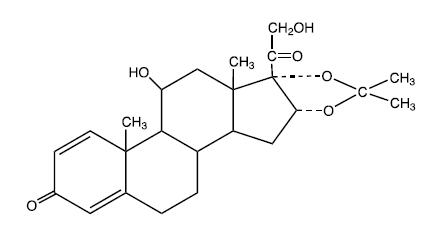
DESONIDE LOTION 0.05% 118ML
Generic: Desonide
DESONIDE LOTION 0.05% 118ML
Sign up to see pricing
Licensed pharmacies, clinics, doctor's offices, and veterinary practices get instant account approval
Sign Up — Instant ApprovalDrug Information
Identification
Desonide
Desonide
Taro Pharmaceuticals U.S.A., Inc.
HUMAN PRESCRIPTION DRUG
Administration
LOTION
TOPICAL
ANDA202161
Active Ingredients
| Ingredient | Strength |
|---|---|
| DESONIDE | .5 mg/mL |
Pharmacological Class
Data sourced from openFDA / DailyMed. For full prescribing information, consult the drug label.
Wholesale compliance resources
Drug Resources
Clinical Drug Information
Indications & Usage
INDICATIONS AND USAGE Desonide lotion is a low to medium potency corticosteroid indicated for the relief of the inflammatory and pruritic manifestations of corticosteroid responsive dermatoses.
Dosage & Administration
DOSAGE AND ADMINISTRATION Desonide lotion should be applied to the affected areas as a thin film two or three times daily depending on the severity of the condition. SHAKE LOTION WELL BEFORE USING. As with other corticosteroids, therapy should be discontinued when control is achieved. If no improvement is seen within 2 weeks, reassessment of diagnosis may be necessary. Desonide lotion should not be used with occlusive dressings.
Adverse Reactions
ADVERSE REACTIONS In controlled clinical trials, the total incidence of adverse reactions associated with the use of desonide was approximately 8%. These were: stinging and burning approximately 3%, irritation, contact dermatitis, condition worsened, peeling of skin, itching, intense transient erythema, and dryness/scaliness, each less than 2%. The following additional local adverse reactions have been reported infrequently with other topical corticosteroids, and they may occur more frequently with the use of occlusive dressings, especially with higher potency corticosteroids. These reactions are listed in an approximate decreasing order of occurrence: folliculitis, acneiform eruptions, hypopigmentation, perioral dermatitis, secondary infection, skin atrophy, striae, and miliaria.
Information for Patients
Information for Patients Patients using topical corticosteroids should receive the following information and instructions: This medication is to be used as directed by the physician. It is for external use only. Avoid contact with the eyes. This medication should not be used for any disorder other than that for which it was prescribed. The treated skin area should not be bandaged or otherwise covered or wrapped so as to be occlusive unless directed by the physician. Patients should report to their physician any signs of local adverse reactions.
Clinical data sourced from openFDA drug labeling. For complete prescribing information, consult the full drug label.