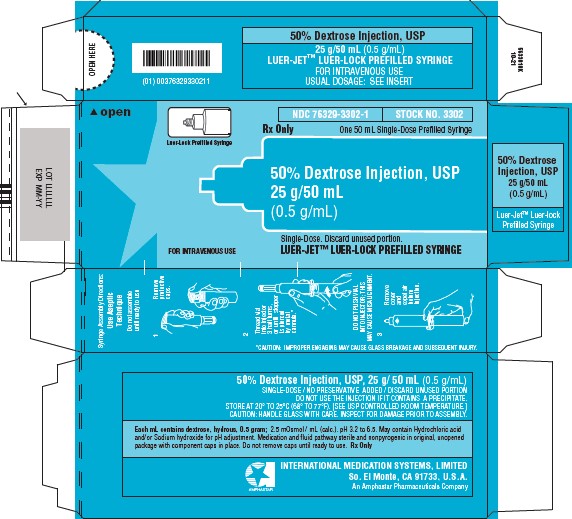
DEXTROSE 50% 25GM PFS 10X50ML
Generic: Dextrose Monohydrate
DEXTROSE 50% 25GM PFS 10X50ML
Sign up to see pricing
Licensed pharmacies, clinics, doctor's offices, and veterinary practices get instant account approval
Sign Up — Instant ApprovalDrug Information
Identification
Dextrose Monohydrate
Dextrose Monohydrate
International Medication Systems, Limited
HUMAN PRESCRIPTION DRUG
Administration
INJECTION, SOLUTION
INTRAVENOUS
ANDA203451
Active Ingredients
| Ingredient | Strength |
|---|---|
| DEXTROSE MONOHYDRATE | 25 g/50mL |
Data sourced from openFDA / DailyMed. For full prescribing information, consult the drug label.
Wholesale compliance resources
Drug Resources
Clinical Drug Information
Indications & Usage
INDICATIONS AND USAGE 50% Dextrose Injection is indicated in the treatment of insulin hypoglycemia (hyperinsulinemia or insulin shock) to restore blood glucose levels. The solution is also indicated, after dilution, for intravenous infusion as a source of carbohydrate calories in patients whose oral intake is restricted or inadequate to maintain nutritional requirements. Slow infusion of hypertonic solutions is essential to ensure proper utilization of dextrose and avoid production of hyperglycemia.
Warnings
WARNINGS 50% Dextrose Injection is hypertonic and may cause phlebitis and thrombosis at the site of injection. Significant hyperglycemia and possible hyperosmolar syndrome may result from too rapid administration. The physician should be aware of the symptoms of hyperosmolar syndrome, such as mental confusion and loss of consciousness, especially in patients with chronic uremia and those with known carbohydrate intolerance. The intravenous administration of this solution can cause fluid and/or solute overloading resulting in dilution of serum electrolyte concentrations, overhydration, congested states or pulmonary edema. Additives may be incompatible. Consult with pharmacist if available. When introducing additives, use aseptic technique, mix thoroughly and do not store. For peripheral vein administration: The solution should be given slowly, preferably through a small bore needle into a large vein, to minimize venous irritation. For central venous administration: Concentrated dextrose should be administered via central vein only after suitable dilution.
Dosage & Administration
DOSAGE AND ADMINISTRATION For peripheral vein administration: Injection of the solution should be made slowly . The maximum rate at which dextrose can be infused without producing glycosuria is 0.5 g/kg of body weight/hour. About 95% of the dextrose is retained when infused at a rate of 0.8 g/kg/hr. In insulin-induced hypoglycemia, intravenous injection of 10 to 25 grams of dextrose (20 to 50 mL of 50% dextrose) is usually adequate. Repeated doses and supportive treatment may be required in severe cases. A specimen for blood glucose determination should be taken before injecting the dextrose. In such emergencies, dextrose should be administered promptly without awaiting pretreatment test results. For central vein administration: For total parenteral nutrition 50% Dextrose Injection, USP is administered by slow intravenous infusion (a) after admixture with amino acid solutions via an indwelling catheter with the tip positioned in a large central vein, preferably the superior vena cava, or (b) after dilution with sterile water for injection. Dosage should be adjusted to meet individual patient requirements. Clinical evaluation and periodic laboratory determinations are necessary to monitor changes in fluid balance, electrolyte concentrations and acid-base balance during prolonged parenteral therapy or whenever the condition of the patient warrants such evaluation. The maximum rate of dextrose administration which does not result in glycosuria is the same as cited above. Parenteral drug products should be inspected visually for particulate matter and discoloration prior to administration, whenever solution and container permit. See CONTRAINDICATIONS .
Adverse Reactions
ADVERSE REACTIONS Hyperosmolar syndrome, resulting from excessively rapid administration of concentrated dextrose may cause mental confusion and/or loss of consciousness. Reactions which may occur because of the solution or the technique of administration include febrile response, infection at the site of injection, venous thrombosis or phlebitis extending from the site of injection, extravasation and hypervolemia. If an adverse reaction does occur, discontinue the infusion, evaluate the patient, institute appropriate therapeutic countermeasures and save the remainder of the fluid for examination if deemed necessary.
Clinical data sourced from openFDA drug labeling. For complete prescribing information, consult the full drug label.