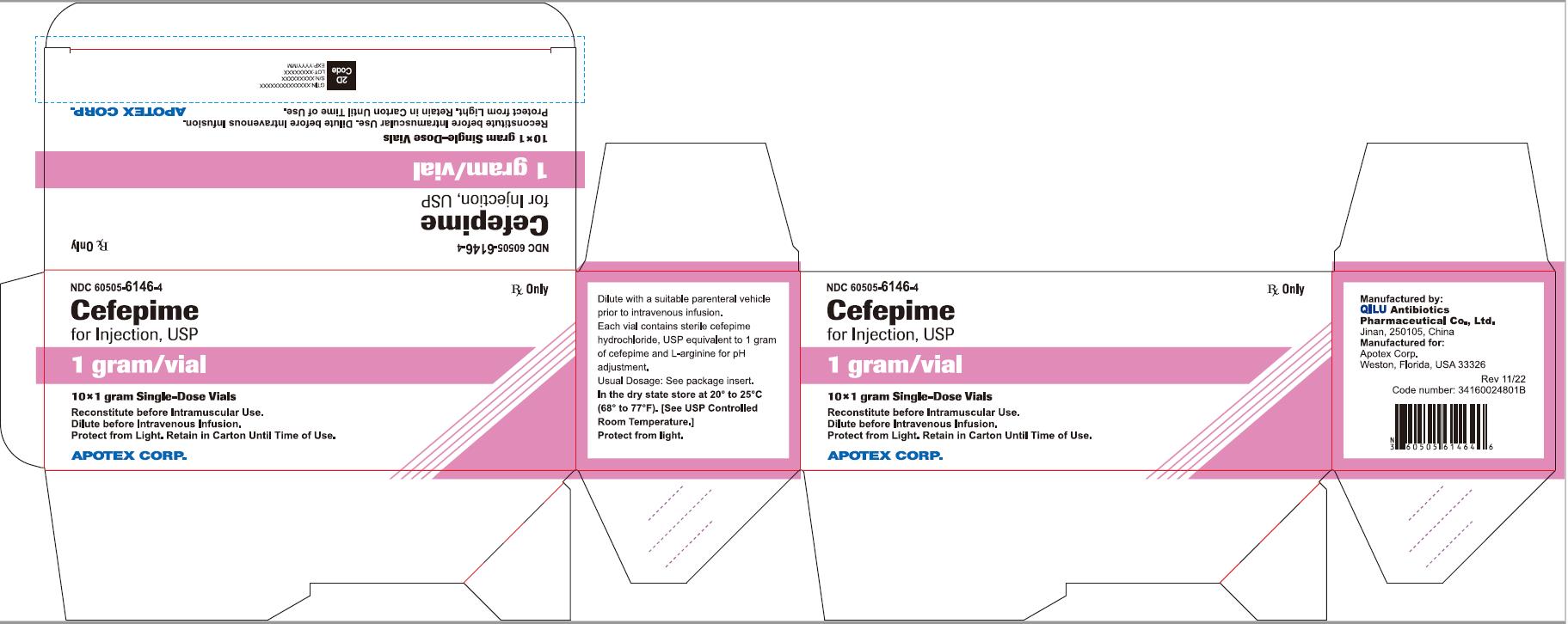
CEFEPIME INJECTION 2GM/20ML SINGLE VIAL
Generic: Cefepime
CEFEPIME INJECTION 2GM/20ML SINGLE VIAL
Sign up to see pricing
Licensed pharmacies, clinics, doctor's offices, and veterinary practices get instant account approval
Sign Up — Instant ApprovalDrug Information
Identification
Cefepime
Cefepime
Apotex Corp.
HUMAN PRESCRIPTION DRUG
Administration
INJECTION, POWDER, FOR SOLUTION
INTRAVENOUS
ANDA203704
Active Ingredients
| Ingredient | Strength |
|---|---|
| CEFEPIME HYDROCHLORIDE | 2 g/1 |
Pharmacological Class
Data sourced from openFDA / DailyMed. For full prescribing information, consult the drug label.
Wholesale compliance resources
Drug Resources
Clinical Drug Information
Indications & Usage
1 INDICATIONS AND USAGE Cefepime for Injection is a cephalosporin antibacterial indicated for the treatment of the following infections caused by susceptible strains of the designated microorganisms: • Pneumonia. ( 1.1 ) • Empiric therapy for febrile neutropenic patients. ( 1.2 ) • Uncomplicated and complicated urinary tract infections (including pyelonephritis). ( 1.3 ) • Uncomplicated skin and skin structure infections. ( 1.4 ) • Complicated intra-abdominal infections (used in combination with metronidazole) in adults. ( 1.5 ) To reduce the development of drug-resistant bacteria and maintain the effectiveness of Cefepime for Injection and other antibacterial drugs, Cefepime for Injection should be used only to treat or prevent infections that are proven or strongly suspected to be caused by bacteria. ( 1.6 ) 1.1 Pneumonia Cefepime for Injection is indicated in the treatment of pneumonia (moderate to severe) caused by susceptible strains of Streptococcus pneumoniae , including cases associated with concurrent bacteremia, Pseudomonas aeruginosa , Klebsiella pneumoniae , or Enterobacter species. 1.2 Empiric Therapy for Febrile Neutropenic Patients Cefepime for Injection as monotherapy is indicated for empiric treatment of febrile neutropenic patients. In patients at high risk for severe infection (including patients with a history of recent bone marrow transplantation, with hypotension at presentation, with an underlying hematologic malignancy, or with severe or prolonged neutropenia), antimicrobial monotherapy may not be appropriate. Insufficient data exist to support the efficacy of cefepime monotherapy in such patients [ see Clinical Studies (14.1) ]. 1.3 Uncomplicated and Complicated Urinary Tract Infections (including pyelonephritis) Cefepime for Injection is indicated in the treatment of uncomplicated and complicated urinary tract infections (including pyelonephritis) caused by susceptible isolates of Escherichia coli or Klebsiella pneumoniae , when the infection is severe, or caused by Escherichia coli , Klebsiella pneumoniae , or Proteus mirabilis , when the infection is mild to moderate, including cases associated with concurrent bacteremia with these bacteria. 1.4 Uncomplicated Skin and Skin Structure Infections Cefepime for Injection is indicated in the treatment of uncomplicated skin and skin structure infections caused by Staphylococcus aureus (methicillin-susceptible isolates only) or Streptococcus pyogenes . 1.5 Complicated Intra-abdominal Infections (used in combination with metronidazole) Cefepime for Injection is indicated in the treatment of complicated intra-abdominal infections (used in combination with metronidazole) in adults caused by susceptible isolates of Escherichia coli , viridans group streptococci, Pseudomonas aeruginosa , Klebsiella pneumoniae , Enterobacter species, or Bacteroides fragilis [ see Clinical Studies (14.2) ]. 1.6 Usage To reduce the development of drug-resistant bacteria and maintain the effectiveness of Cefepime for Injection and other antibacterial drugs, Cefepime for Injection should be used only to treat or prevent infections that are proven or strongly suspected to be caused by susceptible bacteria. When culture and susceptibility information are available, they should be considered in selecting or modifying antibacterial therapy. In the absence of such data, local epidemiology and susceptibility patterns may contribute to the empiric selection of therapy.
Dosage & Administration
2 DOSAGE AND ADMINISTRATION § For Pseudomonas aeruginosa , use 2 g IV every 8 hours. ( 2.1 ) *Or until resolution of neutropenia. ( 2.1 ) **Intramuscular route of administration is indicated only for mild to moderate, uncomplicated or complicated UTIs due to E. coli . ( 2.1 ) Recommended Dosage in Adults with Creatinine Clearance (CrCL) Greater Than 60 mL/min ( 2.1 ) Site and Type of Infection Dose Frequency Duration (days) Moderate to Severe Pneumonia § 1-2 g IV Every 8-12 hours 10 Empiric Therapy for Febrile Neutropenic Patients 2 g IV Every 8 hours 7* Mild to Moderate Uncomplicated or Complicated Urinary Tract Infections 0.5-1 g IV/IM** Every 12 hours 7-10 Severe Uncomplicated or Complicated Urinary Tract Infections 2 g IV Every 12 hours 10 Moderate to Severe Uncomplicated Skin and Skin Structure Infections 2 g IV Every 12 hours 10 Complicated Intra-abdominal Infections § (used in combination with metronidazole) 2 g IV Every 12 hours 7-10 Pediatric Patients (2 months to 16 years) Recommended dosage in pediatric with CrCL greater than 60 mL/min. ( 2.2 ) • The usual recommended dosage in pediatric patients is 50 mg per kg per dose administered every 12 hours (every 8 hours for febrile neutropenia). ( 2.2 ) • Patients with Renal Impairment: Adjust dose in patients with CrCL less than or equal to 60 mL/min. ( 2.3 ) 2.1 Dosage for Adults The recommended adult dosages and routes of administration are outlined in Table 1 below for patients with creatinine clearance greater than 60 mL/min. Administer Cefepime for Injection intravenously over approximately 30 minutes. Table 1: Recommended Dosage Schedule for Cefepime for Injection in Adult Patients with Creatinine Clearance (CrCL) Greater Than 60 mL/min *or until resolution of neutropenia. In patients whose fever resolves but who remain neutropenic for more than 7 days, the need for continued antimicrobial therapy should be re-evaluated frequently. **Intramuscular route of administration is indicated only for mild to moderate, uncomplicated or complicated UTIs due to E. coli . § For P. aeruginosa , use 2 g IV every 8 hours. Site and Type of Infection Dose Frequency Duration (days) Adults Intravenous (IV)/Intramuscular (IM) Moderate to Severe Pneumonia § 1 to 2 g IV Every 8 to 12 hours 10 Empiric therapy for febrile neutropenic patients 2 g IV Every 8 hours 7* Mild to Moderate Uncomplicated or Complicated Urinary Tract Infections, including pyelonephritis 0.5 to 1 g IV/IM** Every 12 hours 7 to 10 Severe Uncomplicated or Complicated Urinary Tract Infections, including pyelonephritis 2 g IV Every 12 hours 10 Moderate to Severe Uncomplicated Skin and Skin Structure Infections 2 g IV Every 12 hours 10 Complicated Intra-abdominal Infections § (used in combination with metronidazole) 2 g IV Every 8 to 12 hours 7 to 10 2.2 Pediatric Patients (2 months up to 16 years) The maximum dose for pediatric patients should not exceed the recommended adult dose. The usual recommended dosage in pediatric patients up to 40 kg in weight for durations as given above for adults is: • 50 mg per kg per dose, administered every 12 hours for uncomplicated and complicated urinary tract infections (including pyelonephritis), uncomplicated skin and skin structure infections, and pneumonia (see below). • For moderate to severe pneumonia due to P. aeruginosa give 50 mg per kg per dose, every 8 hours. • 50 mg per kg per dose, every 8 hours for febrile neutropenic patients. 2.3 Dosage Adjustments in Patients with Renal Impairment Adult Patients Adjust the dose of Cefepime for Injection in patients with creatinine clearance less than or equal to 60 mL/min to compensate for the slower rate of renal elimination. In these patients, the recommended initial dose of Cefepime for Injection should be the same as in patients with CrCL greater than 60 mL/min except in patients undergoing hemodialysis. The recommended doses of Cefepime for Injection in patients with renal impairment are presented in Table 2 . When only serum creatinine is available, the following formula (Cockcroft and Gault equation) 1 may be used to estimate creatinine clearance. The serum creatinine should represent a steady state of renal function: Males: Creatinine Clearance (mL/min) = Weight (kg) x (140 – age) 72 × serum creatinine (mg/dL) Females: 0.85 × above value Table 2: Recommended Dosing Schedule for Cefepime for Injection in Adult Patients With Creatinine Clearance Less Than or Equal to 60 mL/min Creatinine Clearance (mL/min) Recommended Maintenance Schedule Greater than 60 500 mg every 12 hours 1 g every 12 hours 2 g every 12 hours 2 g every 8 hours 30 to 60 500 mg every 24 hours 1 g every 24 hours 2 g every 24 hours 2 g every 12 hours 11 to 29 500 mg every 24 hours 500 mg every 24 hours 1 g every 24 hours 2 g every 24 hours Less than 11 250 mg every 24 hours 250 mg every 24 hours 500 mg every 24 hours 1 g every 24 hours Continuous Ambulatory Peritoneal Dialysis (CAPD) 500 mg every 48 hours 1 g every 48 hours 2 g every 48 hours 2 g every 48 hours Hemodialysis On hemodialysis days, cefepime should be administered following hemodialysis. Whenever possible, cefepime should be administered at the same time each day. 1 g on day 1, then 500 mg every 24 hours thereafter 1 g every 24 hours In patients undergoing Continuous Ambulatory Peritoneal Dialysis (CAPD), Cefepime for Injection may be administered at the recommended doses at a dosage interval of every 48 hours (see Table 2 ). In patients undergoing hemodialysis, approximately 68% of the total amount of cefepime present in the body at the start of dialysis will be removed during a 3-hour dialysis period. The dosage of Cefepime for Injection for hemodialysis patients is 1 g on Day 1 followed by 500 mg every 24 hours for the treatment of all infections except febrile neutropenia, which is 1 g every 24 hours. Cefepime for Injection should be administered at the same time each day and following the completion of hemodialysis on hemodialysis days (see Table 2 ). Pediatric Patients Data in pediatric patients with impaired renal function are not available; however, since cefepime pharmacokinetics are similar in adults and pediatric patients [ see Clinical Pharmacology (12.3) ], changes in the dosing regimen proportional to those in adults (see Tables 1 and 2 ) are recommended for pediatric patients. 2.4 Preparation of Cefepime for Injection for Intravenous Infusion •Constitute the 0.5 gram, 1 gram, or 2 grams vial, of Cefepime for Injection with the one of the following diluents: o Sterile Water for Injection o 0.9% Sodium Chloride Injection o 5% Dextrose Injection o 0.5% or 1% Lidocaine Hydrochloride Injection o Sterile Bacteriostatic Water for Injection with Parabens or Benzyl Alcohol •Dilute the reconstituted solution with one of the following compatible infusion solutions prior to intravenous infusion (Refer to Table 3 below for the amount of diluent to be added to each vial and the amount of the reconstituted solution to be withdrawn): o 0.9% Sodium Chloride Injection o 5% and 10% Dextrose Injection o M/6 Sodium Lactate Injection o 5% Dextrose and 0.9% sodium Chloride Injection o Lactated Rings and 5% Dextrose Injection o Normosol ® -R and Normosol ® -M in 5% Dextrose Injection •Parenteral drugs should be inspected visually for particulate matter before administration. If particulate matter is evident in reconstituted fluids, the drug solution should be discarded. •Administer the resulting intravenous infusion over approximately 30 minutes. •Intermittent intravenous infusion with a Y-type administration set can be accomplished with compatible solutions. However, during infusion of a solution containing cefepime, it is desirable to discontinue the other solution. 2.5 Preparation of Cefepime for Injection for Intramuscular Administration Constitute Cefepime for Injection vials 0.5 gram, 1 gram and 2 grams with one of the following diluents: Sterile Water for Injection, 0.9% Sodium Chloride, 5% Dextrose Injection, 0.5% or 1% Lidocaine Hydrochloride, or Sterile Bacteriostatic Water for Injection with Parabens or Benzyl Alcohol. Refer to Table 3 below for the amount of diluent to be added to each vial and the amount of reconstituted volume to be withdrawn. Parenteral drugs should be inspected visually for particulate matter before administration. If particulate matter is evident in reconstituted fluids, the drug solution should be discarded. Table 3: Preparation of Reconstituted Solutions of Cefepime for Injection Single-Dose Vials for Intravenous (IV)/Intramuscular (IM)Administration Amount of Diluent to be added (mL) Approximate Cefepime Concentration (mg/mL) Amount of Reconstituted Volume to be Withdrawn (mL) 500 mg (IV) 5 100 5 500 mg (IM) 1.3 280 1.8 1 g (IV) 10 100 10.5 1 g (IM) 2.4 280 3.6 2 g (IV) 10 160 12.5 2.6 Compatibility and Stability Intravenous Cefepime for Injection Intravenous Infusion Compatibility Cefepime for Injection vials are compatible at concentrations between 1 mg per mL and 40 mg per mL with the following intravenous infusion fluids: 0.9% Sodium Chloride Injection, 5% and 10% Dextrose Injection, M/6 Sodium Lactate Injection, 5% Dextrose and 0.9% Sodium Chloride Injection, Lactated Ringers and 5% Dextrose Injection, Normosol ® -R, and Normosol ® -M in 5% Dextrose Injection. These solutions may be stored up to 24 hours at controlled room temperature 20°C to 25°C (68°F to 77°F) or 7 days in a refrigerator 2°C to 8°C (36°F to 46°F). Admixture Compatibility Cefepime for Injection admixture compatibility information is summarized in Table 4 . Table 4: Cefepime Admixture Stability NS = 0.9% Sodium Chloride Injection. D5W = 5% Dextrose Injection. na = not applicable. RT/L = Ambient room temperature and light. Stability Time for Cefepime for Injection Concentration Admixture and Concentration Intravenous (IV) Infusion Solutions RT/L (20° to 25°C) Refrigeration (2° to 8°C) 40 mg/mL Amikacin 6 mg/mL NS or D5W 24 hours 7 days 40 mg/mL Ampicillin 1 mg/mL D5W 8 hours 8 hours 40 mg/mL Ampicillin 10 mg/mL D5W 2 hours 8 hours 40 mg/mL Ampicillin 1 mg/mL NS 24 hours 48 hours 40 mg/mL Ampicillin 10 mg/mL NS 8 hours 48 hours 4 mg/mL Ampicillin 40 mg/mL NS 8 hours 8 hours 4 to 40 mg/mL Clindamycin Phosphate 0.25 to 6 mg/mL NS or D5W 24 hours 7 days 4 mg/mL Heparin 10 to 50 units/mL NS or D5W 24 hours 7 days 4 mg/mL Potassium Chloride 10 to 40 mEq/L NS or D5W 24 hours 7 days 4 mg/mL Theophylline 0.8 mg/mL D5W 24 hours 7 days 1 to 4 mg/mL na Aminosyn™ II 4.25% with electrolytes and calcium 8 hours 3 days 0.125 to 0.25 mg/mL na Inpersol™ with 4.25% dextrose 24 hours 7 days Cefepime for Injection Admixture Incompatibility Do not add solutions of Cefepime for Injection, to solutions of ampicillin at a concentration greater than 40 mg per mL, or to metronidazole, vancomycin, gentamicin, tobramycin, netilmicin sulfate, or aminophylline because of potential interaction. However, if concurrent therapy with Cefepime for Injection is indicated, each of these antibacterial drugs can be administered separately. Intramuscular Cefepime for Injection Cefepime for Injection constituted as directed is stable for 24 hours at controlled room temperature 20°C to 25°C (68°F to 77°F) or for 7 days in a refrigerator 2°C to 8°C (36°F to 46°F) with the following diluents: Sterile Water for Injection, 0.9% Sodium Chloride Injection, 5% Dextrose Injection, Sterile Bacteriostatic Water for Injection with Parabens or Benzyl Alcohol, or 0.5% or 1% Lidocaine Hydrochloride. Intramuscular and Intravenous Cefepime for Injection As with other cephalosporins, the color of Cefepime for Injection powder, as well as its solutions tend to darken depending on storage conditions; however, when stored as recommended, the product potency is not adversely affected.
Adverse Reactions
6 ADVERSE REACTIONS The following adverse reactions are discussed in the Warnings and Precautions section and below: • Hypersensitivity Reactions [ see Warnings and Precautions (5.1) ] • Neurotoxicity [ see Warnings and Precautions (5.2) ] • Clostridioides difficile -Associated Diarrhea [ see Warnings and Precautions (5.3) ] •The most common adverse reactions (incidence ≥ 1%) were local reactions, positive Coombs’ test, decreased phosphorous, increased ALT and AST, increased PT and PTT and rash. ( 6.1 ) •At the highest dose (2 g every 8 hours), incidence of adverse reactions was ≥1% for rash, diarrhea, nausea, vomiting, pruritis, fever, and headache. ( 6.1 ) To report SUSPECTED ADVERSE REACTIONS, contact Apotex Corp. at 1-800-706-5575, or FDA at 1-800-FDA-1088 or www.fda.gov/medwatch . 6.1 Clinical Trials Experience Because clinical trials are conducted under widely varying conditions, adverse reaction rates observed in clinical trials of a drug cannot be directly compared to rates in the clinical trials of another drug and may not reflect the rates observed in practice. In clinical trials using multiple doses of cefepime, 4137 patients were treated with the recommended dosages of cefepime (500 mg to 2 g intravenous every 12 hours). There were no deaths or permanent disabilities thought related to drug toxicity. Sixty-four (1.5%) patients discontinued medication due to adverse reactions. Thirty-three (51%) of these 64 patients who discontinued therapy did so because of rash. The percentage of cefepime-treated patients who discontinued study drug because of drug-related adverse reactions was similar at daily doses of 500 mg, 1 g, and 2 g every 12 hours (0.8%, 1.1%, and 2%, respectively). However, the incidence of discontinuation due to rash increased with the higher recommended doses. The following adverse reactions ( Table 5 ) were identified in clinical trials conducted in North America (n=3125 cefepime-treated patients). Table 5: Adverse Reactions in Cefepime Multiple-Dose Dosing Regimens Clinical Trials in North America Incidence equal to or greater than 1% Local adverse reactions (3%), including phlebitis (1.3%), pain and/or inflammation (0.6%)*; rash (1.1%) Incidence less than 1% but greater than 0.1% Colitis (including pseudomembranous colitis), diarrhea, erythema, fever, headache, nausea, oral moniliasis, pruritus, urticaria, vaginitis, vomiting, anemia At the higher dose of 2 g every 8 hours, the incidence of adverse reactions was higher among the 795 patients who received this dose of cefepime. They consisted of rash (4%), diarrhea (3%), nausea (2%), vomiting (1%), pruritus (1%), fever (1%), and headache (1%). The following ( Table 6 ) adverse laboratory changes, with cefepime, were seen during clinical trials conducted in North America. Table 6: Adverse Laboratory Changes in Cefepime Multiple-Dose Dosing Regimens Clinical Trials in North America Incidence equal to or greater than 1% Positive Coombs’ test (without hemolysis) (16.2%); decreased phosphorus (2.8%); increased Alanine Transaminase (ALT) (2.8%), Aspartate Transaminase (AST) (2.4%), eosinophils (1.7%); abnormal PTT (1.6%), Prothrombin Time (PT) (1.4%) Incidence less than 1% but greater than 0.1% Increased alkaline phosphatase, Blood Urea Nitrogen (BUN), calcium, creatinine, phosphorus, potassium, total bilirubin; decreased calcium Hypocalcemia was more common among elderly patients. Clinical consequences from changes in either calcium or phosphorus were not reported. , hematocrit, neutrophils, platelets, White Blood Cells (WBC) A similar safety profile was seen in clinical trials of pediatric patients 6.2 Postmarketing Experience The following adverse reactions have been identified during post-approval use of Cefepime for Injection. Because these reactions are reported voluntarily from a population of uncertain size, it is not always possible to reliably estimate their frequency or establish a causal relationship to drug exposure. In addition to the adverse reactions reported during the North American clinical trials with cefepime, the following adverse reactions have been reported during worldwide postmarketing experience. Encephalopathy (disturbance of consciousness including confusion, hallucinations, stupor, and coma), aphasia, myoclonus, seizures, and nonconvulsive status epilepticus have been reported. [ see Warnings and Precautions (5.2) ]. Anaphylaxis including anaphylactic shock, transient leukopenia, neutropenia, agranulocytosis and thrombocytopenia, have been reported. 6.3 Cephalosporin-Class Adverse Reactions In addition to the adverse reactions listed above that have been observed in patients treated with cefepime, the following adverse reactions and altered laboratory tests have been reported for cephalosporin-class antibacterial drugs: Stevens-Johnson syndrome, erythema multiforme, toxic epidermal necrolysis, renal dysfunction, toxic nephropathy, aplastic anemia, hemolytic anemia, hemorrhage, hepatic dysfunction including cholestasis, and pancytopenia.
Information for Patients
17 PATIENT COUNSELING INFORMATION •Counsel patients that antibacterial drugs including Cefepime for Injection should only be used to treat bacterial infections. They do not treat viral infections (e.g., the common cold). When Cefepime for Injection is prescribed to treat a bacterial infection, patients should be told that although it is common to feel better early in the course of therapy, the medication should be taken exactly as directed. Skipping doses or not completing the full course of therapy may (1) decrease the effectiveness of the immediate treatment and (2) increase the likelihood that bacteria will develop resistance and will not be treatable by Cefepime for Injection or other antibacterial drugs in the future. •Diarrhea is a common problem caused by antibacterial drugs, which usually ends when the antibacterial drug is discontinued. Inform patient that they may develop watery and bloody stools (with or without stomach cramps and fever) during treatment and as late as two or more months after having taken the last dose of the antibacterial drug. Inform patients that they should contact their physician as soon as possible if this occurs. •Advise patients of neurological adverse events that could occur with Cefepime for Injection use. Instruct patients or their caregivers to inform their healthcare provider at once of any neurological signs and symptoms, including encephalopathy (disturbance of consciousness including confusion, hallucinations, stupor, and coma), aphasia (disturbance of speaking and understanding spoken and written language), myoclonus, seizures and nonconvulsive status epilepticus, for immediate treatment, dosage adjustment, or discontinuation of Cefepime for Injection. Manufactured by: Qilu Pharmaceutical Co., Ltd. High Tech Zone Jinan, 250101, China Qilu Antibiotics Pharmaceutical Co., Ltd. Jinan, 250105, China Manufactured for: Apotex Corp. Weston, Florida, USA 33326 Code number: 34040032611E Code number: 34160024211B
Clinical data sourced from openFDA drug labeling. For complete prescribing information, consult the full drug label.