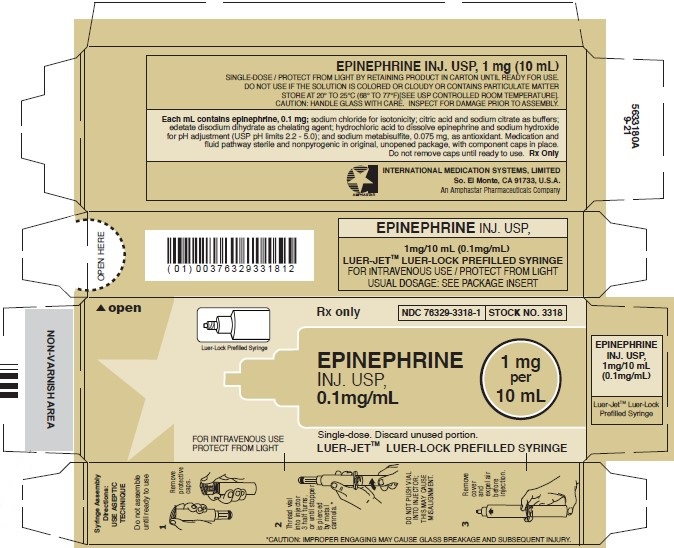
EPINEPHRINE 1MG PFS 10X10ML
Generic: Epinephrine
EPINEPHRINE 1MG PFS 10X10ML
Sign up to see pricing
Licensed pharmacies, clinics, doctor's offices, and veterinary practices get instant account approval
Sign Up — Instant ApprovalDrug Information
Identification
Epinephrine
Epinephrine
International Medication Systems, Limited
HUMAN PRESCRIPTION DRUG
Administration
INJECTION
INTRAVENOUS
NDA211363
Active Ingredients
| Ingredient | Strength |
|---|---|
| EPINEPHRINE | .1 mg/mL |
Pharmacological Class
Data sourced from openFDA / DailyMed. For full prescribing information, consult the drug label.
Wholesale compliance resources
Drug Resources
Clinical Drug Information
Indications & Usage
1 INDICATIONS AND USAGE Epinephrine is a non-selective alpha and beta adrenergic agonist indicated to increase mean arterial blood pressure in adult patients with hypotension associated with septic shock. ( 1.1 ) 1.1 Hypotension associated with Septic Shock Epinephrine Injection USP, 1 mg/10 mL (0.1 mg/mL) is indicated to increase mean arterial blood pressure in adult patients with hypotension associated with septic shock.
Dosage & Administration
2 DOSAGE AND ADMINISTRATION • Hypotension associated with septic shock ( 2.2 ) : o Dilute epinephrine in dextrose solution prior to infusion. o Infuse epinephrine into a large vein. o Titrate 0.05 mcg/kg/min to 2 mcg/kg/min to achieve desired blood pressure. o Wean gradually. 2.1 General Considerations Inspect visually for particulate matter and discoloration prior to administration, whenever solution and container permit. Do not use if the solution is colored or cloudy, or if it contains particulate matter. Discard any unused portion. 2.2 Hypotension associated with Septic Shock Dilute epinephrine in 5% Dextrose Injection, USP or 5% Dextrose and Sodium Chloride solution. These dextrose containing fluids provide protection against significant loss of potency by oxidation. Administration in saline solution alone is not recommended. If indicated, administer whole blood or plasma separately. Add the entire contents of epinephrine prefilled syringe to 1000 mL of a 5% Dextrose containing solution. Each mL of this dilution contains 1 mcg of epinephrine. Whenever possible, give infusions of epinephrine into a large vein. Avoid using a catheter tie-in technique, because the obstruction to blood flow around the tubing may cause stasis and increased local concentration of the drug. Avoid the veins of the leg in elderly patients or in those suffering from occlusive vascular diseases. To provide hemodynamic support in septic shock associated hypotension in adult patients, the suggested dosing infusion rate of intravenously administered epinephrine is 0.05 mcg/kg/min to 2 mcg/kg/min, and is titrated to achieve a desired mean arterial pressure (MAP). The dosage may be adjusted periodically, such as every 10 to 15 minutes, in increments of 0.05 mcg/kg/min to 0.2 mcg/kg/min, to achieve the desired blood pressure goal. After hemodynamic stabilization, wean incrementally over time, such as by decreasing doses of epinephrine every 30 minutes over a 12- to 24-hour period.
Adverse Reactions
6 ADVERSE REACTIONS The following adverse reactions are discussed elsewhere in labeling: • Hypertension [see Warnings and Precautions (5.1)] • Pulmonary Edema [see Warnings and Precautions (5.2)] • Cardiac Arrhythmias and Ischemia [see Warnings and Precautions (5.3)] • Extravassation and Tissue Necrosis with Intravenous Infusion [see Warnings and Precautions (5.4)] • Renal Impairment [see Warnings and Precautions (5.5)] • Allergic Reactions associated with Sulfite [see Warnings and Precautions (5.6)] The following adverse reactions associated with the infusion of epinephrine were identified in the literature. Because these reactions are reported voluntarily from a population of uncertain size, it is not always possible to estimate their frequency reliably or to establish a causal relationship to drug exposure. Cardiovascular disorders: tachycardia, supraventricular tachycardia, ventricular arrhythmias, myocardial ischemia, myocardial infarction, limb ischemia, pulmonary edema Gastrointestinal disorders : Nausea, vomiting General disorders and administrative site conditions : Chest pain, extravasation Metabolic : hypoglycemia, hyperglycemia, insulin resistance, hypokalemia, lactic acidosis Nervous system disorders : Headache, nervousness, paresthesia, tremor, stroke, central nervous system bleeding Psychiatric disorders : Excitability Renal disorders : Renal insufficiency Respiratory : Pulmonary edema, rales Skin and subcutaneous tissue disorders : Diaphoresis, pallor, piloerection, skin blanching, skin necrosis with extravasation Most common adverse reactions to systemically administered epinephrine are headache; anxiety; apprehensiveness; restlessness; tremor; weakness; dizziness; sweating; palpitations; pallor; peripheral coldness; nausea/vomiting; and/or respiratory difficulties. Arrhythmias, including fatal ventricular fibrillation, rapid rises in blood pressure producing cerebral hemorrhage, and angina have occurred. (6.1) To report SUSPECTED ADVERSE REACTIONS, contact Amphastar Pharmaceuticals, Inc. at 1-800-423-4136 or FDA at 1-800-FDA-1088 or www.fda.gov/medwatch.
Clinical data sourced from openFDA drug labeling. For complete prescribing information, consult the full drug label.