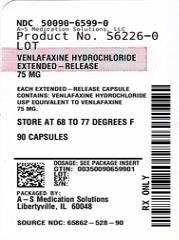
VENLAFAXINE ER 225MG 30TAB
Generic: Venlafaxine
VENLAFAXINE ER 225MG 30TAB
Sign up to see pricing
Licensed pharmacies, clinics, doctor's offices, and veterinary practices get instant account approval
Sign Up — Instant ApprovalDrug Information
Identification
Venlafaxine
Venlafaxine
Dr. Reddy's Laboratories Inc.
HUMAN PRESCRIPTION DRUG
Administration
TABLET, EXTENDED RELEASE
ORAL
ANDA214609
Active Ingredients
| Ingredient | Strength |
|---|---|
| VENLAFAXINE HYDROCHLORIDE | 225 mg/1 |
Pharmacological Class
Data sourced from openFDA / DailyMed. For full prescribing information, consult the drug label.
Wholesale compliance resources
Drug Resources
Clinical Drug Information
Indications & Usage
1 INDICATIONS AND USAGE Venlafaxine extended-release tablets are a selective serotonin and norepinephrine reuptake inhibitor (SNRI) indicated for: • Major Depressive Disorder (MDD) (1.1) • Social Anxiety Disorder (SAD) (1.2) 1.1 Major Depressive Disorder Venlafaxine extended-release tablets are indicated for the treatment of major depressive disorder (MDD). Efficacy of venlafaxine in MDD was shown in both short-term trials and a longer-term trial in MDD [ see Clinical Studies (14.1) ] . A major depressive episode (DSM-IV) implies a prominent and relatively persistent (nearly every day for at least 2 weeks) depressed mood or the loss of interest or pleasure in nearly all activities, representing a change from previous functioning, and includes the presence of at least five of the following nine symptoms during the same two-week period: depressed mood, markedly diminished interest or pleasure in usual activities, significant change in weight and/or appetite, insomnia or hypersomnia, psychomotor agitation or retardation, increased fatigue, feelings of guilt or worthlessness, slowed thinking or impaired concentration, a suicide attempt or suicidal ideation. 1.2 Social Anxiety Disorder Venlafaxine extended-release tablets are indicated for the treatment of Social Anxiety Disorder (SAD), also known as Social Phobia, as defined in DSM-IV. Social Anxiety Disorder (DSM-IV) is characterized by a marked and persistent fear of 1 or more social or performance situations in which the person is exposed to unfamiliar people or to possible scrutiny by others. Exposure to the feared situation almost invariably provokes anxiety, which may approach the intensity of a panic attack. The feared situations are avoided or endured with intense anxiety or distress. The avoidance, anxious anticipation, or distress in the feared situation(s) interferes significantly with the person's normal routine, occupational or academic functioning, or social activities or relationships, or there is a marked distress about having the phobias. Lesser degrees of performance anxiety or shyness generally do not require psychopharmacological treatment. Efficacy of venlafaxine extended-release tablets in the treatment of SAD was established in short-term SAD trials [ see Clinical Studies (14.2)] .
Dosage & Administration
2 DOSAGE AND ADMINISTRATION Venlafaxine extended-release tablets should be administered in a single dose with food either in the morning or in the evening at approximately the same time each day. Each tablet should be swallowed whole with fluid and not divided, crushed, chewed, or placed in water. • Initial Treatment (2.1) Indication Starting Dose Dose Increase Maximum Dose Major Depressive Disorder 75 mg/day (in some patients, 37.5 mg/day for 4 to 7 days) 75 mg/day increments at intervals of 4 days or longer 225 mg/day Social Anxiety Disorder 75 mg/day No benefit at higher doses 75 mg/day • Venlafaxine extended-release tablets should be taken as a single daily dose with food in either the morning or evening at the same time each day. (2) • Discontinuation: Gradual; individualized as necessary. (2.4) 2.1 Initial Treatment Major Depressive Disorder For most patients, the recommended starting dose for venlafaxine extended-release tablets is 7 5 mg/day, administered in a single dose. In the clinical trials establishing the efficacy of venlafaxine hydrochloride extended-release capsules in moderately depressed outpatients, the initial dose of venlafaxine was 75 mg/day. For some patients, it may be desirable to start at 37.5 mg/day for 4 to 7 days, to allow new patients to adjust to the medication before increasing to 75 mg/day. While the relationship between dose and antidepressant response for venlafaxine hydrochloride extended-release capsules has not been adequately explored, patients not responding to the initial 75 mg/day dose may benefit from dose increases to a maximum of approximately 225 mg/day. Dose increases should be in increments of up to 75 mg/day, as needed, and should be made at intervals of not less than 4 days, since steady state plasma levels of venlafaxine and its major metabolites are achieved in most patients by day 4. In the clinical trials establishing efficacy, upward titration was permitted at intervals of 2 weeks or more; the average doses were about 140 to 180 mg/day [ see Clinical Studies (14) ]. It should be noted that, while the maximum recommended dose for moderately depressed outpatients is also 225 mg/day for venlafaxine hydrochloride immediate-release tablets, more severely depressed inpatients in one study of the development program for that product responded to a mean dose of 350 mg/day (range of 150 to 375 mg/day). Whether or not higher doses of venlafaxine extended-release tablets are needed for more severely depressed patients is unknown; however, the experience with venlafaxine hydrochloride extended-release capsule doses higher than 225 mg/day is very limited. Social Anxiety Disorder (Social Phobia) The recommended dose is 75 mg/day, administered in a single dose. There was no evidence that higher doses confer any additional benefit. 2.2 Maintenance Treatment There is no body of evidence available from controlled trials to indicate how long patients with major depressive disorder should be treated with venlafaxine extended-release tablets. It is generally agreed that acute episodes of major depressive disorder require several months or longer of sustained pharmacological therapy beyond response to the acute episode. In one study, in which patients responding during 8 weeks of acute treatment with venlafaxine hydrochloride extended-release capsules were assigned randomly to placebo or to the same dose of venlafaxine hydrochloride extended-release capsules (75, 150, or 225 mg per day, qAM) during 26 weeks of maintenance treatment as they had received during the acute stabilization phase, longer-term efficacy was demonstrated. A second longer-term study has demonstrated the efficacy of venlafaxine hydrochloride immediate-release tablets in maintaining a response in patients with recurrent major depressive disorder who had responded and continued to be improved during an initial 26 weeks of treatment and were then randomly assigned to placebo or venlafaxine hydrochloride immediate-release tablets for periods of up to 52 weeks on the same dose (100 to 200 mg/day, on a b.i.d. schedule) [ see Clinical Studies (14) ]. Based on these limited data, it is not known whether or not the dose of venlafaxine extended-release tablets needed for maintenance treatment is identical to the dose needed to achieve an initial response. Patients should be periodically reassessed to determine the need for maintenance treatment and the appropriate dose for such treatment. 2.3 Special Populations Treatment of Pregnant Women During the Third Trimester Neonates exposed to venlafaxine hydrochloride extended-release capsules, other SNRIs, or SSRIs, late in the third trimester have developed complications requiring prolonged hospitalization, respiratory support, and tube feeding [ see Use in Specific Populations (8.1) ]. When treating pregnant women with venlafaxine extended-release tablets during the third trimester, the physician should carefully consider the potential risks and benefits of treatment. Patients with Hepatic Impairment Given the decrease in clearance and increase in elimination half-life for both venlafaxine and ODV that is observed in patients with hepatic cirrhosis and mild and moderate hepatic impairment compared with normal subjects [ see Use in Specific Populations (8.6) and Clinical Pharmacology (12.3) ], it is recommended that the total daily dose be reduced by 50% in patients with mild to moderate hepatic impairment. Since there was much individual variability in clearance between patients with cirrhosis, it may be necessary to reduce the dose even more than 50%, and individualization of dosing may be desirable in some patients. Patients with Renal Impairment Given the decrease in clearance for venlafaxine and the increase in elimination half-life for both venlafaxine and ODV that is observed in patients with renal impairment (GFR = 10 to 70 mL/min) compared with normal subjects [ see Use in Specific Populations 8.7) and Clinical Pharmacology (12.3) ], it is recommended that the total daily dose be reduced by 25% to 50%. In patients undergoing hemodialysis, it is recommended that the total daily dose be reduced by 50%. Because there was much individual variability in clearance between patients with renal impairment, individualization of dosage may be desirable in some patients. Elderly Patients No dose adjustment is recommended for elderly patients solely on the basis of age. As with any drug for the treatment of major depressive disorder or Social Anxiety Disorder, however, caution should be exercised in treating the elderly. When individualizing the dosage, extra care should be taken when increasing the dose. 2.4 Discontinuing Venlafaxine Extended-Release Tablets Symptoms associated with discontinuation of venlafaxine hydrochloride extended-release capsules, other SNRI’s, and SSRI’s have been reported [ see Warnings and Precautions (5.5) ]. Patients should be monitored for these symptoms when discontinuing treatment. A gradual reduction in the dose rather than abrupt cessation is recommended whenever possible. If intolerable symptoms occur following a decrease in the dose or upon discontinuation of treatment, then resuming the previously prescribed dose may be considered. Subsequently, the physician may continue decreasing the dose but at a more gradual rate. In clinical trials with venlafaxine hydrochloride extended-release capsules, tapering was achieved by reducing the daily dose by 75 mg at 1 week intervals. Individualization of tapering may be necessary. 2.5 Switching Patients from Venlafaxine Hydrochloride Immediate-Release Tablets Depressed patients who are currently being treated at a therapeutic dose with venlafaxine hydrochloride immediate-release tablets may be switched to venlafaxine extended-release tablets at the nearest equivalent dose (mg/day), e.g., 37.5 mg venlafaxine two-times-a-day to 75 mg venlafaxine extended-release tablets once daily. However, individual dosage adjustments may be necessary. 2.6 Switching a Patient To or From a Monoamine Oxidase Inhibitor (MAOI) Intended to Treat Psychiatric Disorders At least 14 days should elapse between discontinuation of an MAOI intended to treat psychiatric disorders and initiation of therapy with venlafaxine extended-release tablets. Conversely, at least 7 days should be allowed after stopping venlafaxine extended-release tablets before starting an MAOI intended to treat psychiatric disorders [ see Contraindications (4.1) ]. 2.7 Use of Venlafaxine Extended-Release Tablets with Other MAOIs, Such as Linezolid or Methylene Blue Do not start venlafaxine extended-release tablets in a patient who is being treated with linezolid or intravenous methylene blue because there is increased risk of serotonin syndrome. In a patient who requires more urgent treatment of a psychiatric condition, other interventions, including hospitalization, should be considered [ see Contraindications (4.1) ]. In some cases, a patient already receiving venlafaxine extended-release tablets therapy may require urgent treatment with linezolid or intravenous methylene blue. If acceptable alternatives to linezolid or intravenous methylene blue treatment are not available and the potential benefits of linezolid or intravenous methylene blue treatment are judged to outweigh the risks of serotonin syndrome in a particular patient, venlafaxine extended-release tablets should be stopped promptly, and linezolid or intravenous methylene blue can be administered. The patient should be monitored for symptoms of serotonin syndrome for 7 days or until 24 hours after the last dose of linezolid or intravenous methylene blue, whichever comes first. Therapy with venlafaxine extended-release tablets may be resumed 24 hours after the last dose of linezolid or intravenous methylene blue [ see Warnings and Precautions (5.2) ]. The risk of administering methylene blue by non-intravenous routes (such as oral tablets or by local injection) or in intravenous doses much lower than 1 mg/kg with venlafaxine extended-release tablets is unclear. The clinician should, nevertheless, be aware of the possibility of emergent symptoms of serotonin syndrome with such use [ see Warnings and Precautions (5.2) ].
Adverse Reactions
6 ADVERSE REACTIONS Major Depressive Disorder - Adverse events in short-term studies that occurred in at least 5% of the patients receiving venlafaxine extended-release capsules and at a rate at least twice that of the placebo group were abnormal ejaculation, gastrointestinal complaints (nausea, dry mouth, and anorexia), CNS complaints (dizziness, somnolence, and abnormal dreams), and sweating. Social Anxiety Disorder - Adverse events in short-term studies that occurred in at least 5% of the patients receiving venlafaxine extended-release capsules and at a rate at least twice that of the placebo group were asthenia, gastrointestinal complaints (anorexia, dry mouth, nausea), CNS complaints (anxiety, insomnia, libido decreased, nervousness, somnolence, dizziness), abnormalities of sexual function (abnormal ejaculation, orgasmic dysfunction, impotence), yawn, sweating, and abnormal vision. To report SUSPECTED ADVERSE REACTIONS, contact Appco Pharma LLC at 1-855-672-7726 or FDA at 1-800-FDA-1088 or www.fda.gov/medwatch. 6.1 Clinical Studies Experience Data Sources The information included in subsection "Adverse Findings Observed in Short-Term, Placebo- Controlled Studies with Venlafaxine Hydrochloride Extended-Release Capsules" is based on data from a pool of three 8- and 12-week controlled clinical trials in major depressive disorder (includes two U.S. trials and one European trial), and on data up to 12 weeks from a pool of two controlled clinical trials in Social Anxiety Disorder. Information on additional adverse reactions associated with venlafaxine hydrochloride extended-release capsules in the entire development program for the formulation and with venlafaxine hydrochloride immediate-release tablets is included in the subsection "Other Adverse Reactions Observed During the Premarketing Evaluation of Venlafaxine Hydrochloride Immediate-Release Tablets and Venlafaxine Hydrochloride Extended-Release Capsules" [ see also Warnings and Precautions (5) ]. Because clinical trials are conducted under widely varying conditions, adverse reaction rates observed in the clinical trials of a drug cannot be directly compared to rates in the clinical trials of another drug and may not reflect the rates observed in practice. Adverse Findings Observed in Short-Term, Placebo-Controlled Studies with Venlafaxine Hydrochloride Extended-Release Capsules Adverse Reactions Associated with Discontinuation of Treatment Major Depressive Disorder: Approximately 11% of the 357 patients who received venlafaxine hydrochloride extended-release capsules in placebo-controlled clinical trials for major depressive disorder discontinued treatment due to an adverse reaction, compared with 6% of the 285 placebo-treated patients in those studies. Adverse reactions that led to treatment discontinuation in a least 2% of drug-treated patients were nausea, dizziness, and somnolence. Social Anxiety Disorder: Approximately 17% of the 277 patients who received venlafaxine hydrochloride extended-release capsules in placebo-controlled clinical trials for Social Anxiety Disorder discontinued treatment due to an adverse reaction, compared with 5% of the 274 placebo-treated patients in those studies. Adverse reactions that led to treatment discontinuation in a least 2% of drug-treated patients were nausea, insomnia, impotence, headache, dizziness, and somnolence. Adverse Reactions Occurring at an Incidence of 5% or More Major Depressive Disorder : Note in particular the following adverse reactions that occurred in at least 5% of the patients receiving venlafaxine hydrochloride extended-release capsules and at a rate at least twice that of the placebo group for all placebo-controlled trials for the major depressive disorder indication (see Table 6): Abnormal ejaculation, gastrointestinal complaints (nausea, dry mouth, and anorexia), CNS complaints (dizziness, somnolence, and abnormal dreams), and sweating. In the two U.S. placebo-controlled trials, the following additional reactions occurred in at least 5% of patients treated with venlafaxine hydrochloride extended-release capsules (n = 192) and at a rate at least twice that of the placebo group: Abnormalities of sexual function (impotence in men, anorgasmia in women, and libido decreased), gastrointestinal complaints (constipation and flatulence), CNS complaints (insomnia, nervousness, and tremor), problems of special senses (abnormal vision), cardiovascular effects (hypertension and vasodilatation), and yawning. Social Anxiety Disorder: Note in particular the following adverse reactions that occurred in at least 5% of the patients receiving venlafaxine hydrochloride extended-release capsules and at a rate at least twice that of the placebo group for the 2 placebo-controlled trials for the Social Anxiety Disorder indication (see Table 7): Asthenia, gastrointestinal complaints (anorexia, constipation, dry mouth, nausea), CNS complaints (dizziness, insomnia, libido decreased, nervousness, somnolence), abnormalities of sexual function (abnormal ejaculation, impotence, libido decreased, orgasmic dysfunction), yawn, sweating, and abnormal vision. Adverse Reactions Occurring at an Incidence of 2% or More Among Patients Treated with Venlafaxine Hydrochloride Extended-Release Capsules Tables 6 and 7 enumerate the incidence, rounded to the nearest percent, of adverse reactions that occurred during acute therapy of major depressive disorder (up to 12 weeks; dose range of 75 to 225 mg/day) and of Social Anxiety Disorder (up to 12 weeks; dose range of 75 to 225 mg/day), respectively, in 2% or more of patients treated with venlafaxine hydrochloride extended-release capsules where the incidence in patients treated with venlafaxine hydrochloride extended-release capsules was greater than the incidence for the respective placebo-treated patients. The table shows the percentage of patients in each group who had at least one episode of a reaction at some time during their treatment. Reported adverse reactions were classified using a standard COSTART-based Dictionary terminology. The prescriber should be aware that these figures cannot be used to predict the incidence of adverse reactions in the course of usual medical practice where patient characteristics and other factors differ from those which prevailed in the clinical trials. Similarly, the cited frequencies cannot be compared with figures obtained from other clinical investigations involving different treatments, uses and investigators. The cited figures, however, do provide the prescribing physician with some basis for estimating the relative contribution of drug and nondrug factors to the adverse reaction incidence rate in the population studied. Table 6 Treatment-Emergent Adverse Reaction Incidence in Short-Term Placebo- Controlled Clinical Trials with Venlafaxine Hydrochloride Extended-Release Capsules in Patients with Major Depressive Disorder 1,2 % Reporting Reaction Body System Preferred Term Venlafaxine Hydrochloride Extended-Release Capsules (n = 357) Placebo (n = 285) Body as a Whole Asthenia 8% 7% Cardiovascular System Vasodilatation 3 4% 2% Hypertension 4% 1% Digestive System Nausea 31% 12% Constipation 8% 5% Anorexia 8% 4% Vomiting 4% 2% Flatulence 4% 3% Metabolic/Nutritional Weight Loss 3% 0% Nervous System Dizziness 20% 9% Somnolence 17% 8% Insomnia 17% 11% Dry Mouth 12% 6% Nervousness 10% 5% Abnormal Dreams 4 7% 2% Tremor 5% 2% Depression 3% <1% Paresthesia 3% 1% Libido Decreased 3% <1% Agitation 3% 1% Respiratory System Pharyngitis 7% 6% Yawn 3% 0% Skin Sweating 14% 3% Special Senses Abnormal Vision 5 4% <1% Urogenital System Abnormal Ejaculation (male) 6,7 16% <1% Impotence 7 4% <1% Anorgasmia (female) 8,9 3% <1% 1 Incidence, rounded to the nearest %, for reactions reported by at least 2% of patients treated with venlafaxine hydrochloride extended-release capsules, except for reactions which had an incidence equal to or less than placebo. 2 <1% indicates an incidence greater than zero but less than 1%. 3 Mostly “hot flashes.” 4 Mostly “vivid dreams,” “nightmares,” and “increased dreaming.” 5 Mostly “blurred vision” and “difficulty focusing eyes.” 6 Mostly “delayed ejaculation.” 7 Incidence is based on the number of male patients. 8 Mostly “delayed orgasm” or “anorgasmia.” 9 Incidence is based on the number of female patients. T able 7 Treatment-Emergent Adverse Reaction Incidence in Short-Term Placebo- Controlled Clinical Trials with Venlafaxine Hydrochloride Extended-Release Capsules in Social Anxiety Disorder Patients1,2 % Reporting Reaction Body System Preferred Term Venlafaxine Hydrochloride Extended-Release Capsules (n = 277) Placebo (n = 274) Body as a Whole Headache 34% 33% Asthenia 17% 8% Flu Syndrome 6% 5% Accidental Injury 5% 3% Abdominal Pain 4% 3% Cardiovascular System Hypertension 5% 4% Vasodilatation 3 3% 1% Palpitation 3% 1% Digestive System Nausea 29% 9% Anorexia 4 20% 1% Constipation 8% 4% Diarrhea 6% 5% Vomiting 3% 2% Eructation 2% 0% Metabolic/Nutritional Weight Loss 4% 0% Nervous System Insomnia 23% 7% Dry Mouth 17% 4% Dizziness 16% 8% Somnolence 16% 8% Nervousness 11% 3% Libido Decreased 9% <1% Anxiety 5% 3% Agitation 4% 1% Tremor 4% <1% Abnormal Dreams 5 4% <1% Paresthesia 3% <1% Twitching 2% 0% Respiratory System Yawn 5% <1% Sinusitis 2% 1% Skin Sweating 13% 2% Special Senses Abnormal Vision 6 6% 3% Urogenital System Abnormal Ejaculation 7,8 16% 1% Impotence 8 10% 1% Orgasmic Dysfunction 9,10 8% 0% 1 Adverse reactions for which the venlafaxine hydrochloride extended-release capsules reporting rate was less than or equal to the placebo rate are not included. 2 <1% means greater than zero but less than 1%. 3 Mostly “hot flashes.” 4 Mostly “decreased appetite” and “loss of appetite.” 5 Mostly “vivid dreams,” “nightmares,” and “increased dreaming.” 6 Mostly “blurred vision.” 7 Includes “delayed ejaculation” and “anorgasmia.” 8 Percentage based on the number of males (venlafaxine hydrochloride extended-release capsules = 158, placebo = 153). 9 Includes “abnormal orgasm” and “anorgasmia.” 10 Percentage based on the number of females (venlafaxine hydrochloride extended-release capsules = 119, placebo = 121) Vital Sign Changes Treatment with venlafaxine hydrochloride extended-release capsules treatment for up to 12 weeks in premarketing placebo-controlled major depressive disorder trials was associated with a mean final on-therapy increase in pulse rate of approximately 2 beats per minute, compared with 1 beat per minute for placebo. Treatment with venlafaxine hydrochloride extended-release capsules for up to 12 weeks in premarketing placebo-controlled Social Anxiety Disorder trials was associated with a mean final on-therapy increase in pulse rate of approximately 4 beats per minute, compared with an increase of 1 beat per minute for placebo. [ See Warnings and Precautions (5.3) for effects on blood pressure.] In a flexible-dose study in MDD, with doses of venlafaxine hydrochloride immediate-release tablets in the range of 200 to 375 mg/day and mean dose greater than 300 mg/day, the mean pulse was increased by about 2 beats per minute compared with a decrease of about 1 beat per minute for placebo. [ See Warnings and Precautions (5.16) for effects on heart rate.] Laboratory Changes Serum Cholesterol Venlafaxine hydrochloride extended-release capsules treatment for up to 12 weeks in premarketing placebo-controlled trials for major depressive disorder was associated with a mean final on-therapy increase in serum cholesterol concentration of approximately 1.5 mg/dL compared with a mean final decrease of 7.4 mg/dL for placebo. Venlafaxine hydrochloride extended-release capsules treatment for up to 12 weeks in other premarketing placebo-controlled trials was associated with mean final on-therapy increases in serum cholesterol concentration of approximately 7.9 mg/dL compared with a mean final decrease of 2.9 mg/dL for placebo. Patients treated with venlafaxine hydrochloride immediate-release tablets for at least 3 months in placebo-controlled 12-month extension trials had a mean final on-therapy increase in total cholesterol of 9.1 mg/dL compared with a decrease of 7.1 mg/dL among placebo-treated patients. This increase was duration dependent over the study period and tended to be greater with higher doses. Clinically relevant increases in serum cholesterol, defined as 1) a final on-therapy increase in serum cholesterol ≥50 mg/dL from baseline and to a value ≥261 mg/dL, or 2) an average on- therapy increase in serum cholesterol ≥50 mg/dL from baseline and to a value ≥261 mg/dL, were recorded in 5.3% of venlafaxine-treated patients and 0.0% of placebo-treated patients [ see Warnings and Precautions (5.14) ]. Serum Triglycerides Venlafaxine hydrochloride extended-release capsules treatment for up to 12 weeks in pooled premarketing trials was associated with a mean final on-therapy increase in fasting serum triglyceride concentration of approximately 8.2 mg/dl, compared with a mean final increase of 0.4 mg/dl for placebo. ECG Changes In a flexible-dose MDD study with doses of venlafaxine hydrochloride immediate-release tablets in the range of 200 to 375 mg/day and mean dose greater than 300 mg/day, the mean change in heart rate was 8.5 beats per minute compared with 1.7 beats per minute for placebo. [ See Warnings and Precautions (5.16) ] Other Adverse Reactions Observed During the Premarketing Evaluation of Venlafaxine Hydrochloride Immediate-Release Tablets and Venlafaxine Hydrochloride Extended-Release Capsules During its premarketing assessment, multiple doses of venlafaxine hydrochloride extended- release capsules were administered to 705 patients in Phase 3 major depressive disorder studies and venlafaxine hydrochloride immediate-release tablets was administered to 96 patients. During its premarketing assessment, multiple doses of venlafaxine hydrochloride extended-release capsules were also administered to 3514 patients in other Phase 3 studies. In addition, in premarketing assessment of venlafaxine hydrochloride immediate-release tablets, multiple doses were administered to 2897 patients in Phase 2 to Phase 3 studies for major depressive disorder. The conditions and duration of exposure to venlafaxine in both development programs varied greatly, and included (in overlapping categories) open and double-blind studies, uncontrolled and controlled studies, inpatient (venlafaxine hydrochloride immediate-release tablets only) and outpatient studies, fixed-dose, and titration studies. Adverse reactions associated with this exposure were recorded by clinical investigators using terminology of their own choosing. Consequently, it is not possible to provide a meaningful estimate of the proportion of individuals experiencing adverse reactions without first grouping similar types of untoward events into a smaller number of standardized reaction categories. In the tabulations that follow, reported adverse reactions were classified using a standard COSTART-based Dictionary terminology. The frequencies presented, therefore, represent the proportion of the 7212 patients exposed to multiple doses of either formulation of venlafaxine who experienced a reaction of the type cited on at least one occasion while receiving venlafaxine. All reported reactions are included except those already listed in Tables 6 and 7 and those reactions for which a drug cause was remote. If the COSTART term for a reaction was so general as to be uninformative, it was replaced with a more informative term. It is important to emphasize that, although the reactions reported occurred during treatment with venlafaxine, they were not necessarily caused by it. Reactions are further categorized by body system and listed in order of decreasing frequency using the following definitions: frequent adverse reactions are defined as those occurring on one or more occasions in at least 1/100 patients; infrequent adverse reactions are those occurring in 1/100 to 1/1000 patients; rare reactions are those occurring in fewer than 1/1000 patients. Body as a whole - Frequent : chest pain substernal, chills, fever, neck pain; Infrequent : face edema, intentional injury, malaise, moniliasis, neck rigidity, pelvic pain, photosensitivity reaction, suicide attempt, withdrawal syndrome; Rare : appendicitis, bacteremia, cellulitis, granuloma. Cardiovascular system - Frequent : migraine, tachycardia; Infrequent : angina pectoris, bradycardia, extrasystoles, hypotension, peripheral vascular disorder (mainly cold feet and/or cold hands), postural hypotension, syncope; Rare : aortic aneurysm, arteritis, first-degree atrioventricular block, bigeminy, bundle branch block, capillary fragility, cerebral ischemia, coronary artery disease, congestive heart failure, heart arrest, hematoma, cardiovascular disorder (mitral valve and circulatory disturbance), mucocutaneous hemorrhage, myocardial infarct, pallor, sinus arrhythmia, thrombophlebitis. Digestive system - Frequent : increased appetite; Infrequent : bruxism, colitis, dysphagia, tongue edema, eructation, esophagitis, gastritis, gastroenteritis, gastrointestinal ulcer, gingivitis, glossitis, rectal hemorrhage, hemorrhoids, melena, oral moniliasis, stomatitis, mouth ulceration; Rare : abdominal distension, biliary pain, cheilitis, cholecystitis, cholelithiasis, esophageal spasms, duodenitis, hematemesis, gastroesophageal reflux disease, gastrointestinal hemorrhage, gum hemorrhage, hepatitis, ileitis, jaundice, intestinal obstruction, liver tenderness, parotitis, periodontitis, proctitis, salivary gland enlargement, increased salivation, soft stools, tongue discoloration. Endocrine system - Rare : galactorrhoea, goiter, hyperthyroidism, hypothyroidism, thyroid nodule, thyroiditis. Hemic and lymphatic system - Frequent : ecchymosis; Infrequent : anemia, leukocytosis, leukopenia, lymphadenopathy, thrombocythemia; Rare: basophilia, bleeding time increased, cyanosis, eosinophilia, lymphocytosis, multiple myeloma, purpura, thrombocytopenia. Metabolic and nutritional - Frequent : edema, weight gain; Infrequent : alkaline phosphatase increased, dehydration, hypercholesteremia, hyperglycemia, hyperlipidemia, hypokalemia, SGOT (AST) increased, SGPT (ALT) increased, thirst; Rare : alcohol intolerance, bilirubinemia, BUN increased, creatinine increased, diabetes mellitus, glycosuria, gout, healing abnormal, hemochromatosis, hypercalcinuria, hyperkalemia, hyperphosphatemia, hyperuricemia, hypocholesteremia, hypoglycemia, hyponatremia, hypophosphatemia, hypoproteinemia, uremia. Muscuoskeletal system - Infrequent : arthritis, arthrosis, bone spurs, bursitis, leg cramps, myasthenia, tenosynovitis; Rare : pathological fracture, muscle cramp, muscle spasms, musculoskeletal stiffness, myopathy, osteoporosis, osteosclerosis, plantar fasciitis, rheumatoid arthritis, tendon rupture. Nervous system - Frequent : amnesia, confusion, depersonalization, hypesthesia, trismus, vertigo; Infrequent : akathisia, apathy, ataxia, circumoral paresthesia, CNS stimulation, emotional lability, euphoria, hallucinations, hostility, hyperesthesia, hyperkinesia, hypotonia, incoordination, libido increased, manic reaction, myoclonus, neuralgia, neuropathy, psychosis, seizure, stupor, suicidal ideation; Rare : akinesia, alcohol abuse, aphasia, bradykinesia, buccoglossal syndrome, cerebrovascular accident, feeling drunk, loss of consciousness, delusions, dementia, dystonia, energy increased, facial paralysis, abnormal gait, Guillain-Barre Syndrome, homicidal ideation, hyperchlorhydria, hypokinesia, hysteria, impulse control difficulties, motion sickness, neuritis, nystagmus, paranoid reaction, paresis, psychotic depression, reflexes decreased, reflexes increased, torticollis. Respiratory system - Frequent : cough increased, dyspnea; Infrequent : asthma, chest congestion, epistaxis, hyperventilation, laryngismus, laryngitis, pneumonia; Rare: atelectasis, hemoptysis, hypoventilation, hypoxia, larynx edema, pleurisy, pulmonary embolus, sleep apnea. Skin and appendages - Frequent : pruritus; Infrequent : acne, alopecia, contact dermatitis, dry skin, eczema, maculopapular rash, psoriasis, urticaria; Rare : brittle nails, erythema nodosum, exfoliative dermatitis, lichenoid dermatitis, furunculosis, hirsutism, leukoderma, miliaria, petechial rash, pruritic rash, pustular rash, vesiculobullous rash, seborrhea, skin atrophy, skin hypertrophy, skin striae, sweating decreased. Special senses - Frequent : abnormality of accommodation, mydriasis, taste perversion; Infrequent : conjunctivitis, diplopia, dry eyes, otitis media, parosmia, photophobia, taste loss; Rare : blepharitis, cataract, chromatopsia, conjunctival edema, corneal lesion, deafness, exophthalmos, eye hemorrhage, angle-closure glaucoma, retinal hemorrhage, subconjunctival hemorrhage, hyperacusis, keratitis, labyrinthitis, miosis, papilledema, decreased pupillary reflex, otitis externa, scleritis, uveitis, visual field defect. Urogenital system - Frequent : albuminuria, urination impaired; Infrequent : amenorrhea,* cystitis, dysuria, hematuria, kidney calculus, kidney pain, leukorrhea,* menorrhagia,* metrorrhagia,* nocturia, breast pain, polyuria, pyuria, prostatic disorder (prostatitis, enlarged prostate, and prostate irritability),* urinary incontinence, urinary retention, urinary urgency, vaginal hemorrhage,* vaginitis*; Rare : abortion,* anuria, breast discharge, breast engorgement, balanitis,* breast enlargement, endometriosis,* female lactation,* fibrocystic breast, calcium crystalluria, cervicitis,* orchitis,* ovarian cyst,* bladder pain, prolonged erection,* gynecomastia (male),* hypomenorrhea,* mastitis, menopause,* pyelonephritis, oliguria, salpingitis,* urolithiasis, uterine hemorrhage,* uterine spasm,* vaginal dryness.* * Based on the number of men and women as appropriate. 6.2 Post-Marketing Experience Voluntary reports of other adverse reactions temporally associated with the use of venlafaxine have been received since market introduction. Because these reactions are reported from a population of uncertain size, it is not always possible to reliably estimate their frequency or establish a causal relationship to drug exposure. These reports include the following reactions: agranulocytosis, anaphylaxis, anosmia, aplastic anemia, catatonia, congenital anomalies, impaired coordination and balance, CPK increased, deep vein thrombophlebitis, delirium, Takotsubo cardiomyopathy, EKG abnormalities such as QT prolongation; cardiac arrhythmias including atrial fibrillation, supraventricular tachycardia, ventricular extrasystoles, and rare reports of ventricular fibrillation and ventricular tachycardia, including torsade de pointes; toxic epidermal necrolysis/Stevens-Johnson Syndrome, erythema multiforme, extrapyramidal symptoms (including dyskinesia and tardive dyskinesia), angle-closure glaucoma, hemorrhage (including eye and gastrointestinal bleeding), hyposmia, hepatic reactions (including GGT elevation; abnormalities of unspecified liver function tests; liver damage, necrosis, or failure; and fatty liver), interstitial lung disease, involuntary movements, LDH increased, neuroleptic malignant syndrome-like reactions (including a case of a 10-year-old who may have been taking methylphenidate, was treated and recovered), neutropenia, night sweats, pancreatitis, pancytopenia, panic, prolactin increased, renal failure, rhabdomyolysis, serotonin syndrome, shock-like electrical sensations or tinnitus (in some cases, subsequent to the discontinuation of venlafaxine or tapering of dose), and syndrome of inappropriate antidiuretic hormone secretion (usually in the elderly).
Information for Patients
17 PATIENT COUNSELING INFORMATION Advise the patient to read the FDA-approved patient labeling (Medication Guide). Prescribers or other health professionals should inform patients, their families, and their caregivers about the benefits and risks associated with treatment with venlafaxine extended-release tablets and should counsel them in its appropriate use. A patient Medication Guide about “Antidepressant Medicines, Depression and Other Serious Mental Illness, and Suicidal Thoughts or Actions” is available for venlafaxine extended-release tablets. The prescriber or health professional should instruct patients, their families, and their caregivers to read the Medication Guide and should assist them in understanding its contents. Patients should be given the opportunity to discuss the contents of the Medication Guide and to obtain answers to any questions they may have. The complete text of the Medication Guide is reprinted at the end of this document. Patients should be advised of the following issues and asked to alert their prescriber if these occur while taking venlafaxine extended-release tablets. 17.1 Clinical Worsening and Suicide Risk Patients, their families, and their caregivers should be encouraged to be alert to the emergence of anxiety, agitation, panic attacks, insomnia, irritability, hostility, aggressiveness, impulsivity, akathisia (psychomotor restlessness), hypomania, mania, other unusual changes in behavior, worsening of depression, and suicidal ideation, especially early during antidepressant treatment and when the dose is adjusted up or down. Families and caregivers of patients should be advised to look for the emergence of such symptoms on a day-to-day basis, since changes may be abrupt. Such symptoms should be reported to the patient's prescriber or health professional, especially if they are severe, abrupt in onset, or were not part of the patient's presenting symptoms. Symptoms such as these may be associated with an increased risk for suicidal thinking and behavior and indicate a need for very close monitoring and possibly changes in the medication. 17.2 Interference with Cognitive and Motor Performance Clinical studies were performed to examine the effects of venlafaxine on behavioral performance of healthy individuals. The results revealed no clinically significant impairment of psychomotor, cognitive, or complex behavior performance. However, since any psychoactive drug may impair judgment, thinking, or motor skills, patients should be cautioned about operating hazardous machinery, including automobiles, until they are reasonably certain that venlafaxine therapy does not adversely affect their ability to engage in such activities. 17.3 Concomitant Medication Patients should be advised to inform their physicians if they are taking, or plan to take, any prescription or over-the-counter drugs, including herbal preparations and nutritional supplements, since there is a potential for interactions. Patients should be cautioned about the risk of serotonin syndrome with the concomitant use of venlafaxine extended-release tablets and triptans, tricyclic antidepressants, opioids, lithium, amphetamines, tryptophan, buspirone, and St. John’s Wort supplements or other serotonergic agents [ see Warnings and Precautions (5.2) and Drug Interactions (7.10) ]. Patients should be cautioned about the concomitant use of venlafaxine extended-release tablets and NSAID’s, aspirin, warfarin, or other drugs that affect coagulation since combined use of psychotropic drugs that interfere with serotonin reuptake and these agents has been associated with an increased risk of bleeding [ see Warnings and Precautions (5.13) and Drug Interactions (7.11) ]. 17.4 Alcohol Although venlafaxine has not been shown to increase the impairment of mental and motor skills caused by alcohol, patients should be advised to avoid alcohol while taking venlafaxine. 17.5 Allergic Reactions Patients should be advised to notify their physician if they develop a rash, hives, or a related allergic phenomenon. 17.6 Pregnancy Advise patients to notify their healthcare provider if they become pregnant or intend to become pregnant during treatment with venlafaxine extended-release tablets. Advise patients that venlafaxine extended-release tablets use during mid to late pregnancy may lead to an increased risk for preeclampsia and may increase the risk for neonatal complications requiring prolonged hospitalization, respiratory support, and tube feeding. Advise patients that there is a pregnancy exposure registry that monitors pregnancy outcomes in women exposed to venlafaxine extended-release tablets during pregnancy [see Use in Specific Populations (8.1)]. 17.7 Nursing Patients should be advised to notify their physician if they are breast-feeding an infant. 17.8 Angle Closure Glaucoma Patients should be advised that taking Venlafaxine can cause mild pupillary dilation, which in susceptible individuals, can lead to an episode of angle closure glaucoma. Pre-existing glaucoma is almost always open-angle glaucoma because angle closure glaucoma, when diagnosed, can be treated definitively with iridectomy. Open-angle glaucoma is not a risk factor for angle closure glaucoma. Patients may wish to be examined to determine whether they are susceptible to angle closure, and have a prophylactic procedure (e.g., iridectomy), if they are susceptible. [ see Warnings and Precautions (5.4) ] 17.9 Sexual Dysfunction Advise patient that use of venlafaxine extended-release tablets may cause symptoms of sexual dysfunction in both male and female patients. Inform patients that they should discuss any changes in sexual function and potential management strategies with their healthcare provider [see Warnings and Precautions (5.18)]. Manufactured by: Appco Pharma LLC Piscataway, New Jersey 08854. Distributed by: Dr. Reddy’s Laboratories Inc. Princeton, NJ 08540 USA Revision date: 10/2023 200434 Medication Guide Antidepressant Medicines, Depression and Other Serious Mental Illnesses, and Suicidal Thoughts or Actions Read the Medication Guide that comes with your or your family member’s antidepressant medicine. This Medication Guide is only about the risk of suicidal thoughts and actions with antidepressant medicines. Talk to your, or your family member’s, healthcare provider about: all risks and benefits of treatment with antidepressant medicines all treatment choices for depression or other serious mental illness Who should not take Venlafaxine Extended-Release Tablets? take a monoamine oxidase inhibitor (MAOI). Ask your healthcare provider or pharmacist if you are not sure if you take an MAOI, including the antibiotic linezolid. Do not take an MAOI within 7 days of stopping venlafaxine extended-release tablets unless directed to do so by your physician. Do not start venlafaxine extended-release tablets if you stopped taking an MAOI in the last 2 weeks unless directed to do so by your physician. What is the most important information I should know about antidepressant medicines, depression and other serious mental illnesses, and suicidal thoughts or actions? 1. Antidepressant medicines may increase suicidal thoughts or actions in some children, teenagers, and young adults within the first few months of treatment. 2. Depression and other serious mental illnesses are the most important causes of suicidal thoughts and actions. Some people may have a particularly high risk of having suicidal thoughts or actions. These include people who have (or have a family history of) bipolar illness (also called manic-depressive illness) or suicidal thoughts or actions. 3. How can I watch for and try to prevent suicidal thoughts and actions in myself or a family member? Pay close attention to any changes, especially sudden changes, in mood, behaviors, thoughts, or feelings. This is very important when an antidepressant medicine is started or when the dose is changed. Call the healthcare provider right away to report new or sudden changes in mood, behavior, thoughts, or feelings. Keep all follow-up visits with the healthcare provider as scheduled. Call the healthcare provider between visits as needed, especially if you have concerns about symptoms. Call a healthcare provider right away if you or your family member has any of the following symptoms, especially if they are new, worse, or worry you: thoughts about suicide or dying attempts to commit suicide new or worse depression new or worse anxiety feeling very agitated or restless panic attacks trouble sleeping (insomnia) new or worse irritability acting aggressive, being angry, or violent acting on dangerous impulses an extreme increase in activity and talking (mania) other unusual changes in behavior or mood Visual Problems: Eye pain, change in vision, swelling or redness around eye What else do I need to know about antidepressant medicines? Never stop an antidepressant medicine without first talking to a healthcare provider. Stopping an antidepressant medicine suddenly can cause other symptoms. Visual Problems. Only some people are at risk for these problems. You may want to undergo an eye examination to see if you are at risk and receive preventative treatment if you are. Antidepressants are medicines used to treat depression and other illnesses. It is important to discuss all the risks of treating depression and also the risks of not treating it. Patients and their families or other caregivers should discuss all treatment choices with the healthcare provider, not just the use of antidepressants. Antidepressant medicines have other side effects . Talk to the healthcare provider about the side effects of the medicine prescribed for you or your family member. Antidepressant medicines can interact with other medicines. Know all of the medicines that you or your family member takes. Keep a list of all medicines to show the healthcare provider. Do not start new medicines without first checking with your healthcare provider. Especially tell your healthcare provider if you take: medicines to treat migraine headaches known as triptans tricyclic antidepressants lithium tramadol, fentanyl, meperidine, methadone, or other opioids tryptophan buspirone amphetamines St. John’s Wort phentermine other medicines containing desvenlafaxine or venlafaxine medicines that can affect blood clotting such as aspirin, nonsteroidal anti-inflammatory drugs (NSAIDs), warfarin Not all antidepressant medicines prescribed for children are FDA approved for use in children . Talk to your child’s healthcare provider for more information. S exual problems (dysfunction). Taking serotonin and norepinephrine reuptake inhibitors (SNRIs), including Venlafaxine Extended Release Tablets, may cause sexual problems. Symptoms in males may include: o Delayed ejaculation or inability to have an ejaculation o Decreased sex drive o Problems getting or keeping an erection Symptoms in females may include: o Decreased sex drive Delayed orgasm or inability to have an orgasm Talk to your healthcare provider if you develop any changes in your sexual function or if you have any questions or concerns about sexual problems during treatment with Venlafaxine Extended Release Tablets. There may be treatments your healthcare provider can suggest. Call your doctor for medical advice about side effects. You may report side effects to FDA at 1-800-FDA-1088. This Medication Guide has been approved by the U.S. Food and Drug Administration for all antidepressants. Manufactured by: Appco Pharma LLC Piscataway, New Jersey 08854. Distributed by: Dr. Reddy’s Laboratories Inc. Princeton, NJ 08540 USA Revision date:10/2023 200434 drl-logo-spl drl-logo-spl
Clinical data sourced from openFDA drug labeling. For complete prescribing information, consult the full drug label.