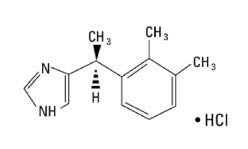
DEXMEDETOMIDINE 200MCG/2ML 25X2ML VIALS
Generic: Dexmedetomidine
DEXMEDETOMIDINE 200MCG/2ML 25X2ML VIALS
Sign up to see pricing
Licensed pharmacies, clinics, doctor's offices, and veterinary practices get instant account approval
Sign Up — Instant ApprovalDrug Information
Identification
Dexmedetomidine
Dexmedetomidine
Piramal Critical Care Inc
HUMAN PRESCRIPTION DRUG
Administration
INJECTION, SOLUTION
INTRAVENOUS
ANDA202126
Active Ingredients
| Ingredient | Strength |
|---|---|
| DEXMEDETOMIDINE HYDROCHLORIDE | 200 ug/2mL |
Pharmacological Class
Data sourced from openFDA / DailyMed. For full prescribing information, consult the drug label.
Wholesale compliance resources
Drug Resources
Clinical Drug Information
Indications & Usage
1 INDICATIONS AND USAGE 1.1 Intensive Care Unit Sedation Dexmedetomidine injection is indicated for sedation of initially intubated and mechanically ventilated adult patients during treatment in an intensive care setting. Dexmedetomidine injection should be administered by continuous infusion not to exceed 24 hours. Dexmedetomidine injection has been continuously infused in mechanically ventilated adult patients prior to extubation, during extubation, and post-extubation. It is not necessary to discontinue dexmedetomidine injection prior to extubation. 1.2 Procedural Sedation Dexmedetomidine injection is indicated for sedation of non-intubated adult patients prior to and/or during surgical and other procedures. Pediatric use information is approved for Hospira Inc.’s PRECEDEXTM (dexmedetomidine hydrochloride) injection. However, due to Hospira Inc.’s marketing exclusivity rights, this drug product is not labeled with that information. Dexmedetomidine injection is a relatively selective alpha 2 -adrenergic agonist indicated for: Sedation of initially intubated and mechanically ventilated patients during treatment in an intensive care setting. Administer dexmedetomidine injection by continuous infusion not to exceed 24 hours. ( 1.1 ) Sedation of non-intubated patients prior to and/or during surgical and other procedures. ( 1.2 )
Dosage & Administration
2 DOSAGE AND ADMINISTRATION 2.1 Administration Instructions • Dexmedetomidine injection dosing should be individualized and titrated to desired clinical response. • Dexmedetomidine injection is not indicated for infusions lasting longer than 24 hours. • Dexmedetomidine injection should be administered using a controlled infusion device. 2.2 Recommended Dosage Table 1: Recommended Dosage in Adult Patients INDICATION DOSAGE AND ADMINISTRATION Initiation of Intensive Care Unit Sedation For adult patients: a loading infusion of one mcg/kg over 10 minutes . For adult patients being converted from alternate sedative therapy : a loading dose may not be required. For patients over 65 years of age: Consider a dose reduction. [see Use in Specific Populations ( 8.5 )]. For adult patients with impaired hepatic function: Consider a dose reduction [see Use in Specific Populations ( 8.6 ), Clinical Pharmacology ( 12.3 )]. Maintenance of Intensive Care Unit Sedation For adult patients: a maintenance infusion of 0.2 to 0.7 mcg/kg/ hour . The rate of the maintenance infusion should be adjusted to achieve the desired level of sedation. For patients over 65 years of age: Consider a dose reduction. [see Use in Specific Populations ( 8.5 )]. For adult patients with impaired hepatic function : Consider a dose reduction. [see Use in Specific Populations ( 8.6 ), Clinical Pharmacology ( 12.3 )]. Initiation of Procedural Sedation For adult patients: a loading infusion of one mcg/kg over 10 minutes . For less invasive procedures such as ophthalmic surgery, a loading infusion of 0.5 mcg/kg given over 10 minutes may be suitable. For awake fiberoptic intubation in adult patients: a loading infusion of one mcg/kg over 10 minutes . For patients over 65 years of age: a loading infusion of 0.5 mcg/kg over 10 minutes [see Use in Specific Populations ( 8.5 )]. For adult patients with impaired hepatic function: Consider a dose reduction [see Use in Specific Populations ( 8.6 ), Clinical Pharmacology ( 12.3 )]. Maintenance of Procedural Sedation For adult patients: the maintenance infusion is generally initiated at 0.6 mcg/kg/ hour and titrated to achieve desired clinical effect with doses ranging from 0.2 to 1 mcg/kg/ hour . Adjust the rate of the maintenance infusion should be adjusted to achieve the targeted level of sedation. For awake fiberoptic intubation in adult patients: a maintenance infusion of 0.7 mcg/kg/ hour is recommended until the endotracheal tube is secured. For patients over 65 years of age: Consider a dose reduction [see Use in Specific Populations ( 8.5 )]. For adult patients with impaired hepatic function: Consider a dose reduction [see Use in Specific Populations ( 8.6 ), Clinical Pharmacology ( 12.3 )]. Pediatric use information is approved for Hospira Inc.’s PRECEDEXTM (dexmedetomidine hydrochloride) injection. However, due to Hospira Inc.’s marketing exclusivity rights, this drug product is not labeled with that information. 2.3 Dosage Adjustment Due to possible pharmacodynamic interactions, a reduction in dosage of dexmedetomidine injection or other concomitant anesthetics, sedatives, hypnotics or opioids may be required when co-administered [see Drug Interactions ( 7.1 )]. Dosage reductions may need to be considered for adult patients with hepatic impairment, and geriatric patients [see Warnings and Precautions ( 5.8 ), Use in Specific Populations ( 8.6 ), Clinical Pharmacology ( 12.3 )]. 2.4 Preparation of Solution Strict aseptic technique must always be maintained during handling of dexmedetomidine injection. Parenteral drug products should be inspected visually for particulate matter and discoloration prior to administration, whenever solution and container permit. Do not use if product is discolored or if precipitate matter is present. Dexmedetomidine Injection, 200 mcg/2 mL (100 mcg/mL) Dexmedetomidine injection must be diluted with 0.9% sodium chloride injection to achieve required concentration (4 mcg/mL) prior to administration. Preparation of solutions is the same, whether for the loading dose or maintenance infusion. To prepare the infusion, withdraw 2 mL of dexmedetomidine injection, and add to 48 mL of 0.9% sodium chloride injection to a total of 50 mL. Shake gently to mix well. 2.5 Administration with Other Fluids Dexmedetomidine infusion should not be co-administered through the same intravenous catheter with blood or plasma because physical compatibility has not been established. Dexmedetomidine injection has been shown to be incompatible when administered with the following drugs: amphotericin B, diazepam. Dexmedetomidine injection has been shown to be compatible when administered with the following intravenous fluids: • 0.9% sodium chloride in water • 5% dextrose in water • 20% mannitol • Lactated Ringer’s solution • 100 mg/mL magnesium sulfate solution • 0.3% potassium chloride solution 2.6 Compatibility with Natural Rubber Compatibility studies have demonstrated the potential for absorption of dexmedetomidine injection to some types of natural rubber. Although dexmedetomidine injection is dosed to effect, it is advisable to use administration components made with synthetic or coated natural rubber gaskets. Individualize and titrate dexmedetomidine injection dosing to desired clinical effect. ( 2.1 ) Administer dexmedetomidine injection using a controlled infusion device. ( 2.1 ) Dilute the 200 mcg/2 mL (100 mcg/mL) vial contents in 0.9% sodium chloride solution to achieve required concentration (4 mcg/mL) prior to administration. ( 2.4 ) For Adult Intensive Care Unit Sedation : Initiate at one mcg/kg over 10 minutes , followed by a maintenance infusion of 0.2 to 0.7 mcg/kg/ hour . ( 2.2 ) For Adult Procedural Sedation : Initiate at one mcg/kg over 10 minutes , followed by a maintenance infusion initiated at 0.6 mcg/kg/hour and titrated to achieve desired clinical effect with doses ranging from 0.2 to 1 mcg/kg/ hour . ( 2.2 ) Alternative Doses: Recommended for patients over 65 years of age and awake fiberoptic intubation patients. ( 2.2 )
Adverse Reactions
6 ADVERSE REACTIONS The following clinically significant adverse reactions are described elsewhere in the labeling: • Hypotension, bradycardia and sinus arrest [ see Warnings and Precautions ( 5.2 )] • Transient hypertension [see Warnings and Precautions ( 5.3 )] 6.1 Clinical Trials Experience Because clinical trials are conducted under widely varying conditions, adverse reactions rates observed in the clinical trials of a drug cannot be directly compared to rates in the clinical trials of another drug and may not reflect the rates observed in practice. Most common treatment-emergent adverse reactions, occurring in greater than 2% of patients in both Intensive Care Unit and procedural sedation studies include hypotension, bradycardia and dry mouth. Intensive Care Unit Sedation Adverse reaction information is derived from the continuous infusion trials of dexmedetomidine for sedation in the Intensive Care Unit setting in which 1,007 adult patients received dexmedetomidine. The mean total dose was 7.4 mcg/kg (range: 0.8 to 84.1), mean dose per hour was 0.5 mcg/kg/hr (range: 0.1 to 6.0) and the mean duration of infusion of 15.9 hours (range: 0.2 to 157.2). The population was between 17 to 88 years of age, 43% ≥65 years of age, 77% male and 93% Caucasian. Treatment-emergent adverse reactions occurring at an incidence of >2% are provided in Table 3. The most frequent adverse reactions were hypotension, bradycardia and dry mouth [see Warnings and Precautions ( 5.2 )]. Table 3: Adverse Reactions with an Incidence >2%-Adult Intensive Care Unit Sedation Population 1% of All Dexmedetomidine-Treated Adult Patients in the Randomized Placebo-Controlled Continuous Infusion 180 mmHg or Diastolic blood pressure of >100 mmHg or in relative terms as ≥30% higher than pre-study drug infusion value. 4 Tachycardia was defined in absolute terms as >120 bpm or in relative terms as ≥30% greater than pre-study drug infusion value The following adverse events occurred between 2 and 5% for Dexmedetomidine and Midazolam, respectively: renal failure acute (2.5%, 0.8%), acute respiratory distress syndrome (2.5%, 0.8%), and respiratory failure (4.5%, 3.3%). Table 6: Number (%) of Adult Subjects Who Had a Dose-Related Increase in Treatment Emergent Adverse Events by Maintenance Adjusted Dose Rate Range in the Dexmedetomidine Group Dexmedetomidine (mcg/kg/hr) Adverse Event ≤0.7* (N = 95) >0.7 to ≤1.1* (N = 78) >1.1* (N = 71) Constipation 6% 5% 14% Agitation 5% 8% 14% Anxiety 5% 5% 9% Edema Peripheral 3% 5% 7% Atrial Fibrillation 2% 4% 9% Respiratory Failure 2% 6% 10% Acute Respiratory Distress Syndrome 1% 3% 9% * Average maintenance dose over the entire study drug administration Adult Procedural Sedation Adverse reaction information is derived from the two trials for adult procedural sedation [see Clinical Studies (14.2)] in which 318 adult patients received dexmedetomidine. The mean total dose was 1.6 mcg/kg (range: 0.5 to 6.7), mean dose per hour was 1.3 mcg/kg/hr (range: 0.3 to 6.1) and the mean duration of infusion of 1.5 hours (range: 0.1 to 6.2). The population was between 18 to 93 years of age, ASA I-IV, 30% ≥65 years of age, 52% male and 61% Caucasian. Treatment-emergent adverse reactions occurring in adults at an incidence of >2% are provided in Table 7. The most frequent adverse reactions were hypotension, bradycardia, and dry mouth [see Warnings and Precautions ( 5.2 )] . Pre-specified criteria for the vital signs to be reported as adverse reactions are footnoted below the table.The decrease in respiratory rate and hypoxia was similar between dexmedetomidine injection and comparator groups in both studies. Table 7: Adverse Reactions With an Incidence >2%— Adult Procedural Sedation Population Adverse Event Dexmedetomidine (N = 318) (%) Placebo (N = 113) (%) Hypotension 1 54% 30% Respiratory Depression 2 37% 32% Bradycardia 3 14% 4% Hypertension 4 13% 24% Tachycardia 5 5% 17% Nausea 3% 2% Dry Mouth 3% 1% Hypoxia6 2% 3% Bradypnea 2% 4% 1 Hypotension was defined in absolute and relative terms as Systolic blood pressure of 25% decrease from baseline. 3 Bradycardia was defined in absolute and relative terms as 180 mmHg or ≥30% higher than pre-study drug infusion value or Diastolic blood pressure of >100 mmHg. 5 Tachycardia was defined in absolute and relative terms as >120 beats per minute or ≥30% greater than pre-study drug infusion value. 6 Hypoxia was defined in absolute and relative terms as SpO2 2%) in adults are hypotension, bradycardia, and dry mouth. ( 6.1 ) Adverse reactions in adults associated with infusions >24 hours in duration include ARDS, respiratory failure, and agitation. ( 6.1 ) To report SUSPECTED ADVERSE REACTIONS, contact Piramal Critical Care at 1-800-414-1901, or FDA at 1-800-FDA-1088 or www.fda.gov/medwatch.
Clinical data sourced from openFDA drug labeling. For complete prescribing information, consult the full drug label.