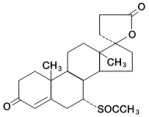
SPIRONOLACTONE 25MG 500 TAB
Generic: Spironolactone
SPIRONOLACTONE 25MG 500 TAB
Sign up to see pricing
Licensed pharmacies, clinics, doctor's offices, and veterinary practices get instant account approval
Sign Up — Instant ApprovalDrug Information
Identification
Spironolactone
Spironolactone
Oxford Pharmaceuticals, LLC
HUMAN PRESCRIPTION DRUG
Administration
TABLET, COATED
ORAL
ANDA040750
Active Ingredients
| Ingredient | Strength |
|---|---|
| SPIRONOLACTONE | 25 mg/1 |
Pharmacological Class
Data sourced from openFDA / DailyMed. For full prescribing information, consult the drug label.
Wholesale compliance resources
Drug Resources
Clinical Drug Information
Indications & Usage
1 INDICATIONS AND USAGE Spironolactone is an aldosterone antagonist indicated for: The treatment of NYHA Class III-IV heart failure and reduced ejection fraction to increase survival, manage edema, and to reduce the need for hospitalization for heart failure ( 1.1 ). Use as an add-on therapy for the treatment of hypertension, to lower blood pressure. Lowering blood pressure reduces the risk of fatal and nonfatal cardiovascular events, primarily strokes and myocardial infarctions ( 1.2 ). The management of edema in adult patients who are cirrhotic when edema is not responsive to fluid and sodium restrictions and in the setting of nephrotic syndrome when treatment of the underlying disease, restriction of fluid and sodium intake, and the use of other diuretics produce an inadequate response ( 1.3 ). Treatment of primary hyperaldosteronism for: ( 1.4 ) Short-term preoperative treatment Long-term maintenance for patients with discrete aldosterone-producing adrenal adenomas who are not candidates for surgery and patients with bilateral micro or macronodular adrenal hyperplasia 1.1 Heart Failure Spironolactone is indicated for treatment of NYHA Class III-IV heart failure and reduced ejection fraction to increase survival, manage edema, and reduce the need for hospitalization for heart failure. Spironolactone is usually administered in conjunction with other heart failure therapies. 1.2 Hypertension Spironolactone is indicated as add-on therapy for the treatment of hypertension, to lower blood pressure in patients who are not adequately controlled on other agents. Lowering blood pressure reduces the risk of fatal and nonfatal cardiovascular events, primarily strokes and myocardial infarctions. These benefits have been seen in controlled trials of antihypertensive drugs from a wide variety of pharmacologic classes. Control of high blood pressure should be part of comprehensive cardiovascular risk management, including, as appropriate, lipid control, diabetes management, antithrombotic therapy, smoking cessation, exercise, and limited sodium intake. Many patients will require more than one drug to achieve blood pressure goals. For specific advice on goals and management, see published guidelines, such as those of the National High Blood Pressure Education Program’s Joint National Committee on Prevention, Detection, Evaluation, and Treatment of High Blood Pressure (JNC). Numerous antihypertensive drugs, from a variety of pharmacologic classes and with different mechanisms of action, have been shown in randomized controlled trials to reduce cardiovascular morbidity and mortality, and it can be concluded that it is blood pressure reduction, and not some other pharmacologic property of the drugs, that is largely responsible for those benefits. The largest and most consistent cardiovascular outcome benefit has been a reduction in the risk of stroke, but reductions in myocardial infarction and cardiovascular mortality also have been seen regularly. Elevated systolic or diastolic pressure causes increased cardiovascular risk, and the absolute risk increase per mmHg is greater at higher blood pressures, so that even modest reductions of severe hypertension can provide substantial benefit. Relative risk reduction from blood pressure reduction is similar across populations with varying absolute risk, so the absolute benefit is greater in patients who are at higher risk independent of their hypertension (for example, patients with diabetes or hyperlipidemia), and such patients would be expected to benefit from more aggressive treatment to a lower blood pressure goal. Some antihypertensive drugs have smaller blood pressure effects (as monotherapy) in black patients, and many antihypertensive drugs have additional approved indications and effects (e.g., on angina, heart failure, or diabetic kidney disease). These considerations may guide selection of therapy. 1.3 Edema Associated with Hepatic Cirrhosis or Nephrotic Syndrome Spironolactone is indicated for the management of edema in the following settings: Cirrhosis of the liver when edema is not responsive to fluid and sodium restriction. Nephrotic syndrome when treatment of the underlying disease, restriction of fluid and sodium intake, and the use of other diuretics produce an inadequate response. Because it increases serum potassium, spironolactone may be useful for treating edema when administration of other diuretics has caused hypokalemia. 1.4 Primary Hyperaldosteronism Spironolactone is indicated in the following settings: Short-term preoperative treatment of patients with primary hyperaldosteronism. Long-term maintenance therapy for patients with discrete aldosterone-producing adrenal adenomas who are not candidates for surgery. Long-term maintenance therapy for patients with bilateral micro or macronodular adrenal hyperplasia (idiopathic hyperaldosteronism).
Dosage & Administration
2 DOSAGE AND ADMINISTRATION Heart Failure: Initiate treatment at 25 mg once daily ( 2.2 ). Hypertension: Initiate treatment at 25 to 100 mg daily in either single or divided doses ( 2.3 ). Edema: Initiate therapy in a hospital setting and titrate slowly. The recommended initial daily dose is 100 mg in single or divided doses ( 2.4 ). Primary hyperaldosteronism: Initiate treatment at 100 to 400 mg in preparation for surgery. In patients unsuitable for surgery use the lowest effective dosage determined for the individual patient ( 2.5 ). 2.1 General Considerations Spironolactone can be taken with or without food, but should be taken consistently with respect to food [see Clinical Pharmacology (12.3) ] . 2.2 Treatment of Heart Failure In patients with serum potassium ≤5.0 mEq/L and eGFR >50 mL/min/1.73 m², initiate treatment at 25 mg once daily. Patients who tolerate 25 mg once daily may have their dosage increased to 50 mg once daily as clinically indicated. Patients who develop hyperkalemia on 25 mg once daily may have their dosage reduced to 25 mg every other day [see Warnings and Precautions (5.1) ] . In patients with an eGFR between 30 and 50 mL/min/1.73 m 2 , consider initiating therapy at 25 mg every other day because of the risk of hyperkalemia [see Use in Specific Populations (8.6) ]. 2.3 Treatment of Essential Hypertension The recommended initial daily dose is 25 to 100 mg of spironolactone administered in either single or divided doses is recommended. Dosage can be titrated at two-week intervals. Doses greater than 100 mg/day generally do not provide additional reductions in blood pressure. 2.4 Treatment of Edema In patients with cirrhosis, initiate therapy in a hospital setting and titrate slowly [see Use in Specific Populations (8.7) ] . The recommended initial daily dosage is 100 mg of spironolactone administered in either single or divided doses, but may range from 25 to 200 mg daily. When given as the sole agent for diuresis, administer for at least five days before increasing dose to obtain desired effect. 2.5 Treatment of Primary Hyperaldosteronism Administer spironolactone in doses of 100 to 400 mg daily in preparation for surgery. For patients who are considered unsuitable for surgery, spironolactone can be used as long-term maintenance therapy at the lowest effective dosage determined for the individual patient.
Adverse Reactions
6 ADVERSE REACTIONS The following clinically significant adverse reactions are described elsewhere in the labeling: Hyperkalemia [see Warnings and Precautions (5.1) ] Hypotension and Worsening Renal Function [see Warnings and Precautions (5.2) ] Electrolyte and Metabolic Abnormalities [see Warnings and Precautions (5.3) ] Gynecomastia [see Warnings and Precautions (5.4) ] Impaired neurological function/ coma in patients with hepatic impairment, cirrhosis and ascites [see Use in Specific Populations (8.7) ] The following adverse reactions associated with the use of spironolactone were identified in clinical trials or postmarketing reports. Because these reactions were reported voluntarily from a population of uncertain size, it is not always possible to estimate their frequency, reliably, or to establish a causal relationship to drug exposure. Digestive: Gastric bleeding, ulceration, gastritis, diarrhea and cramping, nausea, vomiting. Reproductive: Decreased libido, inability to achieve or maintain erection, irregular menses or amenorrhea, postmenopausal bleeding, breast and nipple pain. Hematologic: Leukopenia (including agranulocytosis), thrombocytopenia. Hypersensitivity: Fever, urticaria, maculopapular or erythematous cutaneous eruptions, anaphylactic reactions, vasculitis. Metabolism: Hyperkalemia, electrolyte disturbances [see Warnings and Precautions (5.1 , 5.3) ] , hyponatremia, hypovolemia. Musculoskeletal : Leg cramps. Nervous system/psychiatric: Lethargy, mental confusion, ataxia, dizziness, headache, drowsiness. Liver/biliary: A very few cases of mixed cholestatic/hepatocellular toxicity, with one reported fatality, have been reported with spironolactone administration. Renal: Renal dysfunction (including renal failure). Skin: Stevens-Johnson Syndrome (SJS), toxic epidermal necrolysis (TEN), drug rash with eosinophilia and systemic symptoms (DRESS), alopecia, pruritis. The most common adverse reaction with spironolactone treatment is gynecomastia ( 5.4 , 6 ). To report SUSPECTED ADVERSE REACTIONS, contact Oxford, at 1-844-508-1455, 8:00 am – 4:30 ET, Monday – Friday or FDA at 1-800-FDA-1088 or www.fda.gov/medwatch.
Information for Patients
17 PATIENT COUNSELING INFORMATION Patients who receive spironolactone should be advised to avoid potassium supplements and foods containing high levels of potassium, including salt substitutes. For more information, call Oxford Pharmaceuticals, LLC at 1-844-508-1455, 8:00 am – 4:30 pm ET, Monday – Friday Manufactured by: OXFORD PHARMACEUTICALS Birmingham, AL 35211 8200024 Rev 02/26 R05
Clinical data sourced from openFDA drug labeling. For complete prescribing information, consult the full drug label.