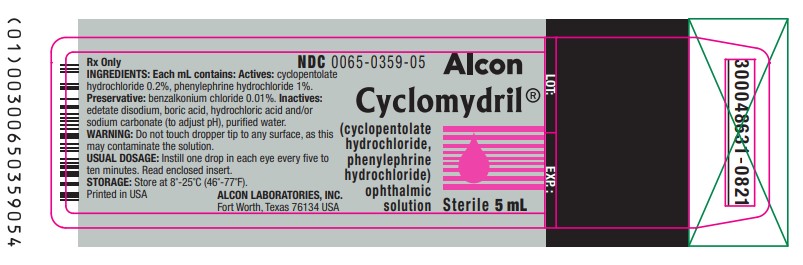
CYCLOPENTOLATE 1% O/S 2 ML
Generic: Cyclopentolate Hydrochloride
CYCLOPENTOLATE 1% O/S 2 ML
Sign up to see pricing
Licensed pharmacies, clinics, doctor's offices, and veterinary practices get instant account approval
Sign Up — Instant ApprovalDrug Information
Identification
Cyclopentolate Hydrochloride
Cyclopentolate Hydrochloride
Sandoz Inc.
HUMAN PRESCRIPTION DRUG
Administration
SOLUTION
OPHTHALMIC
ANDA084110
Active Ingredients
| Ingredient | Strength |
|---|---|
| CYCLOPENTOLATE HYDROCHLORIDE | 10 mg/mL |
Data sourced from openFDA / DailyMed. For full prescribing information, consult the drug label.
Wholesale compliance resources
Clinical Drug Information
Indications & Usage
INDICATIONS AND USAGE Cyclopentolate hydrochloride is used to produce mydriasis and cycloplegia.
Warnings
WARNINGS For topical ophthalmic use. Not for injection. This preparation may cause Central Nervous System (CNS) disturbances. This is especially true in younger age groups, but may occur at any age, especially with the stronger solutions. Infants are especially prone to CNS and cardiopulmonary side effects from cyclopentolate. To minimize absorption, use only 1 drop of 0.5% cyclopentolate hydrochloride ophthalmic solution, USP per eye, followed by pressure applied over the nasolacrimal sac for two to three minutes. Observe infants closely for at least 30 minutes following instillation. Mydriatics may produce a transient elevation of intraocular pressure. Patients with untreated narrow angle glaucoma or anatomically narrow angles may be susceptible to angle closure following administration. Mydriatics may produce a transient elevation of intraocular pressure.
Dosage & Administration
DOSAGE AND ADMINISTRATION Adults: Instill one or two drops of 0.5%, 1% or 2% solution in the eye which may be repeated in five to ten minutes if necessary. Complete recovery usually occurs in 24 hours. Complete recovery from mydriasis in some individuals may require several days. Children: Instill one or two drops of 0.5%, 1% or 2% solution in the eye which may be repeated five to ten minutes later by a second application of 0.5% or 1% solution if necessary. Small Infants: A single instillation of one drop of 0.5% Cyclopentolate Hydrochloride Ophthalmic Solution in the eye. To minimize absorption, apply pressure over the nasolacrimal sac for two to three minutes. Observe infant closely for at least 30 minutes following instillation. Individuals with heavily pigmented irides may require higher strengths.
Adverse Reactions
ADVERSE REACTIONS Ocular: Increased intraocular pressure, burning, photophobia, blurred vision, irritation, hyperemia, conjunctivitis, blepharoconjunctivitis, punctate keratitis, synechiae have been reported. Non-ocular: Use of cyclopentolate has been associated with psychotic reactions and behavioral disturbances, usually in children, especially with 2% concentration. These disturbances include ataxia, incoherent speech, restlessness, hallucinations, hyperactivity, seizures, disorientation as to time and place, and failure to recognize people. This drug produces reactions similar to those of other anticholinergic drugs, but the central nervous system manifestations as noted above are more common. Other toxic manifestations of anticholinergic drugs are skin rash, abdominal distention in infants, unusual drowsiness, tachycardia, hyperpyrexia, vasodilation, urinary retention, diminished gastrointestinal motility and decreased secretion in salivary and sweat glands, pharynx, bronchi and nasal passages. Severe manifestations of toxicity include coma, medullary paralysis and death.
Information for Patients
Information for Patients Do not touch dropper tip to any surface, as this may contaminate the solution. A transient burning sensation may occur upon instillation. Patients should be advised not to drive or engage in other hazardous activities while pupils are dilated. Patients may experience sensitivity to light and should protect eyes in bright illumination during dilation. Parents should be warned not to get this preparation in their child's mouth and to wash their own hands and the child's hands following administration. Feeding intolerance may follow ophthalmic use of this product in infants. It is recommended that feeding be withheld for four (4) hours after examination in infants.
Clinical data sourced from openFDA drug labeling. For complete prescribing information, consult the full drug label.