OFLOXACIN .3% OPSL 5ML
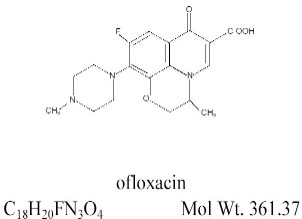
Generic: ofloxacin
OFLOXACIN .3% OPSL 5ML
Sign up to see pricing
Licensed pharmacies, clinics, doctor's offices, and veterinary practices get instant account approval
Sign Up — Instant ApprovalDrug Information
Identification
ofloxacin
Ofloxacin
Apotex Corp.
HUMAN PRESCRIPTION DRUG
Administration
SOLUTION
OPHTHALMIC
ANDA076513
Active Ingredients
| Ingredient | Strength |
|---|---|
| OFLOXACIN | 3 mg/mL |
Pharmacological Class
Data sourced from openFDA / DailyMed. For full prescribing information, consult the drug label.
Wholesale compliance resources
Drug Resources
Clinical Drug Information
Indications & Usage
INDICATIONS AND USAGE Ofloxacin ophthalmic solution is indicated for the treatment of infections caused by susceptible strains of the following bacteria in the conditions listed below: *Efficacy for this organism was studied in fewer than 10 infections CONJUNCTIVITIS Gram-positive bacteria Gram-negative bacteria Staphylococcus aureus Enterobacter cloacae Staphylococcus epidermidis Haemophilus influenzae Streptococcus pneumoniae Proteus mirabilis Pseudomonas aeruginosa CORNEAL ULCERS Gram-positive bacteria Gram-negative bacteria Staphylococcus aureus Pseudomonas aeruginosa Staphylococcus epidermidis Serratia marcescens* Streptococcus pneumoniae Anaerobic species : Propionibacterium acnes
Warnings
WARNINGS NOT FOR INJECTION. Ofloxacin ophthalmic solution should not be injected subconjunctivally, nor should it be introduced directly into the anterior chamber of the eye. There are rare reports of anaphylactic reaction/shock and fatal hypersensitivity reactions in patients receiving systemic quinolones, some following the first dose, including ofloxacin. Some reactions were accompanied by cardiovascular collapse, loss of consciousness, angioedema (including laryngeal, pharyngeal or facial edema), airway obstruction, dyspnea, urticaria, and itching. A rare occurrence of Stevens-Johnson syndrome, which progressed to toxic epidermal necrolysis, has been reported in a patient who was receiving topical ophthalmic ofloxacin. If an allergic reaction to ofloxacin occurs, discontinue the drug. Serious acute hypersensitivity reactions may require immediate emergency treatment. Oxygen and airway management, including intubation should be administered as clinically indicated.
Dosage & Administration
DOSAGE AND ADMINISTRATION The recommended dosage regimen for the treatment of bacterial conjunctivitis is: Days 1 and 2 Instill one to two drops every two to four hours in the affected eye(s). Days 3 through 7 Instill one to two drops four times daily. The recommended dosage regimen for the treatment of bacterial corneal ulcer is: Days 1 and 2 Instill one to two drops into the affected eye every 30 minutes, while awake. Awaken at approximately four and six hours after retiring and instill one to two drops. Days 3 through 7 to 9 Instill one to two drops hourly, while awake. Days 7 to 9 through treatment completion Instill one to two drops, four times daily.
Adverse Reactions
ADVERSE REACTIONS Ophthalmic Use The most frequently reported drug-related adverse reaction was transient ocular burning or discomfort. Other reported reactions include stinging, redness, itching, chemical conjunctivitis/keratitis, ocular/periocular/facial edema, foreign body sensation, photophobia, blurred vision, tearing, dryness, and eye pain. Rare reports of dizziness and nausea have been received. Refer to Warnings for additional adverse reactions.
Information for Patients
Information for Patients Avoid contaminating the applicator tip with material from the eye, fingers or other source. Systemic quinolones, including ofloxacin, have been associated with hypersensitivity reactions, even following a single dose. Discontinue use immediately and contact your physician at the first sign of a rash or allergic reaction.
Clinical data sourced from openFDA drug labeling. For complete prescribing information, consult the full drug label.