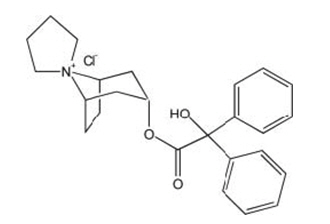
TROSPIUM 20MG 60 TAB
Generic: Trospium Chloride
TROSPIUM 20MG 60 TAB
Sign up to see pricing
Licensed pharmacies, clinics, doctor's offices, and veterinary practices get instant account approval
Sign Up — Instant ApprovalDrug Information
Identification
Trospium Chloride
Trospium Chloride
CIPLA USA INC.,
HUMAN PRESCRIPTION DRUG
Administration
TABLET, FILM COATED
ORAL
ANDA091688
Active Ingredients
| Ingredient | Strength |
|---|---|
| TROSPIUM CHLORIDE | 20 mg/1 |
Pharmacological Class
Data sourced from openFDA / DailyMed. For full prescribing information, consult the drug label.
Wholesale compliance resources
Drug Resources
Clinical Drug Information
Indications & Usage
1 INDICATIONS AND USAGE Trospium chloride tablets are a muscarinic antagonist indicated for the treatment of overactive bladder (OAB) with symptoms of urge urinary incontinence, urgency, and urinary frequency. Trospium chloride tablets are a muscarinic antagonist indicated for the treatment of overactive bladder (OAB) with symptoms of urge urinary incontinence, urgency, and urinary frequency. ( 1 )
Dosage & Administration
2 DOSAGE AND ADMINISTRATION The recommended dose is 20 mg twice daily. Trospium chloride tablets should be dosed at least one hour before meals or given on an empty stomach. Dosage modification is recommended in the following patient populations: • For patients with severe renal impairment (creatinine clearance less than 30 mL/min), the recommended dose is 20 mg once daily at bedtime [ see Warnings and Precautions ( 5.5 ), Use in Specific Populations ( 8.6 ), and Clinical Pharmacology ( 12.3 ) ]. • In geriatric patients greater than or equal to 75 years of age, dose may be titrated down to 20 mg once daily based upon tolerability [ see Use in Specific Populations ( 8.5 ) ]. • The recommended dose of trospium chloride tablet is one 20 mg tablet twice daily. Trospium chloride tablets should be dosed with water on an empty stomach, at least one hour before a meal. ( 2 ) • For patients with severe renal impairment (creatinine clearance less than 30 mL/min), the recommended dose is 20 mg once daily at bedtime. ( 2 ) • In geriatric patients greater than or equal to 75 years of age, dose may be titrated down to 20 mg once daily based upon tolerability. ( 2 )
Adverse Reactions
6 ADVERSE REACTIONS The most common adverse reactions (greater than or equal to 1%) with trospium chloride tablets are dry mouth (20.1%), constipation (9.6%), and headache (4.2%). ( 6.1 ) To report SUSPECTED ADVERSE REACTIONS, contact Cipla Ltd. at 1-866-604-3268 or FDA at 1-800-FDA-1088 or www.fda.gov/medwatch. 6.1 Clinical Trials Experience Because clinical trials are conducted under widely varying conditions, the adverse reaction rates observed in the clinical trials of a drug cannot be directly compared to rates in the clinical trials of another drug and may not reflect the rates observed in clinical practice. The safety of trospium chloride tablets was evaluated in controlled clinical trials in a total of 2975 patients, who were treated with trospium chloride tablets (N=1673), placebo (N=1056) or active control medications (N=246). Of this total, 1181 patients participated in two, 12-week, U.S., efficacy and safety studies and a 9-month open-label extension. Of this total, 591 patients received trospium chloride tablets 20 mg twice daily. In all controlled trials combined, 232 and 208 patients received treatment with trospium chloride tablets for at least 24 and 52 weeks, respectively. In all placebo-controlled trials combined, the incidence of serious adverse events was 2.9% among patients receiving trospium chloride tablets 20 mg twice daily and 1.5% among patients receiving placebo. Table 1 lists adverse reactions from the combined 12-week U.S. safety and efficacy trials were reported by at least 1% of patients, and were reported more frequently in the trospium chloride tablets group than in the placebo group. The two most common adverse reactions reported by patients receiving trospium chloride tablets 20 mg twice daily were dry mouth and constipation. The single most frequently reported adverse reaction for trospium chloride tablets, dry mouth, occurred in 20.1% of trospium chloride tablets treated patients and 5.8% of patients receiving placebo. In the two U.S. studies, dry mouth led to discontinuation in 1.9% of patients treated with trospium chloride tablets 20 mg twice daily. For the patients who reported dry mouth, most had their first occurrence of the event within the first month of treatment. Table 1. Incidence (%) of adverse reactions with trospium chloride tablets, reported in greater than or equal to 1% of all patients treated with trospium chloride tablets and more frequent with trospium chloride tablets (20 mg twice daily) than placebo in Studies 1 and 2 combined Adverse Reaction Placebo (N=590) Trospium Chloride Tablets 20 mg Twice daily (N=591) Gastrointestinal Disorders Dry mouth 34 ( 5.8) 119 (20.1) Constipation 27 (4.6) 57 (9.6) Abdominal pain upper 7 (1.2) 9 (1.5) Constipation aggravated 5 (0.8) 8 (1.4) Dyspepsia 2 (0.3) 7 (1.2) Flatulence 5 (0.8) 7 (1.2) Nervous System Disorders Headache 12 (2.0) 25 (4.2) General Disorders Fatigue 8 (1.4) 11 (1.9) Renal and Urinary Disorders Urinary retention 2 (0.3) 7 (1.2) Eye Disorders Dry eyes 2 (0.3) 7 (1.2) Other adverse reactions from the U.S., placebo-controlled trials , occurring in greater than or equal to 0.5% and less than 1.0% of trospium chloride tablets treated patients, and more common with trospium chloride tablets than placebo are: tachycardia , vision blurred, abdominal distension, vomiting, dysgeusia, dry throat, and dry skin. During controlled clinical studies, one adverse reaction of angioneurotic edema was reported. 6.2 Post-marketing Experience The following adverse reactions have been identified during post-approval use of trospium chloride. Because these reactions are reported voluntarily from a population of uncertain size, it is not always possible to reliably estimate their frequency or establish a causal relationship to drug exposure. Gastrointestinal – gastritis; Cardiovascular – palpitations, supraventricular tachycardia, chest pain, syncope, “hypertensive crisis”; Immunological – Stevens-Johnson syndrome, anaphylactic reaction, angioedema; Nervous System – dizziness, confusion, vision abnormal, hallucinations, somnolence and delirium; Musculoskeletal – rhabdomyolysis; General – rash.
Information for Patients
17 PATIENT COUNSELING INFORMATION “See FDA-approved Patient Labeling (Patient Information)” 17.1 Angioedema Patients should be informed that trospium chloride, the active ingredient in trospium chloride tablets, may produce angioedema which could result in life-threatening airway obstruction. Patients should be advised to promptly discontinue trospium chloride tablets and seek immediate medical attention if they experience edema of the tongue, edema of the laryngopharynx, or difficulty breathing. 17.2 When Not to Use Prior to treatment, patients should fully understand the risks and benefits of trospium chloride tablets. In particular, patients should be informed not to take trospium chloride tablets if they: • have urinary retention; • gastric retention; • uncontrolled narrow-angle glaucoma; • are allergic to any component of trospium chloride tablets. 17.3 Administration Patients should be instructed regarding the recommended dosing and administration of trospium chloride tablets: • Take one trospium chloride tablet twice daily with water. • Take trospium chloride tablets on an empty stomach or at least 1 hour before a meal. 17.4 Adverse Reactions Patients should be informed that the most common side effects with trospium chloride tablets are dry mouth and constipation and that other less common side effects include trouble emptying the bladder, blurred vision, and heat prostration. Because anticholinergics, such as trospium chloride tablets, may produce dizziness or blurred vision, patients should be advised to exercise caution in decisions to engage in potentially dangerous activities until the drug’s effects have been determined. Patients should be informed that alcohol may enhance the drowsiness caused by anticholinergic agents. Revised: 06/2016
Clinical data sourced from openFDA drug labeling. For complete prescribing information, consult the full drug label.