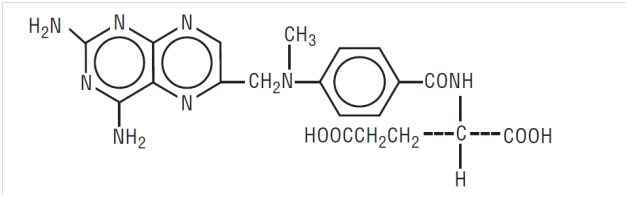
METHOTREXATE 2.5MG 100 TAB
Generic: Methotrexate
METHOTREXATE 2.5MG 100 TAB
Sign up to see pricing
Licensed pharmacies, clinics, doctor's offices, and veterinary practices get instant account approval
Sign Up — Instant ApprovalDrug Information
Identification
Methotrexate
Methotrexate
Accord Healthcare Inc.
HUMAN PRESCRIPTION DRUG
Administration
TABLET
ORAL
ANDA213343
Active Ingredients
| Ingredient | Strength |
|---|---|
| METHOTREXATE SODIUM | 2.5 mg/1 |
Pharmacological Class
Data sourced from openFDA / DailyMed. For full prescribing information, consult the drug label.
Wholesale compliance resources
Drug Resources
Clinical Drug Information
Indications & Usage
1 INDICATIONS AND USAGE Methotrexate tablets is a dihydrofolate reductase inhibitor indicated for the: Treatment of adults and pediatric patients with acute lymphoblastic leukemia (ALL) as part of a combination chemotherapy maintenance regimen ( 1.1 ) Treatment of adults with mycosis fungoides ( 1.1 ) Treatment of adults with relapsed or refractory non-Hodgkin lymphoma as part of a metronomic combination regimen ( 1.1 ) Treatment of adults with rheumatoid arthritis ( 1.2 ) Treatment of pediatric patients with polyarticular juvenile idiopathic arthritis (pJIA) ( 1.3 ) Treatment of adults with severe psoriasis ( 1.4 ) 1.1 Neoplastic Diseases is indicated for the: Methotrexate Tablets is indicated for the: treatment of adults and pediatric patients with acute lymphoblastic leukemia (ALL) as part of a combination chemotherapy maintenance regimen treatment of adults with mycosis fungoides (cutaneous T-cell lymphoma) as a single agent or as part of a combination chemotherapy regimen. treatment of adults with relapsed or refractory non-Hodgkin lymphomas as part of a metronomic combination chemotherapy regimen 1.2 Rheumatoid Arthritis is indicated for the treatment of adults with rheumatoid arthritis. Methotrexate Tablets is indicated for the treatment of adults with rheumatoid arthritis. 1.3 Polyarticular Juvenile Idiopathic Arthritis is indicated for the treatment of pediatric patients with polyarticular Juvenile Idiopathic Arthritis (pJIA). Methotrexate Tablets is indicated for the treatment of pediatric patients with polyarticular Juvenile Idiopathic Arthritis (pJIA). 1.4 Psoriasis is indicated for the treatment of adults with severe psoriasis. Methotrexate Tablets is indicated for the treatment of adults with severe psoriasis.
Dosage & Administration
2 DOSAGE AND ADMINISTRATION Instruct patients and caregivers to take the recommended dosage as directed, because medication errors have led to deaths. ( 2.1 , 5.9 ) Verify pregnancy status in females of reproductive potential before starting Methotrexate Tablets ( 4 , 5.1 ). ALL: The recommended dosage is 20 mg/m 2 orally once weekly as a part of a combination chemotherapy maintenance regimen. ( 2.2 ) Mycosis fungoides: The recommended dosage is 25 mg to 75 mg orally once weekly as monotherapy; 10 mg/m 2 orally twice weekly as part of combination chemotherapy. ( 2.2 ) Relapsed or refractory non-Hodgkin lymphoma: The recommended dosage is 2.5 mg orally two to four times per week as part of metronomic combination chemotherapy. ( 2.2 ) Rheumatoid Arthritis: The recommended starting dosage is 7.5 mg orally once weekly; adjust dose to achieve an optimal response ( 2.3 ) pJIA: The recommended starting dosage is 10 mg/m 2 orally once weekly; adjust dose to achieve an optimal response ( 2.4 ) Psoriasis: The recommended dosage is 10 mg to 25 mg orally once weekly until adequate response is achieved. ( 2.5 ) 2.1 Important Dosage and Safety Information in females of reproductive potential before starting Methotrexate Tablets Verify pregnancy status in females of reproductive potential before starting Methotrexate Tablets [see Contraindications (4), Warnings and Precautions ( 5.1 )]. Instruct patients and caregivers to take the recommended dosage as directed, because medication errors have led to deaths Instruct patients and caregivers to take the recommended dosage as directed, because medication errors have led to deaths [see Warnings and Precautions ( 5.9 )]. When switching the dosing regimen from oral administration to intravenous, intramuscular, or subcutaneous administration, an alternative dosing regimen may be necessary.When switching the dosing regimen from oral administration to intravenous, intramuscular, or subcutaneous administration, an alternative dosing regimen may be necessary. Do not administer to patients who are unable to swallow a tablet.Do not administer to patients who are unable to swallow a tablet. Methotrexate Tablets is a cytotoxic drug. Follow applicable special handling and disposal procedures. Methotrexate Tablets is a cytotoxic drug. Follow applicable special handling and disposal procedures. 1 2.2 Recommended Dosage for Neoplastic Diseases Acute Lymphoblastic Leukemia The recommended starting dosage of Methotrexate Tablets is 20 mg/m 2 orally once weekly, as part of a combination chemotherapy maintenance regimen. After initiating Methotrexate Tablets, periodically monitor absolute neutrophil count (ANC) and platelet count and adjust the dose to maintain ANC at a desirable level and for excessive myelosuppression. Mycosis Fungoides The recommended dosage of Methotrexate Tablets is 25 to 75 mg orally once weekly when administered as a single agent or 10 mg/m 2 orally twice weekly as part of a combination chemotherapy regimen. Relapsed or Refractory Non-Hodgkin Lymphomas The recommended dosage of Methotrexate Tablets is 2.5 mg orally 2 to 4 times per week (maximum 10 mg per week) as part of a metronomic combination chemotherapy regimen. 2.3 Recommended Dosage for Rheumatoid Arthritis The recommended starting dosage of Methotrexate Tablets is 7.5 mg orally once weekly with escalation to achieve optimal response. Dosages of more than 20 mg once weekly result in an increased risk of serious adverse reactions, including myelosuppression. When responses are observed, the majority occurred between 3 and 6 weeks from initiation of treatment; however, responses have occurred up to 12 weeks after treatment initiation.The recommended starting dosage of Methotrexate Tablets is 7.5 mg orally once weekly with escalation to achieve optimal response. Dosages of more than 20 mg once weekly result in an increased risk of serious adverse reactions, including myelosuppression. When responses are observed, the majority occurred between 3 and 6 weeks from initiation of treatment; however, responses have occurred up to 12 weeks after treatment initiation. Administer folic acid or folinic acid to reduce the risk of methotrexate adverse reactions [see Warnings and Precautions ( 5.10 )]. 2.4 Recommended Dosage for Polyarticular Juvenile Idiopathic Arthritis The recommended starting dosage of Methotrexate Tablets is 10 mg/m orally once weekly with escalation to achieve optimal response. Dosages of more than 30 mg/m once weekly result in an increased risk of serious adverse reactions, including myelosuppression. When responses are observed, the majority occurred between 3 and 6 weeks from initiation of treatment; however, responses have occurred up to 12 weeks after treatment initiation. The recommended starting dosage of Methotrexate Tablets is 10 mg/m 2 orally once weekly with escalation to achieve optimal response. Dosages of more than 30 mg/m 2 once weekly result in an increased risk of serious adverse reactions, including myelosuppression. When responses are observed, the majority occurred between 3 and 6 weeks from initiation of treatment; however, responses have occurred up to 12 weeks after treatment initiation. or folinic acid to reduce the risk of methotrexate adverse reactions Administer folic acid or folinic acid to reduce the risk of methotrexate adverse reactions [see Warnings and Precautions ( 5.10 )]. 2.5 Recommended Dosage for Psoriasis The recommended dosage of Methotrexate Tablets is 10 to 25 mg orally once weekly until an adequate response is achieved. Adjust the dose gradually to achieve optimal clinical response; do not exceed a dose of 30 mg per week. Once optimal clinical response has been achieved, reduce the dosage to the lowest possible dosing regimen. or folinic acid supplementation to reduce the risk of methotrexate adverse reactions The recommended dosage of Methotrexate Tablets is 10 to 25 mg orally once weekly until an adequate response is achieved. Adjust the dose gradually to achieve optimal clinical response; do not exceed a dose of 30 mg per week. Once optimal clinical response has been achieved, reduce the dosage to the lowest possible dosing regimen. Administer folic acid or folinic acid supplementation to reduce the risk of methotrexate adverse reactions [see Warnings and Precautions ( 5.10 )]. 2.6 Dosage Modifications for Adverse Reactions Discontinue Methotrexate Tablets for:Discontinue Methotrexate Tablets for: Anaphylaxis or other severe hypersensitivity reactions [see Warnings and Precautions ( 5.2 )] Lymphoproliferative disease [see Warnings and Precautions ( 5.13 )] Withhold, dose reduce or discontinue Methotrexate Tablets as appropriate for:Withhold, dose reduce or discontinue Methotrexate Tablets as appropriate for: Myelosuppression [see Warnings and Precautions ( 5.3 )] Methotrexate Tablets as appropriate for: Withhold or discontinue Methotrexate Tablets as appropriate for: Severe gastrointestinal toxicity [see Warnings and Precautions ( 5.4 )] Hepatotoxicity [see Warnings and Precautions ( 5.5 )] Pulmonary toxicity [see Warnings and Precautions ( 5.6 )] Severe dermatologic reactions [see Warnings and Precautions ( 5.7 )] Severe renal toxicity [see Warnings and Precautions ( 5.8 )] Serious infections [see Warnings and Precautions ( 5.11 )] Neurotoxicity [see Warnings and Precautions ( 5.12 )]
Adverse Reactions
6 ADVERSE REACTIONS The following clinically significant adverse reactions are described elsewhere in the labeling: Hypersensitivity Reactions [see Warnings and Precautions ( 5.2 )] Myelosuppression [see Warnings and Precautions ( 5.3 )] Gastrointestinal Toxicity [see Warnings and Precautions ( 5.4 )] Hepatotoxicity [see Warnings and Precautions ( 5.5 )] Pulmonary Toxicity [see Warnings and Precautions ( 5.6 )] Dermatologic Reactions [see Warnings and Precautions ( 5.7 )] Renal Toxicity [see Warnings and Precautions ( 5.8 )] Serious Infections [see Warnings and Precautions ( 5.11 )] Neurotoxicity [see Warnings and Precautions ( 5.12 )] Secondary Malignancies [see Warnings and Precautions ( 5.13 )] Tumor Lysis Syndrome [see Warnings and Precautions ( 5.14 )] Increased Risk of Adverse Reactions Due to Third-Space Accumulation [see Warnings and Precautions ( 5.17 )] Common adverse reactions include ulcerative stomatitis, leukopenia, nausea, abdominal distress. ( 6.1 ) To report SUSPECTED ADVERSE REACTIONS, contact Accord Healthcare Inc. at 1-866-941-7875 or FDA at 1-800-FDA-1088 or www.fda.gov/medwatch. 6.1 Clinical Trials Experience Because clinical trials and other studies are conducted under widely varying conditions, adverse reaction rates observed in the clinical trials of a drug cannot be directly compared to rates in the clinical trials of another drug and may not reflect the rates observed in practice. Common adverse reactions were: ulcerative stomatitis, leukopenia, nausea, and abdominal distress. Other clinically relevant adverse reactions were infection, malaise, fatigue, chills, fever, and dizziness. Rheumatoid Arthritis The most common adverse reactions of methotrexate that exceeded the rate of placebo in 12- to 18-week double-blind studies in patients (n=128) with rheumatoid arthritis are listed below. Patients received methotrexate 7.5 to 15 mg orally once weekly. Most patients received concomitant nonsteroidal anti-inflammatory drugs (NSAIDs) and some also received corticosteroids. Hepatic histology was not examined in these short-term studies. Incidence ≥10%: Elevated liver tests 15%, nausea/vomiting 10% Incidence 3% to <10%: Stomatitis, thrombocytopenia (platelet count < 100,000/mm 3 ) Incidence 1% to <3%: Rash/pruritus/dermatitis, diarrhea, alopecia, leukopenia (white blood cell count < 3000/mm 3 ), pancytopenia, dizziness Two other controlled trials of patients (n=680) with rheumatoid arthritis who received methotrexate 7.5 mg to 15 mg orally once weekly showed the following serious adverse reaction: Incidence 1%: Interstitial pneumonitis Other less common adverse reactions were: anemia, headache, upper respiratory infection, anorexia, arthralgias, chest pain, coughing, dysuria, eye discomfort, epistaxis, fever, infection, sweating, tinnitus, vaginal discharge. Polyarticular Juvenile Idiopathic Arthritis (pJIA) The most common adverse reactions reported in patients 2 to 18 years of age with pJIA treated with methotrexate 5 mg/m 2 to 20 mg/m 2 orally once weekly or 0.1 to 0.65 mg/kg orally once weekly were as follows: elevated liver tests 14%; gastrointestinal reactions (e.g., nausea, vomiting, diarrhea) 11%; stomatitis 2%; leukopenia 2%; headache 1.2%; alopecia 0.5%; dizziness 0.2%; rash 0.2%. Most patients received concomitant NSAIDs and some also received corticosteroids. Psoriasis In two published series of adults with psoriasis (n=204, 248) who received methotrexate up to 25 mg per week for up to 4 years, adverse reaction rates were similar to those in patients with rheumatoid arthritis, except for alopecia, photosensitivity, and “burning of skin lesions” (3% to 10% each). Painful plaque erosions have been reported. 6.2 Postmarketing Experience The following adverse reactions have been identified during postapproval use of methotrexate. Because these reactions are reported voluntarily from a population of uncertain size, it is not always possible to reliably estimate their frequency or establish a causal relationship to drug exposure Cardiovascular: Thromboembolic events (including arterial thrombosis, cerebral thrombosis, deep vein thrombosis, retinal vein thrombosis, thrombophlebitis, and pulmonary embolus), pericarditis, pericardial effusion, hypotension, sudden death Endocrine: Diabetes Eye: Optic neuropathy, blurred vision, ocular pain, conjunctivitis, xerophthalmia Gastrointestinal: Hemorrhagic enteritis, intestinal perforation, gingivitis, pancreatitis, pharyngitis, hematemesis, melena, gastrointestinal ulceration Hematology: Aplastic anemia, lymphadenopathy, hypogammaglobulinemia Hepatobiliary: Acute hepatitis, decreased serum albumin, fibrosis, cirrhosis Immune system: Anaphylaxis, anaphylactoid reactions, vasculitis Metabolism: Hyperglycemia Musculoskeletal: Stress fracture, soft tissue and bone necrosis, arthralgia, myalgia, osteoporosis Nervous system: Headaches, drowsiness, blurred vision, speech impairment (including dysarthria and aphasia), transient cognitive dysfunction, mood alteration, unusual cranial sensations, paresis, encephalopathy, and convulsions. Renal: Azotemia, hematuria, proteinuria, cystitis Reproductive: Defective oogenesis or spermatogenesis, loss of libido, impotence, gynecomastia, menstrual dysfunction Respiratory: Pulmonary fibrosis, respiratory failure, chronic interstitial obstructive pulmonary disease, pleuritic pain and thickening, alveolitis Skin: Toxic epidermal necrolysis, Stevens-Johnson syndrome, exfoliative dermatitis, skin necrosis, and erythema multiforme, erythematous rashes, pruritus, alopecia, skin ulceration, accelerated nodulosis, urticaria, pigmentary changes, ecchymosis, telangiectasia, photosensitivity, acne, furunculosis
Information for Patients
17 PATIENT COUNSELING INFORMATION Advise the patient to read the FDA-approved patient labeling (Patient Information). Embryo-Fetal Toxicity Advise females of reproductive potential of the potential risk to a fetus and to inform their healthcare provider of a known or suspected pregnancy [see Contraindications ( 4 ), Warnings and Precautions ( 5.1 ), Use in Specific Populations ( 8.1 )]. Advise females of reproductive potential to use effective contraception during treatment with Methotrexate Tablets and for 6 months after the final dose [see Use in Specific Populations ( 8.3 )]. Advise males of reproductive potential to use effective contraception during treatment with Methotrexate Tablets and for 3 months after the final dose [see Use in Specific Populations ( 8.3 )]. Hypersensitivity Reactions Advise patients and their caregivers of the potential risk of hypersensitivity and that Methotrexate Tablets is contraindicated in patients with a history of hypersensitivity reactions to methotrexate. Instruct patients to seek immediate medical attention for signs of a hypersensitivity reaction [see Warnings and Precautions ( 5.2 )]. Myelosuppression and Serious Infections Inform patients and their caregivers that Methotrexate Tablets can cause myelosuppression and the need for frequent monitoring of blood cell counts. Advise patients and their caregivers to immediately report new onset fever, symptoms of infection, easy bruising or persistent bleeding to their healthcare provider [see Warnings and Precautions ( 5.3 , 5.11 )]. Gastrointestinal Toxicity Advise patients and their caregivers to report new or worsening diarrhea, vomiting, or stomatitis to their healthcare provider. Advise patients to immediately contact their healthcare provider for high fever, rigors, persistent or severe abdominal pain, severe constipation, hematemesis, or melena [see Warnings and Precautions ( 5.4 )]. Hepatotoxicity Advise patients and their caregivers to report signs or symptoms of hepatic toxicity to their healthcare provider [see Warnings and Precautions ( 5.5 )]. Pulmonary Toxicity Advise patients and their caregivers to report new or worsening cough, fever, or dyspnea to their healthcare provider [see Warnings and Precautions ( 5.6 )]. Dermatologic Reactions Advise patients and their caregivers that Methotrexate Tablets can cause serious skin rash and to immediately contact their healthcare provider for new or worsening skin rash. Advise patients and their caregivers to avoid excessive sun exposure and use sun protection measures [see Warnings and Precautions ( 5.7 )]. Renal Toxicity Advise patients and their caregivers to immediately contact their healthcare provider for signs or symptoms of renal toxicity, such as marked increases or decreases in urinary output [see Warnings and Precautions ( 5.8 )]. Risk of Fatal Adverse Reactions with Medication Error For patients who are prescribed a once weekly dosing regimen, advise patients and caregivers that the recommended dosage is to be taken once weekly as a single dose and that mistakenly taking the recommended weekly dosage once daily has led to fatal adverse reactions [see Warnings and Precautions ( 5.9 )]. Neurotoxicity Advise patients and their caregivers to report new neurological signs or symptoms to their healthcare provider [see Warnings and Precautions ( 5.12 )]. Secondary Malignancies Advise patients on the risk of second primary malignancies during treatment with Methotrexate Tablets [see Warnings and Precautions ( 5.13 )]. Lactation Instruct women not to breastfeed during treatment with Methotrexate Tablets and for 1 week after the final dose [see Use in Specific Populations ( 8.2 )]. Infertility Advise females and males of reproductive potential that methotrexate may impair fertility [see Warnings and Precautions ( 5.16 ), Use in Specific Populations ( 8.3 )]. Drug Interactions Advise patients and caregivers to inform their healthcare provider of all concomitant medications, including prescription medicines, over-the-counter drugs, vitamins, and herbal products [see Drug Interactions ( 7 )]. For more information, go to www.accordhealthcare.us or call Accord Healthcare Inc. at 1-866-941-7875. Manufactured For: Accord Healthcare, Inc., 8041 Arco Corporate Drive, Suite 200, Raleigh, NC 27617, USA. Manufactured By: Intas Pharmaceuticals Limited, Plot No. 5 to 14, Pharmez, Near Village Matoda, Sarkhej-Bavla Highway, No. 8-A, Taluka Sanand, Ahmedabad 382 213, India. 51 3344 3 739938 Issued May 2026
Clinical data sourced from openFDA drug labeling. For complete prescribing information, consult the full drug label.