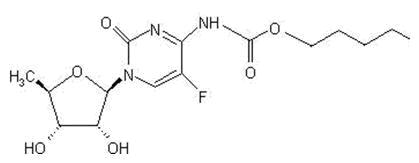
CAPECITABINE TABS 500 MG 120CT
Generic: Capecitabine
CAPECITABINE TABS 500 MG 120CT
Sign up to see pricing
Licensed pharmacies, clinics, doctor's offices, and veterinary practices get instant account approval
Sign Up — Instant ApprovalDrug Information
Identification
Capecitabine
Capecitabine
Ascend Laboratories, LLC
HUMAN PRESCRIPTION DRUG
Administration
TABLET, FILM COATED
ORAL
ANDA207652
Active Ingredients
| Ingredient | Strength |
|---|---|
| CAPECITABINE | 500 mg/1 |
Pharmacological Class
Data sourced from openFDA / DailyMed. For full prescribing information, consult the drug label.
Wholesale compliance resources
Drug Resources
Clinical Drug Information
Indications & Usage
1 INDICATIONS AND USAGE Capecitabine tablets are a nucleoside metabolic inhibitor indicated for: Colorectal Cancer adjuvant treatment of patients with Stage III colon cancer as a single agent or as a component of a combination chemotherapy regimen. ( 1.1 ) perioperative treatment of adults with locally advanced rectal cancer as a component of chemoradiotherapy. ( 1.1 ) treatment of patients with unresectable or metastatic colorectal cancer as a single agent or as a component of a combination chemotherapy regimen. ( 1.1 ) Breast Cancer treatment of patients with advanced or metastatic breast cancer as a single agent if an anthracycline- or taxane-containing chemotherapy is not indicated. ( 1.2 ) treatment of patients with advanced or metastatic breast cancer in combination with docetaxel after disease progression on prior anthracycline-containing chemotherapy. ( 1.2 ) Gastric, Esophageal, or Gastroesophageal Junction Cancer treatment of adults with unresectable or metastatic gastric, esophageal, or gastroesophageal junction cancer as a component of a combination chemotherapy regimen. ( 1.3 ) treatment of adults with HER2-overexpressing metastatic gastric or gastroesophageal junction adenocarcinoma who have not received prior treatment for metastatic disease as a component of a combination regimen. ( 1.3 ) Pancreatic Cancer adjuvant treatment of adults with pancreatic adenocarcinoma as a component of a combination chemotherapy regimen. ( 1.4 ) 1.1 Colorectal Cancer Capecitabine tablets are indicated for the: adjuvant treatment of patients with Stage III colon cancer as a single agent or as a component of a combination chemotherapy regimen. perioperative treatment of adults with locally advanced rectal cancer as a component of chemoradiotherapy. treatment of patients with unresectable or metastatic colorectal cancer as a single agent or as a component of a combination chemotherapy regimen. 1.2 Breast Cancer Capecitabine tablets are indicated for the: treatment of patients with advanced or metastatic breast cancer as a single agent if an anthracycline- or taxane-containing chemotherapy is not indicated. treatment of patients with advanced or metastatic breast cancer in combination with docetaxel after disease progression on prior anthracycline-containing chemotherapy. 1.3 Gastric, Esophageal, or Gastroesophageal Junction Cancer Capecitabine tablets are indicated for the: treatment of adults with unresectable or metastatic gastric, esophageal, or gastroesophageal junction cancer as a component of a combination chemotherapy regimen. treatment of adults with HER2-overexpressing metastatic gastric or gastroesophageal junction adenocarcinoma who have not received prior treatment for metastatic disease as a component of a combination regimen. 1.4 Pancreatic Cancer Capecitabine tablets are indicated for the adjuvant treatment of adults with pancreatic adenocarcinoma as a component of a combination chemotherapy regimen.
Dosage & Administration
2 DOSAGE AND ADMINISTRATION Adjuvant Treatment of Colon Cancer Single agent: 1,250 mg/m 2 twice daily orally for the first 14 days of each 21-day cycle for a maximum of 8 cycles. ( 2.1 ) In combination with Oxaliplatin-Containing Regimens: 1,000 mg/m 2 orally twice daily for the first 14 days of each 21-day cycle for a maximum of 8 cycles in combination with oxaliplatin 130 mg/m 2 administered intravenously on day 1 of each cycle. ( 2.2 ) Perioperative Treatment of Rectal Cancer With Concomitant Radiation Therapy: 825 mg/m 2 orally twice daily ( 2.2 ) Without Radiation Therapy: 1,250 mg/m 2 orally twice daily ( 2.2 ) Unresectable or Metastatic Colorectal Cancer: Single agent: 1,250 mg/m 2 twice daily orally for the first 14 days of each 21-day cycle until disease progression or unacceptable toxicity. ( 2.2 ) In Combination with Oxaliplatin: 1,000 mg/m 2 orally twice daily for the first 14 days of each 21-day cycle until disease progression or unacceptable toxicity in combination with oxaliplatin 130 mg/m 2 administered intravenously on day 1 of each cycle. ( 2.2 ) Advanced or Metastatic Breast Cancer: Single agent: 1,000 mg/m 2 or 1,250 mg/m 2 twice daily orally for the first 14 days of each 21-day cycle until disease progression or unacceptable toxicity. ( 2.3 ) In combination with docetaxel: 1,000 mg/m 2 or 1,250 mg/m 2 orally twice daily for the first 14 days of a 21-day cycle, until disease progression or unacceptable toxicity in combination with docetaxel at 75 mg/m 2 administered intravenously on day 1 of each cycle ( 2.3 ) Unresectable or Metastatic Gastric, Esophageal, or Gastroesophageal Junction Cancer 625 mg/m 2 orally twice daily on days 1 to 21 of each 21-day cycle for a maximum of 8 cycles in combination with platinum-containing chemotherapy. ( 2.4 )OR 850 mg/m 2 or 1,000 mg/m 2 orally twice daily for the first 14 days of each 21-day cycle until disease progression or unacceptable toxicity in combination with oxaliplatin 130 mg/m 2 administered intravenously on day 1 of each cycle. ( 2.4 ) HER2-overexpressing metastatic adenocarcinoma of the gastroesophageal junction or stomach 1,000 mg/m 2 orally twice daily for the first 14 days of each 21-day cycle until disease progression or unacceptable toxicity in combination with cisplatin and trastuzumab. ( 2.4 ) Pancreatic cancer 830 mg/m 2 orally twice daily for the first 21 days of each 28-day cycle for maximum of 6 cycles in combination with gemcitabine 1,000 mg/m 2 administered intravenously on days 1, 8, and 15 of each cycle. ( 2.5 ) Refer to Sections 2.5 and 2.6 for information related to dosage modifications for adverse reactions and renal impairment ( 2.5 and 2.6 ). 2.1 Evaluation and Testing of DPD Deficiency Before Initiating Capecitabine Tablets Prior to initiating capecitabine tablets, test patients for genetic variants of the DPYD gene unless immediate treatment is necessary. An FDA-authorized test for the detection of the DPYD gene to identify patients at risk of serious adverse reactions with capecitabine tablet is not currently available. Currently available tests used to identify DPYD variants may vary in accuracy and design (e.g., which DPYD variant(s) they identify). Avoid use of capecitabine tablets in patients known to have certain homozygous or compound heterozygous DPYD variants that result in complete DPD deficiency. No capecitabine tablets dose has been proven safe for patients with complete DPD deficiency. For patients with partial DPD deficiency, individualize the dosage and modify based on tolerability and intent of treatment [see Warnings and Precautions ( 5.1 )]. 2.2 Recommended Dosage for Colorectal Cancer Adjuvant Treatment of Colon Cancer Single Agent The recommended dosage of capecitabine tablet is 1,250 mg/m 2 orally twice daily for the first 14 days of each 21-day cycle for a maximum of 8 cycles. In Combination with Oxaliplatin-Containing Regimens The recommended dosage of capecitabine tablet is 1,000 mg/m 2 orally twice daily for the first 14 days of each 21-day cycle for a maximum of 8 cycles in combination with oxaliplatin 130 mg/m 2 administered intravenously on day 1 of each cycle. Refer to the oxaliplatin prescribing information for additional dosing information as appropriate. Perioperative Treatment of Rectal Cancer The recommended dosage of capecitabine is 825 mg/m 2 orally twice daily when administered with concomitant radiation therapy and 1,250 mg/m 2 orally twice daily when administered without radiation therapy as part of a peri-operative combination regimen. Unresectable or Metastatic Colorectal Cancer Single Agent The recommended dosage of capecitabine tablet is 1,250 mg/m 2 orally twice daily for the first 14 days of a 21-day cycle until disease progression or unacceptable toxicity. In Combination with Oxaliplatin The recommended dosage of capecitabine tablet is 1,000 mg/m 2 orally twice daily for the first 14 days of each 21-day cycle until disease progression or unacceptable toxicity in combination with oxaliplatin 130 mg/m 2 administered intravenously on day 1 of each cycle. Refer to the Prescribing Information for oxaliplatin for additional dosing information as appropriate. 2.3 Recommended Dosage for Breast Cancer Advanced or Metastatic Breast Cancer Single Agent The recommended dosage of capecitabine tablet is 1,000 mg/m 2 or 1,250 mg/m 2 orally twice daily for the first 14 days of a 21-day cycle until disease progression or unacceptable toxicity. Individualize the dose and dosing schedule of capecitabine tablets based on patient risk factors and adverse reactions. In Combination with Docetaxel The recommended dosage of capecitabine tablet is 1,000 mg/m 2 or 1,250 mg/m 2 orally twice daily for the first 14 days of a 21-day cycle until disease progression or unacceptable toxicity in combination with docetaxel 75 mg/m 2 administered intravenously on day 1 of each cycle. Refer to the Prescribing Information for docetaxel for additional dosing information as appropriate. 2.4 Recommended Dosage for Gastric, Esophageal, or Gastroesophageal Junction Cancer The recommended dosage of capecitabine tablets for unresectable or metastatic gastric, esophageal, or gastroesophageal junction cancer is: 625 mg/m 2 orally twice daily on days 1 to 21 of each 21-day cycle for a maximum of 8 cycles in combination with platinum-containing chemotherapy. OR 850 mg/m 2 or 1,000 mg/m 2 orally twice daily for the first 14 days of each 21-day cycle until disease progression or unacceptable toxicity in combination with oxaliplatin 130 mg/m 2 administered intravenously on day 1 of each cycle. Individualize the dose and dosing schedule of capecitabine tablets based on patient risk factors and adverse reactions. The recommended dosage of capecitabine tablets for HER2-overexpressing metastatic gastric or gastroesophageal junction adenocarcinoma is 1,000 mg/m 2 orally twice daily for the first 14 days of each 21-day cycle until disease progression or unacceptable toxicity in combination with cisplatin and trastuzumab. Refer to the Prescribing Information for agents used in combination for additional dosing information as appropriate. 2.5 Recommended Dosage for Pancreatic Cancer The recommended dosage of capecitabine tablet is 830 mg/m 2 orally twice daily for the first 21 days of each 28-day cycle until disease progression, unacceptable toxicity, or for a maximum 6 cycles in combination with gemcitabine 1,000 mg/m 2 administered intravenously on days 1, 8, and 15 of each cycle. Refer to Prescribing Information for gemcitabine for additional dosing information as appropriate. 2.6 Dosage Modifications for Adverse Reactions Monitor patients for adverse reactions and modify dosages of capecitabine tablets as described in Table 1. Do not replace missed doses of capecitabine tablets; instead resume capecitabine tablets with the next planned dosage. When capecitabine tablets are administered with docetaxel, withhold capecitabine tablets and docetaxel until the requirements for resuming both capecitabine tablets and docetaxel are met. Refer to the Prescribing Information for docetaxel for additional dosing information as appropriate. Table 1 Recommended Dosage Modifications for Adverse Reactions Severity Dosage Modification Resume at Same or Reduced Dose (Percent of Current Dose) Grade 2 1st appearance Withhold until resolved to grade 0 to 1. 100% 2nd appearance 75% 3rd appearance 50% 4th appearance Permanently discontinue. - Grade 3 1st appearance Withhold until resolved to grade 0 to 1. 75% 2nd appearance 50% 3rd appearance Permanently discontinue. - Grade 4 1st appearance Permanently discontinue OR Withhold until resolved to grade 0 to 1. 50% Hyperbilirubinemia Patients with Grade 3 to 4 hyperbilirubinemia may resume treatment once the event is Grade 2 or less (less than three times the upper limit of normal), using the percent of current dose as shown in column 3 of Table 1 [see Warnings and Precautions ( 5.10 )]. 2.7 Dosage Modification For Renal Impairment Reduce the dose of capecitabine tablets by 25% for patients with creatinine clearance (CLcr) of 30 to 50 mL/min as determined by Cockcroft-Gault equation. A dosage has not been established in patients with severe renal impairment (CLcr <30 mL/min) [see Use in Specific Populations ( 8.6 )] . 2.8 Administration Round the recommended dosage for patients to the nearest 150 mg dose to provide whole capecitabine tablets. Swallow capecitabine tablets whole with water within 30 minutes after a meal. Do not chew, cut, or crush capecitabine tablets [see Warnings and Precautions ( 5.12 )]. Take capecitabine tablets at the same time each day approximately 12 hours apart. Do not take an additional dose after vomiting and continue with the next scheduled dose. Do not take a missed dose and continue with the next scheduled dose. Capecitabine tablets are a hazardous drug. Follow applicable special handling and disposal procedures. 1
Adverse Reactions
6 ADVERSE REACTIONS The following clinically significant adverse reactions are described elsewhere in the labeling: Cardiotoxicity [see Warnings and Precautions (5.3)] Diarrhea [see Warnings and Precautions (5.4)] Dehydration [see Warnings and Precautions (5.5)] Renal Toxicity [see Warnings and Precautions (5.6)] Serious Skin Toxicities [see Warnings and Precautions (5.7)] Palmar-Plantar Erythrodysesthesia Syndrome [see Warnings and Precautions (5.8)] Myelosuppression [see Warnings and Precautions (5.9)] Hyperbilirubinemia [see Warnings and Precautions (5.10)] Most common adverse reactions in patients who received capecitabine tablets as a single agent for the adjuvant treatment for colon cancer ( > 30%) were palmar-plantar erythrodysesthesia syndrome, diarrhea, and nausea. ( 6.1 ) Most common adverse reactions ( > 30%) in patients with metastatic colorectal cancer who received capecitabine tablets as a single agent were anemia, diarrhea, palmar-plantar erythrodysesthesia syndrome, hyperbilirubinemia, nausea, fatigue, and abdominal pain. ( 6.1 ) Most common adverse reactions ( > 30%) in patients with metastatic breast cancer who received capecitabine tablets with docetaxel were diarrhea, stomatitis, palmar-plantar erythrodysesthesia syndrome, nausea, alopecia, vomiting, edema, and abdominal pain. ( 6.1 ) Most common adverse reactions ( > 30%) in patients with metastatic breast cancer who received capecitabine tablets as a single agent were lymphopenia, anemia, diarrhea, hand-and-foot syndrome, nausea, fatigue, vomiting, and dermatitis. ( 6.1 ) To report SUSPECTED ADVERSE REACTIONS, contact Ascend Laboratories, LLC at 1-877-272-7901 or FDA at 1-800-FDA-1088 or www.fda.gov/medwatch . 6.1 Clinical Trials Experience Because clinical trials are conducted under widely varying conditions, adverse reaction rates observed in the clinical trials of a drug cannot be directly compared to rates in the clinical trials of another drug and may not reflect the rates observed in practice. Adjuvant Treatment of Colon Cancer Single Agent The safety of capecitabine tablets as a single agent was evaluated in patients with Stage III colon cancer in X-ACT [see Clinical Studies (14.1)] . Patients received capecitabine tablets 1,250 mg/m 2 orally twice daily for the first 14 days of a 21-day cycle (N=995) or leucovorin 20 mg/m 2 intravenously followed by fluorouracil 425 mg/m 2 as an intravenous bolus on days 1 to 5 of each 28-day cycle (N=974). Among patients who received capecitabine tablets, the median duration of treatment was 5.4 months. Deaths due to all causes occurred in 0.8% of patients who received capecitabine tablets on study or within 28 days of receiving study drug. Permanent discontinuation due to an adverse reaction occurred in 11% of patients who received capecitabine tablets. Most common adverse reactions (>30%) were palmar-plantar erythrodysesthesia syndrome, diarrhea, and nausea. Tables 2 and 3 summarize the adverse reactions and laboratory abnormalities in X-ACT. Table 2 Adverse Reactions ( > 10%) in Patients Who Received Capecitabine Tablets for Adjuvant Treatment of Colon Cancer in X-ACT Adverse Reaction Capecitabine Tablets (N=995) Fluorouracil + Leucovorin (N=974) All Grades (%) Grade 3 or 4 (%) All Grades (%) Grade 3 or 4 (%) Skin and Subcutaneous Tissue Palmar-plantar erythrodysesthesia syndrome 60 17 9 1%) in Patients Who Received Capecitabine Tablets as a Single Agent for Adjuvant Treatment of Colon Cancer in X- ACT Laboratory Abnormality Capecitabine Tablets (N=995) Fluorouracil + Leucovorin (N=974) Grade 3 or 4 (%) Grade 3 or 4 (%) Bilirubin increased 20 6 Lymphocytes decreased 13 13 Neutrophils/granulocytes decreased 2.4 26 Calcium decreased 2.3 2.2 Neutrophils decreased 2.2 26 ALT increased 1.6 0.6 Calcium increased 1.1 0.7 Hemoglobin decreased 1 1.2 Platelets decreased 1 0.7 In Combination with Oxaliplatin-Containing Regimens The safety of capecitabine tablets for the perioperative treatment of adults with Stage III colon cancer as a component of a combination chemotherapy regimen was derived from published literature [see Clinical Studies (14.1)]. The safety of capecitabine tablets for the adjuvant treatment of patients with Stage III colon cancer as a component of a combination chemotherapy regimen was similar to those in patients treated with capecitabine tablets as a single agent, with the exception of an increased incidence of neurosensory toxicity. Perioperative Treatment of Rectal Cancer The safety of capecitabine tablets for the perioperative treatment of adults with locally advanced rectal cancer as a component of chemoradiotherapy was derived from published literature [see Clinical Studies (14.1)] . The safety of capecitabine tablets for the perioperative treatment of adults with locally advanced rectal cancer as a component of chemoradiotherapy was similar to those in patients treated with capecitabine tablets as a single agent, with the exception of an increased incidence of diarrhea. Metastatic Colorectal Cancer Single Agent The safety of capecitabine tablets as a single agent was evaluated in a pooled metastatic colorectal cancer population (Study SO14695 and Study SO14796) [see Clinical Studies (14.1)] . Patients received capecitabine tablets 1,250 mg/m 2 orally twice a day for the first 14 days of a 21-day cycle (N=596) or leucovorin 20 mg/m 2 intravenously followed by fluorouracil 425 mg/m 2 as an intravenous bolus on days 1 to 5 of each 28-day cycle (N=593). Among the patients who received capecitabine tablets, the median duration of treatment was 4.6 months. Deaths due to all causes occurred in 8% of patients who received capecitabine tablets on study or within 28 days of receiving study drug. Permanent discontinuation due to an adverse reaction or intercurrent illness occurred in 13% of patients who received capecitabine tablets. Most common adverse reactions (>30%) were anemia, diarrhea, palmar-plantar erythrodysesthesia syndrome, hyperbilirubinemia, nausea, fatigue, and abdominal pain. Table 4 shows the adverse reactions occurring in this pooled colorectal cancer population. Table 4 Adverse Reactions ( > 10%) in Patients Who Received Capecitabine Tablets in Pooled Metastatic Colorectal Cancer Population (Study SO14695 and Study SO14796) Adverse Reaction Capecitabine Tablets (N=596) Fluorouracil + Leucovorin (N=593) All Grades (%) Grade 3 (%) Grade 4 (%) All Grades (%) Grade 3 (%) Grade 4 (%) Blood and Lymphatic System Anemia 80 2 30%) were diarrhea, stomatitis, palmar-plantar erythrodysesthesia syndrome, nausea, alopecia, vomiting, edema, and abdominal pain. Table 5 summarizes the adverse reactions in Study SO14999. Table 5 Adverse Reactions (≥10%) in Patients Who Received Capecitabine Tablets with Docetaxel for Metastatic Breast Cancer in Study SO14999 Adverse Reaction Capecitabine Tablets with Docetaxel (N=251) Docetaxel (N=255) All Grades (%) Grade 3 (%) Grade 4 (%) All Grades (%) Grade 3 (%) Grade 4 (%) Gastrointestinal Diarrhea 67 14 30%) were lymphopenia, anemia, diarrhea, hand-and-foot syndrome, nausea, fatigue, vomiting, and dermatitis. Table 7 summarizes the adverse reactions in Study SO14697. Table 7 Adverse Reactions (>10%) in Patients Who Received Capecitabine Tablets for Metastatic Breast Cancer in Study SO14697 Adverse Reaction Capecitabine Tablets (n=162) All Grades (%) Grade 3 (%) Grade 4 (%) Blood and Lymphatic System Lymphopenia 94 44 15 Anemia 72 3 1 Neutropenia 26 2 2 Thrombocytopenia 24 3 1 Gastrointestinal Diarrhea 57 12 3 Nausea 53 4 – Vomiting 37 4 – Stomatitis 24 7 – Abdominal pain 20 4 – Constipation 15 1 – Skin and Subcutaneous Tissue Hand-and-foot syndrome 57 11 NA Dermatitis 37 1 – General Fatigue 41 8 – Pyrexia 12 1 – Metabolism and Nutrition Anorexia 23 3 – Hepatobiliary Hyperbilirubinemia 22 9 2 Nervous System Paresthesia 21 1 – Eye Eye irritation 15 – – – = Not observed NA = Not Applicable Pooled Safety Population Clinically relevant adverse reactions in <10% of patients who received capecitabine tablets as a single agent are presented below. Blood & Lymphatic System: leukopenia, coagulation disorder, bone marrow depression, pancytopenia Cardiac: tachycardia, bradycardia, atrial fibrillation, myocarditis, edema Ear: vertigo Eye: conjunctivitis Gastrointestinal: abdominal distension, dysphagia, proctalgia, gastric ulcer, ileus, gastroenteritis, dyspepsia General: chest pain, influenza-like illness, hot flushes, pain, thirst, fibrosis, hemorrhage, edema, pain in limb Hepatobiliary: hepatic fibrosis, hepatitis, cholestatic hepatitis, abnormal liver function tests Immune System: drug hypersensitivity Infections: bronchitis, pneumonia, keratoconjunctivitis, sepsis, fungal infections Metabolism and Nutrition: cachexia, hypertriglyceridemia, hypokalemia, hypomagnesemia, dehydration Musculoskeletal and Connective Tissue: myalgia, arthritis, muscle weakness Nervous System: insomnia, ataxia, tremor, dysphasia, encephalopathy, dysarthria, impaired balance, headache, dizziness Psychiatric: depression, confusion Renal and Urinary: renal impairment Respiratory, Mediastinal and Thoracic: cough, epistaxis, respiratory distress, dyspnea Skin and Subcutaneous Tissue: nail disorder, sweating increased, photosensitivity reaction, skin ulceration, pruritus, radiation recall syndrome Vascular: hypotension, hypertension, lymphedema, pulmonary embolism Unresectable or Metastatic Gastric, Esophageal, or Gastroesophageal Junction Cancer The safety of capecitabine tablets for the treatment of adults with unresectable or metastatic gastric, esophageal, or gastroesophageal junction cancer as a component of a combination chemotherapy regimen was derived from published literature [see Clinical Studies (14.3)]. The safety of capecitabine tablets for the treatment of adults with unresectable or metastatic gastric, esophageal, or gastroesophageal junction cancer as a component of a combination chemotherapy regimen was consistent with the known safety profile of capecitabine tablets. The safety of capecitabine tablets for the treatment of patients with HER2-overexpressing metastatic gastric or gastroesophageal junction adenocarcinoma who have not received prior treatment for metastatic disease as a component of a combination regimen was derived from the published literature [see Clinical Studies (14.3)]. The safety of capecitabine tablets for the treatment of patients with HER2-overexpressing metastatic gastric or gastroesophageal junction adenocarcinoma was consistent with the known safety profile of capecitabine tablets. Pancreatic Cancer The safety of capecitabine tablets for the adjuvant treatment of adults with pancreatic adenocarcinoma as a component of a combination chemotherapy regimen was derived from the published literature [see Clinical Studies (14.4)]. The safety of capecitabine tablets for the adjuvant treatment of adults with pancreatic adenocarcinoma as a component of a combination chemotherapy regimen was consistent with the known safety profile of capecitabine tablets. 6.2 Postmarketing Experience The following adverse reactions have been identified during post-approval use of capecitabine tablets. Because these reactions are reported voluntarily from a population of uncertain size, it is not always possible to reliably estimate their frequency or establish a causal relationship to drug exposure. Eye: lacrimal duct stenosis, corneal disorders including keratitis Hepatobiliary: hepatic failure Immune System Disorders: angioedema Nervous System : toxic leukoencephalopathy Renal & Urinary: acute renal failure secondary to dehydration including fatal outcome Skin & Subcutaneous Tissue: cutaneous lupus erythematosus, severe skin reactions such as Stevens-Johnson Syndrome and Toxic Epidermal Necrolysis (TEN), persistent or severe PPES can eventually lead to loss of fingerprints
Information for Patients
17 PATIENT COUNSELING INFORMATION Advise the patient to read the FDA-approved patient labeling (Patient Information). Serious Adverse Reactions or Death from Dihydropyrimidine Dehydrogenase (DPD) Deficiency Prior to initiating capecitabine tablets treatment, inform patients of the potential for serious or fatal adverse reactions due to DPD deficiency and testing for genetic variants of DPYD . Advise patients to immediately contact their healthcare provider if symptoms of severe mucositis, diarrhea, neutropenia, and neurotoxicity occur [see Warnings and Precautions (5.1) and Clinical Pharmacology (12.5)] . Increased Risk of Bleeding with Concomitant Use of Vitamin K Antagonists Advise patients on vitamin K antagonists, such as warfarin, that they are at an increased risk of severe bleeding while taking capecitabine tablets. Advise these patients that INR should be monitored more frequently, and dosage modifications of the vitamin K antagonist may be required, while taking and after discontinuation of capecitabine tablets. Advise these patients to immediately contact their healthcare provider if signs or symptoms of bleeding occur [see Warnings and Precautions (5.2)]. Cardiotoxicity Advise patients of the risk of cardiotoxicity and to immediately contact their healthcare provider for new onset of chest pain, shortness of breath, dizziness, or lightheadedness [see Warnings and Precautions (5.3)] . Diarrhea Inform patients experiencing grade 2 diarrhea (an increase of 4 to 6 stools/day or nocturnal stools) or greater or experiencing severe bloody diarrhea with severe abdominal pain and fever to stop taking capecitabine tablets. Advise patients on the use of antidiarrheal treatments (e.g., loperamide) to manage diarrhea [see Warnings and Precautions (5.4)] . Dehydration Instruct patients experiencing grade 2 or higher dehydration to stop taking capecitabine tablets immediately and to contact their healthcare provider. Advise patients to not restart capecitabine tablets until rehydrated and any precipitating causes have been corrected or controlled [see Warnings and Precautions (5.5)] . Renal Toxicity Instruct patients experiencing decreased urinary output or other signs and symptoms of renal toxicity to immediately contact their healthcare provider [see Warnings and Precautions (5.6)] . Serious Skin Toxicities Instruct patients skin rash, blistering, or peeling to immediately contact their healthcare provider [see Warnings and Precautions (5.7)] . Palmar-Plantar Erythrodysesthesia Syndrome Instruct patients experiencing grade 2 palmar-plantar erythrodysesthesia syndrome or greater to stop taking capecitabine tablets immediately and to contact their healthcare provider. Inform patients that initiation of symptomatic treatment is recommended and hand-and-foot syndrome can lead to loss of fingerprints which could impact personal identification [see Warnings and Precautions (5.8)] . Myelosuppression Inform patients who develop a fever of 100.5°F or greater or other evidence of potential infection to immediately contact their healthcare provider [see Warnings and Precautions (5.9)] . Hyperbilirubinemia Inform patients who develop jaundice or icterus to immediately contact their healthcare provider [see Warnings and Precautions (5.10)] . Embryo-Fetal Toxicity Advise pregnant women and females of reproductive potential of the potential risk to a fetus. Advise females of reproductive potential to inform their healthcare provider of a known or suspected pregnancy [see Warnings and Precautions (5.11), Use in Specific Populations (8.1)] . Advise females of reproductive potential to use effective contraception during treatment with capecitabine tablets and for 6 months after the last dose [see Use in Specific Populations (8.3)] . Advise males with female partners of reproductive potential to use effective contraception during treatment with capecitabine tablets and for 3 months after the last dose [see Use in Specific Populations (8.3)] . Lactation Advise females not to breastfeed during treatment with capecitabine tablets and for 1 week after the last dose [see Use in Specific Populations (8.2)] . Infertility Advise males and females of reproductive potential that capecitabine tablets may impair fertility [see Use in Specific Populations (8.3)] . Hypersensitivity and Angioedema Advise patients that capecitabine tablets may cause severe hypersensitivity reactions and angioedema. Advise patients who have known hypersensitivity to capecitabine or 5-fluorouracil to inform their healthcare provider [see Contraindications (4)] . Instruct patients who develop hypersensitivity reactions or mucocutaneous symptoms (e.g., urticaria, rash, erythema, pruritus, or swelling of the face, lips, tongue or throat which make it difficult to swallow or breathe) to stop taking capecitabine tablets and immediately contact their healthcare provider or to go to an emergency room. [see Adverse Reactions (6)] . Nausea and Vomiting Instruct patients experiencing grade 2 nausea (food intake significantly decreased but able to eat intermittently) or greater to stop taking capecitabine tablets and to immediately contact their healthcare provider for management of nausea [see Adverse Reactions (6.1)] . Instruct patients experiencing grade 2 vomiting (2 to 5 episodes in a 24-hour period) or greater to stop taking capecitabine tablets immediately and to contact their healthcare provider for management of vomiting [see Adverse Reactions (6.1)] . Stomatitis Inform patients experiencing grade 2 stomatitis (painful erythema, edema or ulcers of the mouth or tongue, but able to eat) or greater to stop taking capecitabine tablets immediately and to contact their healthcare provider [see Adverse Reactions (6.1)] . Important Administration Instructions Advise patients to swallow capecitabine tablets whole with water within 30 minutes after a meal. Advise patients and caregivers not to chew, crush, or cut capecitabine tablets. Advise patients if they cannot swallow capecitabine tablets whole to inform their healthcare provider [see Dosage and Administration (2.7), Warnings and Precautions (5.12)] . Drug interactions Instruct patients not to take products containing folic acid or folate analog products (e.g., leucovorin, levoleucovorin) unless directed to do so by their healthcare provider. Advise patients to inform their healthcare provider of all prescription or nonprescription medications, vitamins or herbal products [see Drug Interactions (7.1, 7.2, 7.3)]. Manufactured by: Alkem Laboratories Ltd., Mumbai - 400 013, INDIA. Distributed by: Ascend Laboratories, LLC Bedminster, NJ 07921 Trademarks are the property of their respective owners. Revised: October 2025
Clinical data sourced from openFDA drug labeling. For complete prescribing information, consult the full drug label.